✈️ Paper Airplanes How To Make

& CRAFT IDEAS
Beginner-friendly tutorials, creative projects,
and weekly inspiration in your inbox.
🛠️ The Ultimate Maker's Toolkit
I've tested thousands of craft tools over the years. Whether you are quilting, crafting, or building mixed-media art, these are the top 5 absolute non-negotiable tools I personally recommend to guarantee professional results.
🪡 SINGER Heavy Duty 4452 Sewing Machine
The sewing community highly recommends this as the ultimate "bulletproof" entry-level machine. Its heavy metal frame powerfully pushes through thick denim and heavy quilt layers that would instantly jam a standard plastic machine.
✂️ Fiskars 8" Orange-Handled Scissors
Never settle for dull dollar-store blades. Wirecutter repeatedly names Fiskars the absolute best all-purpose craft scissor due to its legendary precision-ground blades and an ergonomic grip that prevents hand-cramping.
🔥 Gorilla Dual Temp Hot Glue Gun
Named Wirecutter's top choice because it literally does the work of two tools. It features dual-temperature settings offering low heat for delicate florals and blistering high heat for heavy wood adhesion repairs.
🖌️ Mod Podge Waterbase Gloss Sealer
The absolute undisputed champion of decoupage and paper crafts. Experts rely exclusively on this exact water-based formula because it glues, seals, and finishes beautifully without yellowing or flaking over time.
🎨 Apple Barrel Acrylic Paint (2 oz)
The quintessential, incredibly inexpensive craft paint. Woodworkers and hobby painters swear by its smooth flow and matte finish, providing massive value and remarkably thick color coverage on rough surfaces.
Got a sheet of paper and a burning need to dominate the skies of your living room? Perfect. We’re folding, flying, and flexing some serious paper engineering. No fancy tools, just your hands, a flat surface, and a tiny dash of patience.
Below are fifteen folds that go from classic to “wait, that actually flies.” Each one comes with quick steps, a pro tip, and why it works. Ready to launch?
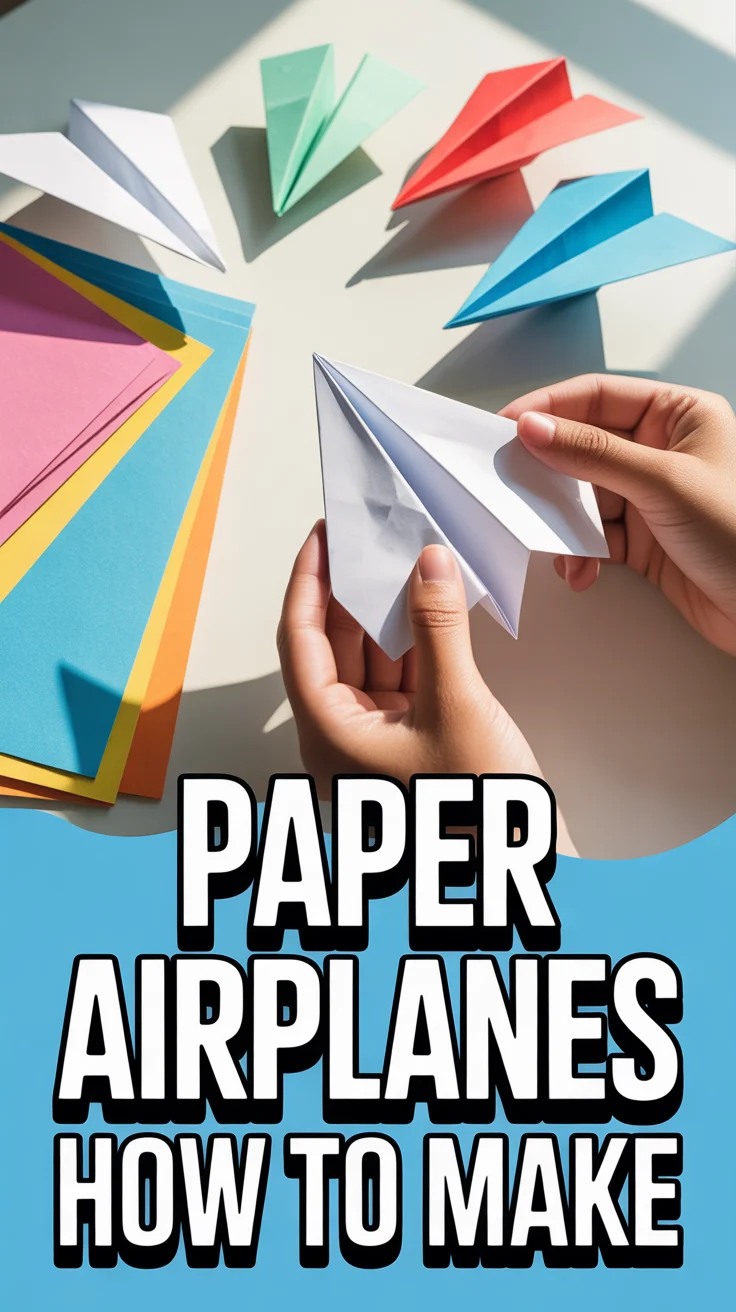
1. Classic Dart
The OG speed demon. Folds fast, flies faster. Great for straight-line shots down the hallway.
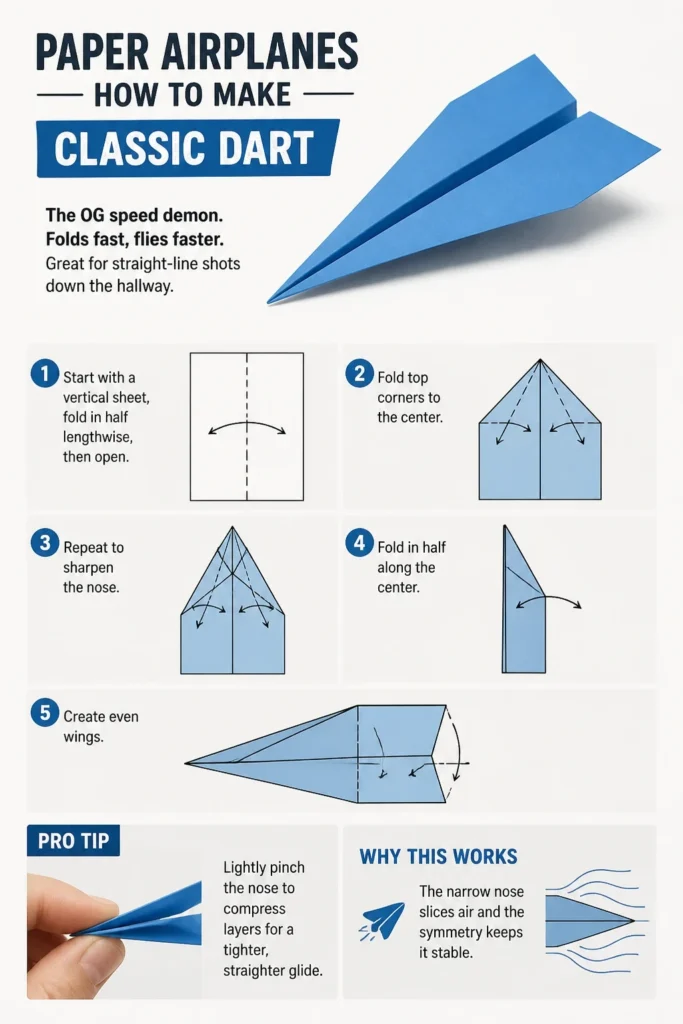
- Start with a vertical sheet, fold in half lengthwise, then open.
- Fold top corners to the center, repeat to sharpen the nose.
- Fold in half along the center, then create even wings.
Pro tip Lightly pinch the nose to compress layers for a tighter, straighter glide. This one works because the narrow nose slices air and the symmetry keeps it stable.
2. Stable Glider
Slow and floaty. It cruises like a lazy Sunday cloud.
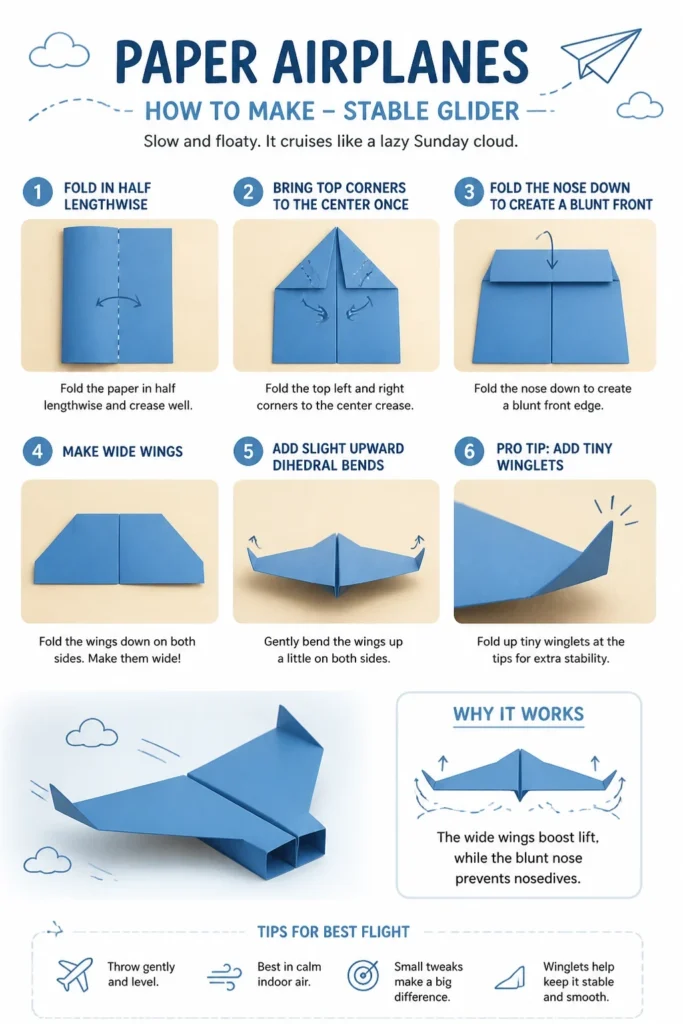
- Fold in half lengthwise, bring top corners to the center once.
- Fold the nose down to create a blunt front.
- Make wide wings with slight upward dihedral bends.
Pro tip Add tiny winglets at the tips for stability. It works because the wide wings boost lift while the blunt nose prevents nosedives.
3. Bulldog Nose
Chonky front, drama-free flight. Perfect for short indoor runs.
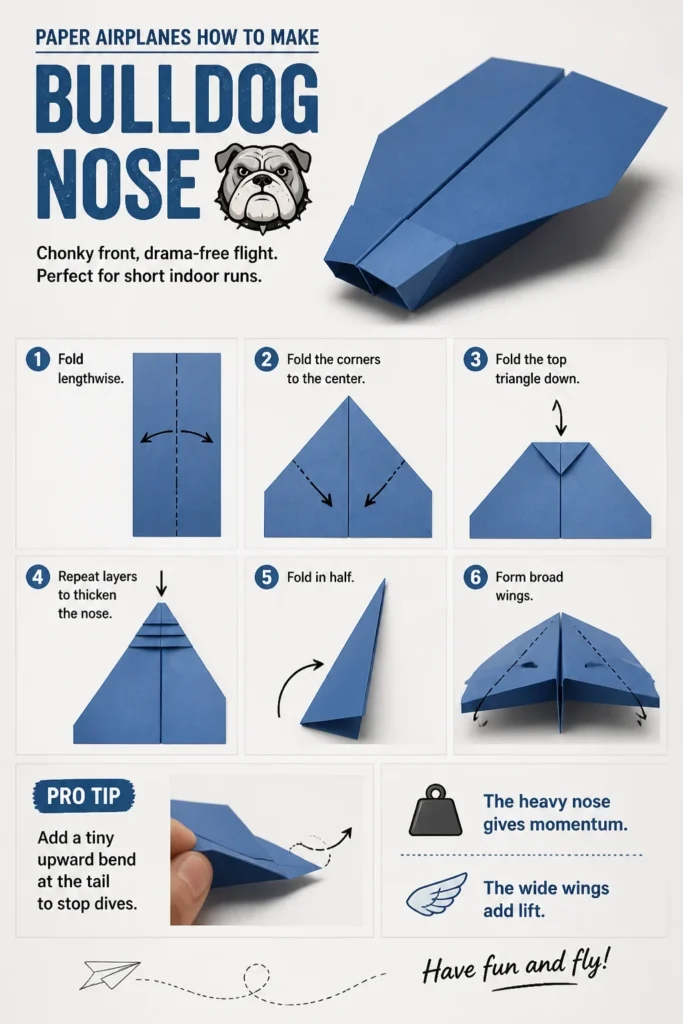
- Fold lengthwise, then corners to center.
- Fold the top triangle down, repeat layers to thicken the nose.
- Fold in half and form broad wings.
Pro tip Add a tiny upward bend at the tail to stop dives. The heavy nose gives momentum, while the wide wings add lift.
4. Arrowhead Racer
Narrow, sleek, and a little scary. Great for distance shots.
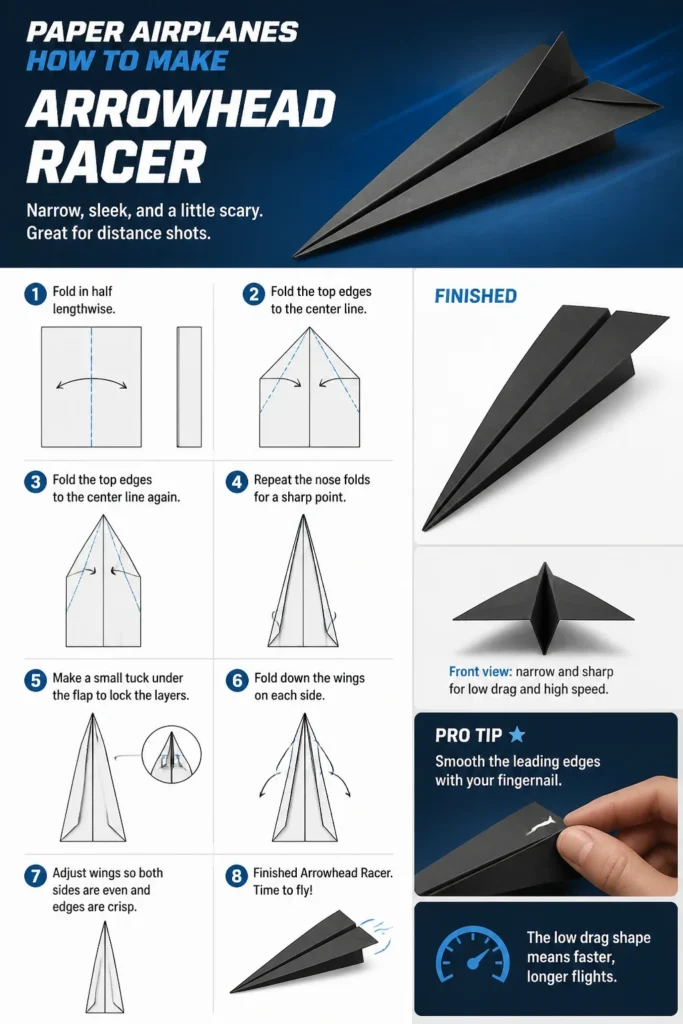
- Fold in half lengthwise, then make sharp, repeated nose folds.
- Lock the layers with a small tuck under the flap.
- Create slim wings and keep edges crisp.
Pro tip Smooth the leading edges with your fingernail. The low drag shape means faster, longer flights.
5. Canard Cruiser
Little front fins, big personality. Looks fancy, flies steady.
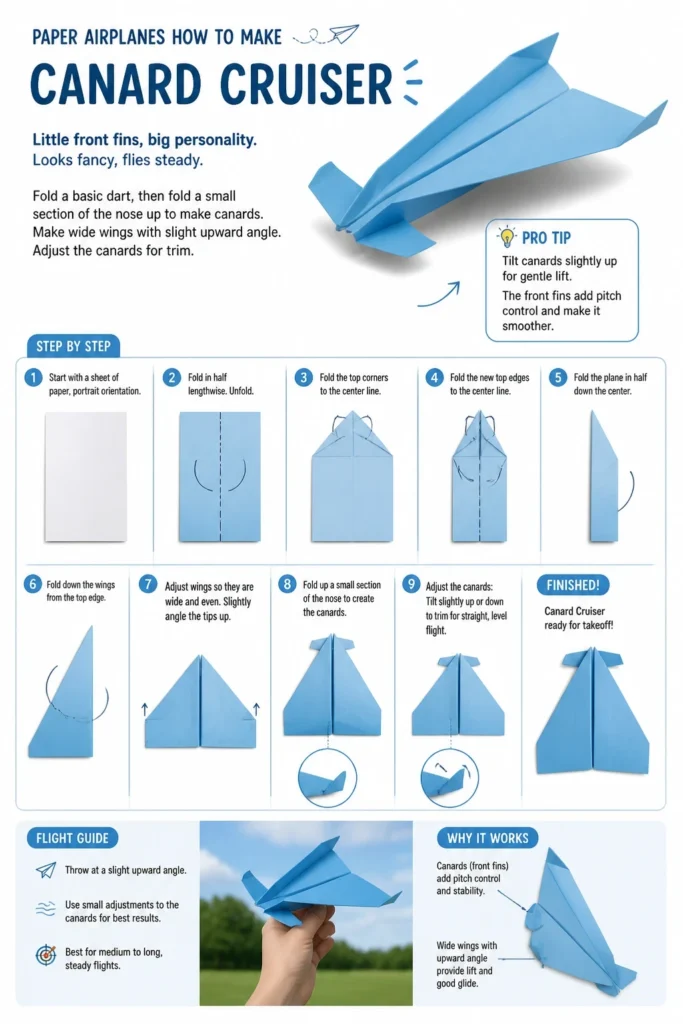
- Fold a basic dart, then fold a small section of the nose up to make canards.
- Make wide wings with slight upward angle.
- Adjust the canards for trim.
Pro tip Tilt canards slightly up for gentle lift. The front fins add pitch control and make it smoother.
6. Hammerhead Stunt
Built for tricks. Banks, swoops, and dramatic turns on command.
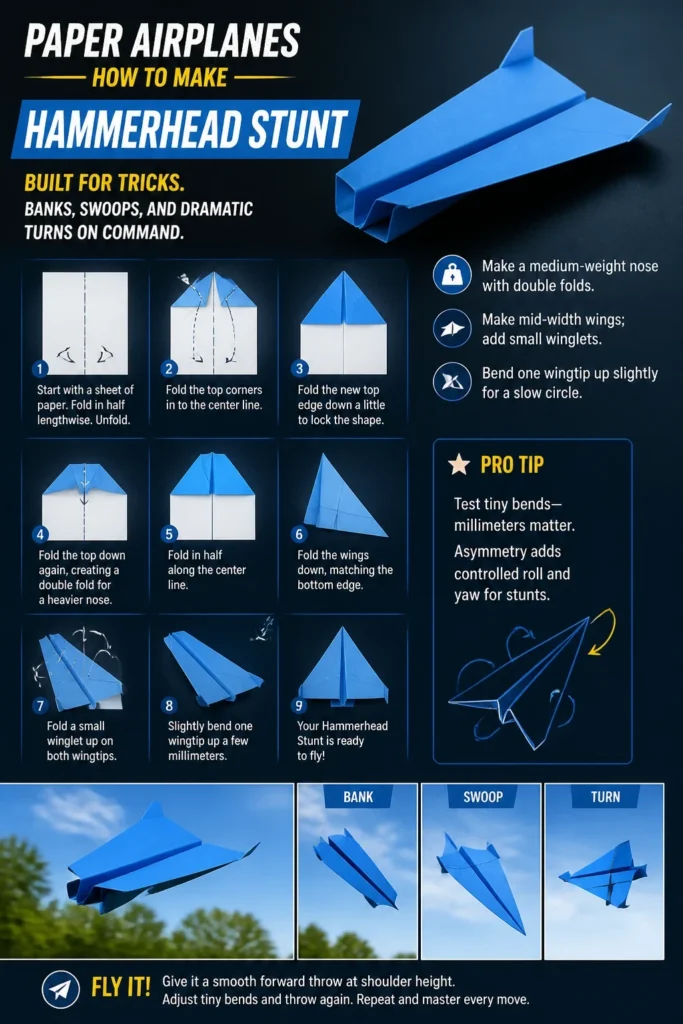
- Create a medium-weight nose with double folds.
- Make mid-width wings; add small winglets.
- Bend one wingtip up slightly for a slow circle.
Pro tip Test tiny bends—millimeters matter. Asymmetry adds controlled roll and yaw for stunts.
7. Long Glider
Wide wingspan, chill vibes. Floats forever if you toss it right.
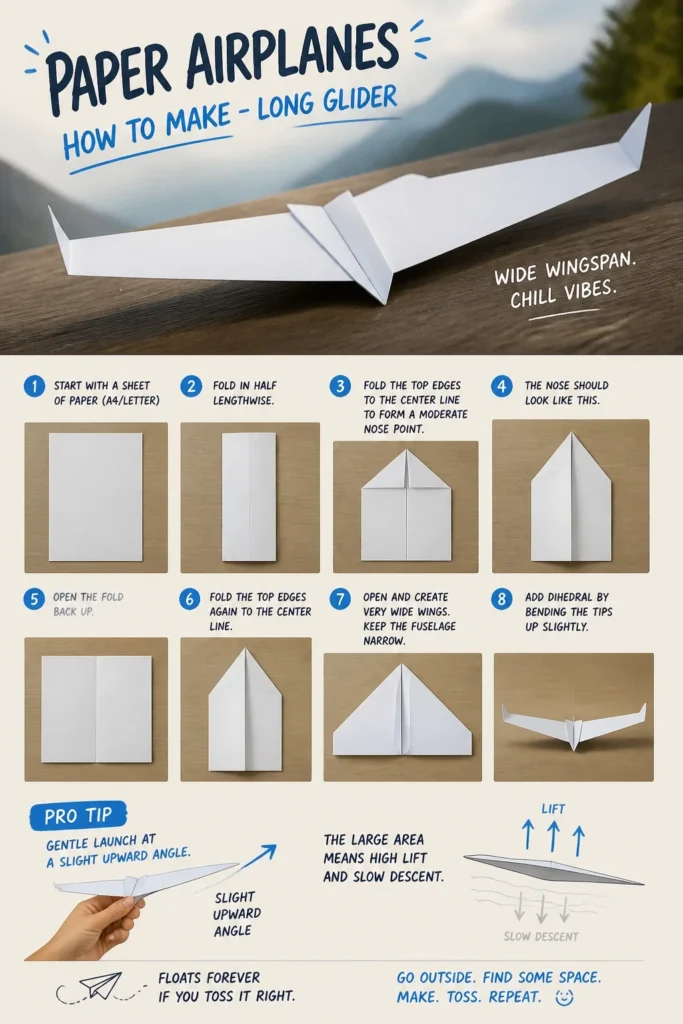
- Fold in half, then form a moderate nose point.
- Open and create very wide wings with thin fuselage.
- Add dihedral by bending tips up.
Pro tip Gentle launch at a slight upward angle. The large area means high lift and slow descent.
8. Nakamura Lock
Clean look, reliable flier. Locks the nose so it doesn’t unravel mid-flight.
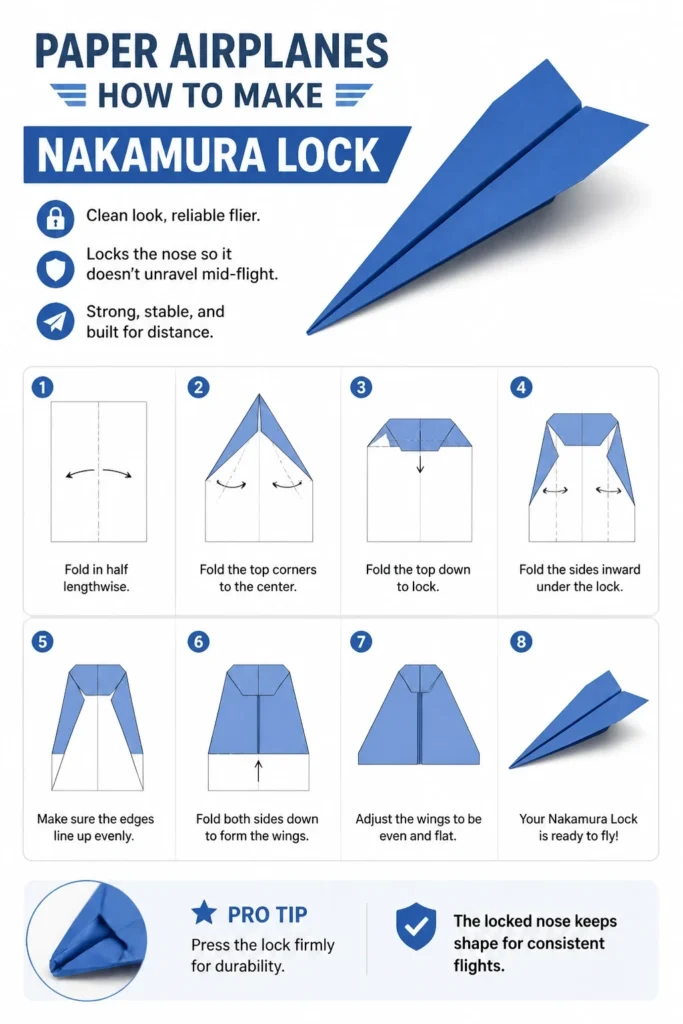
- Fold in half, corners to center, then fold the top down to lock.
- Fold sides inward under the lock.
- Form even wings with crisp creases.
Pro tip Press the lock firmly for durability. The locked nose keeps shape for consistent flights.
9. Sea Gull
Curvy wings that actually help. Elegant and floaty.
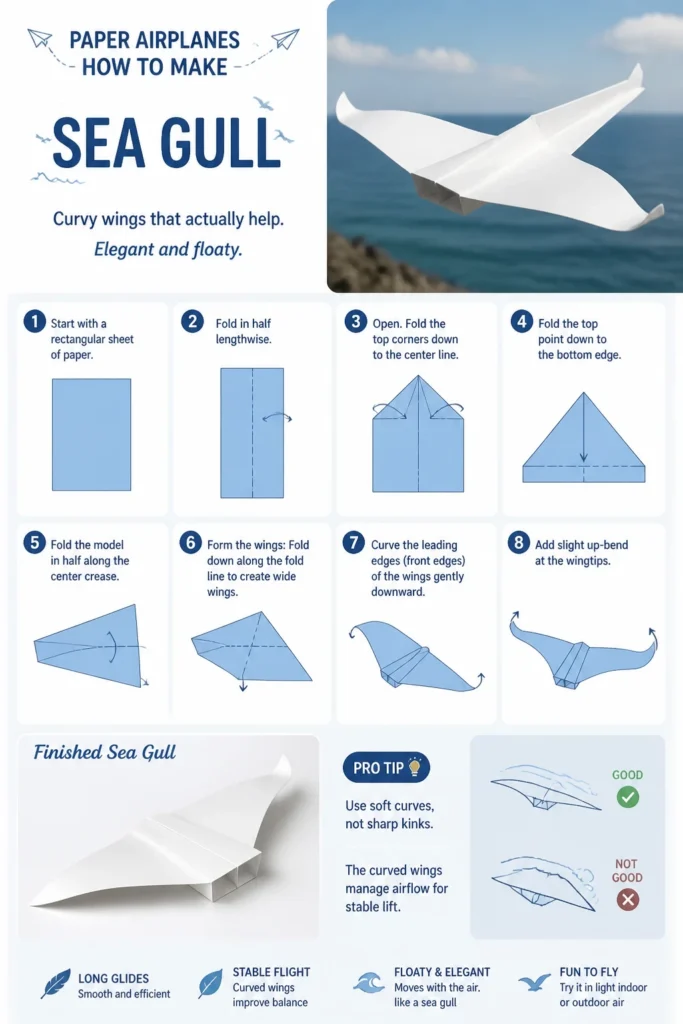
- Make a blunt nose base.
- Form wide wings, then gently curve the leading edges.
- Add slight up-bend at the tips.
Pro tip Use soft curves, not sharp kinks. The curved wings manage airflow for stable lift.
10. Boomerang Turn
Throws right, returns left. Party trick status unlocked.
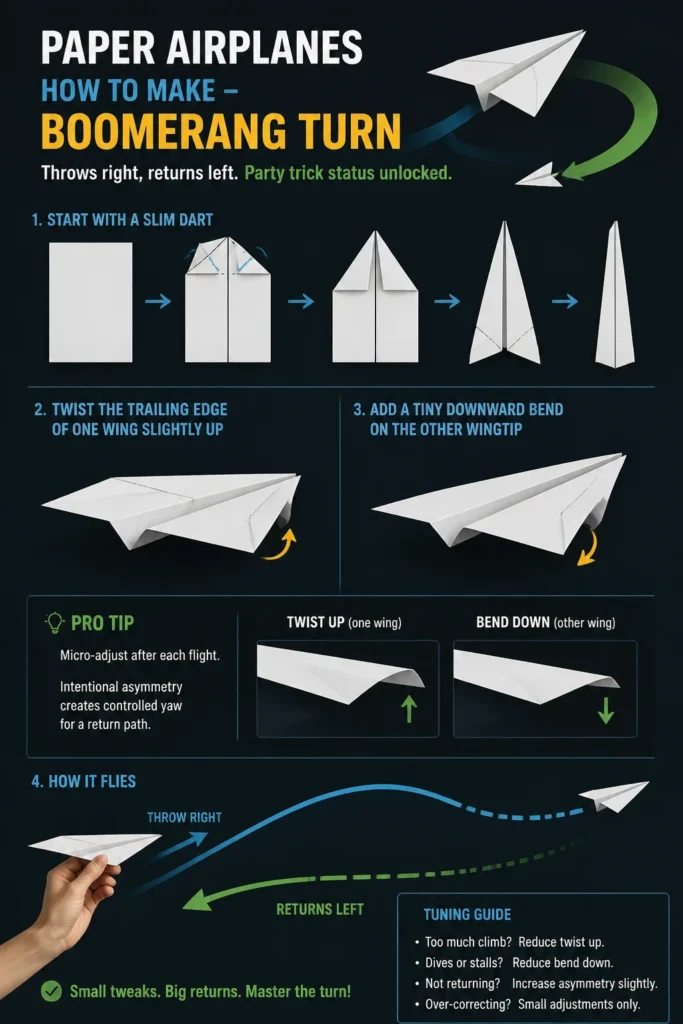
- Start with a slim dart.
- Twist the trailing edge of one wing slightly up.
- Add a tiny downward bend on the other wingtip.
Pro tip Micro-adjust after each flight. Intentional asymmetry creates controlled yaw for a return path.
11. Heavy Glider
For when your paper is flimsy but your goals are not. Weight forward, glide stable.
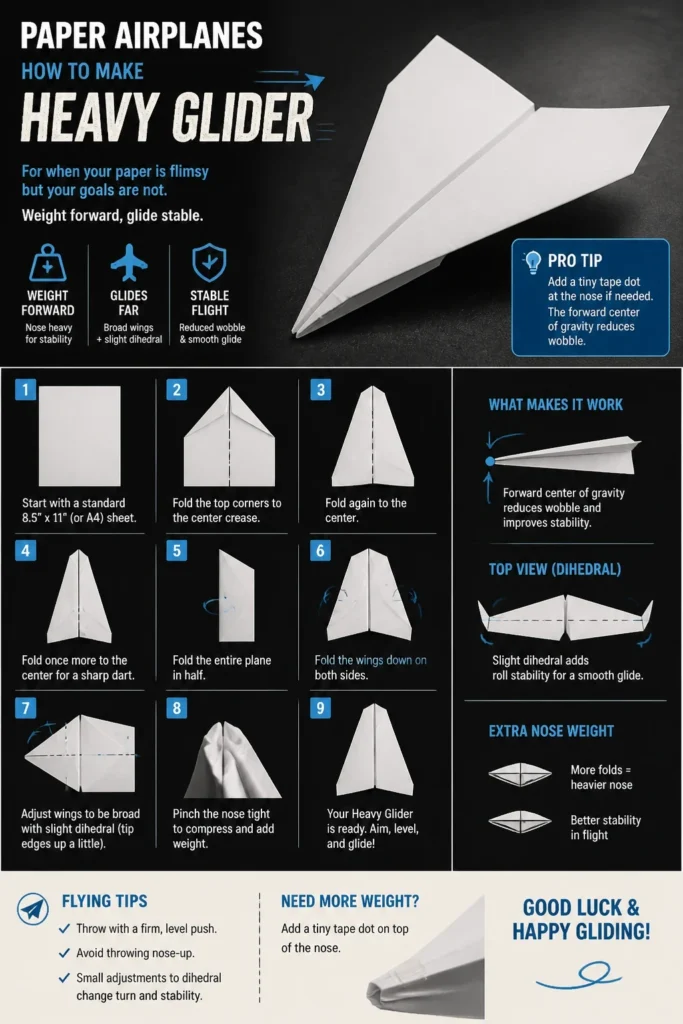
- Fold a standard dart with extra nose layers.
- Make broad wings with slight dihedral.
- Pinch the nose tight to compress.
Pro tip Add a tiny tape dot at the nose if needed. The forward center of gravity reduces wobble.
12. Pocket Jet
Small plane, big attitude. Great for short-range indoor flights.
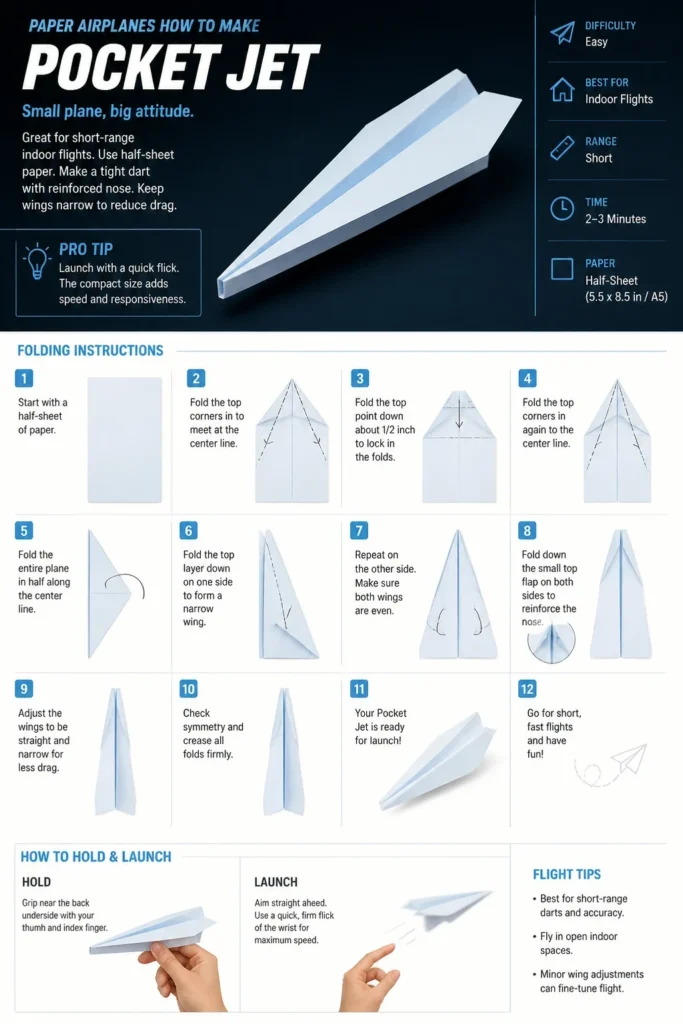
- Use half-sheet paper.
- Make a tight dart with reinforced nose.
- Keep wings narrow to reduce drag.
Pro tip Launch with a quick flick. The compact size adds speed and responsiveness.
13. Winged Arrow
Looks futuristic, flies like it knows it. Balanced for speed and stability.
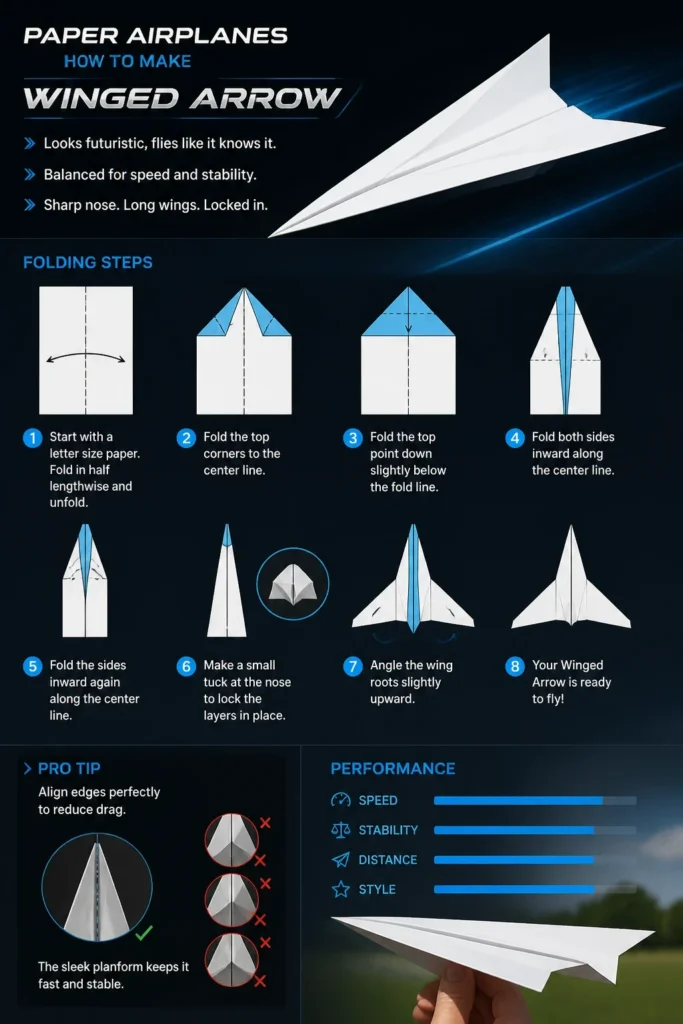
- Create a sharp nose and long triangular wings.
- Lock the nose with a small tuck.
- Angle wing roots slightly up.
Pro tip Align edges perfectly to reduce drag. The sleek planform keeps it fast and stable.
14. Dihedral Dream
Beginner-proof and smooth. It rights itself mid-flight like magic.
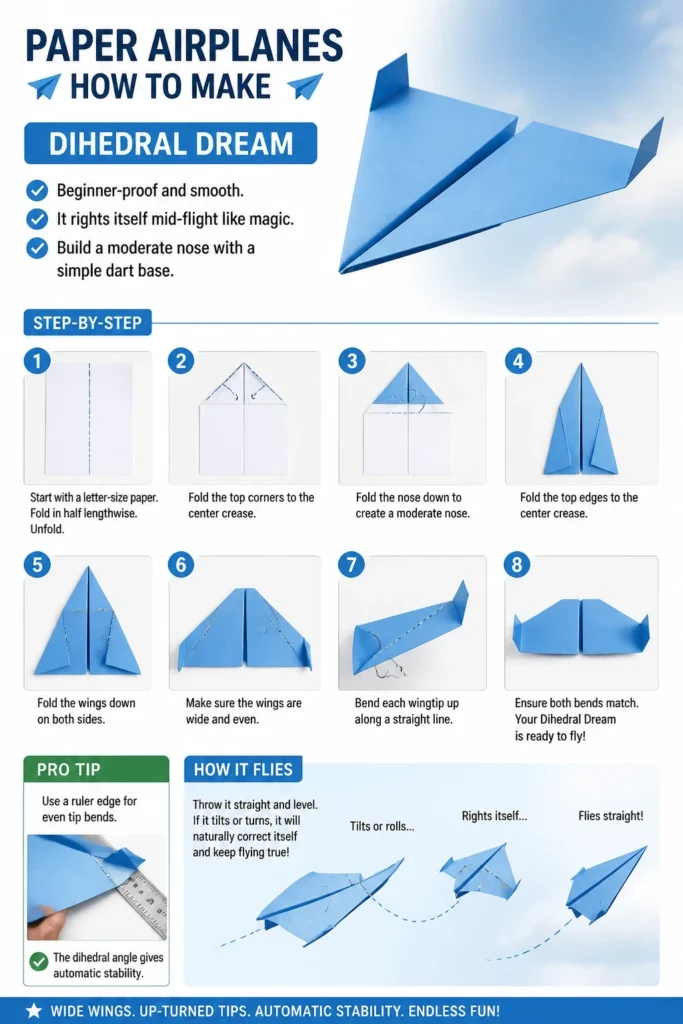
- Build a moderate nose with a simple dart base.
- Fold wings wide, then bend each wingtip up.
- Ensure both bends match.
Pro tip Use a ruler edge for even tip bends. The dihedral angle gives automatic stability.
15. Elevator Tuner
Not a plane, a power-up. Turn any design into a glider king.
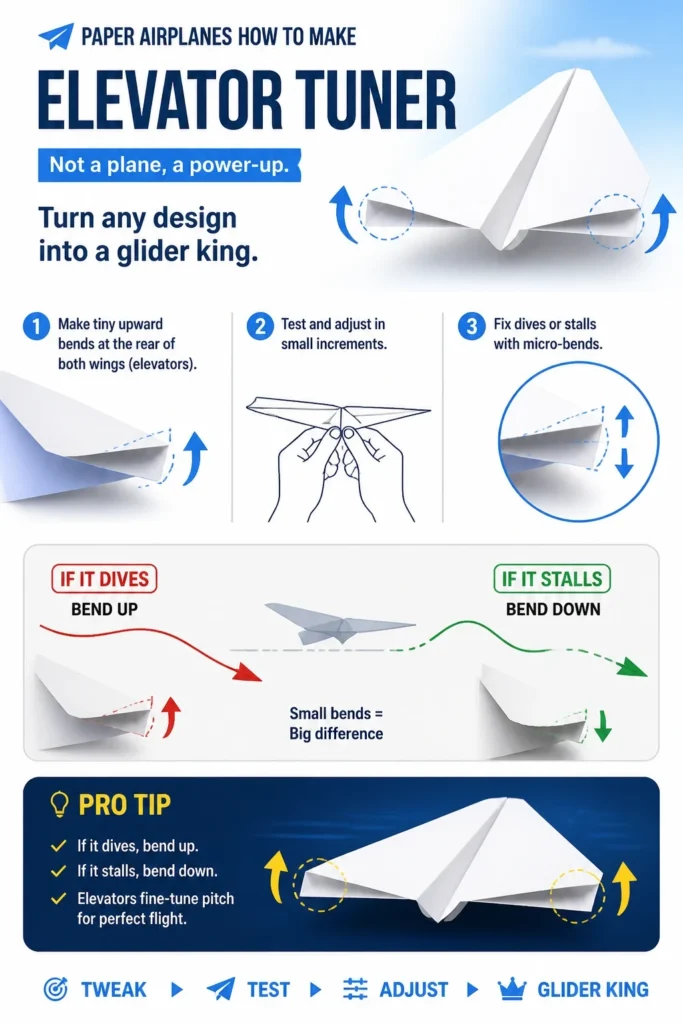
- Make tiny upward bends at the rear of both wings (elevators).
- Test and adjust in small increments.
- Fix dives or stalls with micro-bends.
Pro tip If it dives, bend up; if it stalls, bend down. Elevators fine-tune pitch for perfect flight.
Conclusion
Paper plus a few sharp folds equals airborne joy. Play with wing angles, nose weight, and tiny bends to dial in perfect flights. Keep it light, keep it crisp, and let the living room become your runway.
& CRAFT IDEAS
Beginner-friendly tutorials, creative projects,
and weekly inspiration in your inbox.