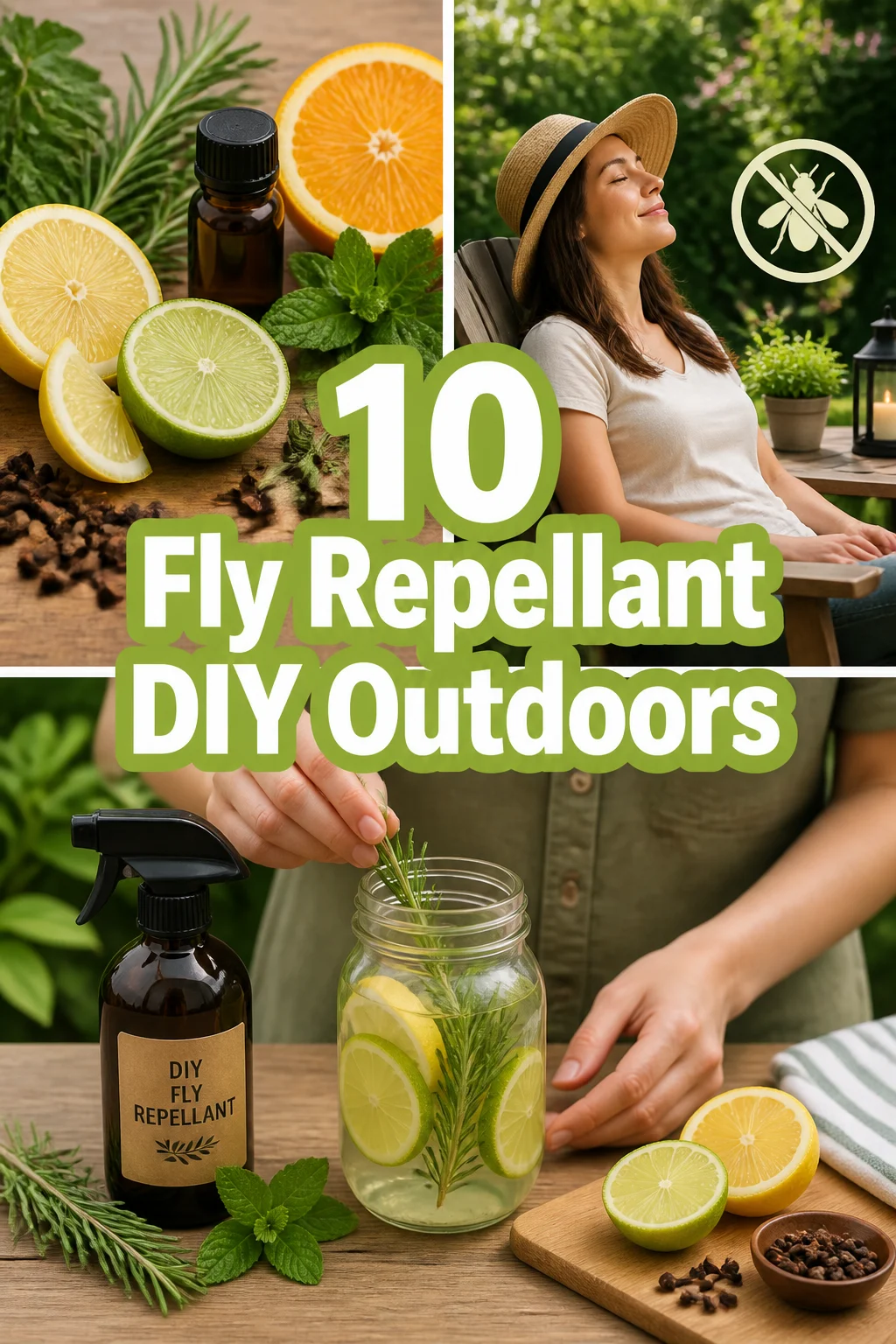
🦟 10 Fly Repellant DIY Outdoors

& CRAFT IDEAS
Beginner-friendly tutorials, creative projects,
and weekly inspiration in your inbox.
Okay, real talk. Summer is amazing, right? Sunshine, good vibes, grilling out with your crew. But then BAM! The uninvited guests show up. Yep, we’re talking about those persistent, buzzing little party crashers—flies. They’re basically tiny, winged agents of chaos trying to ruin your al fresco dreams. Before you throw in the picnic blanket, guess what? You don’t need a hazmat suit or a chemical factory to keep them away. We’ve got the lowdown on some seriously clever, totally natural, and ridiculously easy DIY hacks to reclaim your outdoor sanctuary. No more swatting, just chill vibes. Let’s get into it!
1. Citrus & Cloves
This one is basically a fancy potpourri for your patio, but with a purpose. Flies absolutely despise the combo of citrus and cloves. Grab an orange, lemon, or lime, slice it in half, and then stud the flesh with about 10-15 whole cloves. Place these fragrant deterrents on tables or ledges where you hang out.
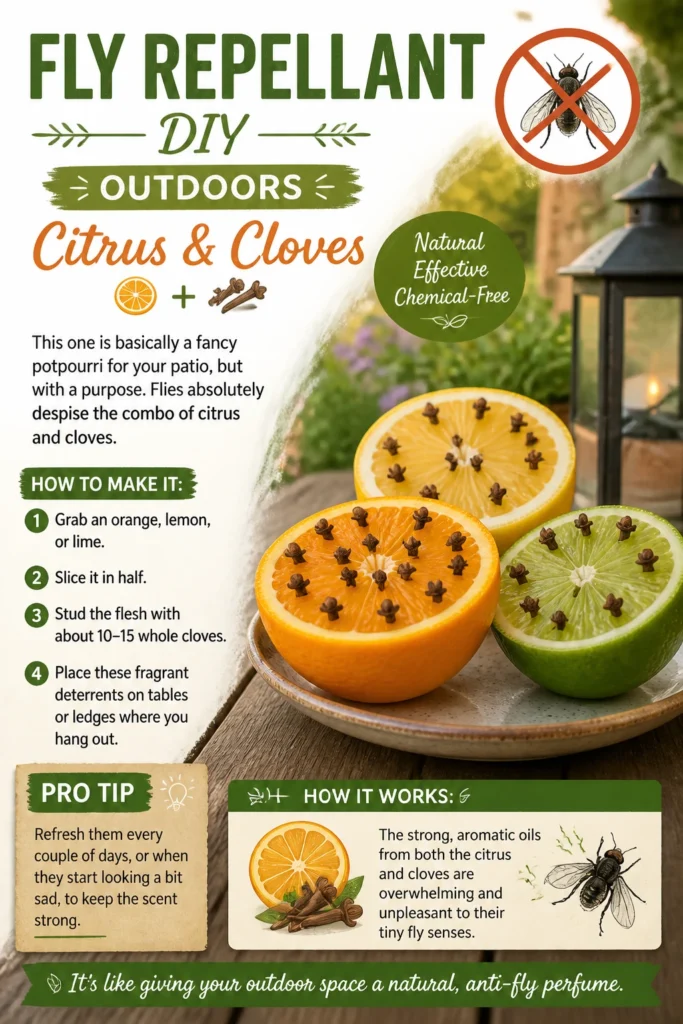
Pro tip: Refresh them every couple of days, or when they start looking a bit sad, to keep the scent strong. It’s like giving your outdoor space a natural, anti-fly perfume.
It works because the strong, aromatic oils from both the citrus and cloves are overwhelming and unpleasant to their tiny fly senses.
2. Herbal Sachets
Who knew your herb garden could be a fly-fighting fortress? Flies are not fans of certain strong-smelling herbs. Think lavender, mint, rosemary, or bay leaves. Gather fresh sprigs, tie them into small bundles, or put dried herbs into little mesh bags.
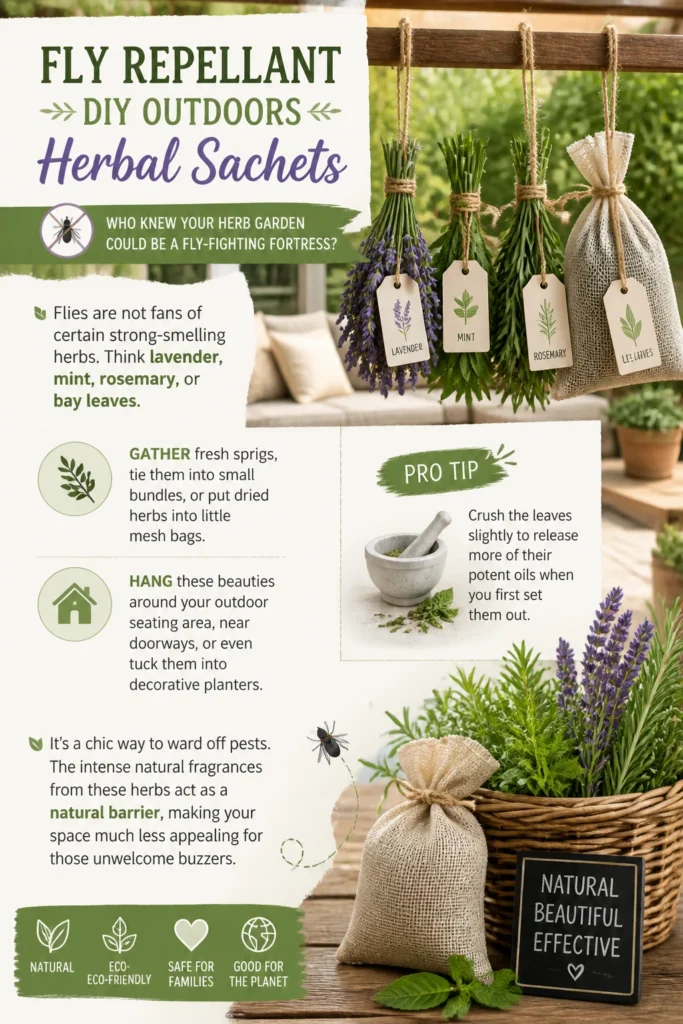
Hang these beauties around your outdoor seating area, near doorways, or even tuck them into decorative planters. Pro tip: Crush the leaves slightly to release more of their potent oils when you first set them out. It’s a chic way to ward off pests.
The intense natural fragrances from these herbs act as a natural barrier, making your space much less appealing for those unwelcome buzzers.
3. Apple Cider Vinegar Traps
Sometimes you gotta fight fire with… well, deliciousness (to a fly, anyway). Flies are super attracted to the fermenting smell of apple cider vinegar. Grab a shallow bowl or jar, pour in some apple cider vinegar, and add a few drops of dish soap. Cover it with plastic wrap and poke a few small holes.
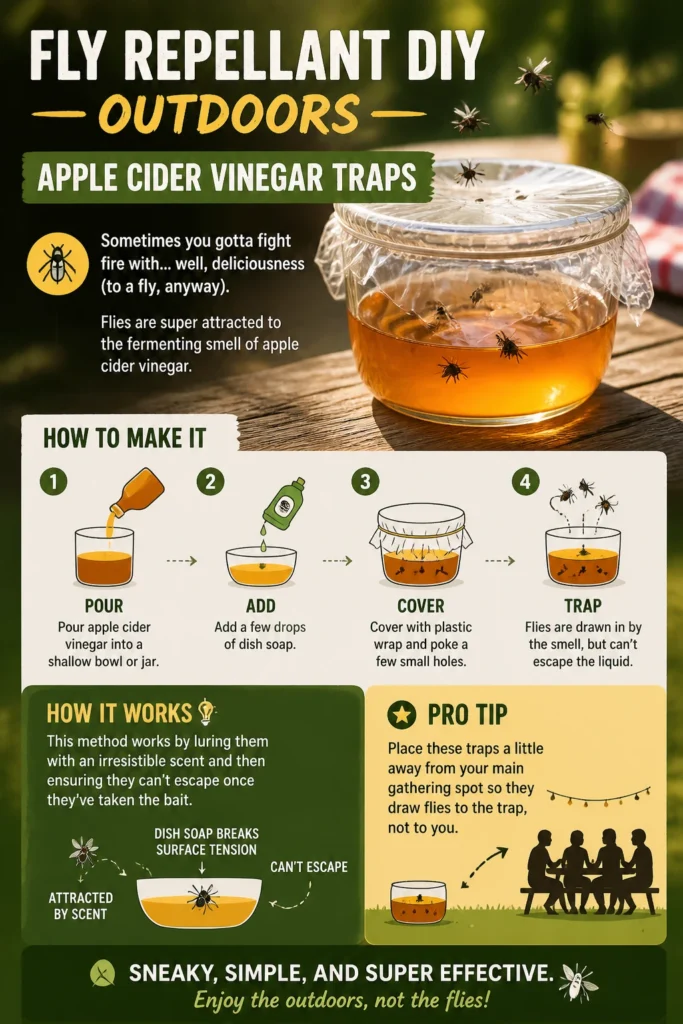
The flies will be drawn in, but the dish soap breaks the surface tension of the liquid, so they can’t just land and fly off. Pro tip: Place these traps a little away from your main gathering spot so they draw flies to the trap, not to you. It’s a sneaky, effective tactic.
This method works by luring them with an irresistible scent and then ensuring they can’t escape once they’ve taken the bait.
4. Essential Oil Sprays
Time to get spritzy! Essential oils are potent little powerhouses against flies. Fill a spray bottle with water, add about 20-30 drops of essential oils like peppermint, lemongrass, eucalyptus, or citronella. A dash of witch hazel or vodka helps disperse the oils.
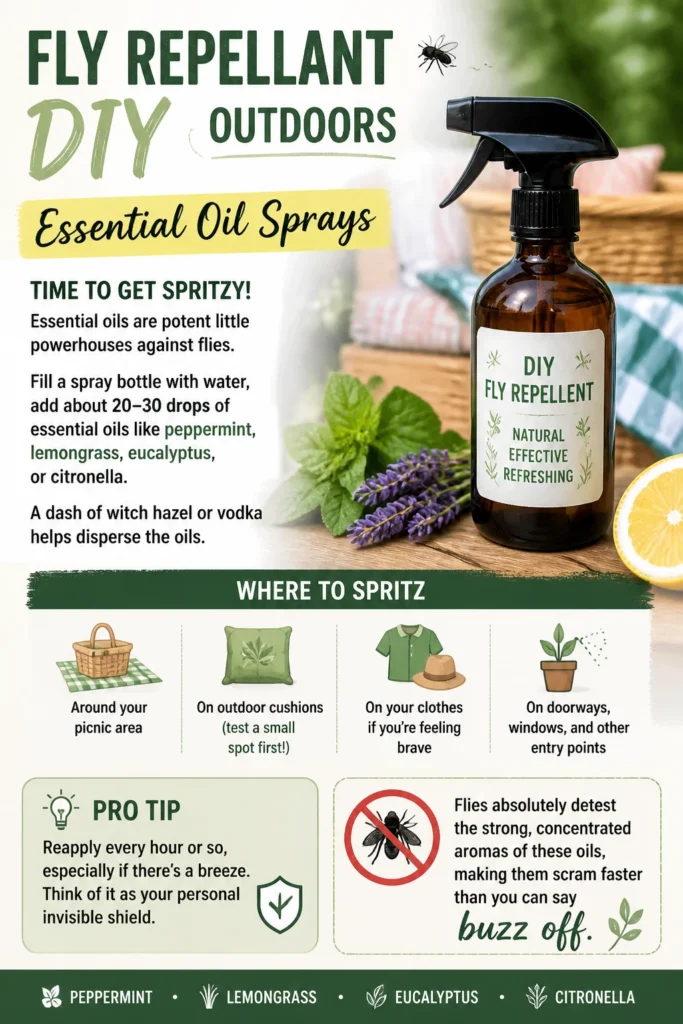
Spritz it around your picnic area, on outdoor cushions (test a small spot first!), or even on your clothes if you’re feeling brave. Pro tip: Reapply every hour or so, especially if there’s a breeze. Think of it as your personal invisible shield.
Flies absolutely detest the strong, concentrated aromas of these oils, making them scram faster than you can say “buzz off.”
5. Penny Bags
This one sounds a bit like an old wives’ tale, but many swear by it! Take a clear plastic bag, fill it with water, and drop in about 4-5 shiny pennies. Hang these bags near doorways or above your outdoor eating area.
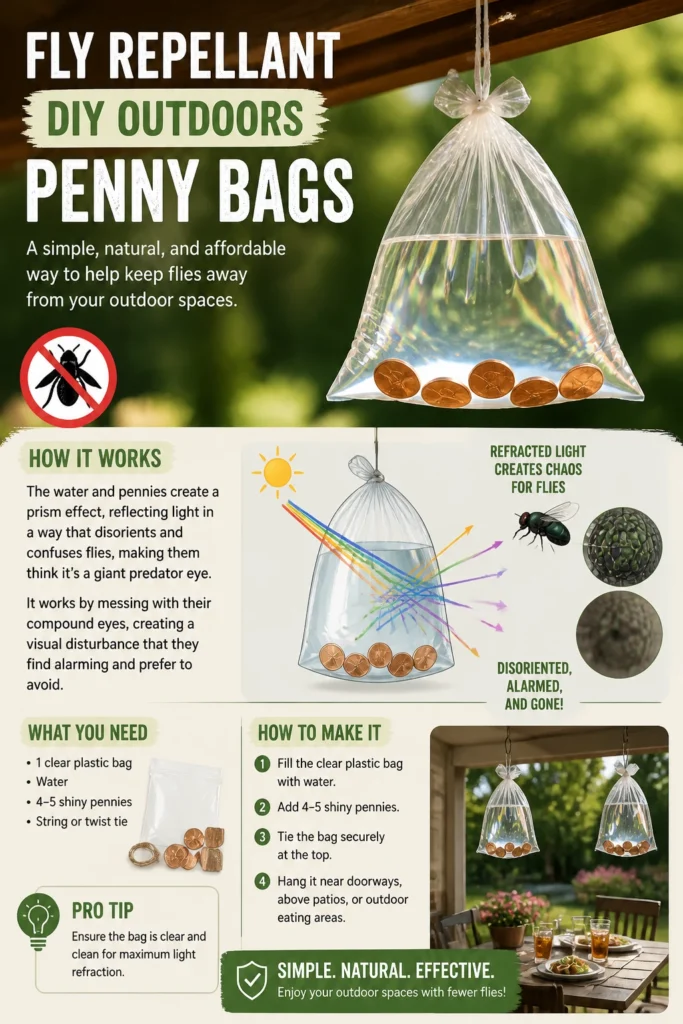
The theory is that the water and pennies create a prism effect, reflecting light in a way that disorients and confuses flies, making them think it’s a giant predator eye. Pro tip: Ensure the bag is clear and clean for maximum light refraction. It’s a simple, visual deterrent.
It works by messing with their compound eyes, creating a visual disturbance that they find alarming and prefer to avoid.
6. Garlic Spray
Vampires aren’t the only ones who hate garlic; flies aren’t big fans either! Mince a few cloves of garlic, steep them in hot water for about an hour, then strain the liquid. Add this garlic-infused water to a spray bottle.
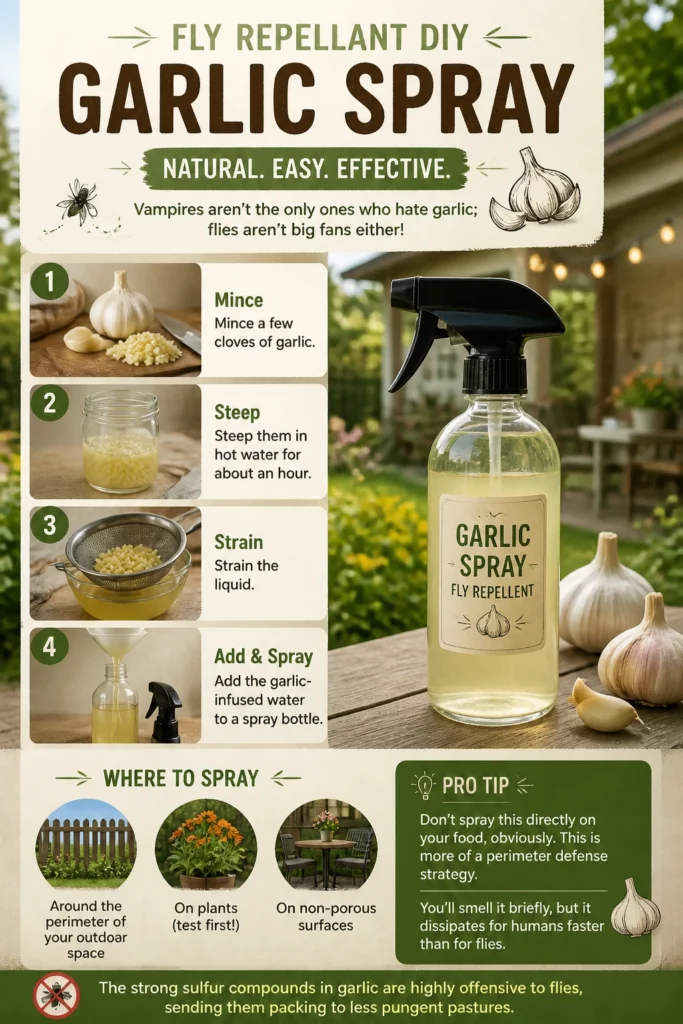
Spray it around the perimeter of your outdoor space, on plants (test first!), or on non-porous surfaces. Pro tip: Don’t spray this directly on your food, obviously. This is more of a perimeter defense strategy. You’ll smell it briefly, but it dissipates for humans faster than for flies.
The strong sulfur compounds in garlic are highly offensive to flies, sending them packing to less pungent pastures.
7. DIY Fly Paper
Sometimes you need to get a little sticky. Cut strips of brown paper bag or thick paper. In a saucepan, mix equal parts corn syrup, sugar, and water, and simmer until it thickens slightly. Let it cool a bit, then brush or dip your paper strips in the sticky mixture.
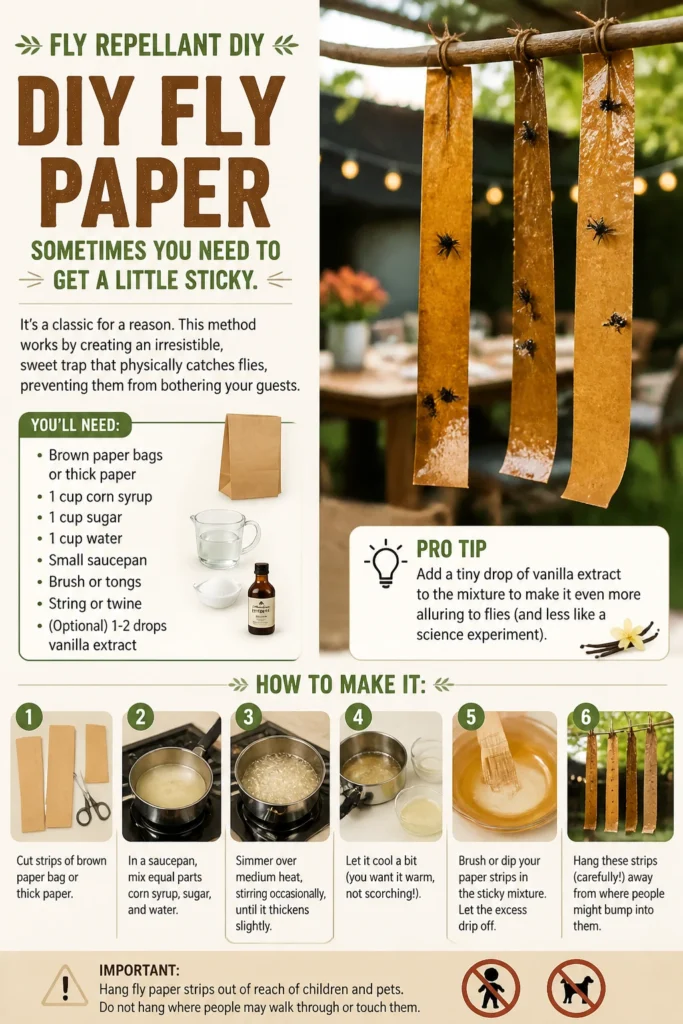
Hang these strips (carefully!) away from where people might bump into them. Pro tip: Add a tiny drop of vanilla extract to the mixture to make it even more alluring to flies (and less like a science experiment). It’s a classic for a reason.
This method works by creating an irresistible, sweet trap that physically catches flies, preventing them from bothering your guests.
8. Basil Plants
Who doesn’t love fresh basil? Turns out, flies don’t. Planting basil in pots around your patio or near windows is a super easy and fragrant way to keep flies at bay. Plus, fresh basil for your caprese salad? Win-win!
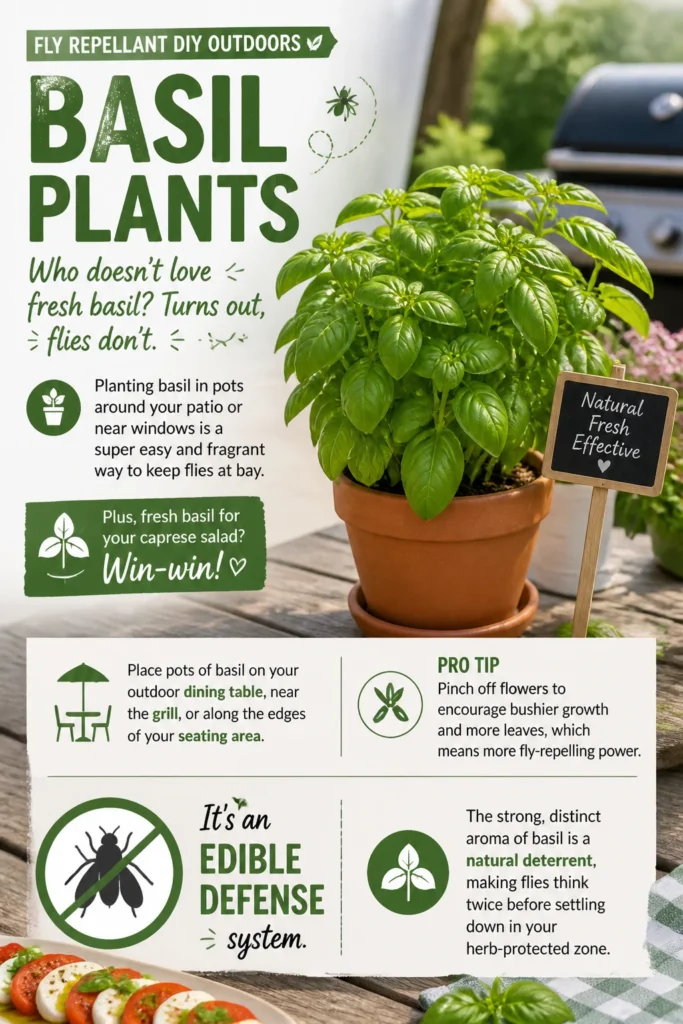
Place pots of basil on your outdoor dining table, near the grill, or along the edges of your seating area. Pro tip: Pinch off flowers to encourage bushier growth and more leaves, which means more fly-repelling power. It’s an edible defense system.
The strong, distinct aroma of basil is a natural deterrent, making flies think twice before settling down in your herb-protected zone.
9. Cucumber Slices
This might sound too simple to be true, but cucumbers are surprisingly effective against flies, especially in specific areas. Slice up a fresh cucumber and place the slices on aluminum foil in areas where flies congregate, like near trash cans or food prep zones.
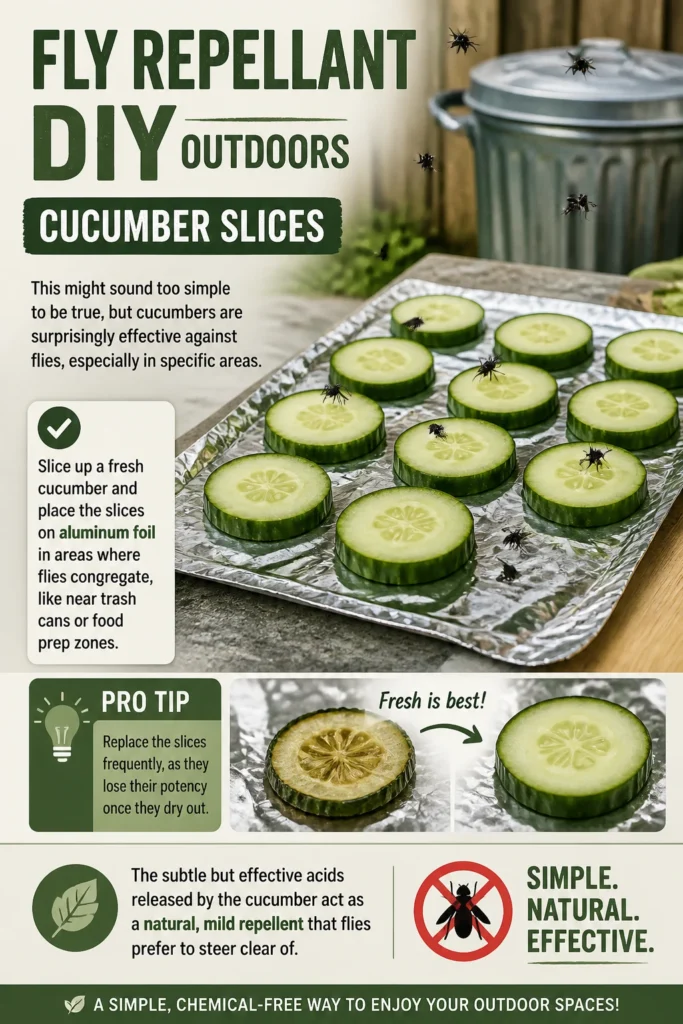
The natural acids in cucumbers are offensive to flies and they’ll avoid the area. Pro tip: Replace the slices frequently, as they lose their potency once they dry out. It’s a great short-term solution for specific problem spots.
The subtle but effective acids released by the cucumber act as a natural, mild repellent that flies prefer to steer clear of.
10. Incense Sticks
Time to light it up! Certain incense sticks aren’t just for good vibes; they can actually deter flies. Look for sticks containing citronella, sandalwood, or even lavender. Light them up and place them in safe, non-flammable holders around your outdoor space.
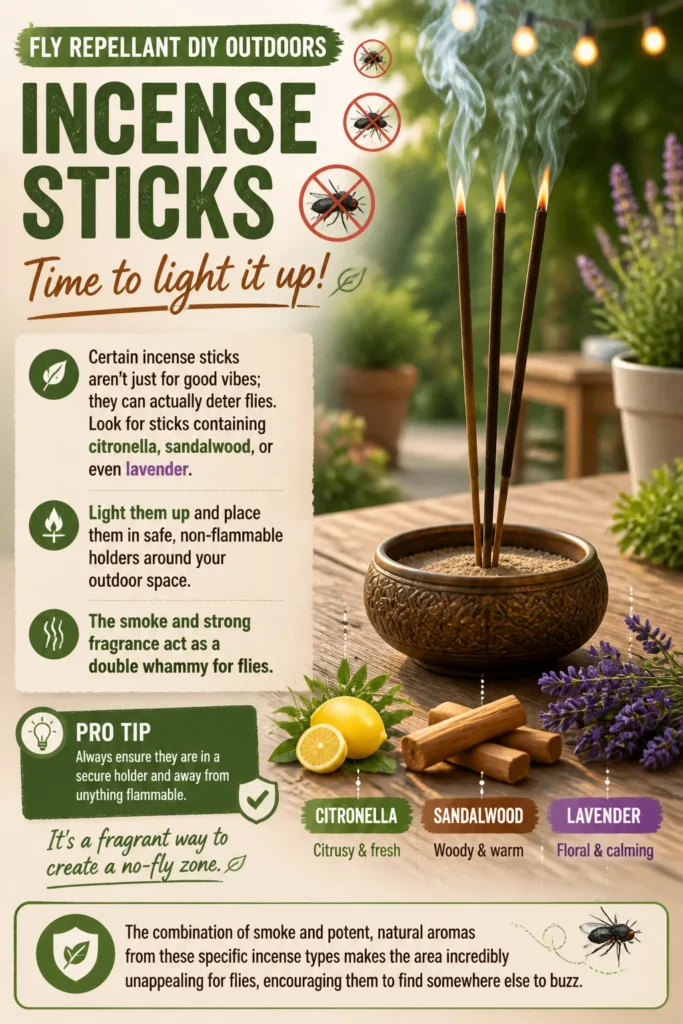
The smoke and strong fragrance act as a double whammy for flies. Pro tip: Always ensure they are in a secure holder and away from anything flammable. It’s a fragrant way to create a no-fly zone.
The combination of smoke and potent, natural aromas from these specific incense types makes the area incredibly unappealing for flies, encouraging them to find somewhere else to buzz.
Conclusion
So there you have it, folks! Ten ridiculously easy, totally natural ways to tell those pesky flies to take a hike. No need to douse your amazing outdoor space in questionable chemicals when Mother Nature (and a little DIY savvy) has your back. Go forth, enjoy your barbecues, your sunbathing, and your general outdoor awesomeness without the constant buzzkill. Your patio (and your sanity) will thank you. Stay breezy!
& CRAFT IDEAS
Beginner-friendly tutorials, creative projects,
and weekly inspiration in your inbox.