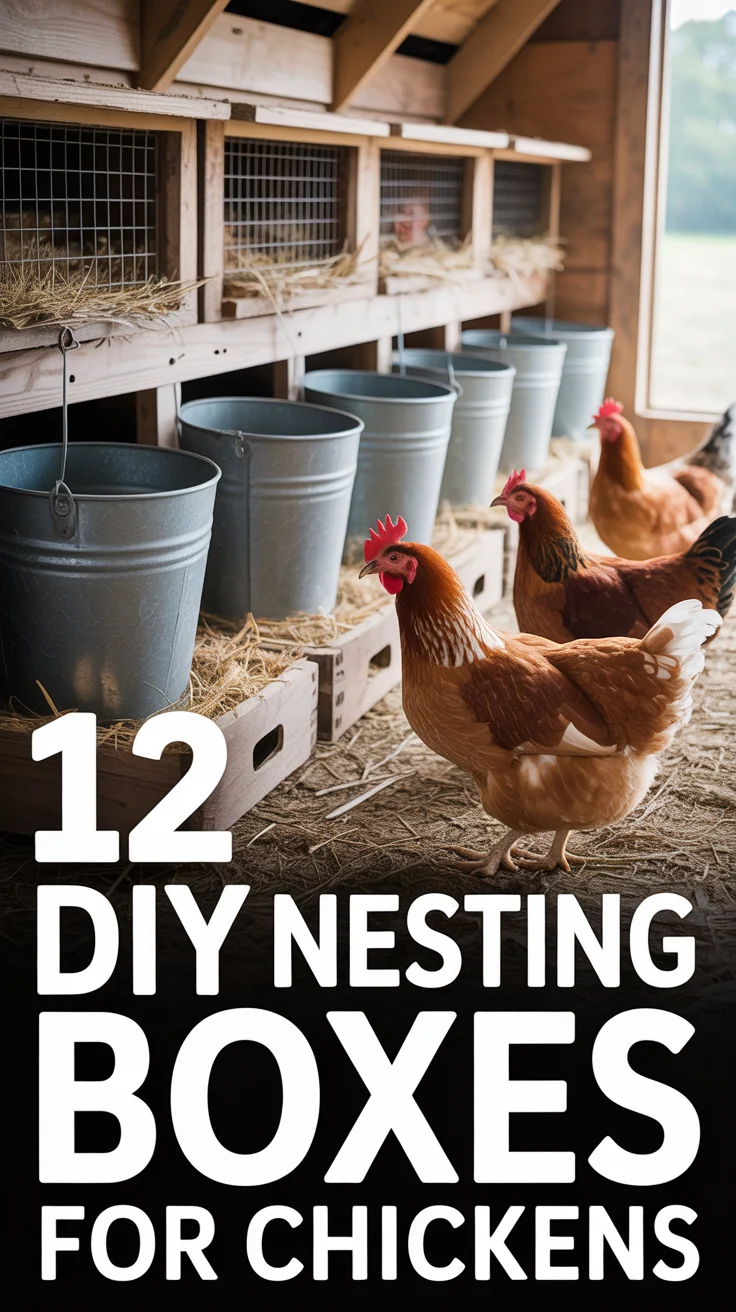
🐔 12 DIY Nesting Boxes For Chickens
& CRAFT IDEAS
Beginner-friendly tutorials, creative projects,
and weekly inspiration in your inbox.
🛠️ The Ultimate Maker's Toolkit
I've tested thousands of craft tools over the years. Whether you are quilting, crafting, or building mixed-media art, these are the top 5 absolute non-negotiable tools I personally recommend to guarantee professional results.
🪡 SINGER Heavy Duty 4452 Sewing Machine
The sewing community highly recommends this as the ultimate "bulletproof" entry-level machine. Its heavy metal frame powerfully pushes through thick denim and heavy quilt layers that would instantly jam a standard plastic machine.
✂️ Fiskars 8" Orange-Handled Scissors
Never settle for dull dollar-store blades. Wirecutter repeatedly names Fiskars the absolute best all-purpose craft scissor due to its legendary precision-ground blades and an ergonomic grip that prevents hand-cramping.
🔥 Gorilla Dual Temp Hot Glue Gun
Named Wirecutter's top choice because it literally does the work of two tools. It features dual-temperature settings offering low heat for delicate florals and blistering high heat for heavy wood adhesion repairs.
🖌️ Mod Podge Waterbase Gloss Sealer
The absolute undisputed champion of decoupage and paper crafts. Experts rely exclusively on this exact water-based formula because it glues, seals, and finishes beautifully without yellowing or flaking over time.
🎨 Apple Barrel Acrylic Paint (2 oz)
The quintessential, incredibly inexpensive craft paint. Woodworkers and hobby painters swear by its smooth flow and matte finish, providing massive value and remarkably thick color coverage on rough surfaces.
Your hens want cozy, you want eggs not laid on your lawn chair. Let’s build simple, budget-friendly nesting boxes that look good, stay clean, and keep the flock happy. No boutique farm budget required, just a little elbow grease and some smart shortcuts.
1. Milk Crate Classic
Cheap, sturdy, and stackable. Flip a plastic milk crate on its side, add a cushion of pine shavings, and you’re basically done. It’s ventilation-friendly and easy to scrub.
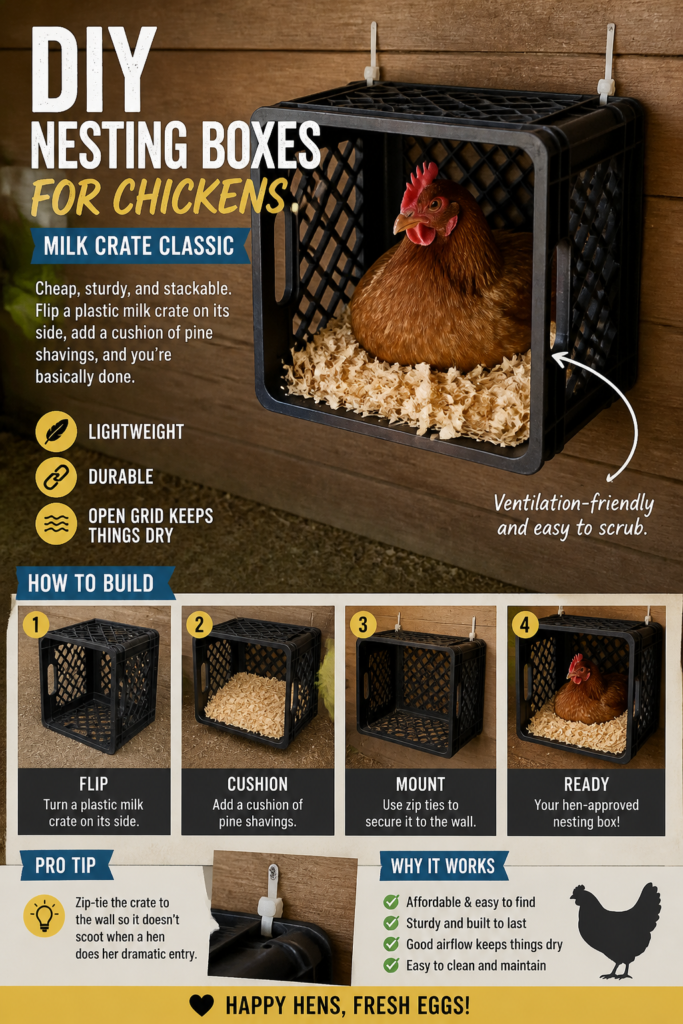
Pro tip: Zip-tie the crate to the wall so it doesn’t scoot when a hen does her dramatic entry.
It works because it’s lightweight, durable, and the open grid keeps things dry.
2. Five-Gallon Bucket Nester
Turn a 5-gallon bucket on its side and boom, chicken studio apartment. Cut a small lip to keep bedding in and mount it slightly tilted so eggs roll back.
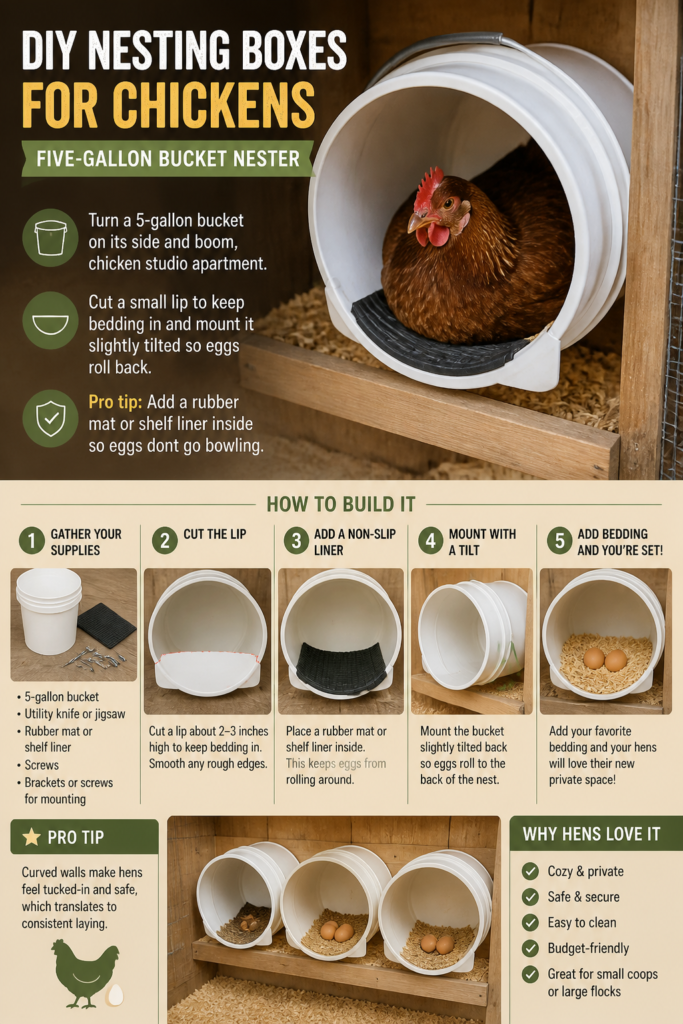
Pro tip: Add a rubber mat or shelf liner inside so eggs don’t go bowling.
Curved walls make hens feel tucked-in and safe, which translates to consistent laying.
3. Wooden Crate Charm
Those rustic wooden produce crates aren’t just cute—they’re breathable and easy to stack. Line with straw and screw to a backboard.
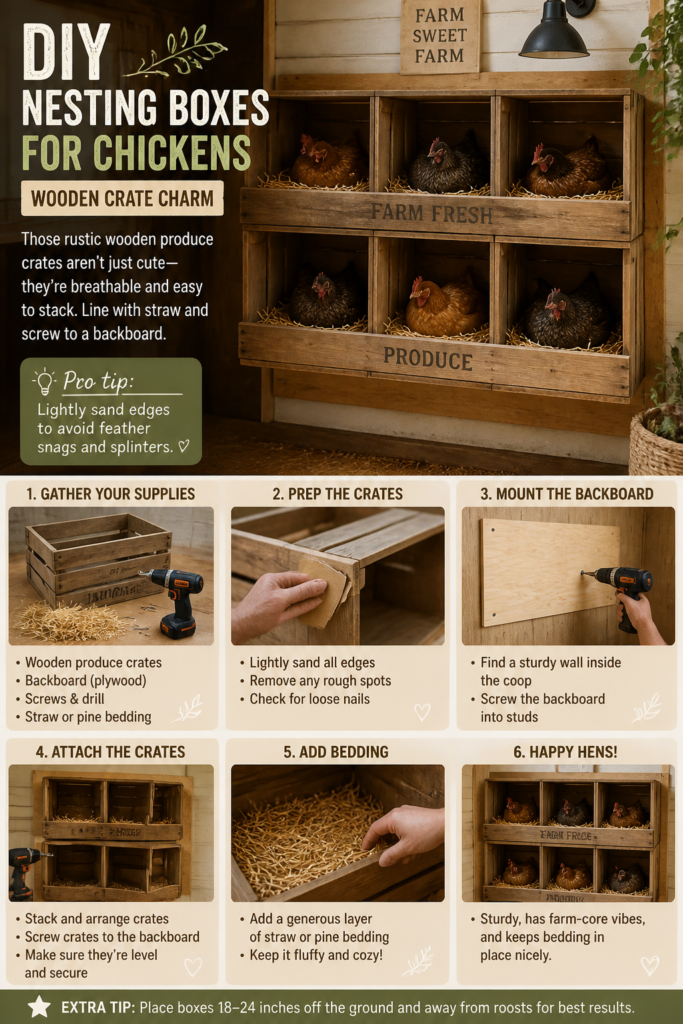
Pro tip: Lightly sand edges to avoid feather snags and splinters.
It’s sturdy, has farm-core vibes, and keeps bedding in place nicely.
4. Tote Bin Hideaway
A plastic storage tote with a cut-out entry makes a draft-free nook. Add a small overhang on the entry to keep bedding dry.
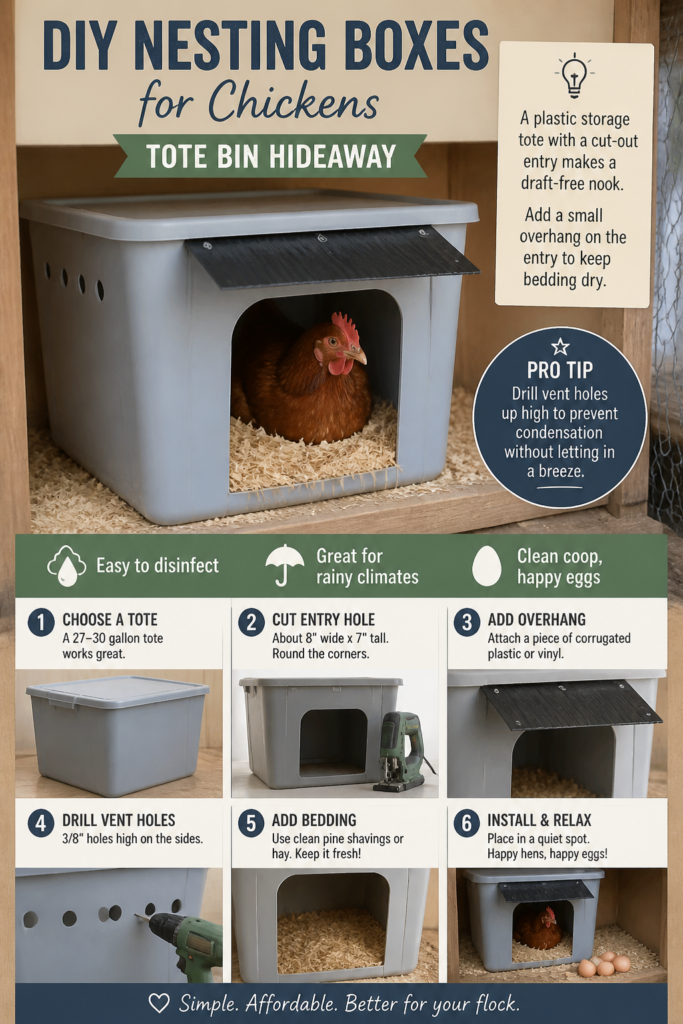
Pro tip: Drill vent holes up high to prevent condensation without letting in a breeze.
Easy to disinfect and great for rainy climates—clean coop, happy eggs.
5. Cabinet Door Upcycle
Old cabinet? Remove the shelves and give it a second life as a multi-box unit. Each cubby becomes a nesting suite.
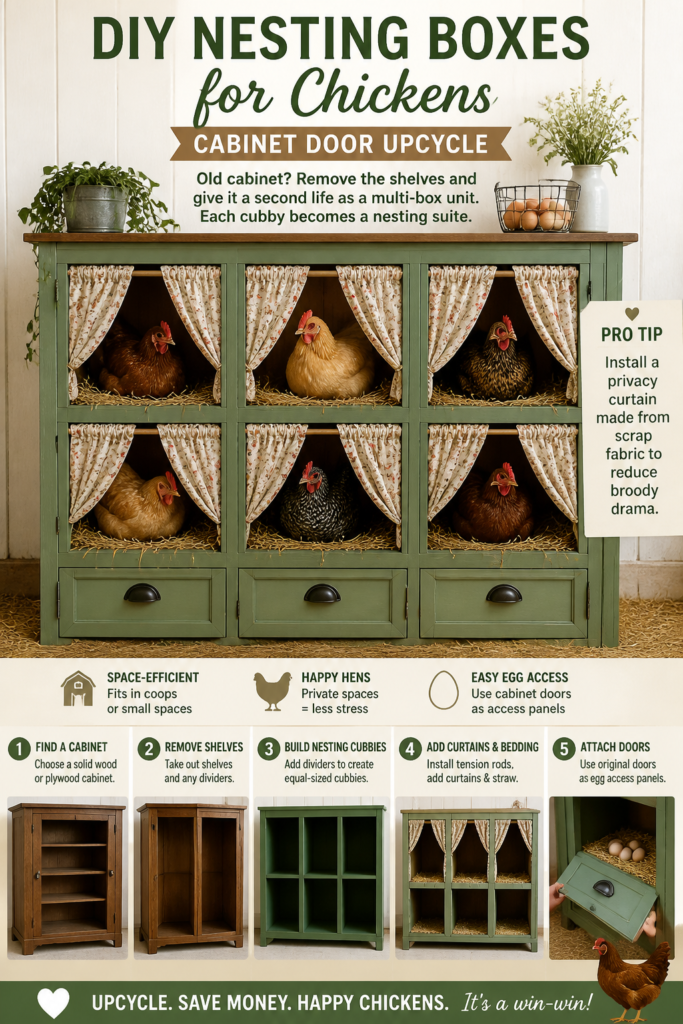
Pro tip: Install a privacy curtain made from scrap fabric to reduce broody drama.
It’s space-efficient and looks polished—plus, doors can become egg access panels.
6. PVC-Cornered Curtain Box
Build a simple plywood box and add a curved PVC pipe as a front perch. Hens hop, settle, lay, leave—no flapping chaos.
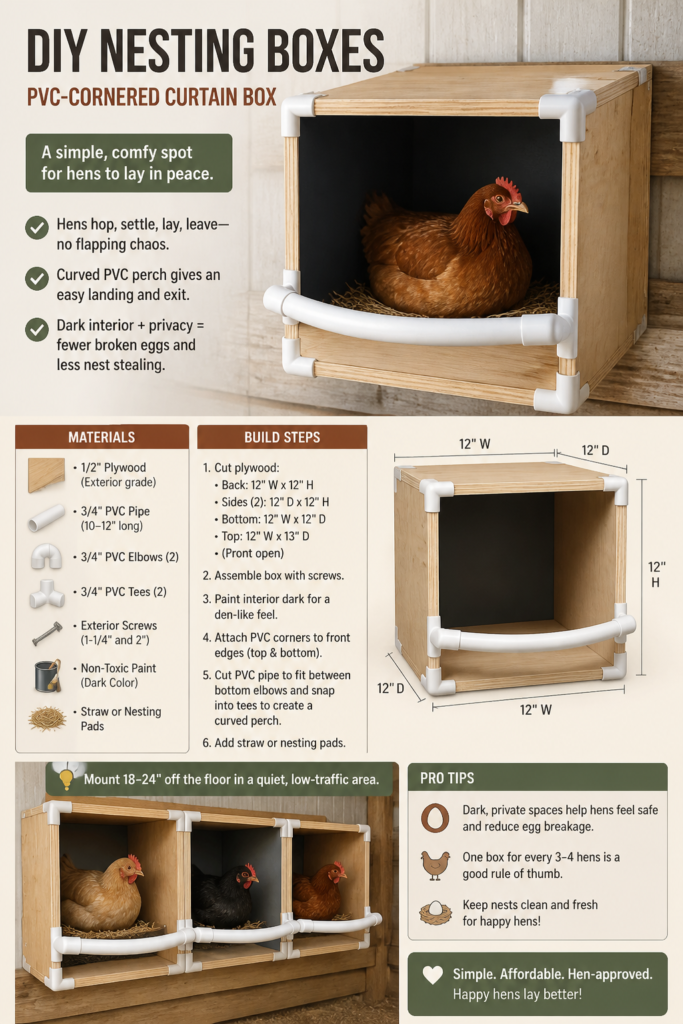
Pro tip: Paint the interior a darker shade to make it feel den-like.
Perch + privacy = fewer broken eggs and less nest stealing.
7. Metal Drum Slice
Cut a 55-gallon drum into thirds for industrial-strength nests. Sand edges and mount securely to studs.
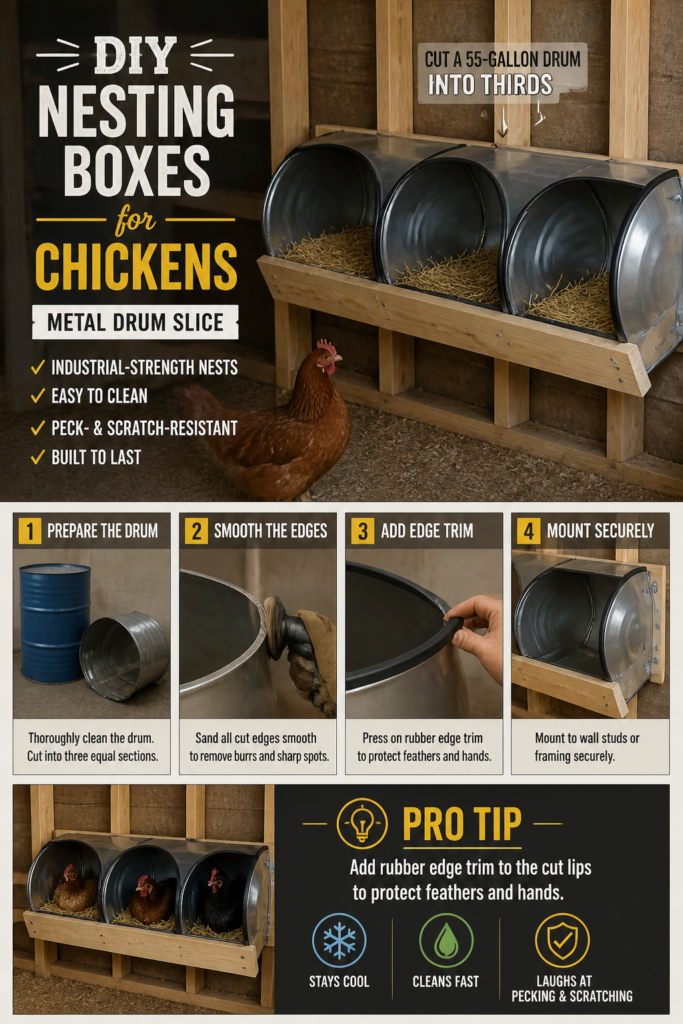
Pro tip: Add rubber edge trim to the cut lips to protect feathers and hands.
Metal stays cool, cleans fast, and laughs at pecking and scratching.
8. Pallet Wood Cubby Wall
Disassemble pallets and build modular cubbies. It’s rustic, inexpensive, and surprisingly sturdy when braced.
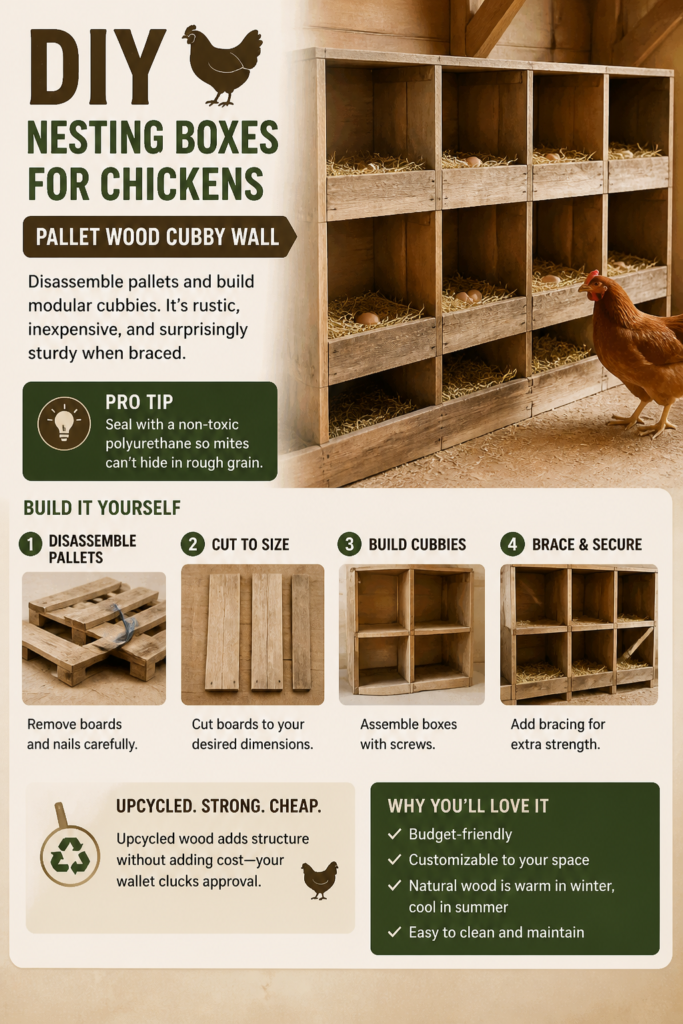
Pro tip: Seal with a non-toxic polyurethane so mites can’t hide in rough grain.
Upcycled wood adds structure without adding cost—your wallet clucks approval.
9. Cat Litter Box Conversion
A covered cat litter box is basically a ready-made nest with a lid. Swap litter for straw, and hens enjoy the privacy pod.
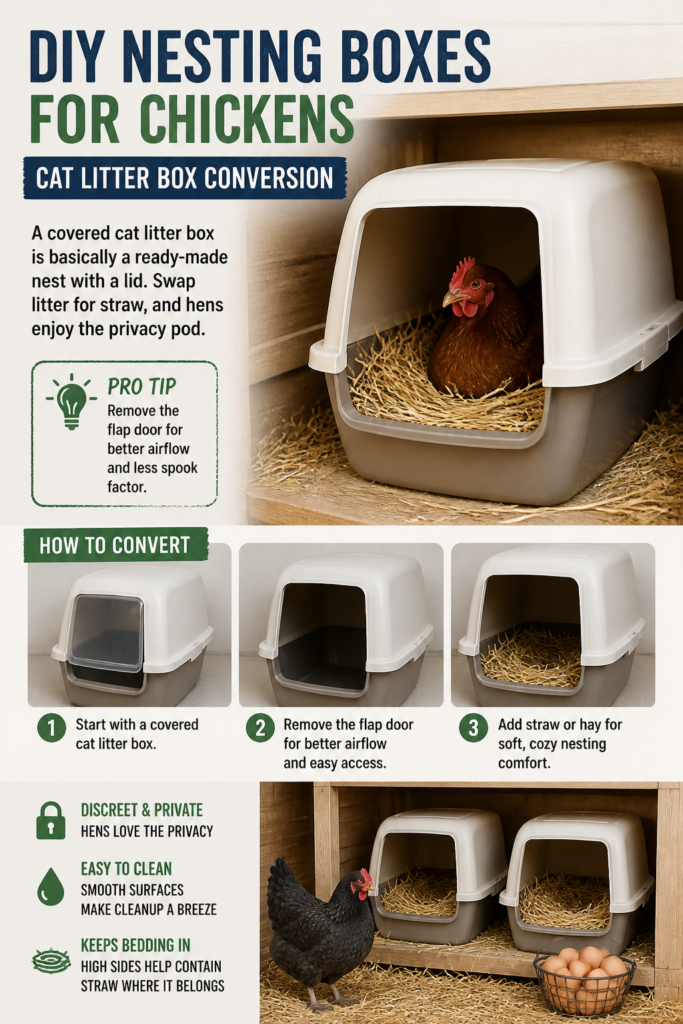
Pro tip: Remove the flap door for better airflow and less spook factor.
It’s discrete, easy to wash, and keeps bedding inside where it belongs.
10. Gutter Trough Row
Mount a wide vinyl gutter as a low, continuous nest for bantams or small breeds. Add dividers every 12 inches.
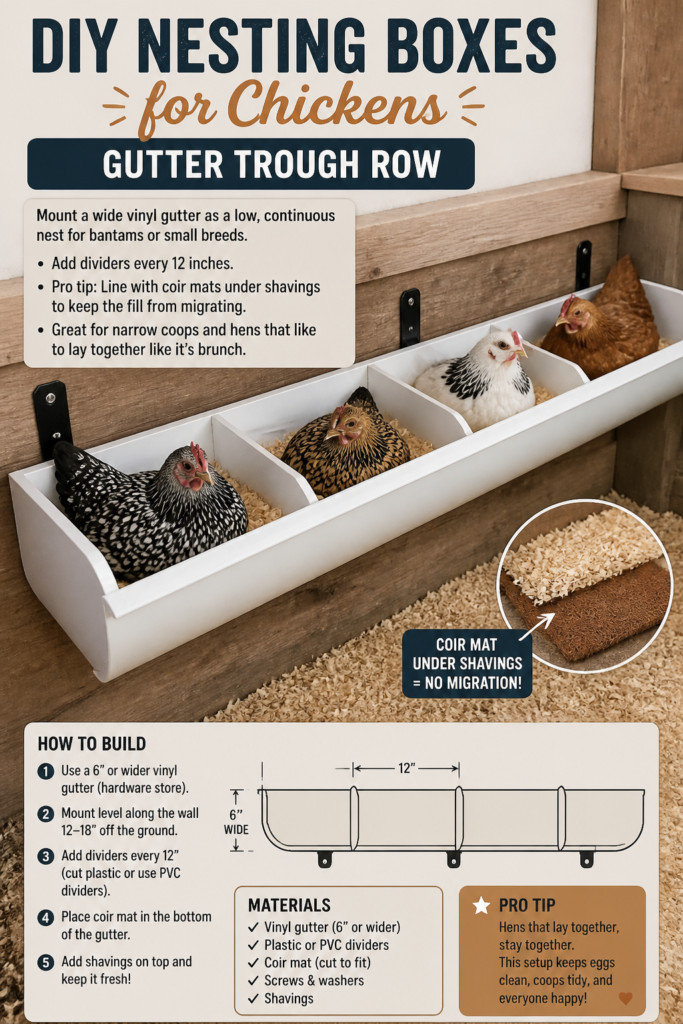
Pro tip: Line with coir mats under shavings to keep the fill from migrating.
Great for narrow coops and hens that like to lay together like it’s brunch.
11. Hinged Top Box With Egg Rail
Build a hinged-lid wooden box and add a 1-inch front rail to block roll-outs. Maintenance is a breeze with that top access.
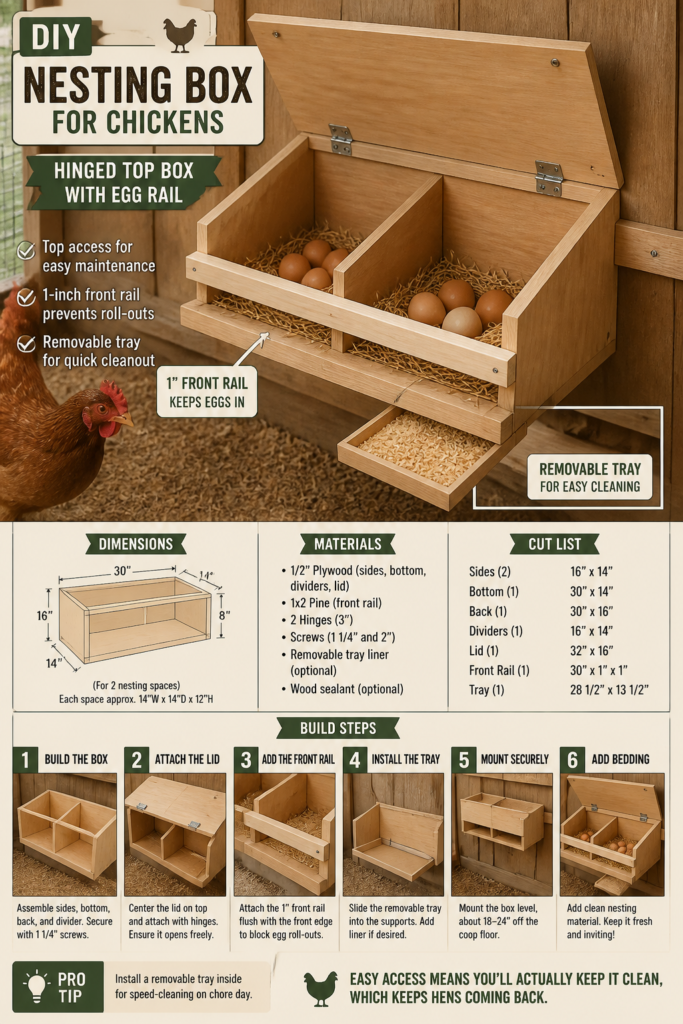
Pro tip: Install a removable tray inside for speed-cleaning on chore day.
Easy access means you’ll actually keep it clean, which keeps hens coming back.
12. Roll-Away Nest Insert
Create a slight 2-3 degree slope in a standard box so eggs roll into a covered catch. Fewer pecks, fewer cracks.
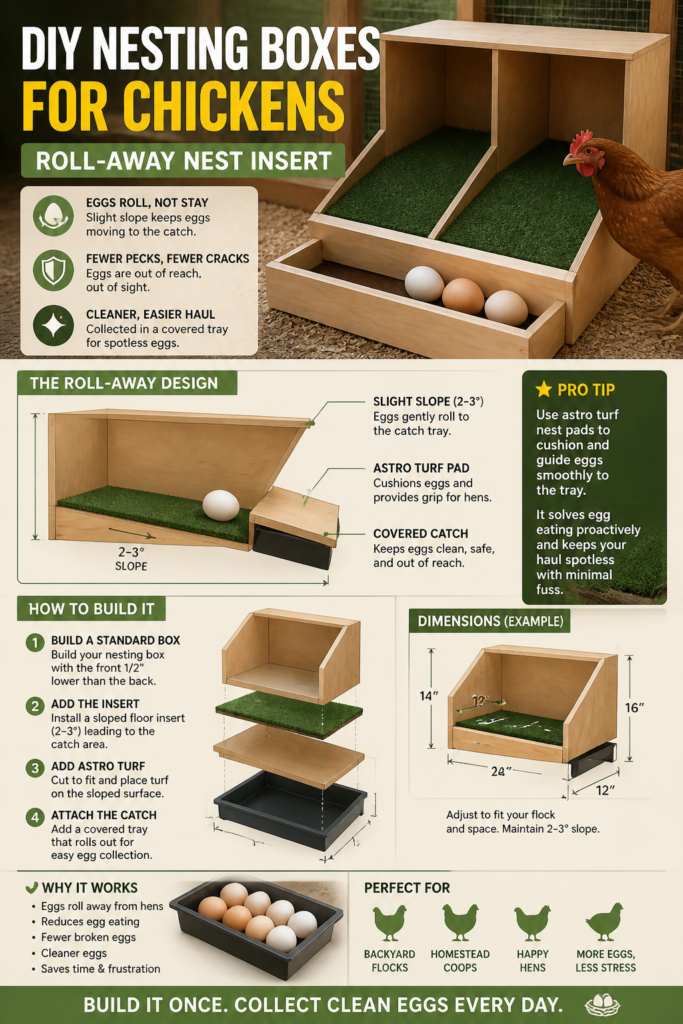
Pro tip: Use astro turf nest pads to cushion and guide eggs smoothly to the tray.
It solves egg eating proactively and keeps your haul spotless with minimal fuss.
Conclusion
Cozy nests mean calmer hens and cleaner eggs, period. Whether you upcycle a bucket or go full pallet project, the right design saves time and cracks. Build a few, watch the egg count rise, and accept your new title: Chief Nest Architect.
& CRAFT IDEAS
Beginner-friendly tutorials, creative projects,
and weekly inspiration in your inbox.