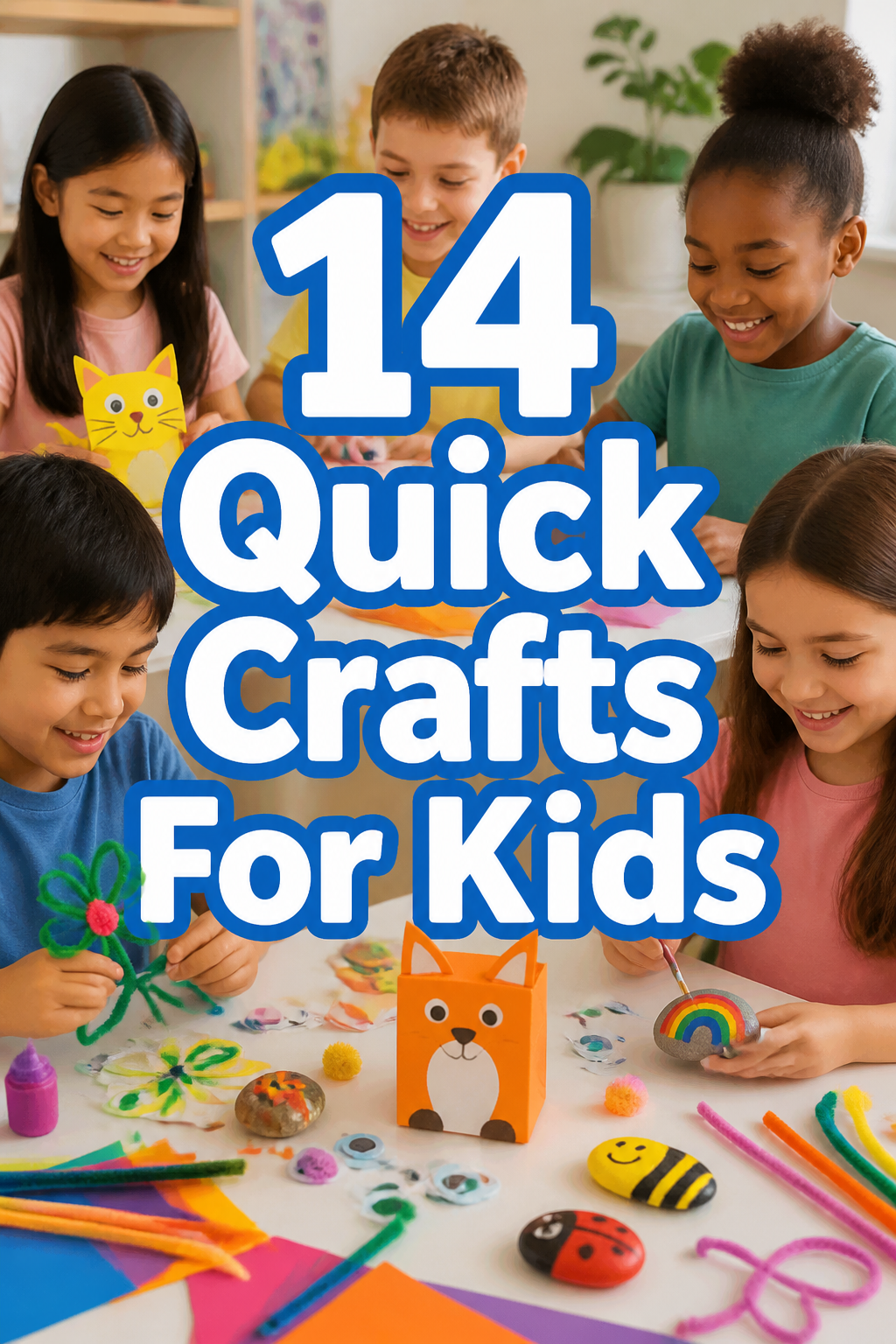
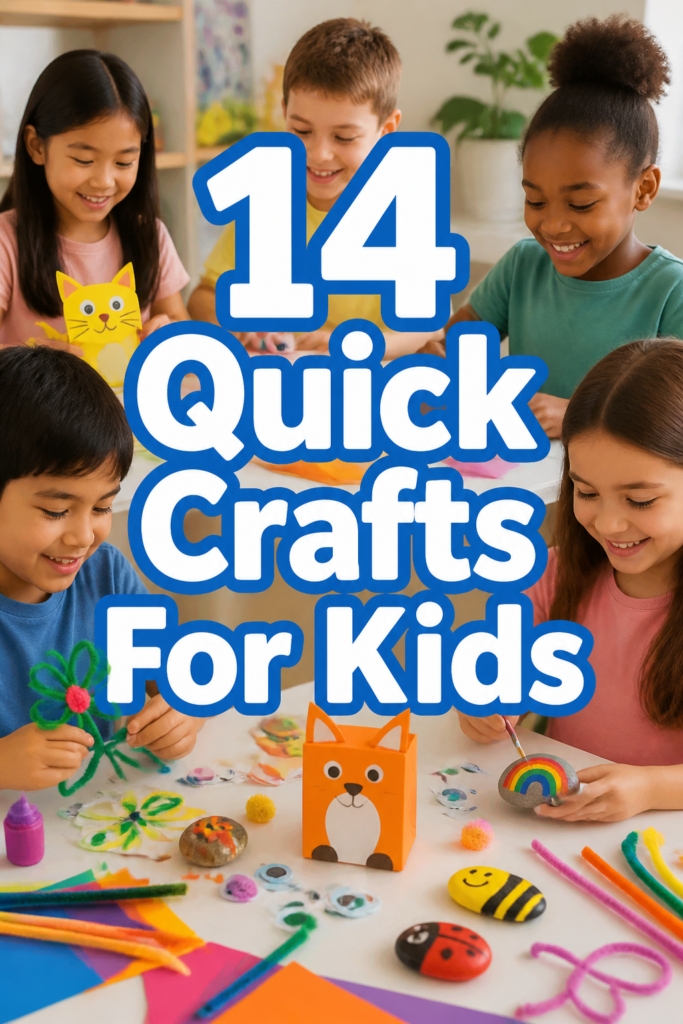
✨ 14 Quick Crafts For Kids
& CRAFT IDEAS
Beginner-friendly tutorials, creative projects,
and weekly inspiration in your inbox.
🛠️ The Ultimate Maker's Toolkit
I've tested thousands of craft tools over the years. Whether you are quilting, crafting, or building mixed-media art, these are the top 5 absolute non-negotiable tools I personally recommend to guarantee professional results.
🪡 SINGER Heavy Duty 4452 Sewing Machine
The sewing community highly recommends this as the ultimate "bulletproof" entry-level machine. Its heavy metal frame powerfully pushes through thick denim and heavy quilt layers that would instantly jam a standard plastic machine.
✂️ Fiskars 8" Orange-Handled Scissors
Never settle for dull dollar-store blades. Wirecutter repeatedly names Fiskars the absolute best all-purpose craft scissor due to its legendary precision-ground blades and an ergonomic grip that prevents hand-cramping.
🔥 Gorilla Dual Temp Hot Glue Gun
Named Wirecutter's top choice because it literally does the work of two tools. It features dual-temperature settings offering low heat for delicate florals and blistering high heat for heavy wood adhesion repairs.
🖌️ Mod Podge Waterbase Gloss Sealer
The absolute undisputed champion of decoupage and paper crafts. Experts rely exclusively on this exact water-based formula because it glues, seals, and finishes beautifully without yellowing or flaking over time.
🎨 Apple Barrel Acrylic Paint (2 oz)
The quintessential, incredibly inexpensive craft paint. Woodworkers and hobby painters swear by its smooth flow and matte finish, providing massive value and remarkably thick color coverage on rough surfaces.
Okay, real talk. Your little humans are probably bouncing off the walls right now, right?
Screen time is hitting peak levels, and you’re dreaming of five minutes of quiet that doesn’t involve a cartoon theme song.
Good news! We’ve rounded up some seriously simple craft ideas that are quick, fun, and won’t require a fine arts degree or a specialty store run.
1. Toilet Paper Roll Animals
- Best For: Toddlers to early elementary, rainy afternoons.
- Vibe: Whimsical, upcycled fun.
- Why it works: Uses common household items for creative play.
Grab those empty toilet paper rolls. They’re basically tiny canvases waiting for transformation.
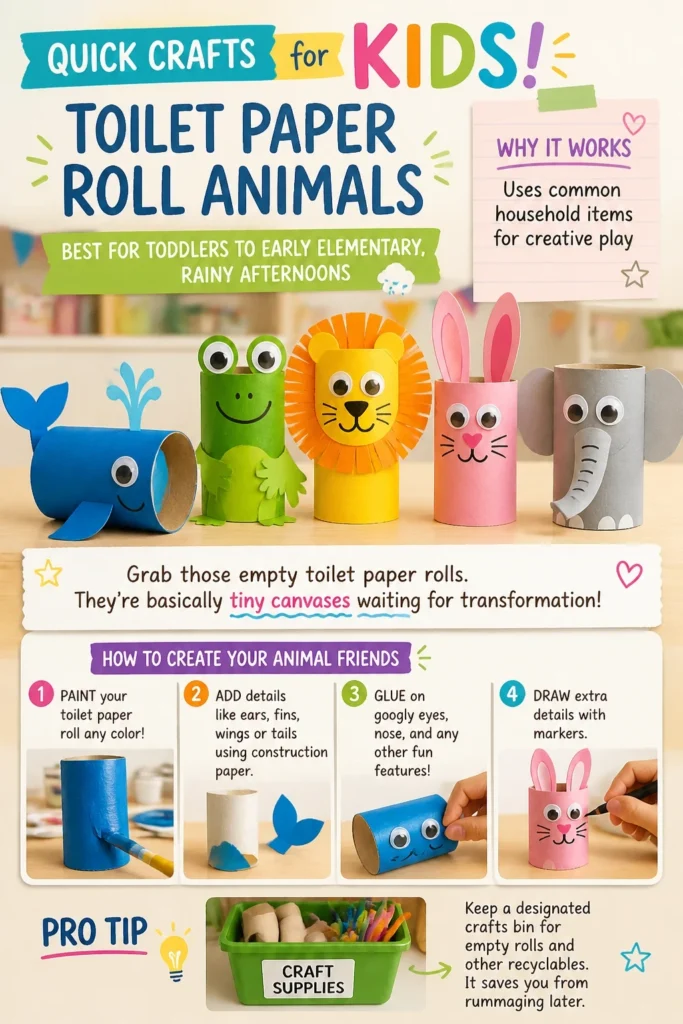
Kids can paint them bright blue for a whale or green for a frog.
Add some construction paper ears or googly eyes, and suddenly you have a whole zoo.
Pro Tip: Keep a designated “crafts” bin for empty rolls and other recyclables. It saves you from rummaging later.
2. Rock Painting
- Best For: All ages, outdoor adventurers.
- Vibe: Earthy, artistic expression.
- Why it works: Connects kids with nature and art effortlessly.
Find some smooth, flat rocks on your next walk. Clean them up, then let the kids go wild with acrylic paints.
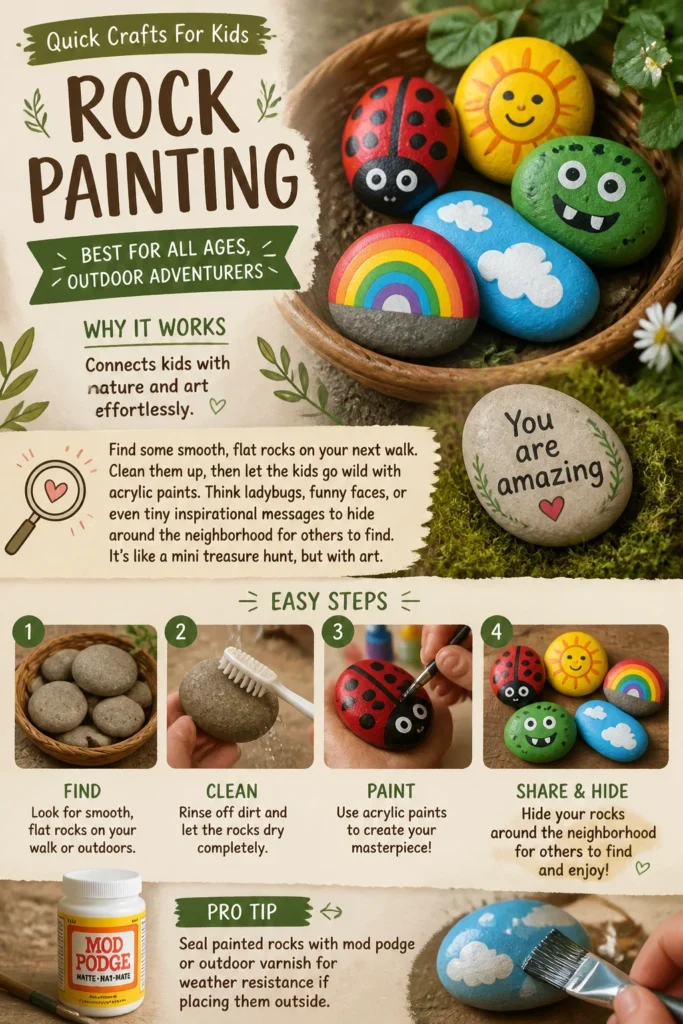
Think ladybugs, funny faces, or even tiny inspirational messages to hide around the neighborhood for others to find.
It’s like a mini treasure hunt, but with art.
Pro Tip: Seal painted rocks with mod podge or outdoor varnish for weather resistance if placing them outside.
3. Pasta Necklaces
- Best For: Fine motor skill development, preschool to elementary.
- Vibe: Colorful, wearable art.
- Why it works: Simple materials yield a fun, tangible result.
Dye uncooked pasta (like penne or rigatoni) with a few drops of food coloring and rubbing alcohol in ziplock bags.
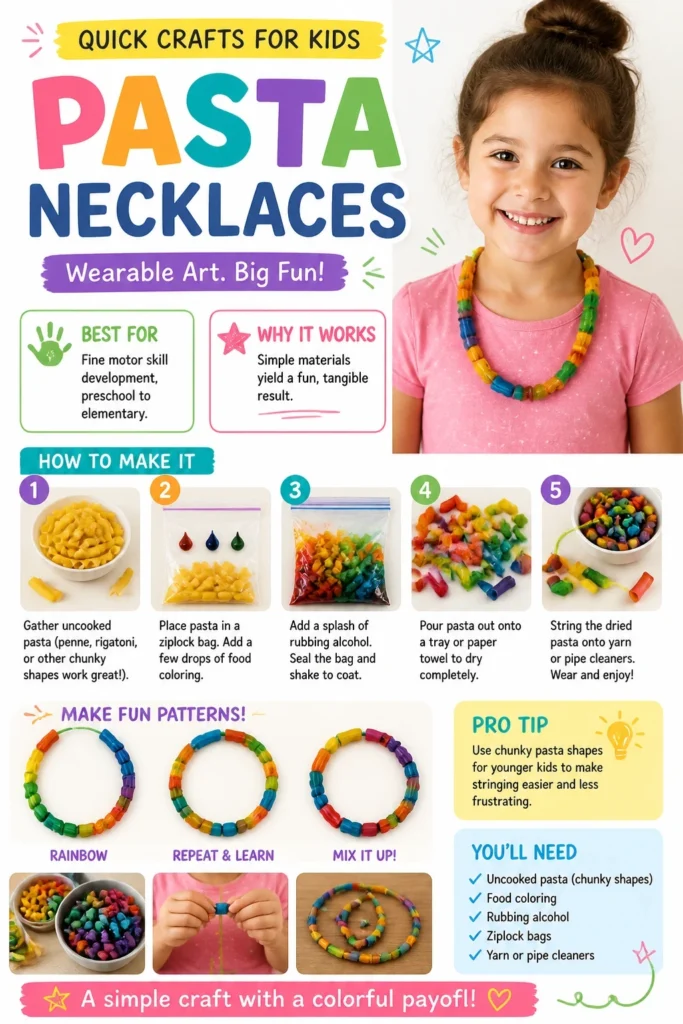
Let it dry, then string them onto yarn or pipe cleaners.
It’s a fantastic way to practice patterns and coordination, plus they get a snazzy accessory.
Pro Tip: Use chunky pasta shapes for younger kids to make stringing easier and less frustrating.
4. DIY Playdough
- Best For: Sensory play, all ages.
- Vibe: Squishy, imaginative.
- Why it works: Provides hours of tactile, open-ended play.
Whip up a batch of homemade playdough with flour, salt, water, and cream of tartar.
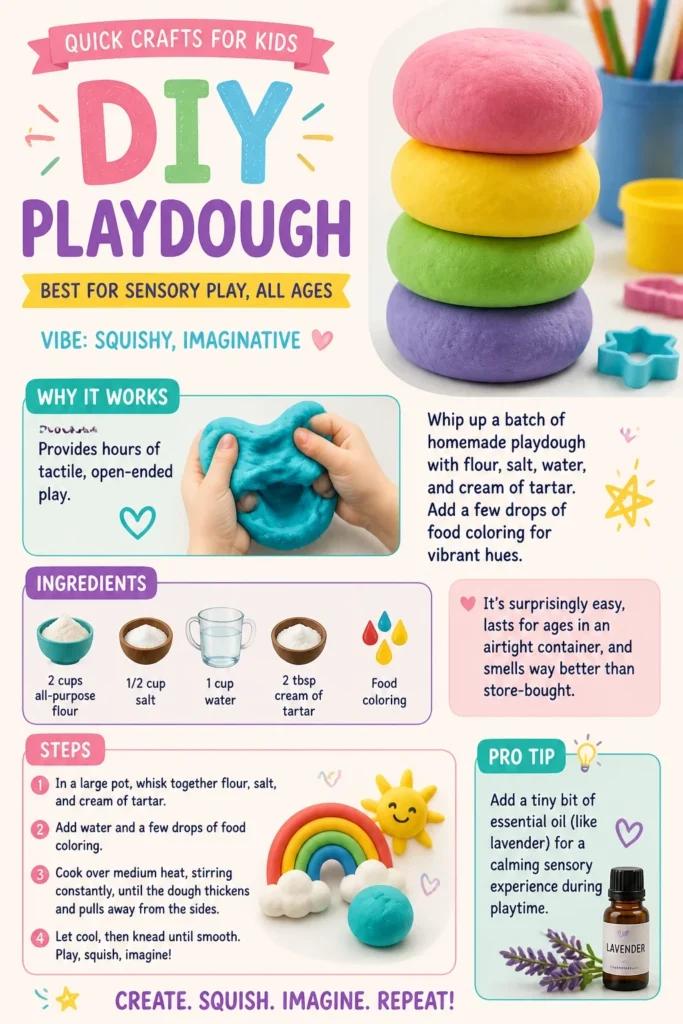
Add a few drops of food coloring for vibrant hues.
It’s surprisingly easy, lasts for ages in an airtight container, and smells way better than store-bought.
Pro Tip: Add a tiny bit of essential oil (like lavender) for a calming sensory experience during playtime.
5. Paper Plate Masks
- Best For: Imaginative play, dress-up fans.
- Vibe: Transformative, theatrical.
- Why it works: Encourages role-playing and creativity with minimal supplies.
Grab some plain paper plates. Cut out eye holes, then let kids decorate them with markers, crayons, glitter, or even yarn for hair.
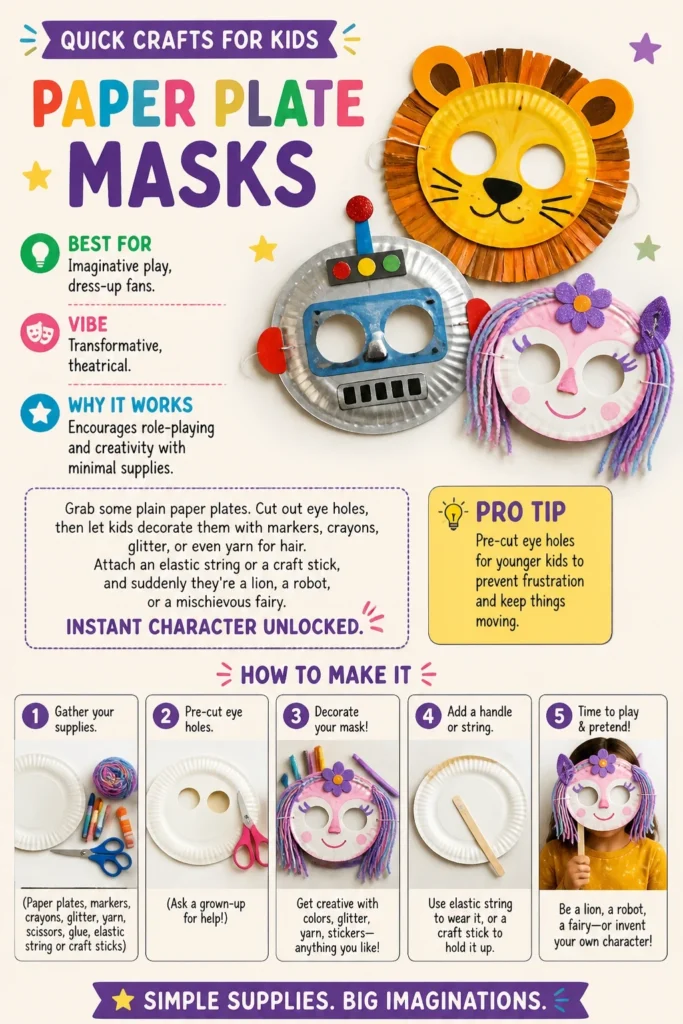
Attach an elastic string or a craft stick, and suddenly they’re a lion, a robot, or a mischievous fairy.
Instant character unlocked.
Pro Tip: Pre-cut eye holes for younger kids to prevent frustration and keep things moving.
6. Cotton Ball Clouds
- Best For: Younger kids, learning about weather.
- Vibe: Fluffy, dreamy.
- Why it works: Simple, visually appealing, and calming to create.
Draw a simple sky scene on blue construction paper. Then, have kids glue cotton balls onto the paper to create soft, puffy clouds.
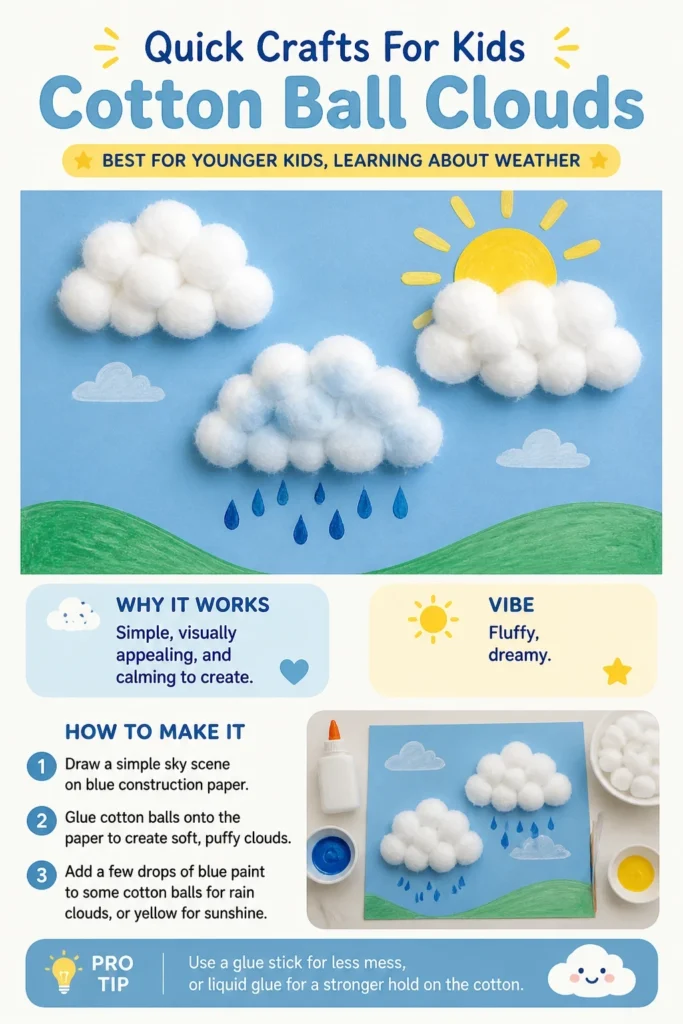
Add a few drops of blue paint to some cotton balls for rain clouds, or yellow for sunshine.
It’s basically weather forecasting, but cuter.
Pro Tip: Use a glue stick for less mess, or liquid glue for a stronger hold on the cotton.
7. Pipe Cleaner Creatures
- Best For: Dexterity, imaginative storytelling.
- Vibe: Bendy, quirky.
- Why it works: Extremely versatile material for 3D creations.
A pack of colorful pipe cleaners and a bag of googly eyes are all you need.
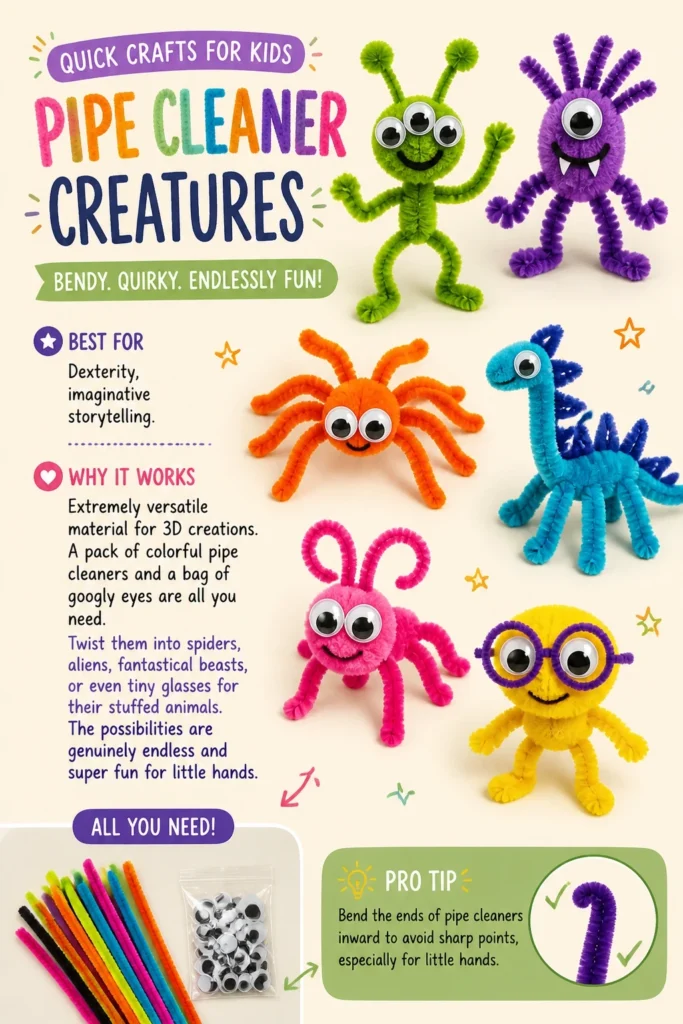
Twist them into spiders, aliens, fantastical beasts, or even tiny glasses for their stuffed animals.
The possibilities are genuinely endless and super fun for little hands.
Pro Tip: Bend the ends of pipe cleaners inward to avoid sharp points, especially for little hands.
8. Leaf Rubbings
- Best For: Nature exploration, texture discovery.
- Vibe: Natural, artistic.
- Why it works: A simple way to capture the beauty of nature.
Go on a nature walk to collect interesting leaves with prominent veins.
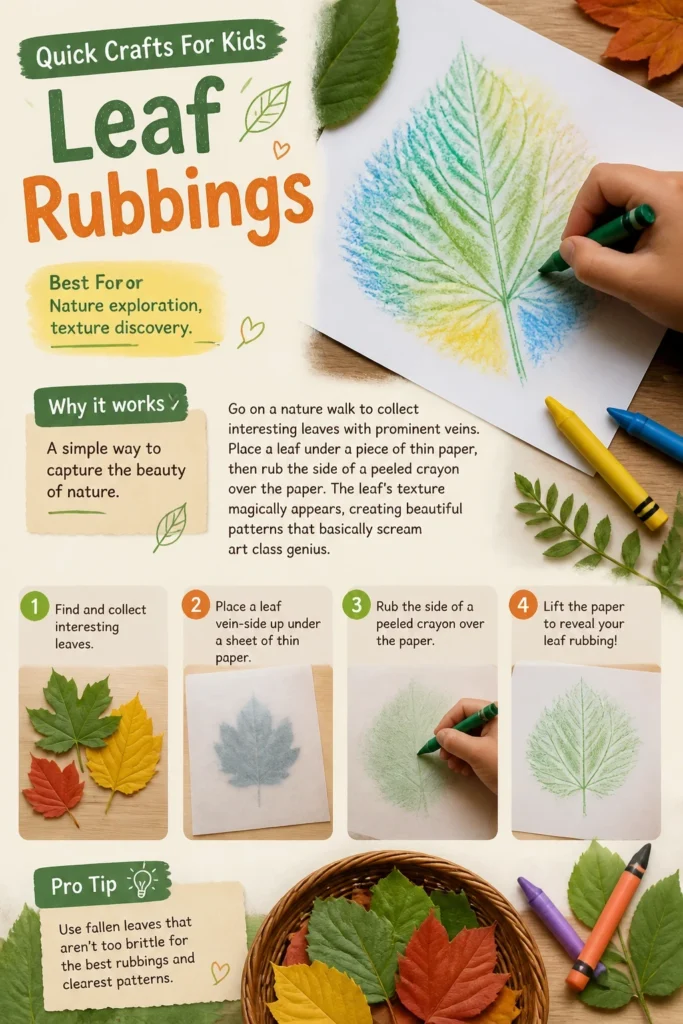
Place a leaf under a piece of thin paper, then rub the side of a peeled crayon over the paper.
The leaf’s texture magically appears, creating beautiful patterns that basically scream “art class genius.”
Pro Tip: Use fallen leaves that aren’t too brittle for the best rubbings and clearest patterns.
9. Coffee Filter Butterflies
- Best For: Color mixing, delicate art.
- Vibe: Ethereal, vibrant.
- Why it works: Creates beautiful, unique patterns with simple tools.
Kids color plain coffee filters with washable markers.
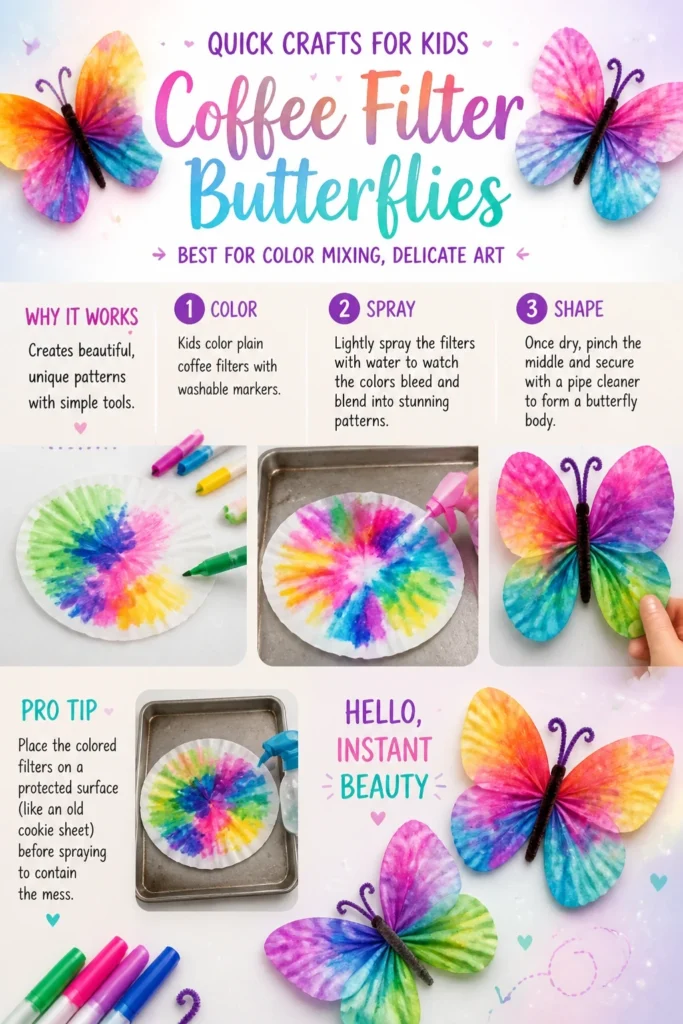
Lightly spray the filters with water to watch the colors bleed and blend into stunning patterns.
Once dry, pinch the middle and secure with a pipe cleaner to form a butterfly body. Hello, instant beauty.
Pro Tip: Place the colored filters on a protected surface (like an old cookie sheet) before spraying to contain the mess.
10. Pom-Pom Monsters
- Best For: Sensory exploration, character creation.
- Vibe: Fuzzy, silly.
- Why it works: Easy to assemble and encourages imaginative play.
Grab a bag of assorted pom-poms (the bigger, the better for tiny hands).
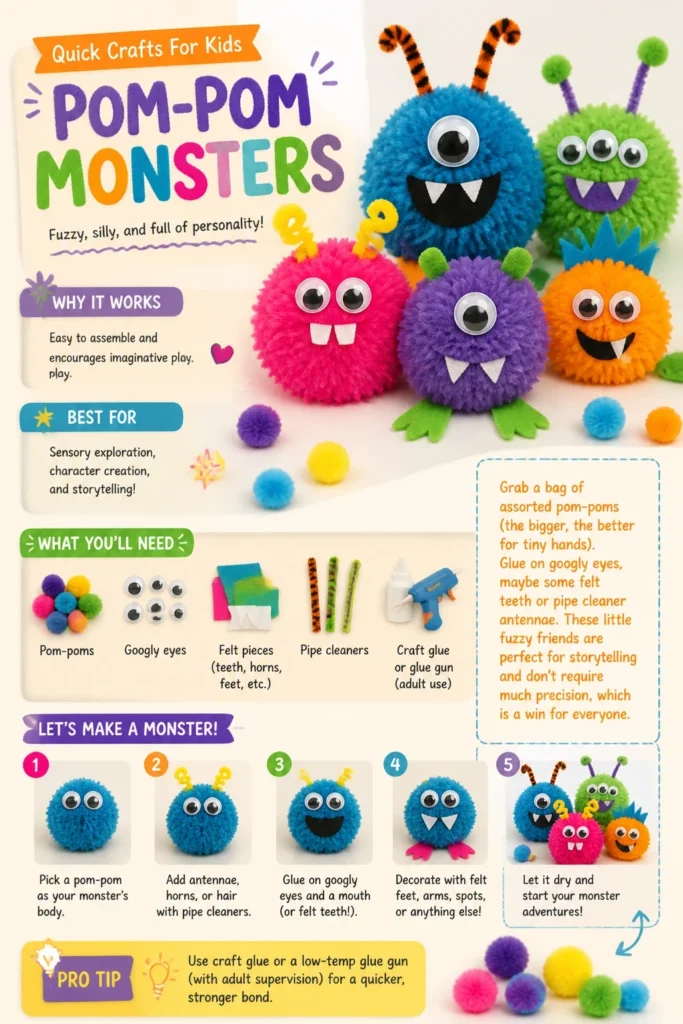
Glue on googly eyes, maybe some felt teeth or pipe cleaner antennae.
These little fuzzy friends are perfect for storytelling and don’t require much precision, which is a win for everyone.
Pro Tip: Use craft glue or a low-temp glue gun (with adult supervision) for a quicker, stronger bond.
11. Sponge Painting
- Best For: Toddlers, abstract art.
- Vibe: Textured, expressive.
- Why it works: Offers a different tactile painting experience.
Cut kitchen sponges into fun shapes like stars, hearts, or squares.
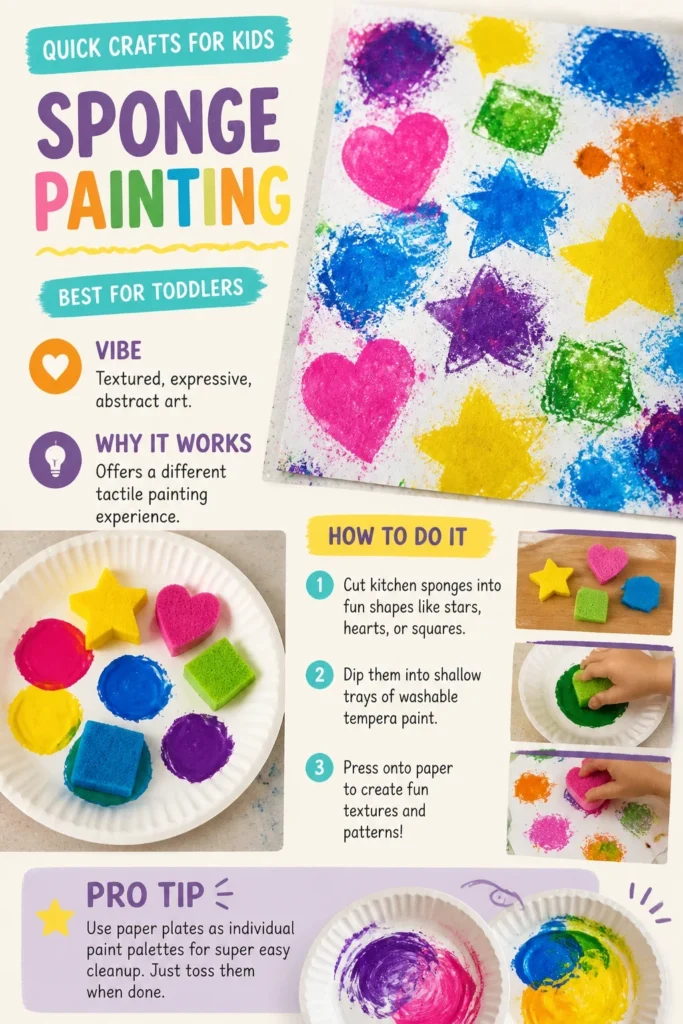
Dip them into shallow trays of washable tempera paint and press onto paper.
It’s a fantastic way to explore textures and patterns without needing a paintbrush, and the cleanup is surprisingly minimal.
Pro Tip: Use paper plates as individual paint palettes for super easy cleanup. Just toss them when done.
12. Cereal Box Robots
- Best For: Older kids, engineering basics.
- Vibe: Futuristic, recycled.
- Why it works: Transforms everyday recycling into a cool toy.
Save those empty cereal boxes and other small cardboard containers.
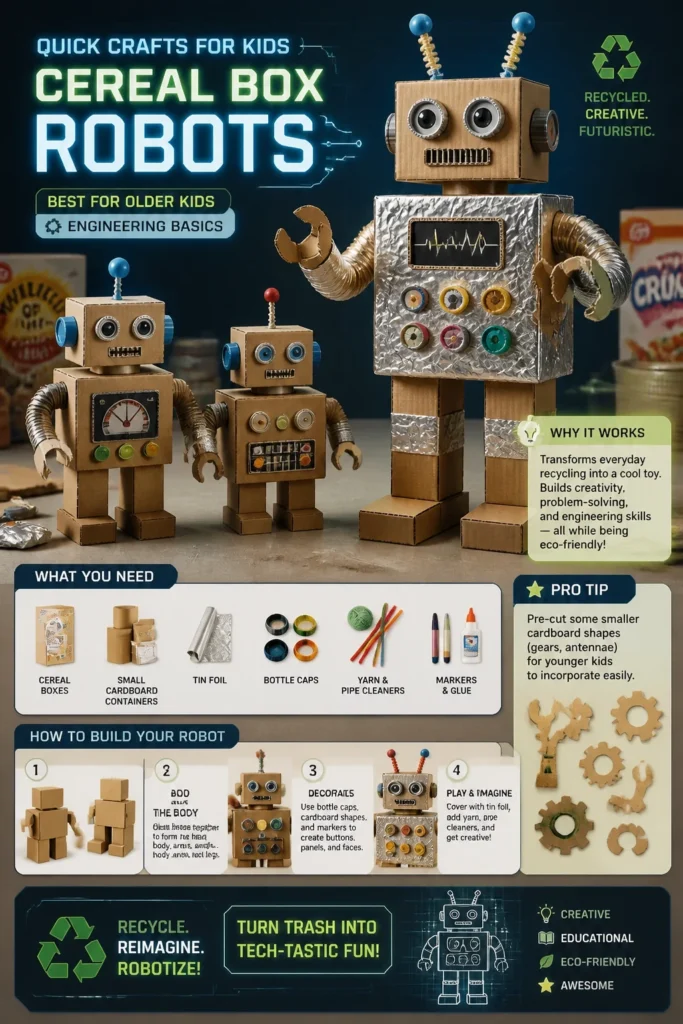
Kids can glue them together to form robot bodies, then decorate with tin foil, bottle caps, yarn, and markers.
It’s like building blocks, but way cooler and eco-friendly.
Pro Tip: Pre-cut some smaller cardboard shapes (gears, antennae) for younger kids to incorporate easily.
13. Fingerprint Art
- Best For: Babies to elementary, personal touch.
- Vibe: Unique, sentimental.
- Why it works: Everyone can participate, creating personalized art.
A simple ink pad or some washable paint is all you need.
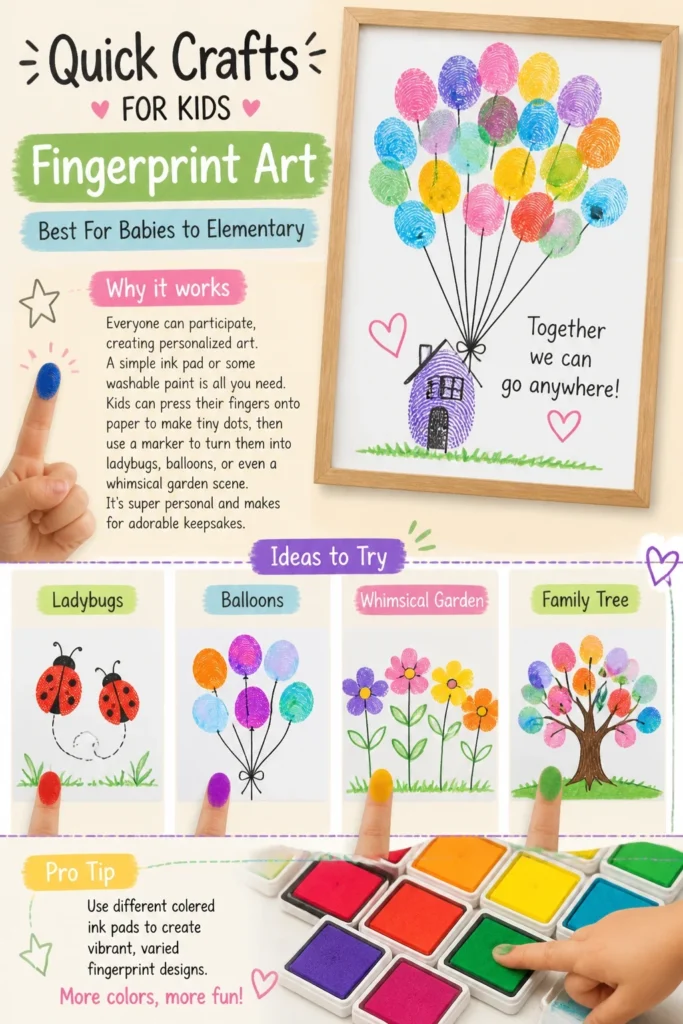
Kids can press their fingers onto paper to make tiny dots, then use a marker to turn them into ladybugs, balloons, or even a whimsical garden scene.
It’s super personal and makes for adorable keepsakes.
Pro Tip: Use different colored ink pads to create vibrant, varied fingerprint designs. More colors, more fun.
14. Nature Collages
- Best For: Outdoor lovers, sensory exploration.
- Vibe: Organic, earthy.
- Why it works: Encourages observation and appreciation for nature.
After a walk, gather small treasures like interesting leaves, tiny pebbles, twigs, and fallen petals.
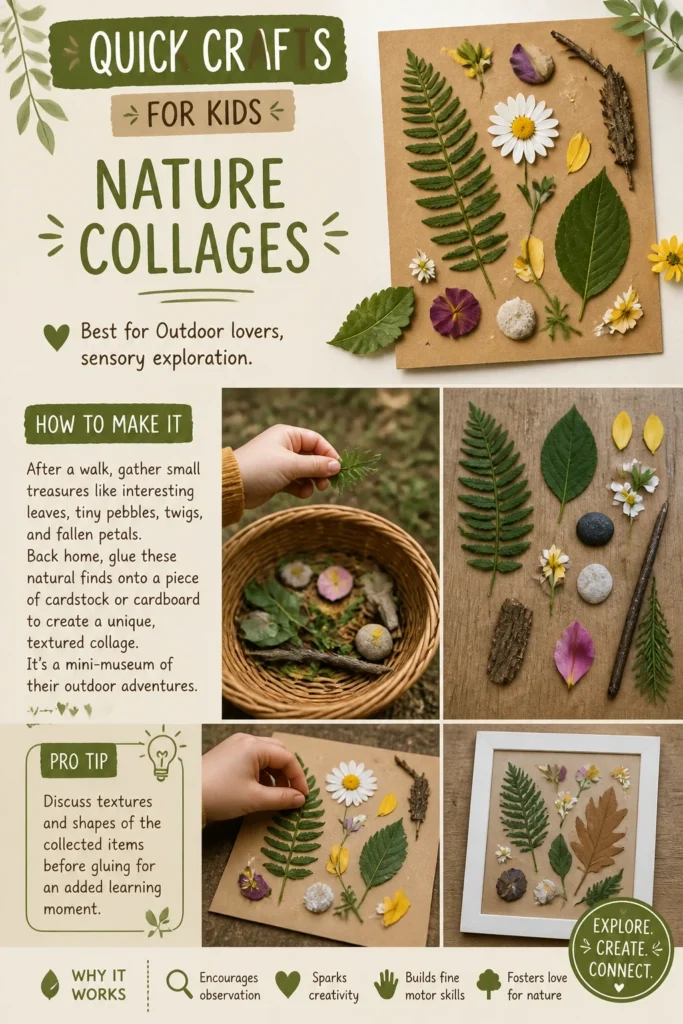
Back home, glue these natural finds onto a piece of cardstock or cardboard to create a unique, textured collage.
It’s a mini-museum of their outdoor adventures.
Pro Tip: Discuss textures and shapes of the collected items before gluing for an added learning moment.
Our Top Recommended Finds
- Washable Tempera Paint Set: Absolutely essential for most projects. It cleans up like a dream, which is pretty much the holy grail of kid crafts.
- Bulk Pack of Googly Eyes: These turn anything into a character. Seriously, a rock with googly eyes is instantly hilarious.
- Assorted Pipe Cleaners: Incredibly versatile for 3D crafting, fine motor skills, and twisting into impromptu glasses for stuffed animals.
Which of these will you try first?
See? No need to stress about elaborate setups or a massive craft budget. These ideas are all about sparking joy and creativity with what you’ve got.
So, which quick craft are you tackling first with your mini-makers? Let us know in the comments below!
& CRAFT IDEAS
Beginner-friendly tutorials, creative projects,
and weekly inspiration in your inbox.