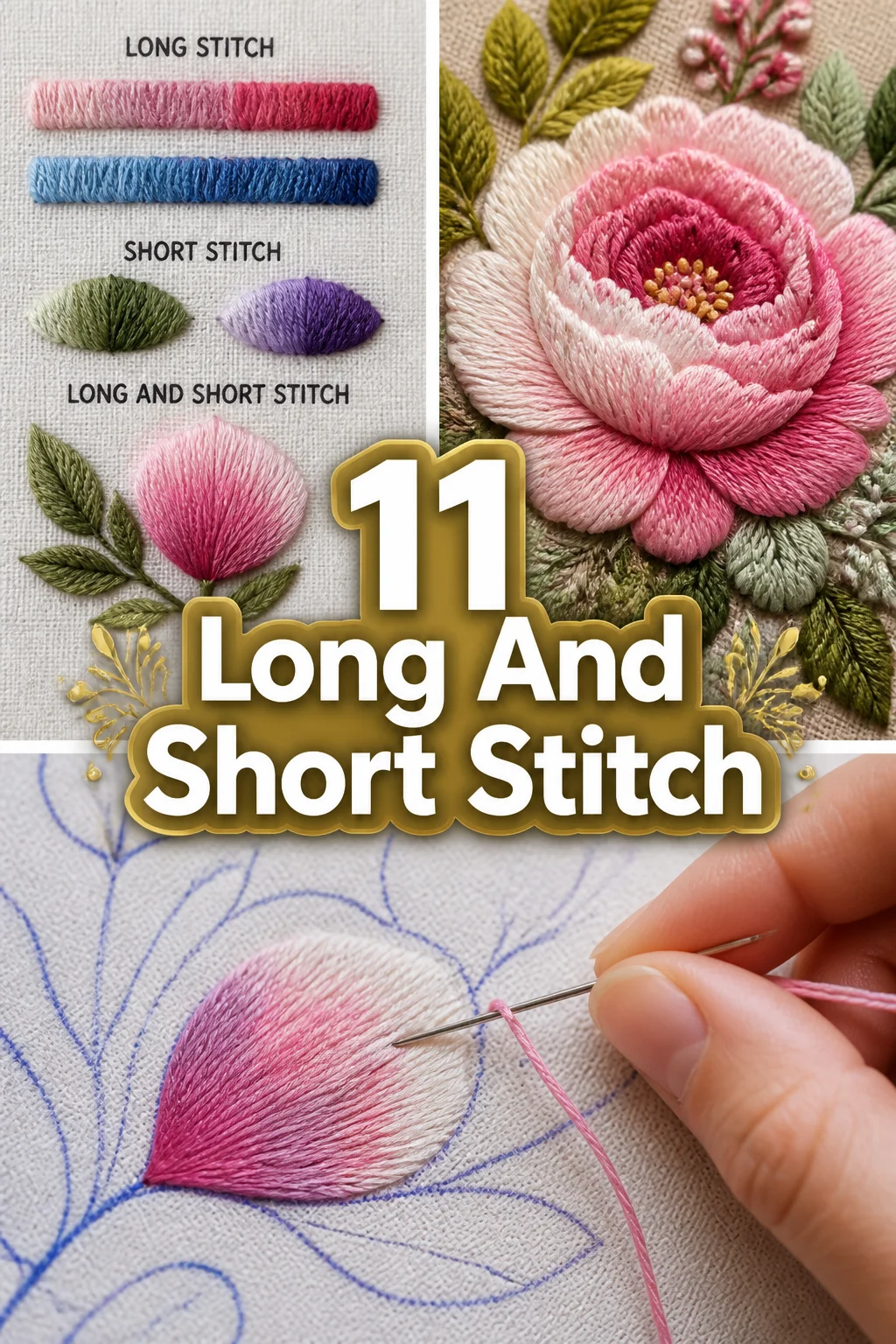
🧵 11 Long And Short Stitch
& CRAFT IDEAS
Beginner-friendly tutorials, creative projects,
and weekly inspiration in your inbox.
🛠️ The Ultimate Maker's Toolkit
I've tested thousands of craft tools over the years. Whether you are quilting, crafting, or building mixed-media art, these are the top 5 absolute non-negotiable tools I personally recommend to guarantee professional results.
🪡 SINGER Heavy Duty 4452 Sewing Machine
The sewing community highly recommends this as the ultimate "bulletproof" entry-level machine. Its heavy metal frame powerfully pushes through thick denim and heavy quilt layers that would instantly jam a standard plastic machine.
✂️ Fiskars 8" Orange-Handled Scissors
Never settle for dull dollar-store blades. Wirecutter repeatedly names Fiskars the absolute best all-purpose craft scissor due to its legendary precision-ground blades and an ergonomic grip that prevents hand-cramping.
🔥 Gorilla Dual Temp Hot Glue Gun
Named Wirecutter's top choice because it literally does the work of two tools. It features dual-temperature settings offering low heat for delicate florals and blistering high heat for heavy wood adhesion repairs.
🖌️ Mod Podge Waterbase Gloss Sealer
The absolute undisputed champion of decoupage and paper crafts. Experts rely exclusively on this exact water-based formula because it glues, seals, and finishes beautifully without yellowing or flaking over time.
🎨 Apple Barrel Acrylic Paint (2 oz)
The quintessential, incredibly inexpensive craft paint. Woodworkers and hobby painters swear by its smooth flow and matte finish, providing massive value and remarkably thick color coverage on rough surfaces.
So you want your embroidery to look like a painting instead of a preschool project. Enter the long and short stitch, the ultimate secret weapon for anyone who hates flat, boring fills. It is basically the Photoshop gradient tool of the needlework world, but with way more soul and significantly fewer software crashes. Grab your hoop and let’s make some magic happen.
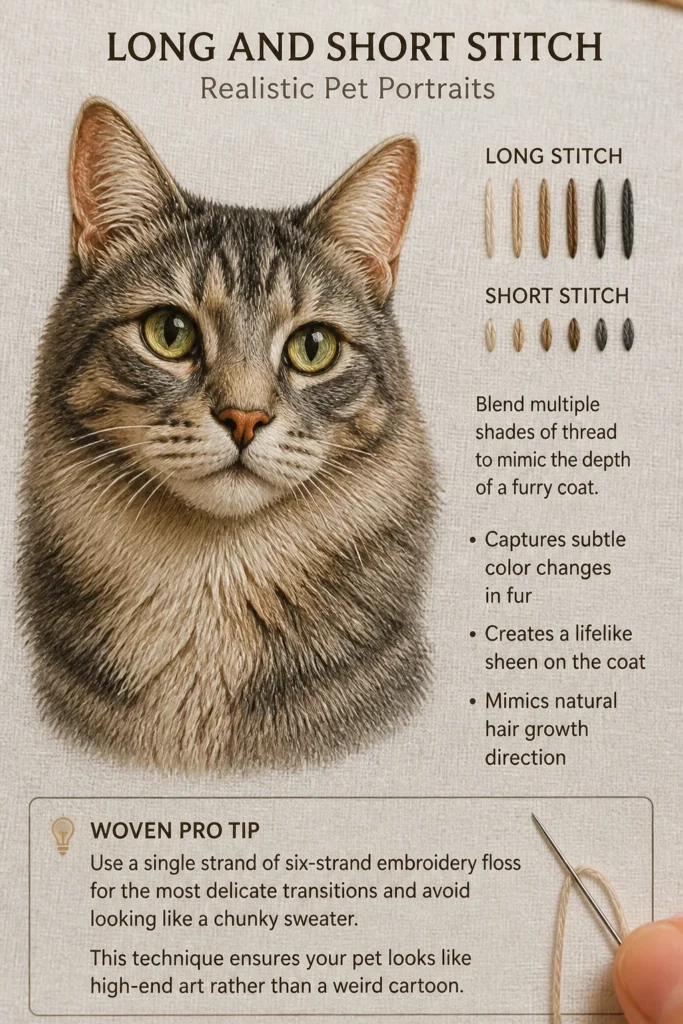
1. Realistic Pet Portraits
Your cat deserves better than a crude outline that looks like a potato. Use this stitch to blend multiple shades of thread to mimic the depth of a furry coat.
- Captures subtle color changes in fur
- Creates a lifelike sheen on the coat
- Mimics natural hair growth direction
Woven pro tip: Use a single strand of six-strand embroidery floss for the most delicate transitions and avoid looking like a chunky sweater. This technique ensures your pet looks like high-end art rather than a weird cartoon.
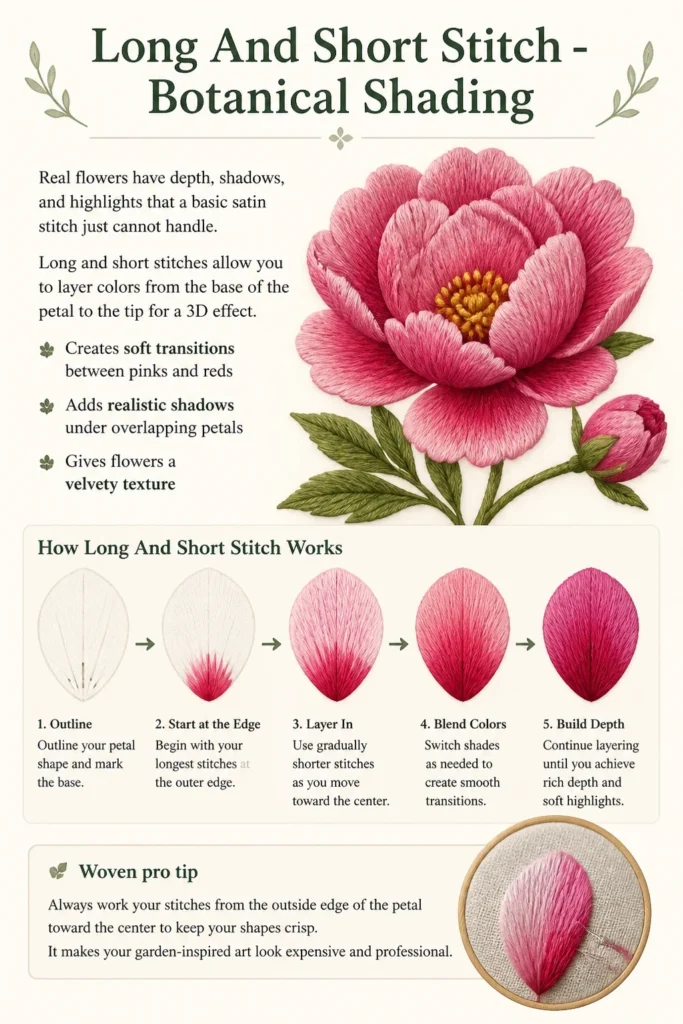
2. Botanical Shading
Real flowers have depth, shadows, and highlights that a basic satin stitch just cannot handle. Long and short stitches allow you to layer colors from the base of the petal to the tip for a 3D effect.
- Creates soft transitions between pinks and reds
- Adds realistic shadows under overlapping petals
- Gives flowers a velvety texture
Woven pro tip: Always work your stitches from the outside edge of the petal toward the center to keep your shapes crisp. It makes your garden-inspired art look expensive and professional.
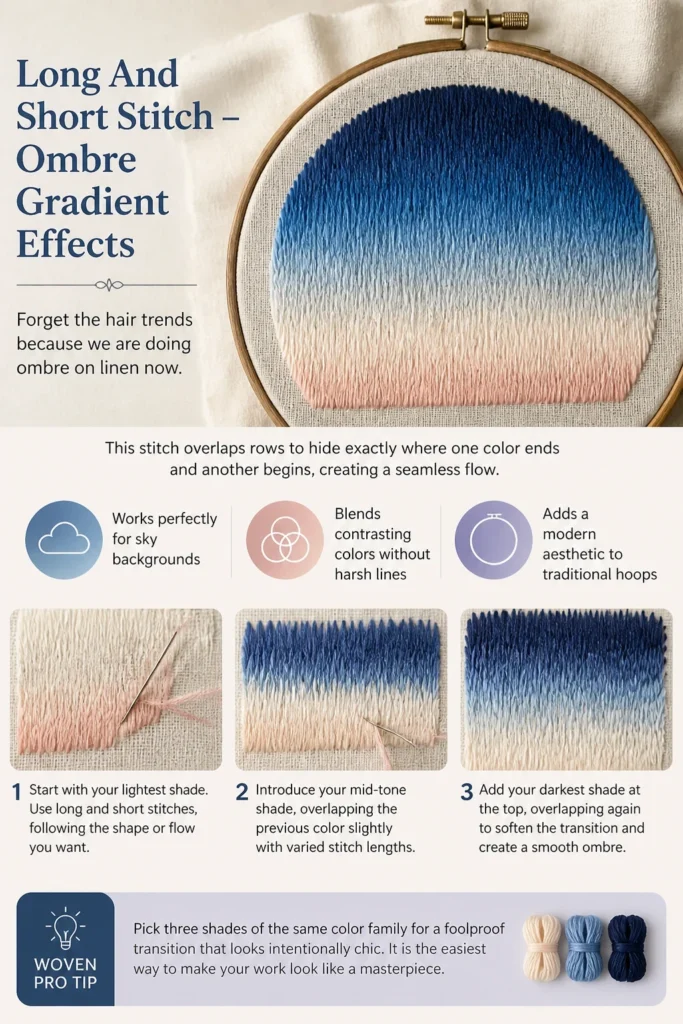
3. Ombre Gradient Effects
Forget the hair trends because we are doing ombre on linen now. This stitch overlaps rows to hide exactly where one color ends and another begins, creating a seamless flow.
- Works perfectly for sky backgrounds
- Blends contrasting colors without harsh lines
- Adds a modern aesthetic to traditional hoops
Woven pro tip: Pick three shades of the same color family for a foolproof transition that looks intentionally chic. It is the easiest way to make your work look like a masterpiece.
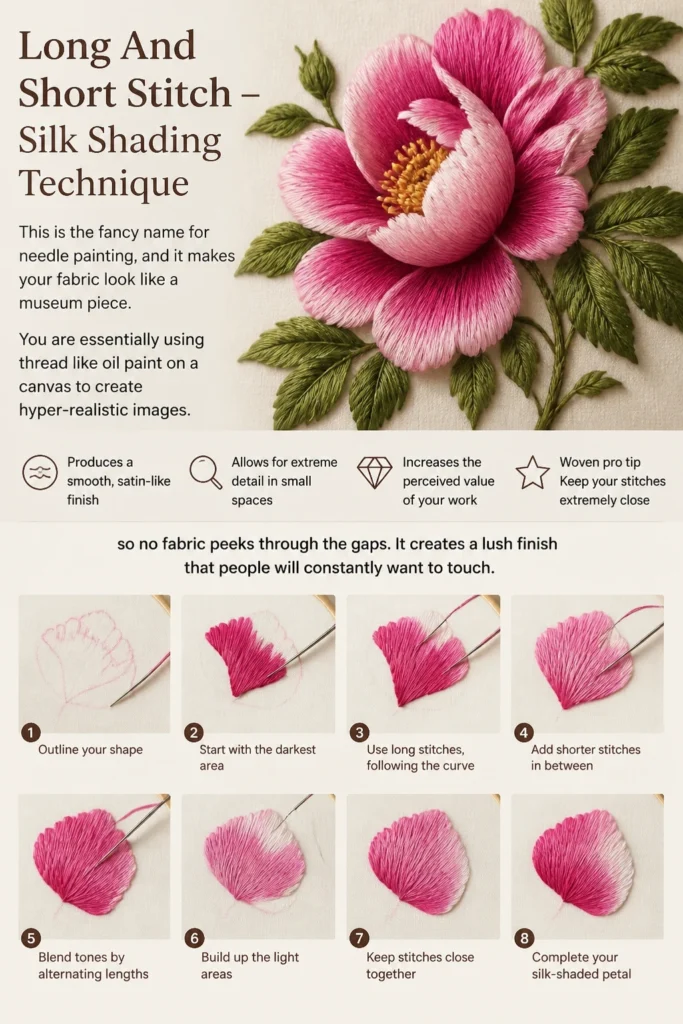
4. Silk Shading Technique
This is the fancy name for needle painting, and it makes your fabric look like a museum piece. You are essentially using thread like oil paint on a canvas to create hyper-realistic images.
- Produces a smooth, satin-like finish
- Allows for extreme detail in small spaces
- Increases the perceived value of your work
Woven pro tip: Keep your stitches extremely close together so no fabric peeks through the gaps. It creates a lush finish that people will constantly want to touch.
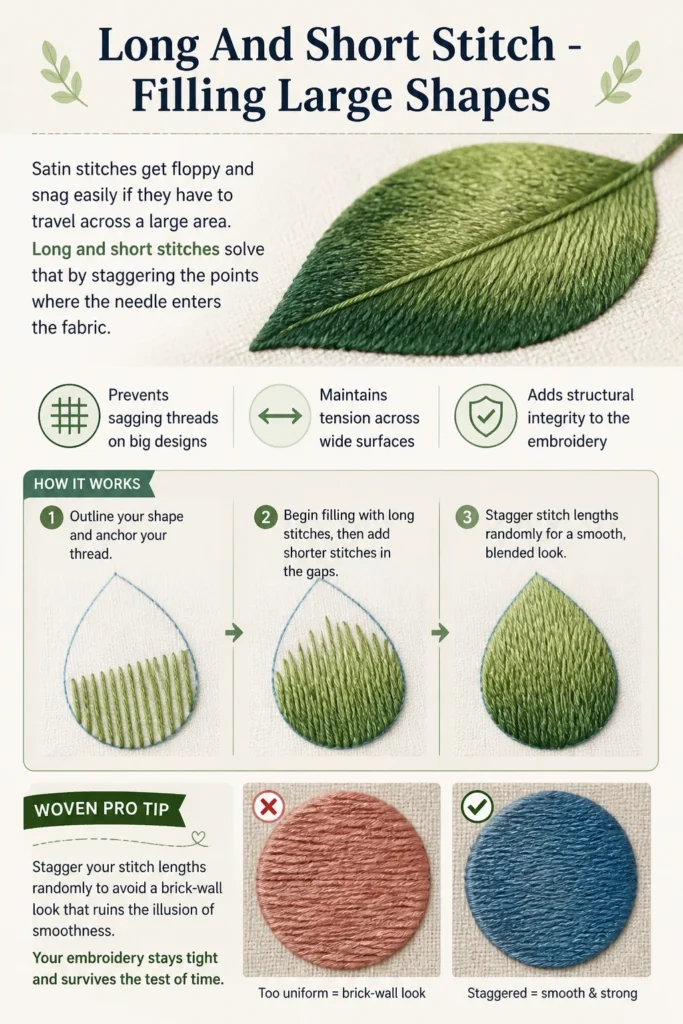
5. Filling Large Shapes
Satin stitches get floppy and snag easily if they have to travel across a large area. Long and short stitches solve that by staggering the points where the needle enters the fabric.
- Prevents sagging threads on big designs
- Maintains tension across wide surfaces
- Adds structural integrity to the embroidery
Woven pro tip: Stagger your stitch lengths randomly to avoid a brick-wall look that ruins the illusion of smoothness. Your embroidery stays tight and survives the test of time.
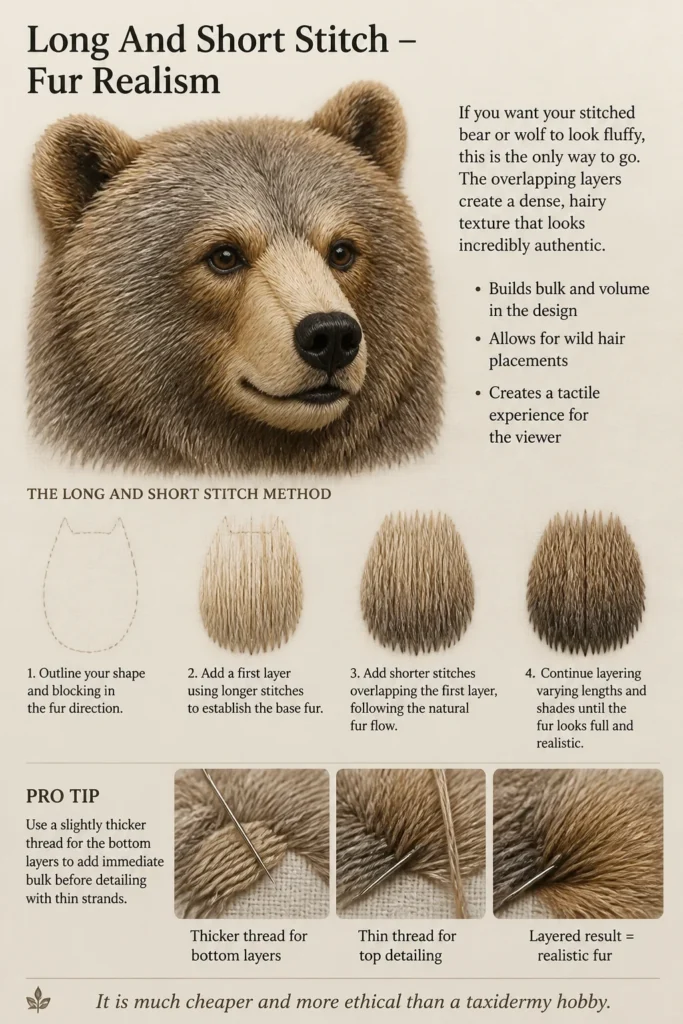
6. Fur Realism
If you want your stitched bear or wolf to look fluffy, this is the only way to go. The overlapping layers create a dense, hairy texture that looks incredibly authentic.
- Builds bulk and volume in the design
- Allows for “wild” hair placements
- Creates a tactile experience for the viewer
Woven pro tip: Use a slightly thicker thread for the bottom layers to add immediate bulk before detailing with thin strands. It is much cheaper and more ethical than a taxidermy hobby.
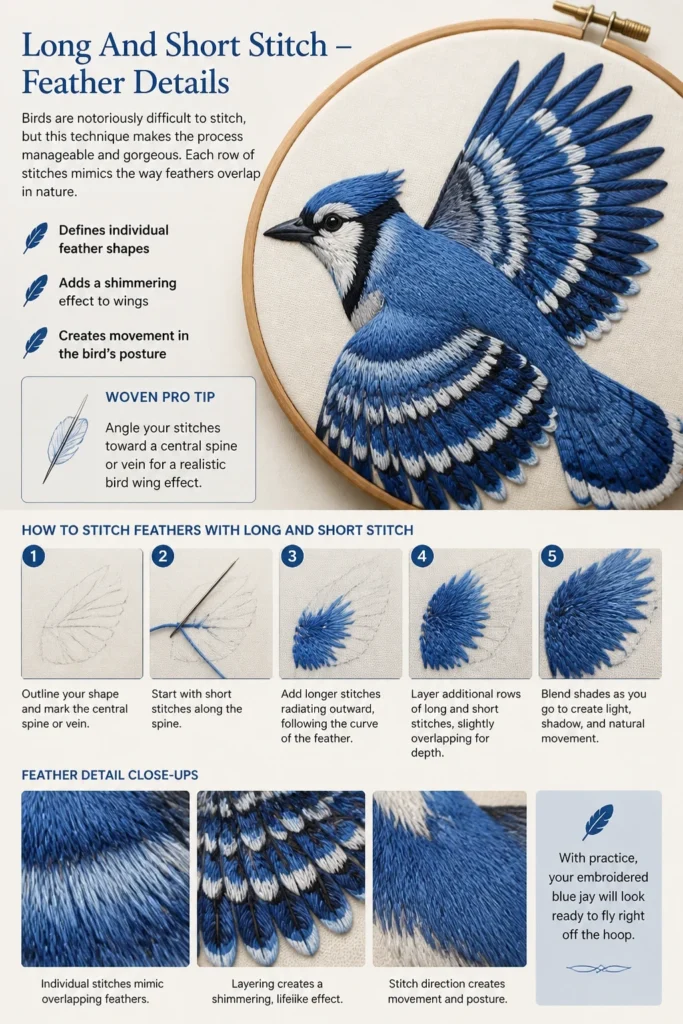
7. Feather Details
Birds are notoriously difficult to stitch, but this technique makes the process manageable and gorgeous. Each row of stitches mimics the way feathers overlap in nature.
- Defines individual feather shapes
- Adds a shimmering effect to wings
- Creates movement in the bird’s posture
Woven pro tip: Angle your stitches toward a central spine or vein for a realistic bird wing effect. Your embroidered blue jay will look ready to fly right off the hoop.
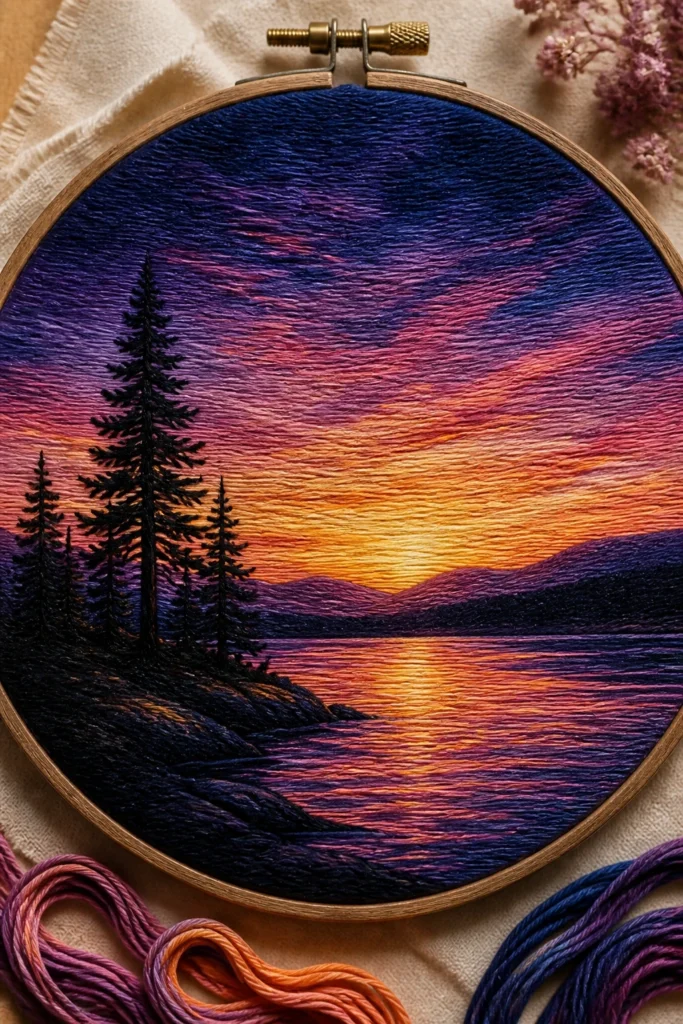
8. Sunset Skies
Ditch the watercolor paints and grab a needle to create a perfect twilight scene. You can blend oranges, purples, and deep blues to create a glowing horizon.
- Mimics the hazy look of a summer evening
- Blends dark and light shades effortlessly
- Provides a dramatic backdrop for silhouettes
Woven pro tip: Use variegated thread to cheat your way to complex color shifts without changing needles constantly. It is a total vibe for your living room gallery wall.
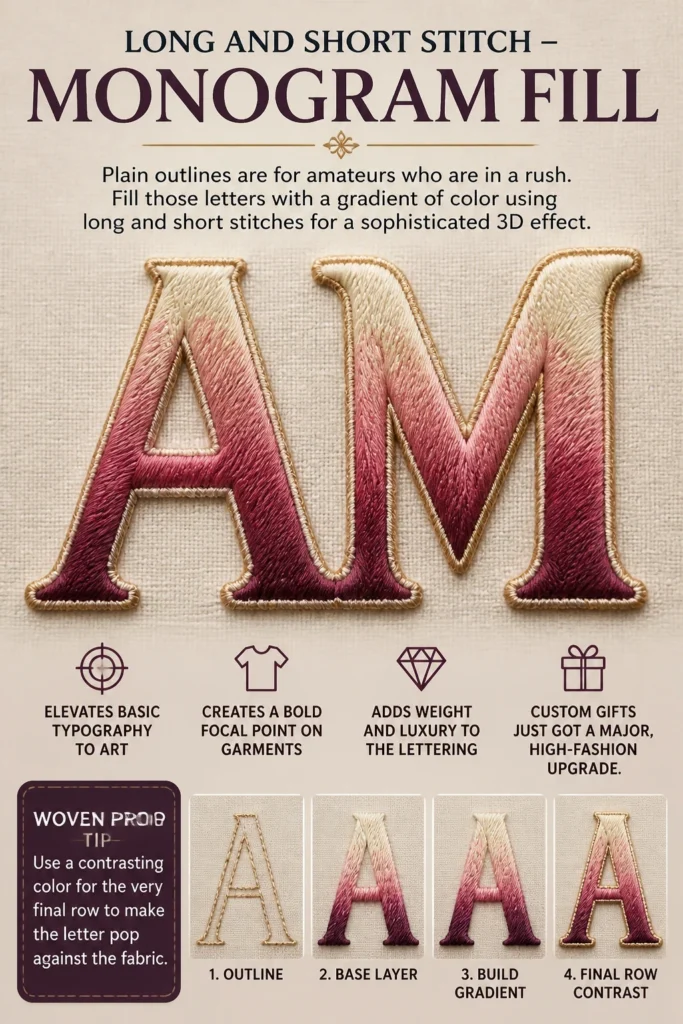
9. Monogram Fill
Plain outlines are for amateurs who are in a rush. Fill those letters with a gradient of color using long and short stitches for a sophisticated 3D effect.
- Elevates basic typography to art
- Creates a bold focal point on garments
- Adds weight and luxury to the lettering
Woven pro tip: Use a contrasting color for the very final row to make the letter pop against the fabric. Custom gifts just got a major, high-fashion upgrade.
10. Repairing Fabric Holes
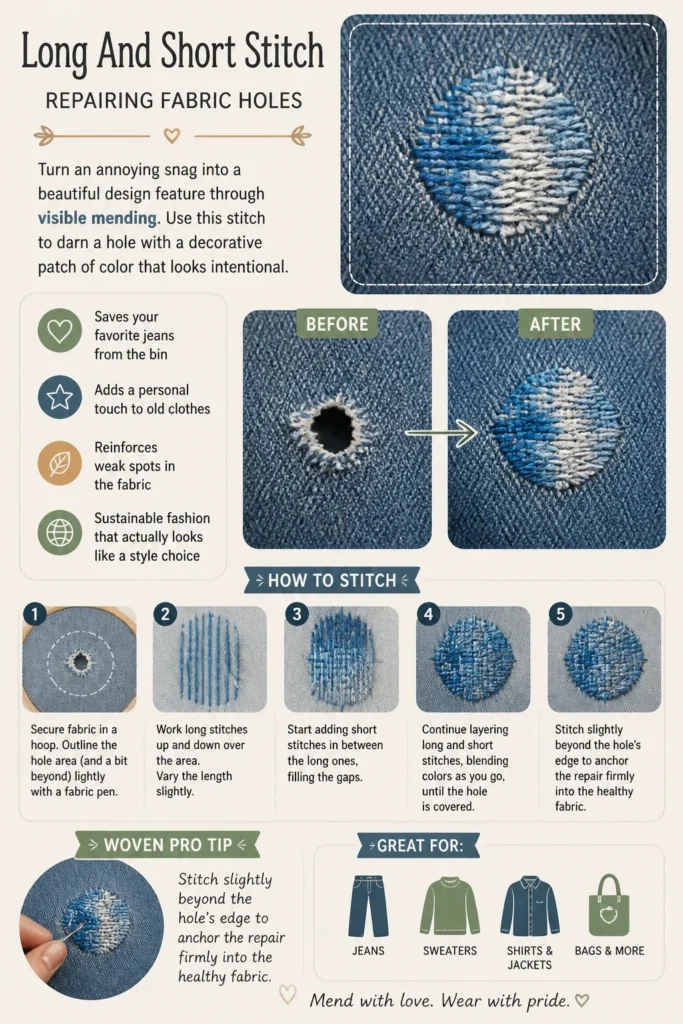
Turn an annoying snag into a beautiful design feature through visible mending. Use this stitch to darn a hole with a decorative patch of color that looks intentional.
- Saves your favorite jeans from the bin
- Adds a personal touch to old clothes
- Reinforces weak spots in the fabric
Woven pro tip: Stitch slightly beyond the hole’s edge to anchor the repair firmly into the healthy fabric. It is sustainable fashion that actually looks like a style choice.
11. Mixed Media Accents
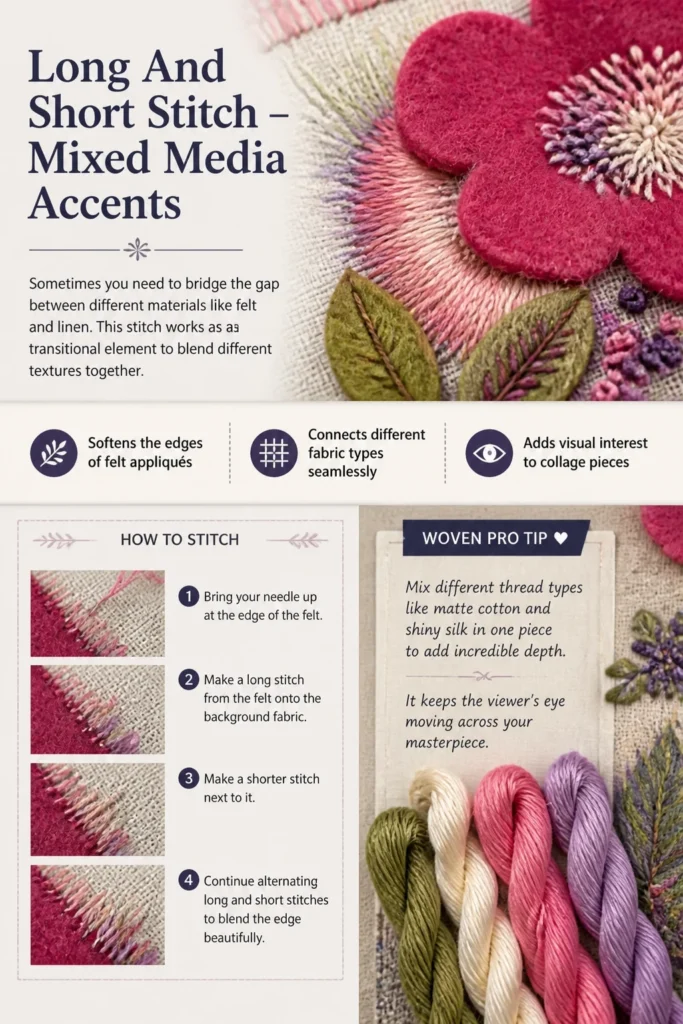
Sometimes you need to bridge the gap between different materials like felt and linen. This stitch works as a transitional element to blend different textures together.
- Softens the edges of felt appliqués
- Connects different fabric types seamlessly
- Adds visual interest to collage pieces
Woven pro tip: Mix different thread types like matte cotton and shiny silk in one piece to add incredible depth. It keeps the viewer’s eye moving across your masterpiece.
Conclusion
Now go grab a needle and some thread because you have everything you need to start blending like a master. Long and short stitches take a bit of patience, but the “wow” factor is worth every single poke of the needle. Stop settling for flat designs and start painting with thread today.
& CRAFT IDEAS
Beginner-friendly tutorials, creative projects,
and weekly inspiration in your inbox.