🦋 How To Make Wings
& CRAFT IDEAS
Beginner-friendly tutorials, creative projects,
and weekly inspiration in your inbox.
🛠️ The Ultimate Maker's Toolkit
I've tested thousands of craft tools over the years. Whether you are quilting, crafting, or building mixed-media art, these are the top 5 absolute non-negotiable tools I personally recommend to guarantee professional results.
🪡 SINGER Heavy Duty 4452 Sewing Machine
The sewing community highly recommends this as the ultimate "bulletproof" entry-level machine. Its heavy metal frame powerfully pushes through thick denim and heavy quilt layers that would instantly jam a standard plastic machine.
✂️ Fiskars 8" Orange-Handled Scissors
Never settle for dull dollar-store blades. Wirecutter repeatedly names Fiskars the absolute best all-purpose craft scissor due to its legendary precision-ground blades and an ergonomic grip that prevents hand-cramping.
🔥 Gorilla Dual Temp Hot Glue Gun
Named Wirecutter's top choice because it literally does the work of two tools. It features dual-temperature settings offering low heat for delicate florals and blistering high heat for heavy wood adhesion repairs.
🖌️ Mod Podge Waterbase Gloss Sealer
The absolute undisputed champion of decoupage and paper crafts. Experts rely exclusively on this exact water-based formula because it glues, seals, and finishes beautifully without yellowing or flaking over time.
🎨 Apple Barrel Acrylic Paint (2 oz)
The quintessential, incredibly inexpensive craft paint. Woodworkers and hobby painters swear by its smooth flow and matte finish, providing massive value and remarkably thick color coverage on rough surfaces.
Ever dreamed of adding a touch of magic to your costume, cosplay, or just for fun?
Creating your own set of wearable wings might seem daunting, but it’s incredibly rewarding.
I’ve crafted many pairs over the years, from delicate fairy wings to robust dragon wings, and I’m here to share all my practical insights.
Quick Overview
You’re about to embark on a creative journey, transforming simple materials into a stunning, wearable accessory.
This guide will walk you through every essential step, ensuring your wings are not only beautiful but also sturdy and comfortable.
- Time needed: 4-8 hours (depending on complexity and drying times)
- Difficulty: Beginner to Intermediate
- What you’ll need: Craft wire, fabric, glue, basic tools, and imagination
Step-by-Step Instructions
Step 1: Envision Your Flight
Before you gather any materials, take some time to visualize your wings. What shape are they? How big will they be?
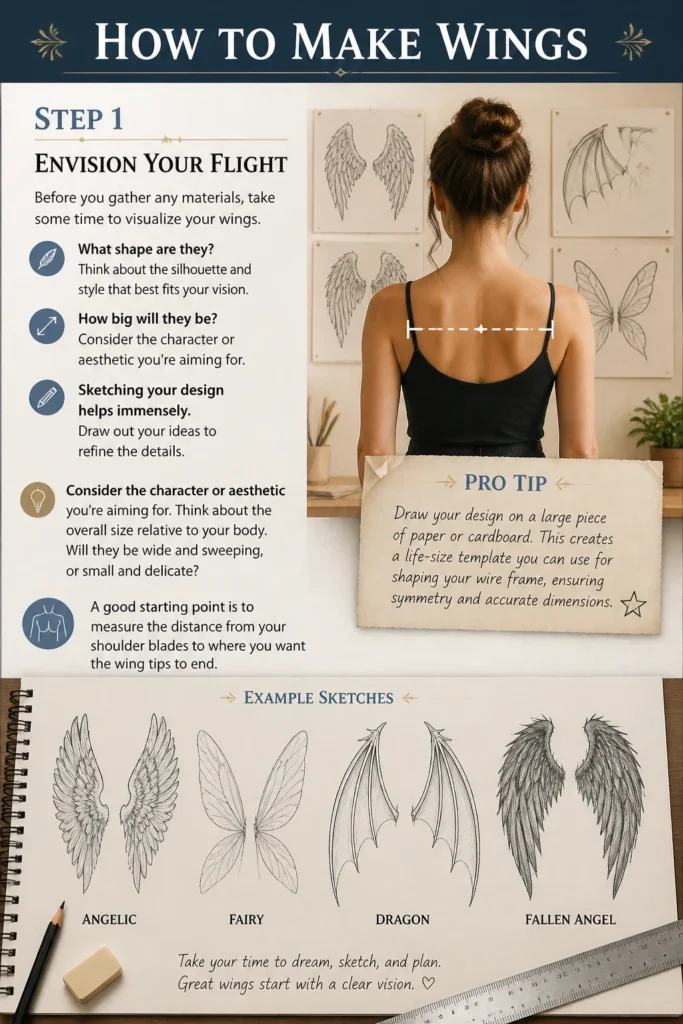
Sketching your design helps immensely. Consider the character or aesthetic you’re aiming for.
Think about the overall size relative to your body. Will they be wide and sweeping, or small and delicate?
A good starting point is to measure the distance from your shoulder blades to where you want the wing tips to end.
Pro Tip: Draw your design on a large piece of paper or cardboard. This creates a life-size template you can use for shaping your wire frame, ensuring symmetry and accurate dimensions.
Step 2: Gather Your Materials
Having everything at hand makes the crafting process much smoother. Here’s a detailed list of what you’ll likely need:
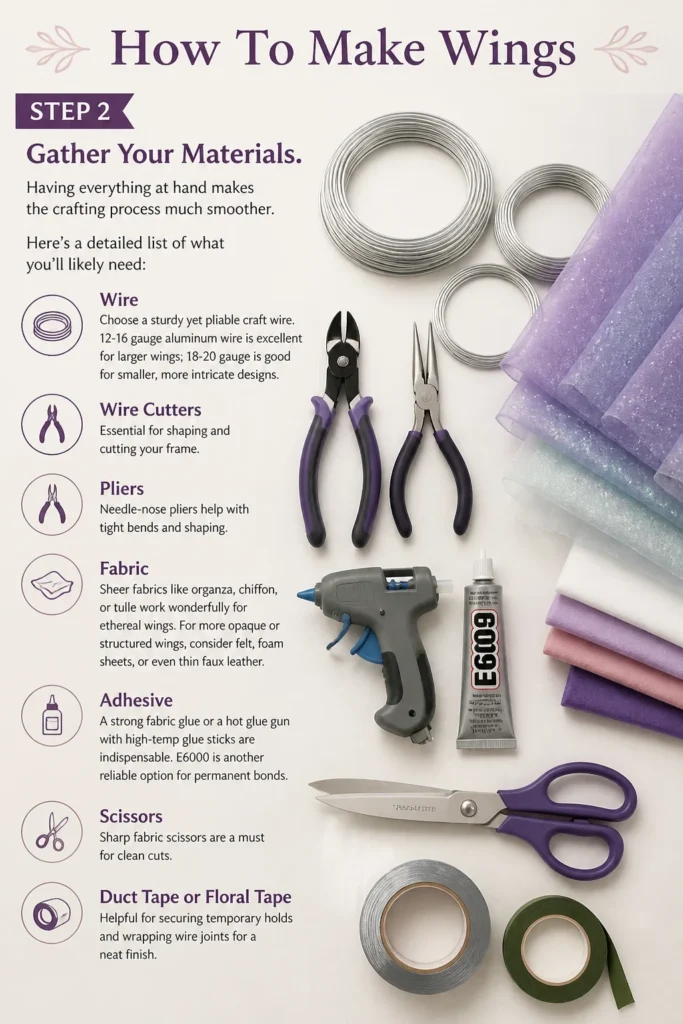
- Wire: Choose a sturdy yet pliable craft wire. 12-16 gauge aluminum wire is excellent for larger wings; 18-20 gauge is good for smaller, more intricate designs.
- Wire Cutters: Essential for shaping and cutting your frame.
- Pliers: Needle-nose pliers help with tight bends and shaping.
- Fabric: Sheer fabrics like organza, chiffon, or tulle work wonderfully for ethereal wings. For more opaque or structured wings, consider felt, foam sheets, or even thin faux leather.
- Adhesive: A strong fabric glue or a hot glue gun with high-temp glue sticks are indispensable. E6000 is another reliable option for permanent bonds.
- Scissors: Sharp fabric scissors are a must for clean cuts.
- Duct Tape or Floral Tape: Useful for securing wire joints temporarily or for wrapping the frame for a smoother finish.
- Elastic Straps: For creating the harness that allows you to wear your wings comfortably.
- Decorations: Glitter, acrylic paints, fabric dyes, feathers, rhinestones, or artificial flowers can add beautiful detail.
- Measuring Tape/Ruler: For accurate sizing.
Don’t be afraid to experiment with different materials. Each choice will give your wings a unique texture and feel.
Step 3: Forge the Frame
This is where your wings truly begin to take shape. Using your template, carefully bend the wire to form the main outline of each wing.
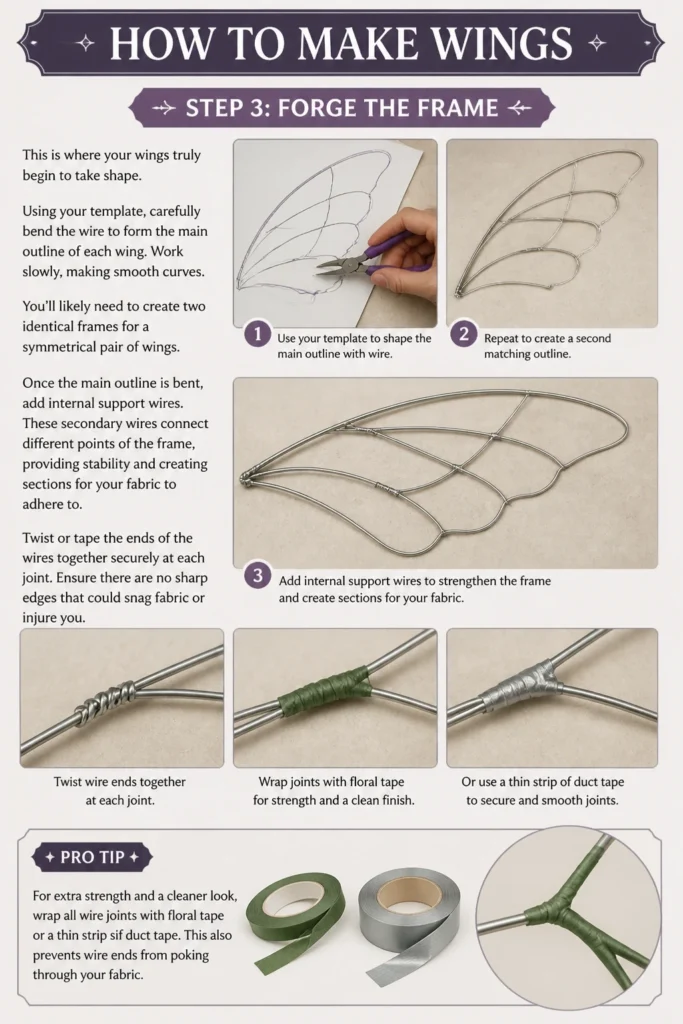
Work slowly, making smooth curves. You’ll likely need to create two identical frames for a symmetrical pair of wings.
Once the main outline is bent, add internal support wires. These secondary wires connect different points of the frame, providing stability and creating sections for your fabric to adhere to.
Twist or tape the ends of the wires together securely at each joint. Ensure there are no sharp edges that could snag fabric or injure you.
Pro Tip: For extra strength and a cleaner look, wrap all wire joints with floral tape or a thin strip of duct tape. This also prevents wire ends from poking through your fabric.
Step 4: Craft the Central Harness
The harness is crucial for wearing your wings. Cut a piece of wire to form a small, sturdy central “U” or “M” shape that will sit against your back.
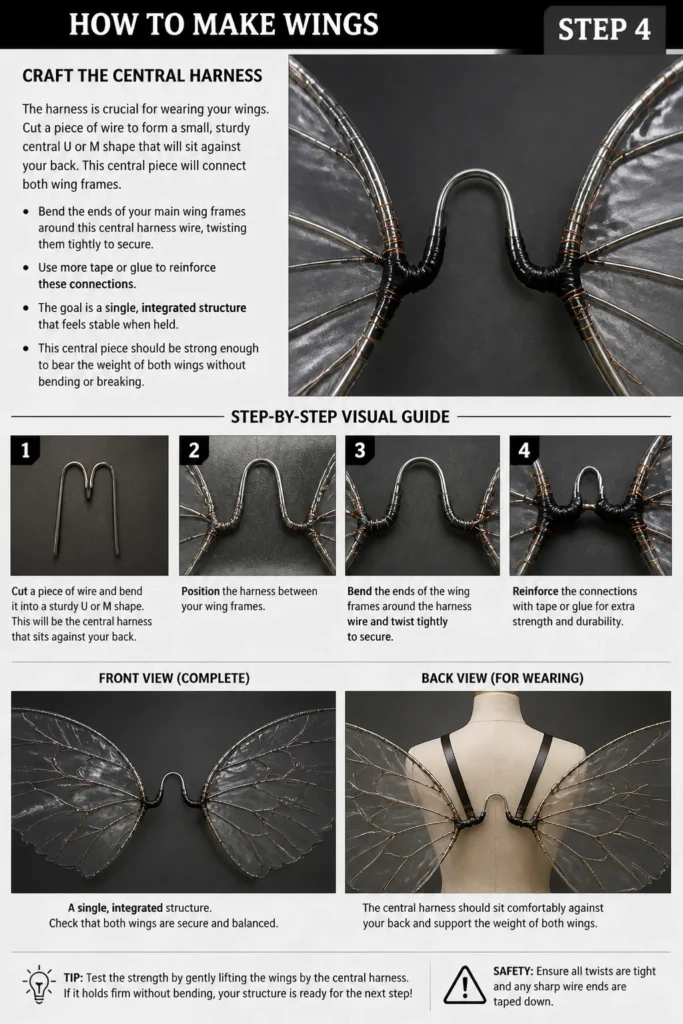
This central piece will connect both wing frames. Bend the ends of your main wing frames around this central harness wire, twisting them tightly to secure.
Use more tape or glue to reinforce these connections. The goal is a single, integrated structure that feels stable when held.
This central piece should be strong enough to bear the weight of both wings without bending or breaking.
Step 5: Tailor the Fabric
Now it’s time to bring color and texture to your frame. Lay your chosen fabric over one of your wire frames.
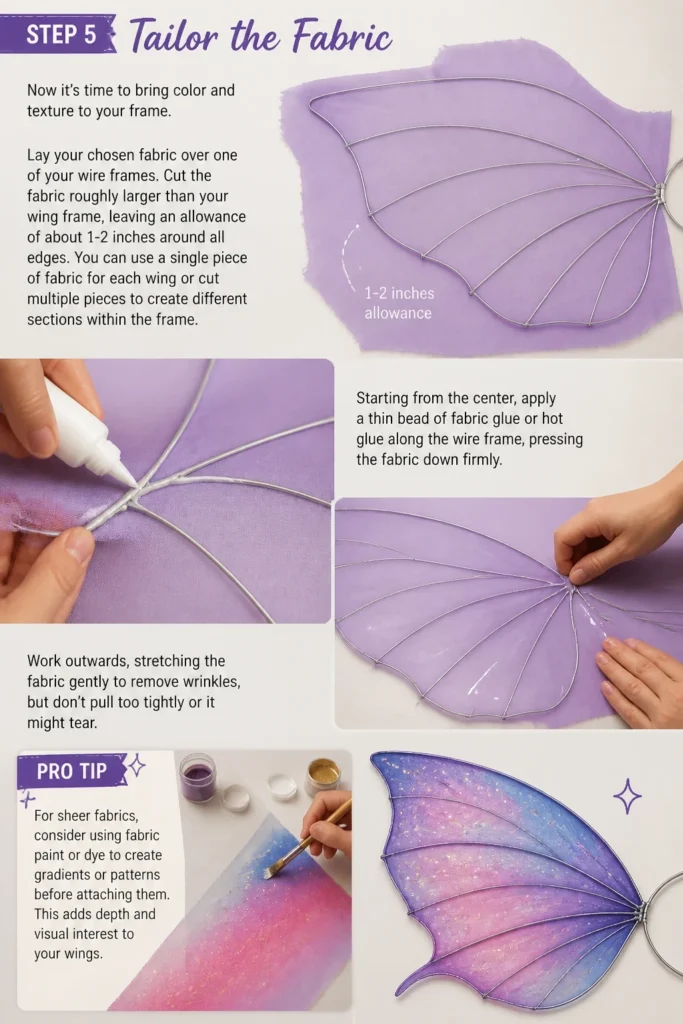
Cut the fabric roughly larger than your wing frame, leaving an allowance of about 1-2 inches around all edges.
You can use a single piece of fabric for each wing or cut multiple pieces to create different sections within the frame.
Starting from the center, apply a thin bead of fabric glue or hot glue along the wire frame, pressing the fabric down firmly.
Work outwards, stretching the fabric gently to remove wrinkles, but don’t pull too tightly or it might tear.
Pro Tip: For sheer fabrics, consider using fabric paint or dye to create gradients or patterns before attaching them. This adds depth and visual interest to your wings.
Step 6: Trim and Finish Fabric Edges
Once the glue has dried completely, carefully trim any excess fabric from the edges of your wings.
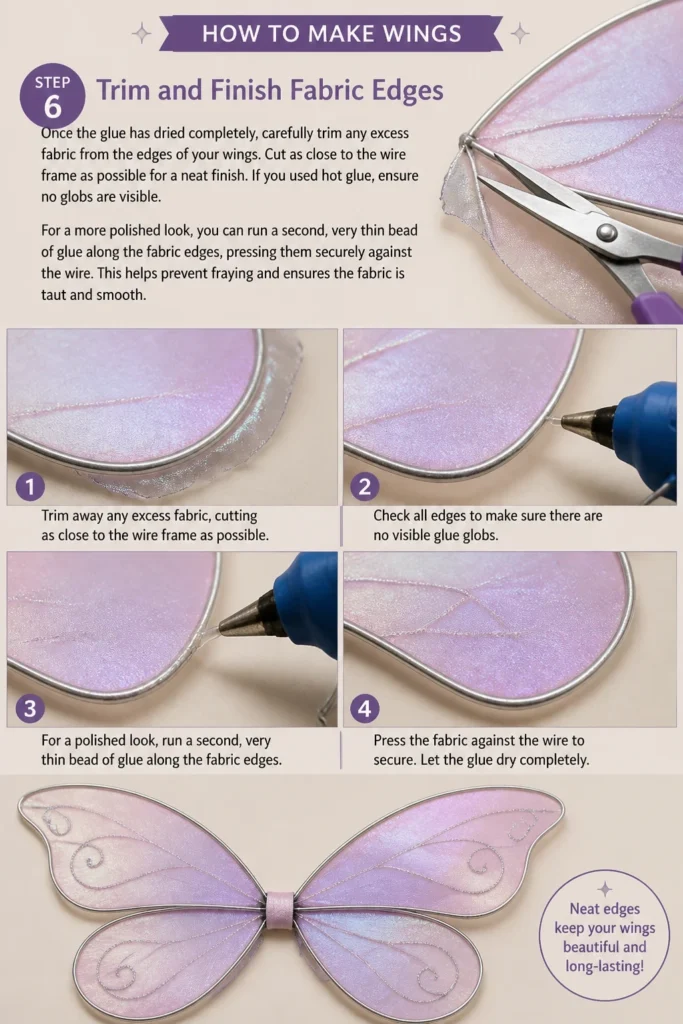
Cut as close to the wire frame as possible for a neat finish. If you used hot glue, ensure no globs are visible.
For a more polished look, you can run a second, very thin bead of glue along the fabric edges, pressing them securely against the wire.
This helps prevent fraying and ensures the fabric is taut and smooth.
Step 7: Adorn with Flair
This is where your personal style truly shines! Decorate your wings to match your vision.
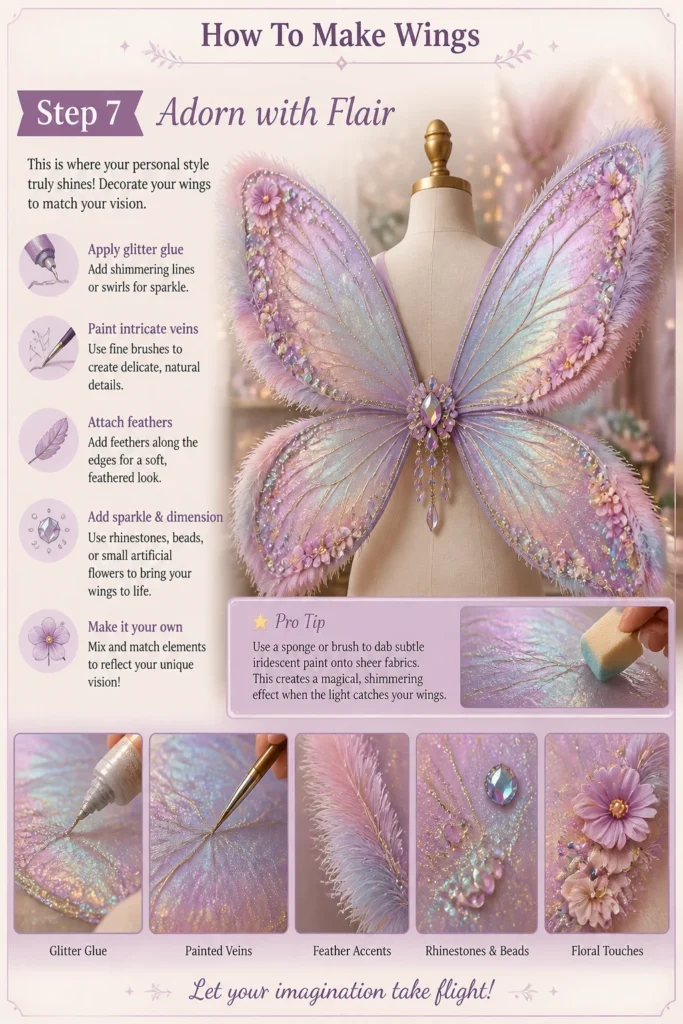
Apply glitter glue, paint intricate veins, or attach feathers along the edges for a soft, feathered look.
Rhinestones, beads, or small artificial flowers can add sparkle and dimension.
If painting, use flexible acrylic paints designed for fabric to prevent cracking.
Pro Tip: Use a sponge or brush to dab subtle iridescent paint onto sheer fabrics. This creates a magical, shimmering effect when the light catches your wings.
Step 8: Construct the Harness
The most common way to wear wings is with elastic straps, similar to a backpack.
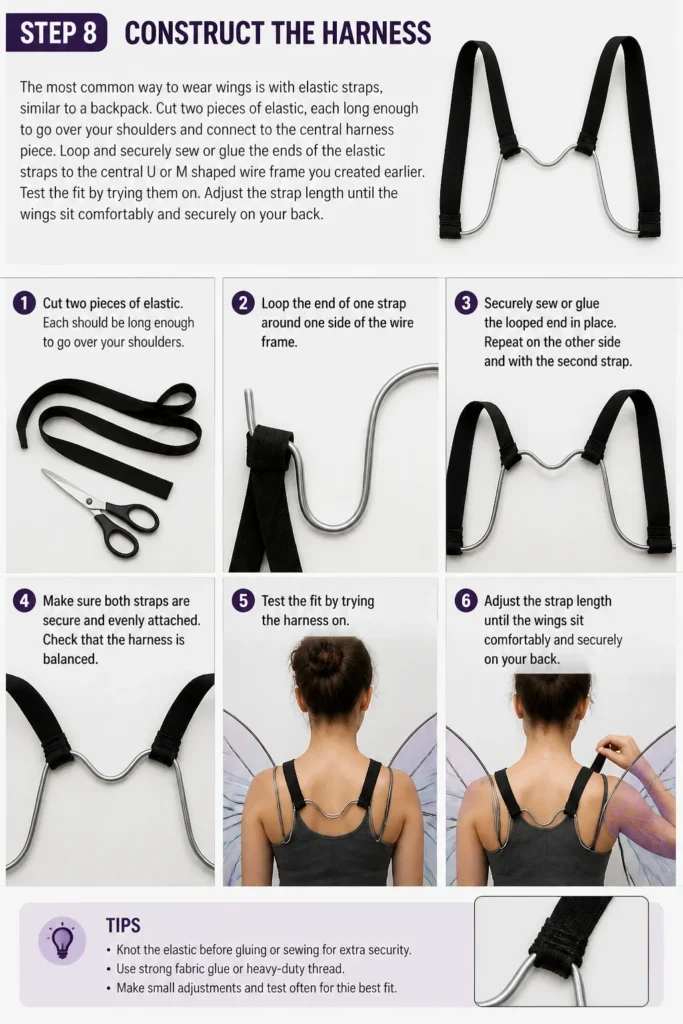
Cut two pieces of elastic, each long enough to go over your shoulders and connect to the central harness piece.
Loop and securely sew or glue the ends of the elastic straps to the central “U” or “M” shaped wire frame you created earlier.
Test the fit by trying them on. Adjust the strap length until the wings sit comfortably and securely on your back.
Step 9: Test Your Creation
Put on your wings and move around. Check for any uncomfortable pressure points or areas where the wings feel unstable.
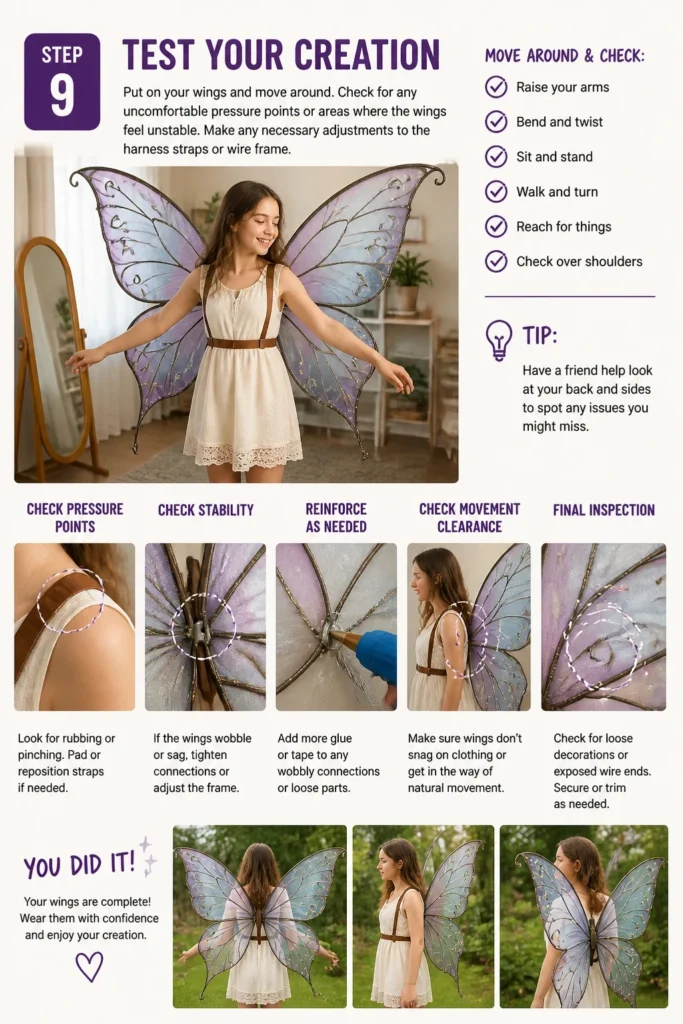
Make any necessary adjustments to the harness straps or wire frame. Reinforce any wobbly connections with more glue or tape.
Ensure the wings don’t snag on clothing or get in the way of natural movement too much.
A final inspection for any loose decorations or exposed wire ends will complete your project.
Common Mistakes to Avoid
Using Weak Wire
Beginning with a flimsy wire gauge often leads to saggy, unstable wings. The wings won’t hold their shape, especially if they are large or have heavier embellishments.
Always opt for a gauge that feels robust enough for your intended size and material. It’s better to start with slightly thicker wire and find it a bit harder to bend than to have your wings collapse.
Skipping the Template
Freehanding your wire frame without a template often results in asymmetrical wings. One side might be larger or a different shape than the other.
A large paper or cardboard template ensures both wings are identical in shape and size, which is vital for a professional-looking finish.
Applying Too Much Glue
Over-applying glue, especially hot glue, can create visible clumps and make your fabric stiff or discolored. It can also add unnecessary weight.
Use thin, even beads of glue. Work in small sections, allowing glue to set before moving on, especially with sheer fabrics where glue is more visible.
Neglecting the Harness
A poorly constructed harness means uncomfortable or constantly shifting wings. If the straps are too thin, they can dig into your shoulders, or if they are attached weakly, the wings might fall off.
Invest time in making a strong, comfortable harness. Use wide elastic straps and reinforce all attachment points to the wing frame for stability and comfort.
Troubleshooting
Wings Are Sagging or Uneven
This usually indicates insufficient internal wire support or a weak main frame. The fabric might also be pulling too much in one direction.
Reinforce the sagging areas by adding more internal wire spokes, connecting them securely to the main frame. You might also need to gently reshape the main wire frame to restore its intended form.
Fabric Is Wrinkled or Not Sticking
Wrinkles often occur if the fabric isn’t stretched smoothly during application or if the glue dries too quickly. If the fabric isn’t sticking, the glue might be incompatible or applied too thinly.
Carefully peel back the affected section, apply a fresh, thin line of appropriate adhesive, and re-stretch the fabric gently but firmly. Ensure the fabric is clean and free of oils.
Harness Feels Uncomfortable
If the straps are digging in or the wings feel unstable, the elastic might be too narrow, or the attachment points are too close together.
Replace narrow elastic with wider, softer elastic for better weight distribution. Consider adding a small piece of felt or foam padding to the back of the central harness where it rests against your body for added comfort.
Key Takeaways
- Planning with a sketch or template ensures symmetrical and well-proportioned wings.
- Choosing the right gauge of wire is crucial for structural integrity and shape retention.
- Secure all wire joints with tape or additional twists to prevent wobbling.
- Apply fabric smoothly and evenly, using thin beads of glue to avoid clumps.
- Personalize your wings with decorations to make them uniquely yours.
- A well-constructed, comfortable harness is essential for wearable wings.
Frequently Asked Questions
Can I make these wings foldable?
Making wings foldable requires a more advanced wire frame technique, often involving hinges or telescoping sections. For your first pair, focus on a static design. Once you master the basics, you can explore tutorials specifically for foldable wing mechanisms.
How do I make my wings glow?
To make your wings glow, you can weave thin strands of battery-operated LED fairy lights through the wire frame before attaching the fabric. Alternatively, use glow-in-the-dark paint on the fabric, which charges under light and emits a soft glow in darkness.
What if I don’t have a hot glue gun?
You can use a strong fabric adhesive like E6000 or a specialized craft glue that bonds well with both metal and fabric. Just be aware that these glues often require longer drying times compared to hot glue, so you’ll need patience.
How can I make my wings more durable?
For increased durability, use a slightly heavier gauge wire for the main frame. You can also coat your fabric with a thin layer of fabric stiffener or Mod Podge once all decorations are dry. This adds a protective layer and makes the wings more resistant to wear and tear.
Our Top Recommended Finds
- 12-Gauge Aluminum Craft Wire: This gauge provides excellent strength for larger wing frames while remaining pliable enough to shape.
- High-Temperature Hot Glue Gun: A reliable glue gun with strong adhesive sticks ensures your fabric and decorations stay put.
- Sheer Organza Fabric: Lightweight and shimmery, organza is perfect for creating delicate, ethereal wing effects and is easy to work with.
Spread Your Creative Wings
You now have all the tools and knowledge to create your very own magnificent wings.
Don’t let perfection be the enemy of good. Your first pair might not be flawless, but it will be a testament to your creativity and effort.
Each project is a learning experience, building your skills for even more ambitious creations.
So, gather your materials, clear your workspace, and let your imagination take flight. What magical creation will you bring to life today?
& CRAFT IDEAS
Beginner-friendly tutorials, creative projects,
and weekly inspiration in your inbox.