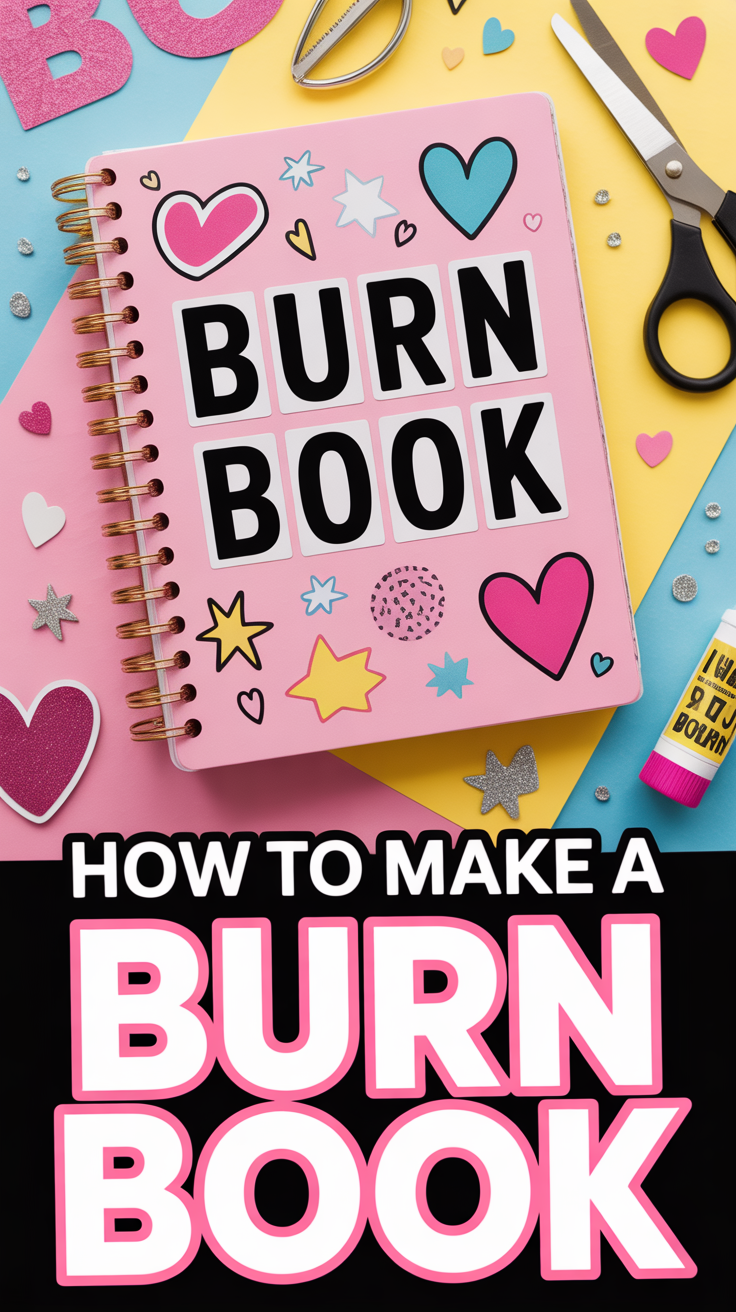
🔥 How To Make A Burn Book
Let’s be honest. You don’t want drama. You want catharsis. This “burn book” is a creative, private outlet to process stuff, laugh it off, and move on—minus the chaos. We’re building a reflective, artsy journal that gets the sting out without singeing anyone IRL.
1. Mood and Boundaries
Set the vibe before you scribble. Decide what this book is for—and what it isn’t. Keep it private, reflective, and respectful. No doxxing, no hate speech, no targeting real people by full name.
Pro tip: Make a simple rule list on the inside cover. If it wouldn’t be okay on a group chat, it doesn’t go in.
This works because boundaries keep your creativity spicy, not messy.
2. Pick Your Book
Choose a notebook that feels good to hold—spiral, hardcover, or a recycled sketchbook. Go for thick pages if you’ll collage or use markers. A pocket folder in the back is clutch.
Pro tip: If you want stealth, pick something boring on the outside. If you want drama, pick neon.
It works because the right format actually makes you use it.
3. Cover Glow-Up
Dress it up like it’s going out. Paint, stickers, doodles, or a minimalist title that only you get. Add washi tape to the spine for instant cute.
Pro tip: Glue a ribbon inside for a bookmark. You’ll thank yourself later.
It works because personalization turns it into your space, not just paper.
4. The Index You’ll Actually Use
Reserve the first two pages for a quick index. Create sections: Vents, Lessons, Petty-but-Private, Wins, Quotes, Release Rituals. Number pages as you go.
Pro tip: Color-code tabs so you can skip to the mood you’re in.
It works because structure keeps it intentional, not chaotic.
5. Vent Pages Done Right
Get it out fast. Free-write for five minutes, no edits. Swap names for initials or emojis to keep it anonymous and safe.
Pro tip: End each vent with one sentence: “What I learned” or “What I needed.”
It works because you move from spiraling to clarity.
6. Collage the Drama
Cut out vibes, not identities. Use magazine phrases, colors, and textures to capture a mood. Layer with post-its to add thoughts later.
Pro tip: Glue in an envelope for scraps you’ll use next time.
It works because art says what texts can’t.
7. Petty but Private Section
Park the snark where it’s harmless. Write the spicy line, then translate it into a boundary or request. Two columns: “Feeling” and “Action.”
Pro tip: Use a timer—three minutes to vent, two minutes to reframe.
It works because you turn heat into growth without leaving scorch marks.
8. Receipts for Yourself
Track patterns, not people. Jot the trigger, your reaction, and a better future move. Add checklists for how you’ll handle it next time.
Pro tip: Star any entry that led to an actual change.
It works because receipts make you wiser, not bitter.
9. Release Rituals
Wrap things up so you don’t carry them. Try a tear-and-toss page, water-activated paper, or a “closed” stamp when you’re done with a topic.
Pro tip: Play a specific song when you close a loop. Train your brain to let go.
It works because your mind loves a ritual finish line.
10. Safety, Privacy, and Storage
Keep it under wraps. Use a lockbox, a coded label, or a digital backup with a password. Never post pages online.
Pro tip: Add a note inside: “Private Journal—Please Respect.” People usually do.
It works because privacy gives you the freedom to be honest and kind.
Conclusion
A burn book done right burns off stress, not bridges. Keep it playful, keep it private, and let every page nudge you toward clarity, boundaries, and a lighter heart. The tea stays in the cup—and you still get the flavor.