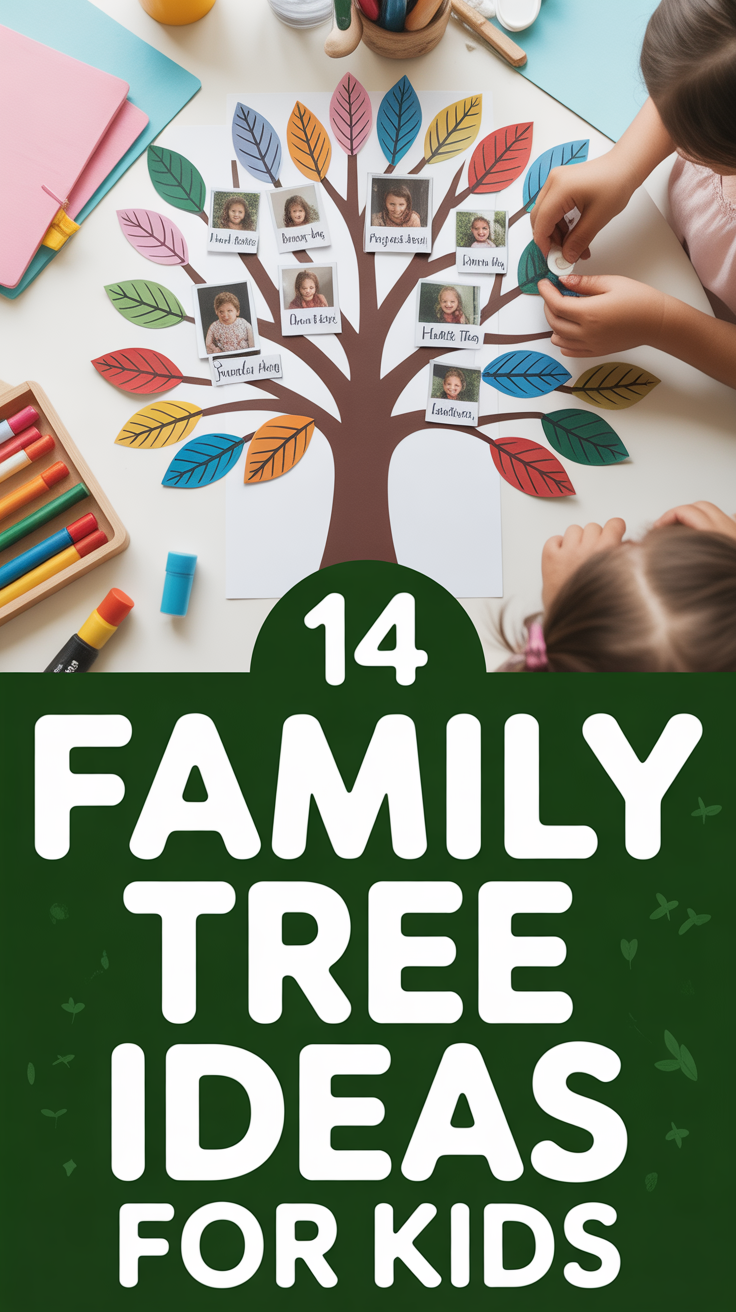
🌳 14 Family Tree Ideas For Kids
Got curious kiddos and a shoe box full of mystery relatives? Perfect. Let’s turn that family chaos into fun, colorful projects that actually stick to the fridge. Zero genealogy degree required. Maximum “aww” potential.
1. Handprint Tree Poster
Big impact, tiny hands. Trace your child’s hand as the tree trunk and use painted handprints as leafy clusters for each family branch.
- Add names and birthdates inside each leaf.
- Use different colors for each generation.
Pro tip: Stamp prints on separate paper first, then cut and glue to avoid messy splats.
It works because kids see family layers literally grow from their own hands.
2. Photo Garland Lineage
Turn the wall into a timeline party. Hang a string garland and clip photos from great-grandparents to your little star.
- Use mini clothespins and label tags.
- Arrange left-to-right by generation.
Pro tip: Print black-and-white for older generations and color for newer to signal time.
Simple visuals help kids map who came before whom without eye-crossing charts.
3. Apple Orchard Family Tree
An orchard beats a single tree when your family is sprawling. Each tree equals a branch of the family; apples are people.
- Write names on paper apples.
- Group siblings on the same tree with color-coded apples.
Pro tip: Stick apples with Velcro so you can move folks as stories update.
It’s playful and modular—perfect for blended families and surprise cousins.
4. Lego Tower Generations
Build your family, literally. Stack Lego bricks by generation with a photo or name tag on each block.
- Assign a brick color to each generation.
- Use a baseplate to keep the dynasty upright.
Pro tip: Add tiny printed flags for locations or fun facts.
Hands-on builders remember better when they can stack and rearrange.
5. Storybook Flip Book
Turn relatives into a bedtime story. Each page spotlights one person with a mini bio.
- Include photo, name, relation, and a fun fact.
- Organize by oldest to youngest.
Pro tip: Laminate pages and bind with rings for kid-proof durability.
Narrative makes relationships feel personal, not just chart-y.
6. Window Cling Tree
Suncatcher meets ancestry. Use clear window clings or gel stickers to place names on leaf shapes.
- Create a tree silhouette with tape.
- Put older generations higher on the window.
Pro tip: Add a color legend for maternal vs. paternal sides.
Light and color make the family glow—literally irresistible for kids.
7. Puzzle Piece Relatives
Every person completes the picture. Write names on large puzzle pieces and connect them by relationships.
- Use blank jigsaw pieces from a craft store.
- Draw arrows or icons to show connections.
Pro tip: Add QR codes to pieces that link to short audio stories.
It’s tactile, flexible, and invites repeat play while learning who’s who.
8. Chalkboard Wall Tree
Draw, erase, redraw—no pressure. Sketch a big tree and label branches and leaves with chalk.
- Use one color per generation.
- Keep a legend box in the corner.
Pro tip: Take photos after each update so you keep a history of versions.
Great for evolving families and kids who love to doodle facts.
9. Map-Based Family Roots
Geography meets genealogy. Pin locations where each family member was born or lived.
- Use string from names to map pins.
- Mark migration paths with arrows.
Pro tip: Add tiny flags with year ranges for context.
Kids love seeing how far their roots stretch—hello, global explorers.
10. Paper Plate Portrait Tree
Craft-day friendly and cheap. Paper plates become faces, the wall becomes a tree.
- Let kids draw hair, glasses, and signature styles.
- Arrange plates by generation layers.
Pro tip: Punch two holes and connect plates with yarn for parent-child links.
It blends art time with family learning—win-win for rainy afternoons.
11. Digital Slide Deck Tree
Techy and tidy. Create a simple slide deck with one slide per person.
- Use icons for relationship types.
- Add voice-over narration from grandparents.
Pro tip: Export as a video so kids can replay on a tablet.
Perfect for long-distance families sharing stories across time zones.
12. Button and String Wall Web
Visualize connections like a detective board, minus the crime. Buttons are people; string shows relationships.
- Use two colors of string for maternal and paternal sides.
- Stick name labels under each button.
Pro tip: Keep a key that explains what each color and knot means.
Dynamic and eye-catching, it turns abstract links into lines kids can trace.
13. Family Recipe Tree
Taste the lineage. Each leaf is a favorite recipe from a relative.
- Attach recipe cards with the person’s name and origin.
- Mark allergy-friendly swaps so kids can cook along.
Pro tip: Add a small photo to each card for instant recognition.
Food memories make relatives feel close—even if they’re miles away.
14. Time-Capsule Tree Box
A tree you build over time. Keep a decorated box with envelopes for each family member.
- Include photos, notes, and little artifacts.
- Sort envelopes by generation dividers.
Pro tip: Add a yearly “family day” to open, add, and reorganize together.
It grows with your kid, turning family history into a living tradition.
Conclusion
Family trees don’t have to be dusty charts that make eyes glaze over. Pick one idea, keep it colorful, and let kids help shape the branches. With a little creativity and a few glue sticks, you’ll turn names into stories—and stories into memories that actually stick.