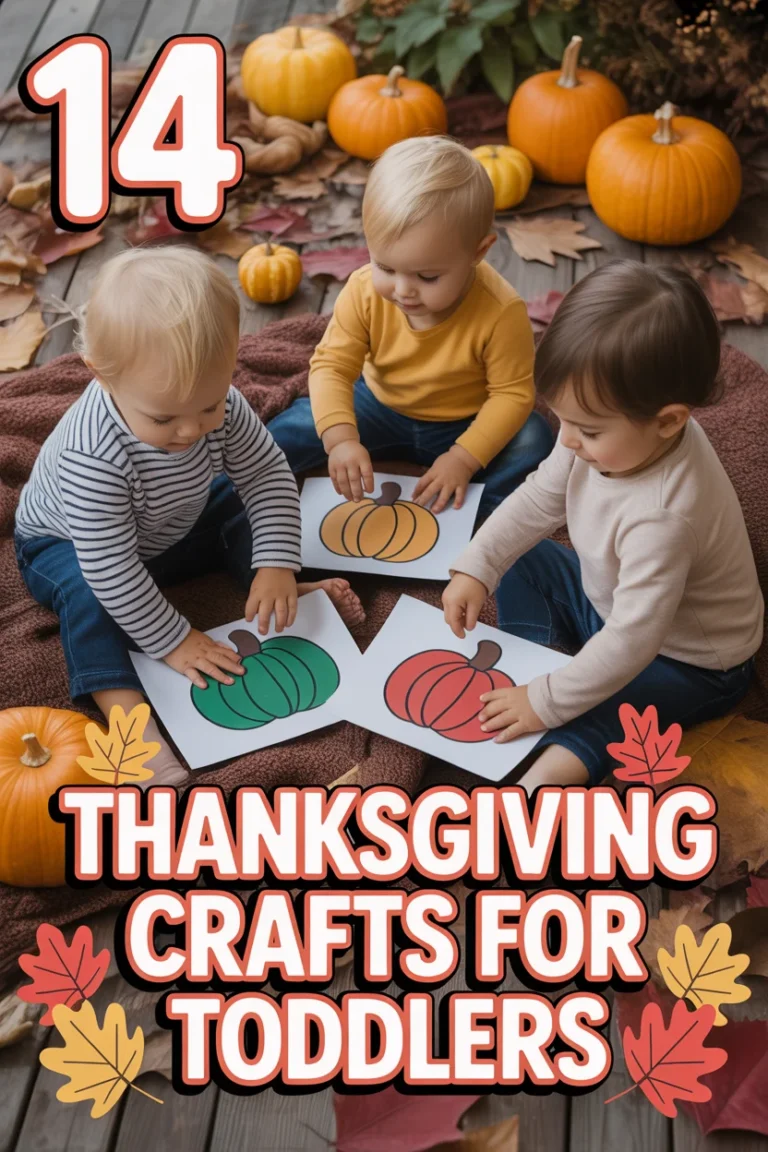
🥚 15 Egg Drop Project Ideas

& CRAFT IDEAS
Beginner-friendly tutorials, creative projects,
and weekly inspiration in your inbox.
🛠️ The Ultimate Maker's Toolkit
I've tested thousands of craft tools over the years. Whether you are quilting, crafting, or building mixed-media art, these are the top 5 absolute non-negotiable tools I personally recommend to guarantee professional results.
🪡 SINGER Heavy Duty 4452 Sewing Machine
The sewing community highly recommends this as the ultimate "bulletproof" entry-level machine. Its heavy metal frame powerfully pushes through thick denim and heavy quilt layers that would instantly jam a standard plastic machine.
✂️ Fiskars 8" Orange-Handled Scissors
Never settle for dull dollar-store blades. Wirecutter repeatedly names Fiskars the absolute best all-purpose craft scissor due to its legendary precision-ground blades and an ergonomic grip that prevents hand-cramping.
🔥 Gorilla Dual Temp Hot Glue Gun
Named Wirecutter's top choice because it literally does the work of two tools. It features dual-temperature settings offering low heat for delicate florals and blistering high heat for heavy wood adhesion repairs.
🖌️ Mod Podge Waterbase Gloss Sealer
The absolute undisputed champion of decoupage and paper crafts. Experts rely exclusively on this exact water-based formula because it glues, seals, and finishes beautifully without yellowing or flaking over time.
🎨 Apple Barrel Acrylic Paint (2 oz)
The quintessential, incredibly inexpensive craft paint. Woodworkers and hobby painters swear by its smooth flow and matte finish, providing massive value and remarkably thick color coverage on rough surfaces.
So, you have to drop a raw egg from a terrifying height and hope it doesn’t turn into an omelet on the pavement. Gravity is usually a jerk, but with the right gear, your egg might actually survive the fall. Forget those boring school lectures and let’s get into some designs that actually work while making you look like a DIY genius. Whether you want to use snacks or trash, these ideas keep your fragile cargo intact.
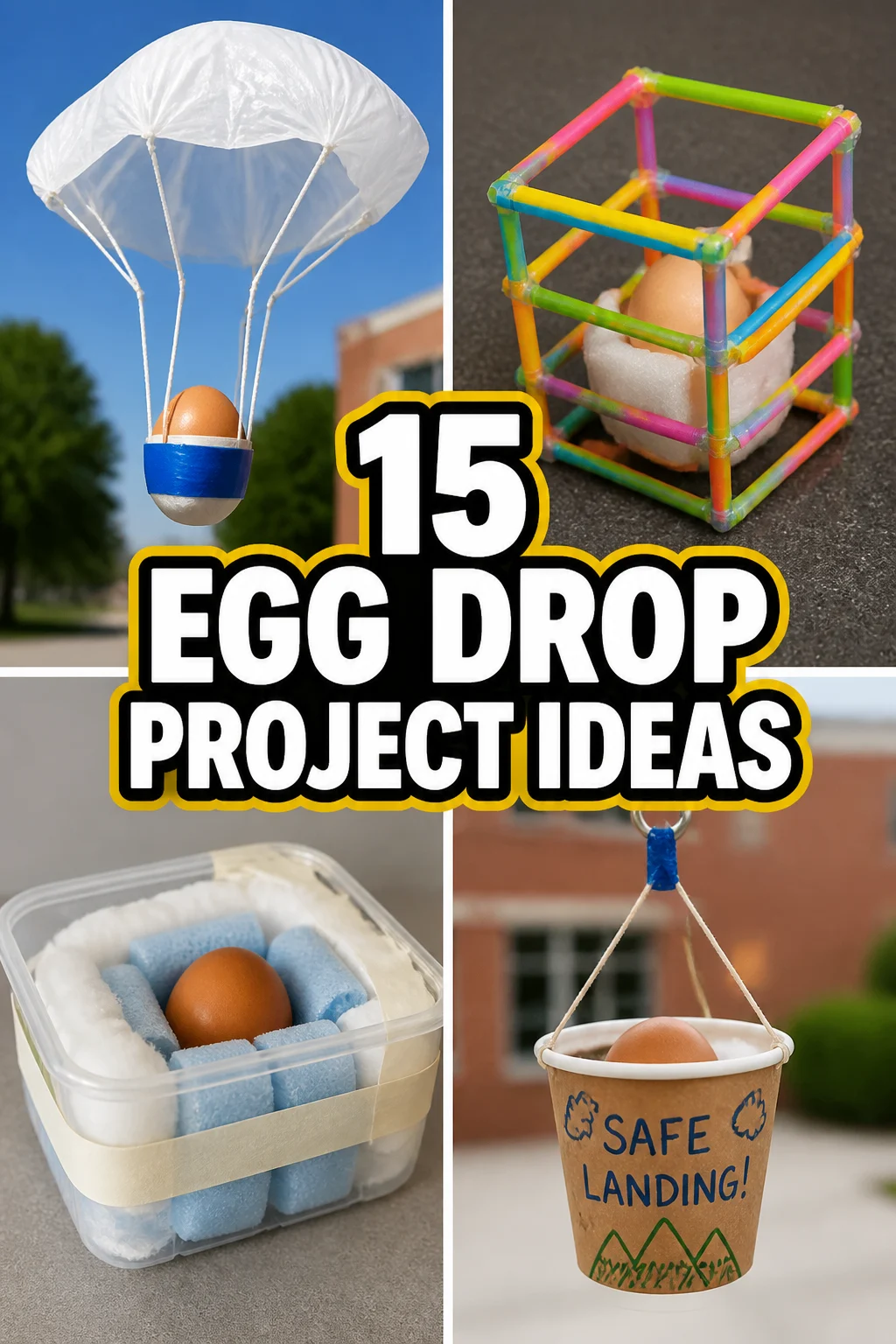
1. The Parachute Classic
This is the literal gold standard of keeping things from smashing into the ground. You grab a trash bag or an old grocery bag and tie it to your egg container with some sturdy string. The air catches the plastic and slows the descent to a gentle float rather than a terminal velocity nightmare.
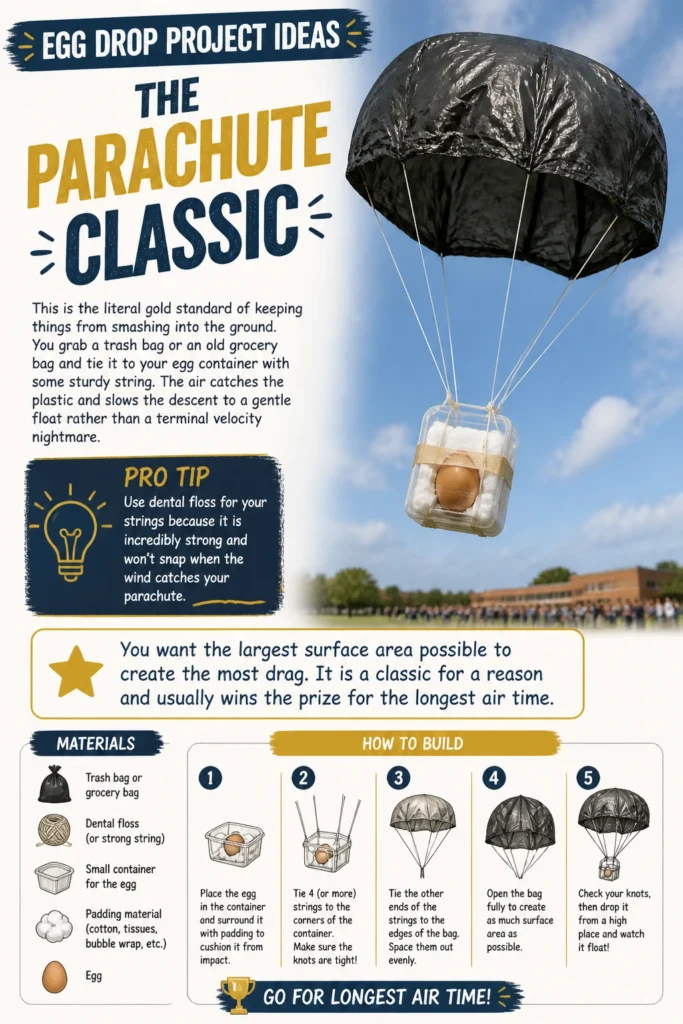
Pro Tip: Use dental floss for your strings because it is incredibly strong and won’t snap when the wind catches your parachute. You want the largest surface area possible to create the most drag.
It is a classic for a reason and usually wins the prize for the longest air time.
2. The Peanut Butter Jar
If you don’t mind a little grease, this method is basically foolproof. You submerge your egg in a jar of creamy peanut butter and screw the lid on tight. The thick, viscous goo absorbs the shock from every angle, acting like a liquid pillow for your shell.
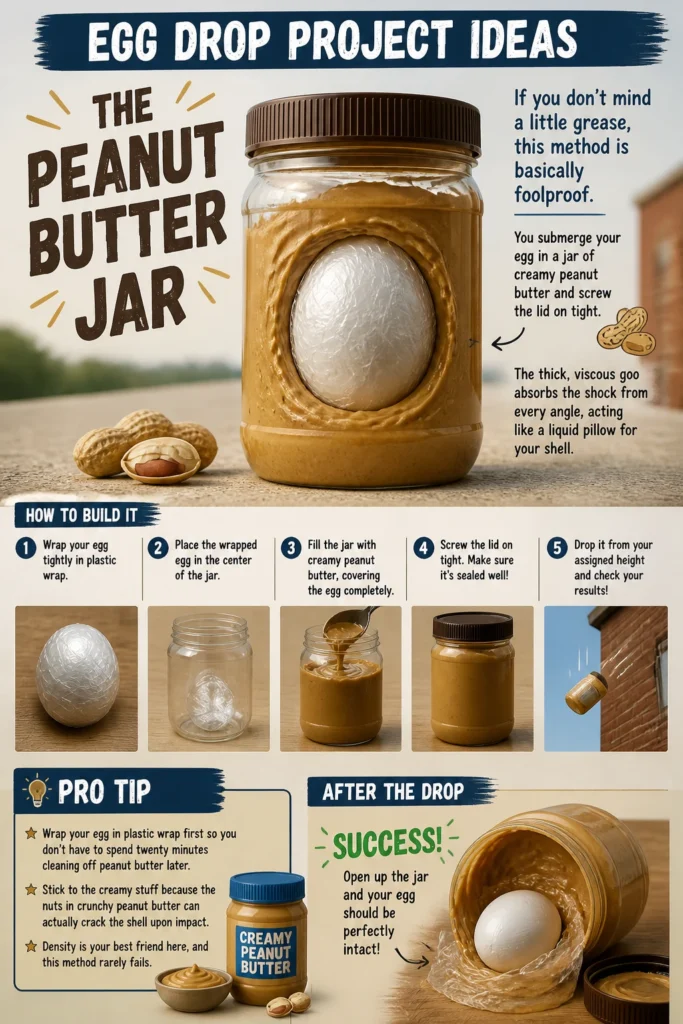
Pro Tip: Wrap your egg in plastic wrap first so you don’t have to spend twenty minutes cleaning off peanut butter later. Also, stick to the creamy stuff because the nuts in crunchy peanut butter can actually crack the shell upon impact.
Density is your best friend here, and this method rarely fails.
3. The Cereal Box Fortress
Turn your breakfast into a safety device by filling a box with puffed rice or cornflakes. These cereals are full of tiny air pockets that crush on impact, which directs the energy away from the egg. It is lightweight, cheap, and smells like a Saturday morning cartoon marathon.
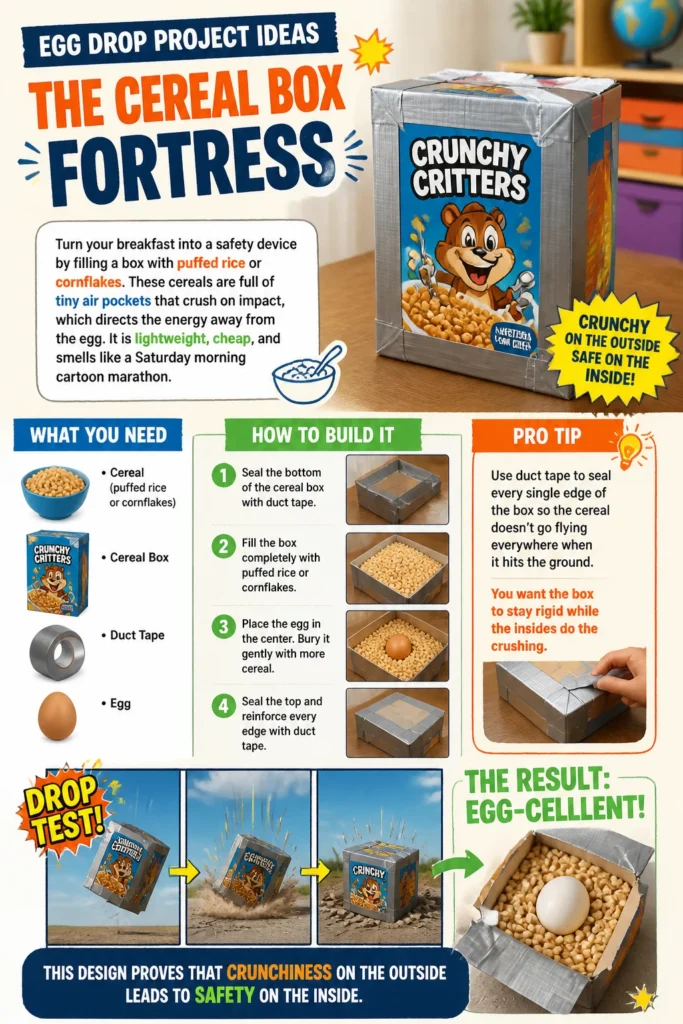
Pro Tip: Use duct tape to seal every single edge of the box so the cereal doesn’t go flying everywhere when it hits the ground. You want the box to stay rigid while the insides do the crushing.
This design proves that crunchiness on the outside leads to safety on the inside.
4. The Bubble Wrap Mummy
This is the ultimate lazy-person hack that actually delivers high-end results. You wrap the egg in so many layers of bubble wrap that it looks like a translucent burrito. The air-filled bubbles provide a constant cushion that bounces slightly when it hits the concrete.
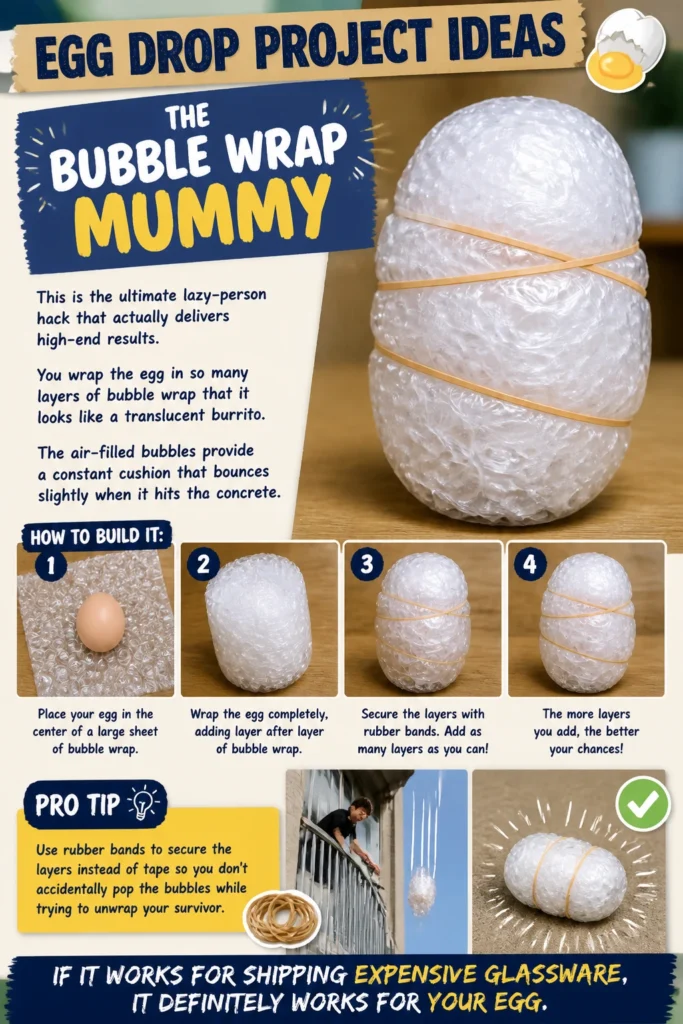
Pro Tip: Use rubber bands to secure the layers instead of tape so you don’t accidentally pop the bubbles while trying to unwrap your survivor. The more layers you add, the better your chances.
If it works for shipping expensive glassware, it definitely works for your egg.
5. The Straw Cage
Geometry finally becomes useful with this structural masterpiece. You build a multi-dimensional cage out of plastic straws and tape the egg right in the center. The straws act as a crumple zone, bending and snapping to absorb the force of the fall.
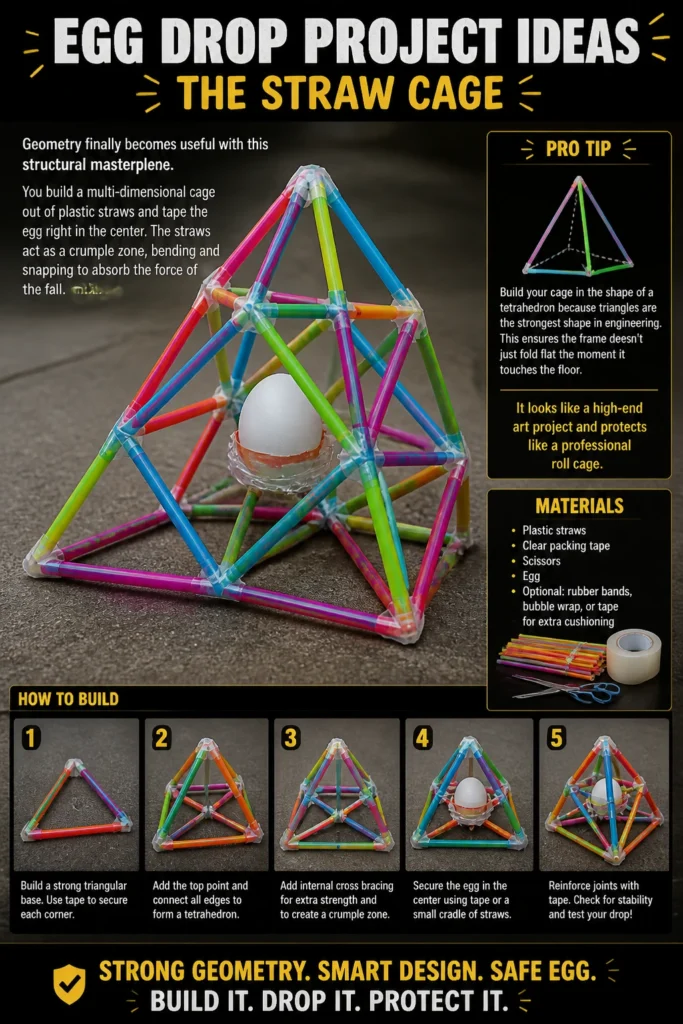
Pro Tip: Build your cage in the shape of a tetrahedron because triangles are the strongest shape in engineering. This ensures the frame doesn’t just fold flat the moment it touches the floor.
It looks like a high-end art project and protects like a professional roll cage.
6. The Sponge Block
Take four or five thick kitchen sponges and create a soft sandwich around your egg. You can use zip ties or rubber bands to keep the sponges compressed around the shell. The porous material acts like a memory foam mattress that eats the impact for breakfast.
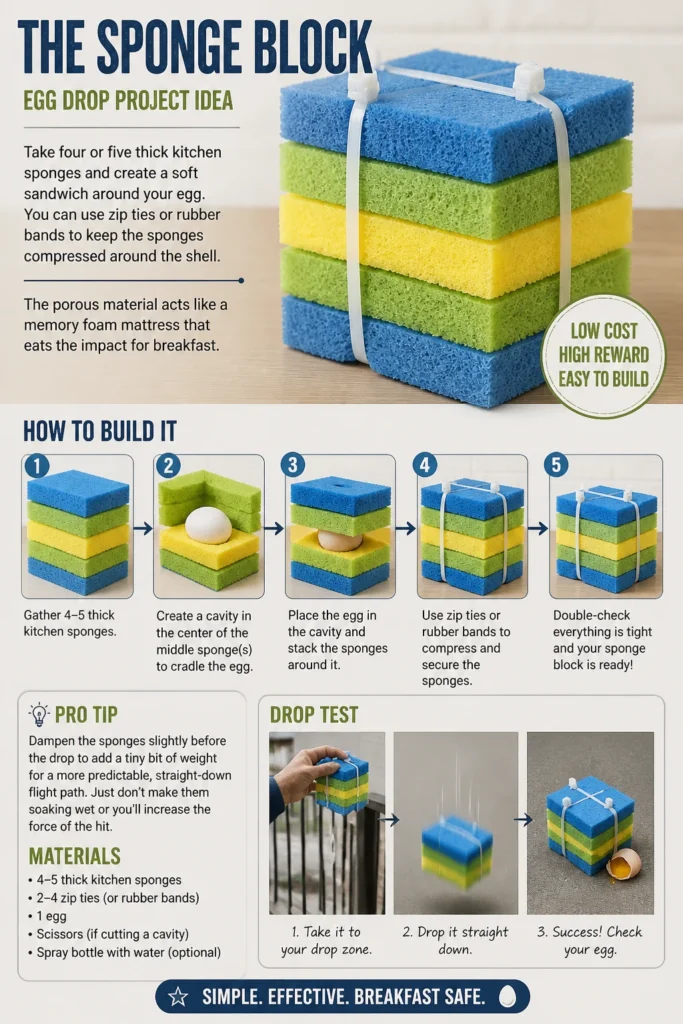
Pro Tip: Dampen the sponges slightly before the drop to add a tiny bit of weight for a more predictable, straight-down flight path. Just don’t make them soaking wet or you’ll increase the force of the hit.
This is a low-cost, high-reward method that is incredibly easy to assemble.
7. The Oobleck Suspension
Mix cornstarch and water to create oobleck, the weirdest substance in your kitchen. This non-Newtonian fluid stays liquid until it gets hit hard, at which point it turns into a solid shield. Put your egg in a plastic baggie and drop it into a container filled with this magic goo.
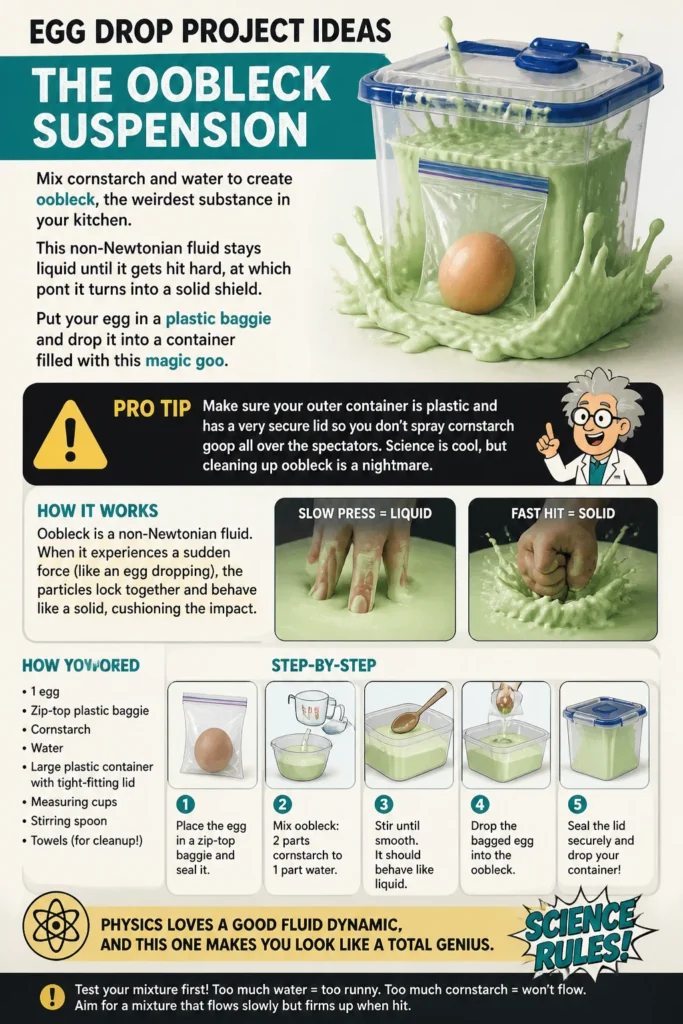
Pro Tip: Make sure your outer container is plastic and has a very secure lid so you don’t spray cornstarch goop all over the spectators. Science is cool, but cleaning up oobleck is a nightmare.
Physics loves a good fluid dynamic, and this one makes you look like a total genius.
8. The Popcorn Cloud
Fill a large container with air-popped popcorn and nestle your egg right in the middle. Popcorn is nature’s version of packing peanuts, offering plenty of air and soft surfaces. It is much better for the environment than Styrofoam and significantly tastier if you have leftovers.
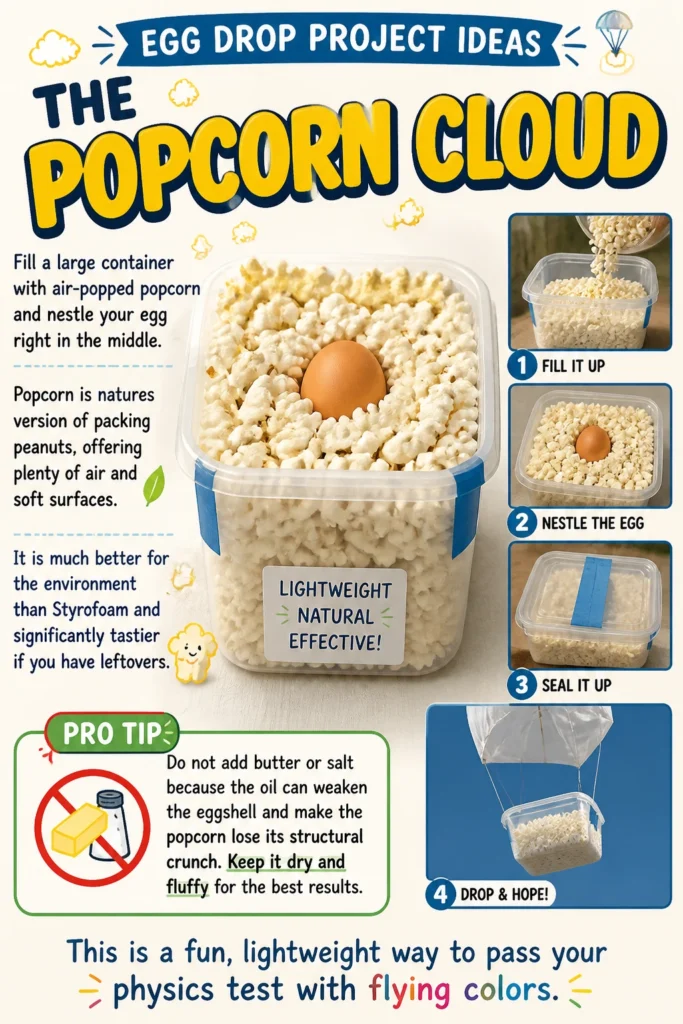
Pro Tip: Do not add butter or salt because the oil can weaken the eggshell and make the popcorn lose its structural crunch. Keep it dry and fluffy for the best results.
This is a fun, lightweight way to pass your physics test with flying colors.
9. The Rubber Band Web
Suspend your egg in the middle of a wooden or cardboard frame using a complex web of rubber bands. The egg hangs in the center and never actually touches the outer walls of the container. When the frame hits the ground, the egg just bounces safely in its bungee-cord home.
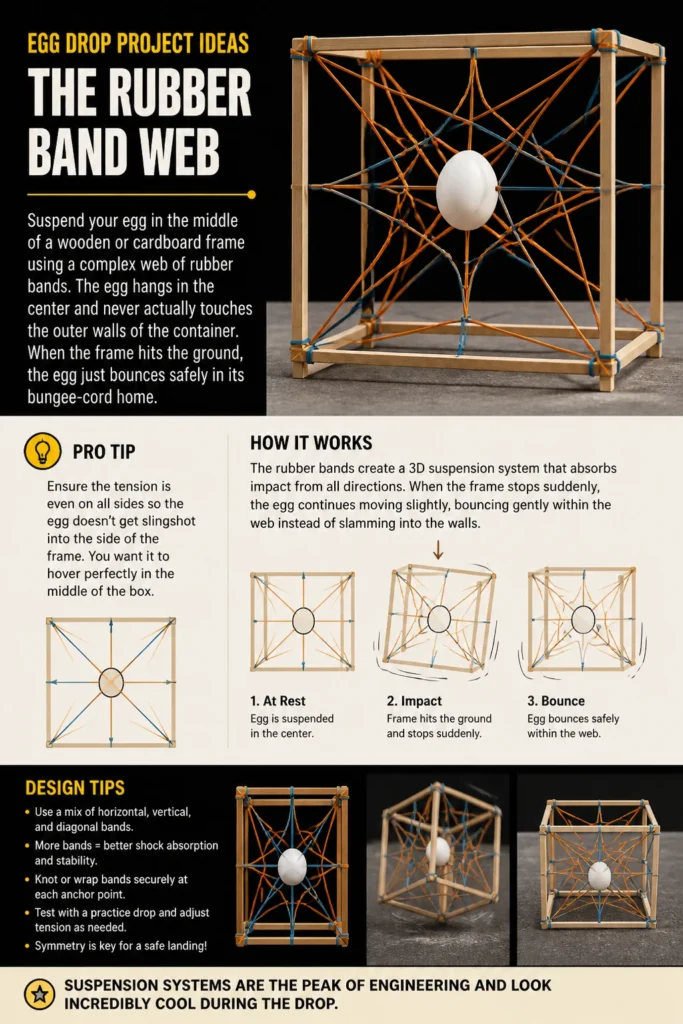
Pro Tip: Ensure the tension is even on all sides so the egg doesn’t get slingshot into the side of the frame. You want it to hover perfectly in the middle of the box.
Suspension systems are the peak of engineering and look incredibly cool during the drop.
10. The Diaper Defense
Grab a clean disposable diaper and wrap it snugly around your egg. These things are literally engineered to absorb impact and hold a lot of weight without breaking. The thick padding and elastic edges create a perfect, soft cocoon for your fragile passenger.
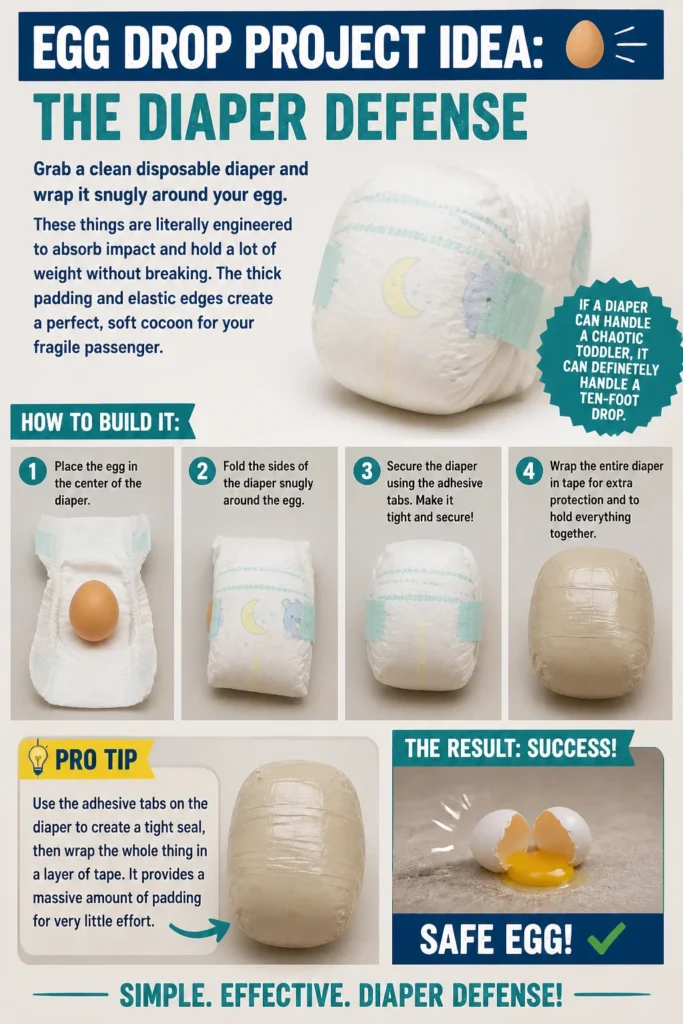
Pro Tip: Use the adhesive tabs on the diaper to create a tight seal, then wrap the whole thing in a layer of tape. It provides a massive amount of padding for very little effort.
If a diaper can handle a chaotic toddler, it can definitely handle a ten-foot drop.
11. The Balloon Buffer
Tape several inflated balloons around a small box containing your egg. The balloons act as giant, air-filled bumpers that redirect the force of the fall. It makes your project look like a party is happening and provides a very bouncy landing.
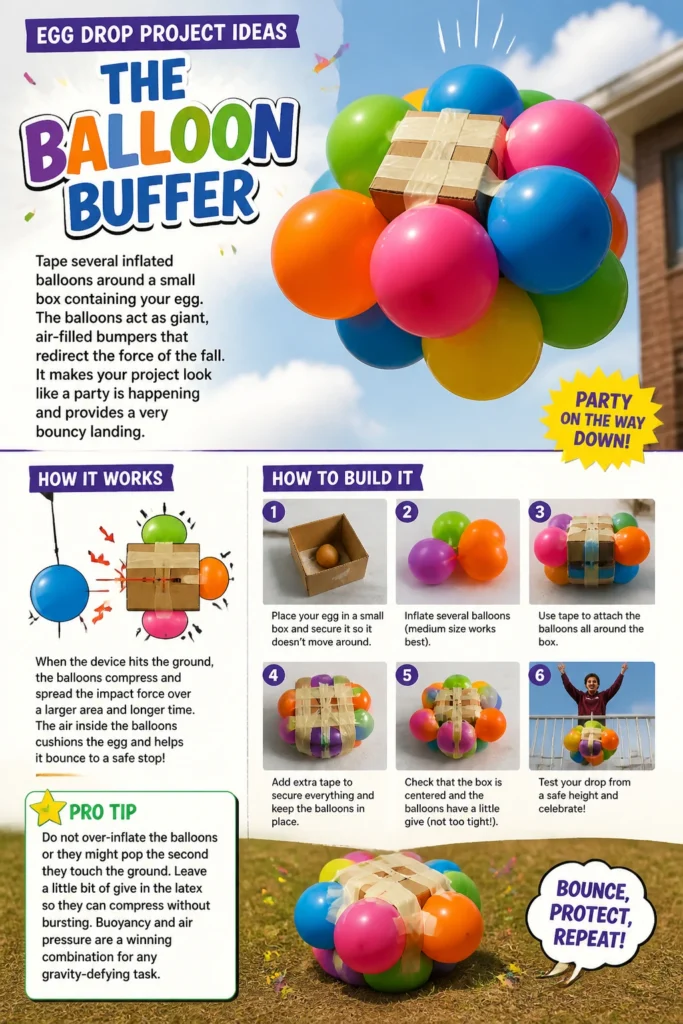
Pro Tip: Do not over-inflate the balloons or they might pop the second they touch the ground. Leave a little bit of “give” in the latex so they can compress without bursting.
Buoyancy and air pressure are a winning combination for any gravity-defying task.
12. The Cotton Ball Nest
Stuff a small container with hundreds of cotton balls until it is packed tight. You are creating a dense but incredibly soft environment where the egg cannot move or shift. It is basically the closest thing to a cloud that you can build in your living room.
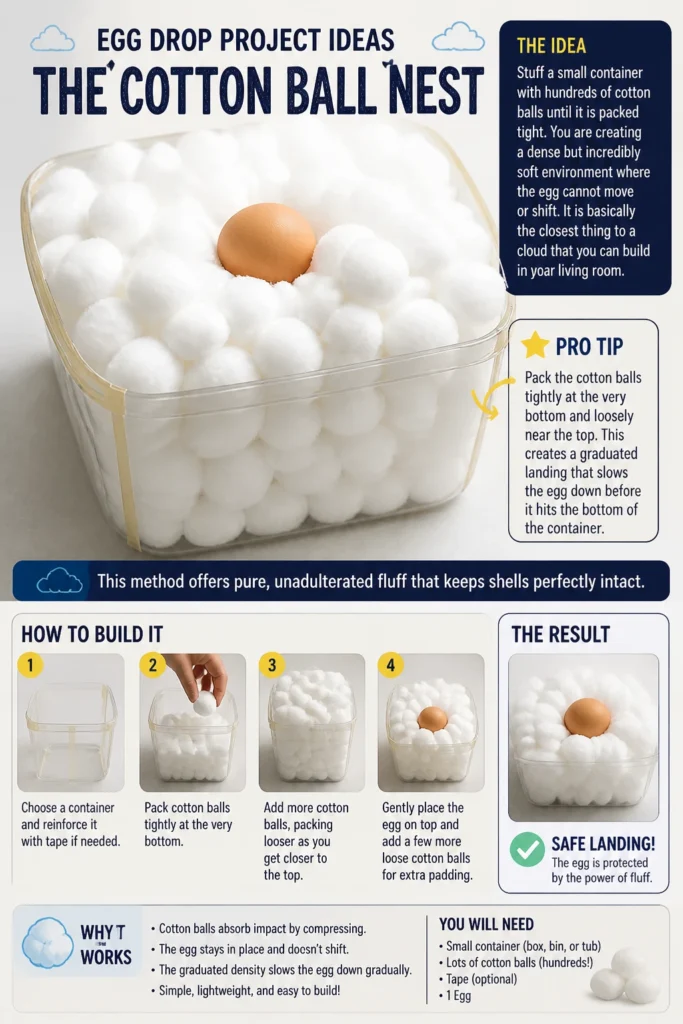
Pro Tip: Pack the cotton balls tightly at the very bottom and loosely near the top. This creates a graduated landing that slows the egg down before it hits the bottom of the container.
This method offers pure, unadulterated fluff that keeps shells perfectly intact.
13. The Bread Loaf
Hollow out a sturdy loaf of sourdough bread and slide your egg inside the center. The yeast-filled structure of the bread is a natural shock absorber that can take a serious beating. It is a weirdly effective way to use groceries for science.
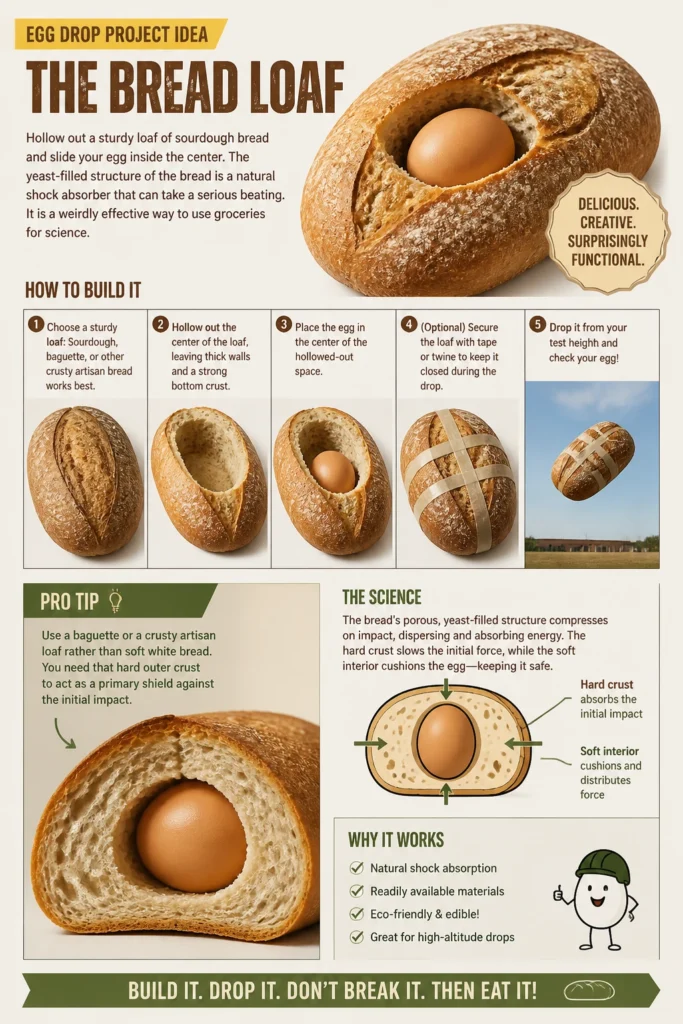
Pro Tip: Use a baguette or a crusty artisan loaf rather than soft white bread. You need that hard outer crust to act as a primary shield against the initial impact.
This idea is delicious, creative, and surprisingly functional for high-altitude drops.
14. The Styrofoam Cup Stack
Place your egg in one Styrofoam cup and then stack that cup inside five or six more. The air gaps between the stacked cups provide a buffer that dissipates energy as each cup compresses. It is a low-budget solution that works wonders for quick projects.
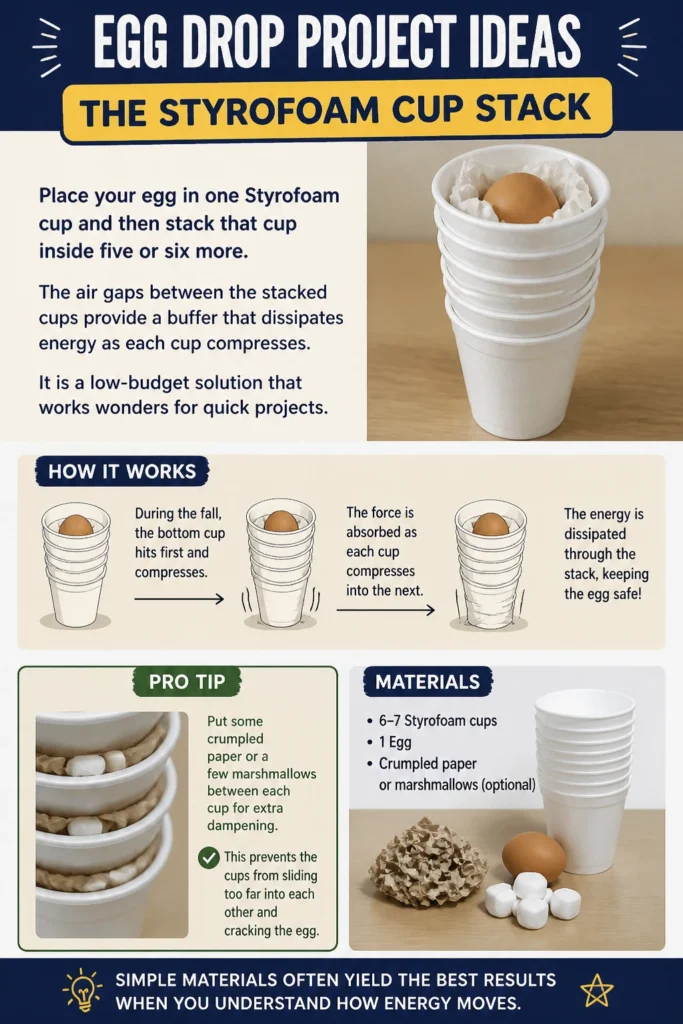
Pro Tip: Put some crumpled paper or a few marshmallows between each cup for extra dampening. This prevents the cups from sliding too far into each other and cracking the egg.
Simple materials often yield the best results when you understand how energy moves.
15. The Toilet Paper Roll Cage
Use empty cardboard rolls to build a multi-directional frame around your egg container. The cardboard tubes are surprisingly strong when standing upright and provide an excellent crumple zone. You are essentially turning household trash into a high-tech safety suit.
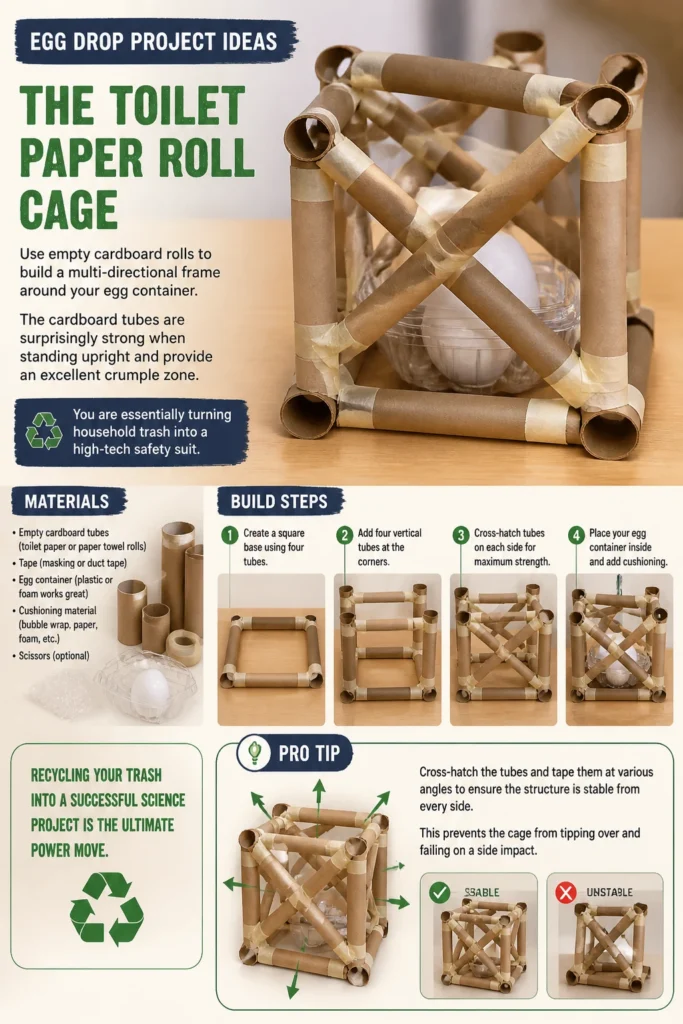
Pro Tip: Cross-hatch the tubes and tape them at various angles to ensure the structure is stable from every side. This prevents the cage from tipping over and failing on a side impact.
Recycling your trash into a successful science project is the ultimate power move.
Conclusion
Saving an egg from a long fall is all about managing energy and being a little bit creative with your trash. Whether you go with the peanut butter soak or the straw pyramid, the goal is to keep that shell from meeting the pavement too quickly. Grab your supplies, test your knots, and show gravity who is actually in charge. You’ve got this, and your egg is going to live to see another day.
& CRAFT IDEAS
Beginner-friendly tutorials, creative projects,
and weekly inspiration in your inbox.