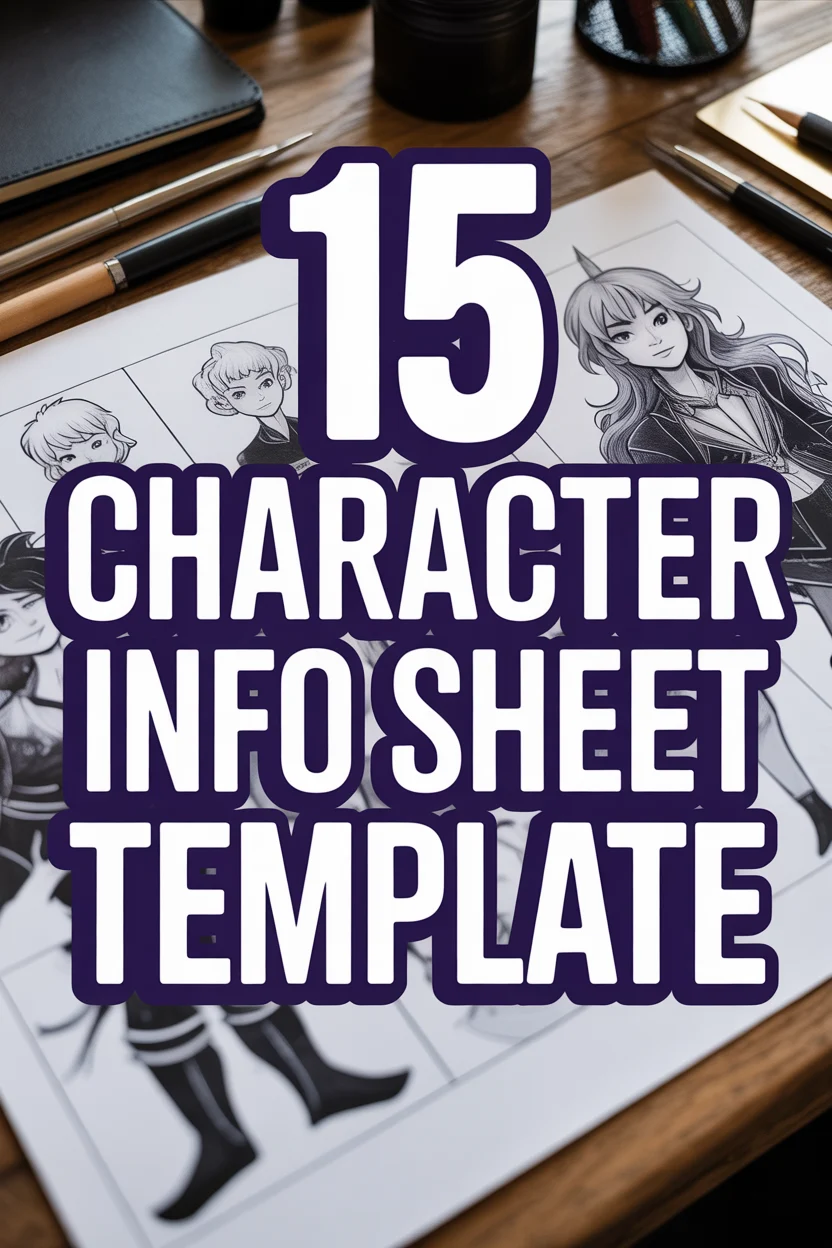
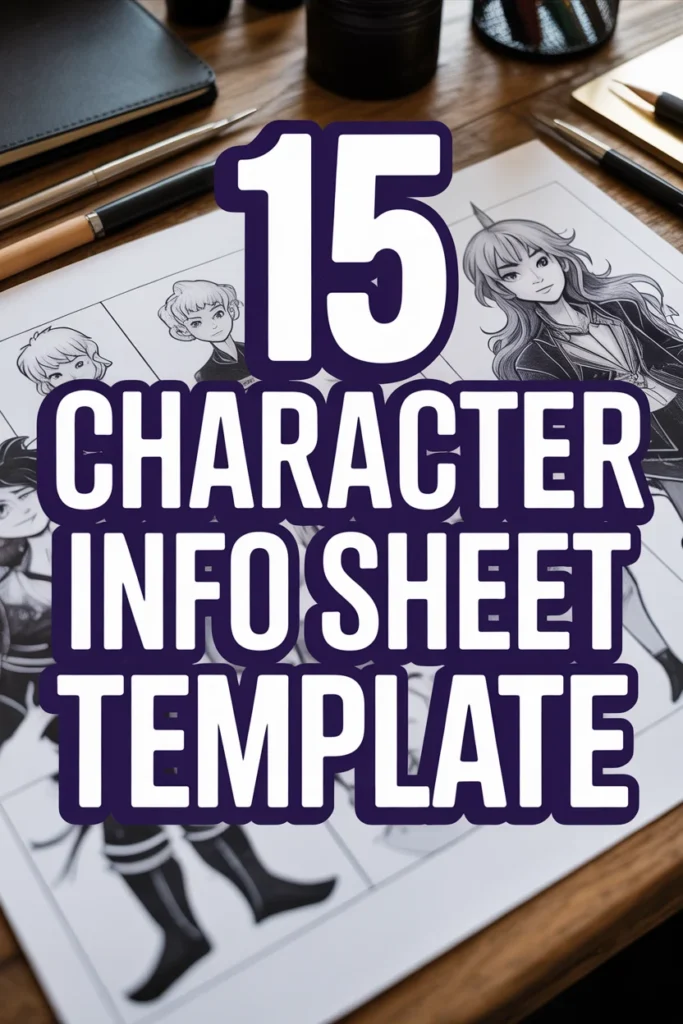
✍️ 15 Character Info Sheet Template
& CRAFT IDEAS
Beginner-friendly tutorials, creative projects,
and weekly inspiration in your inbox.
🛠️ The Ultimate Maker's Toolkit
I've tested thousands of craft tools over the years. Whether you are quilting, crafting, or building mixed-media art, these are the top 5 absolute non-negotiable tools I personally recommend to guarantee professional results.
🪡 SINGER Heavy Duty 4452 Sewing Machine
The sewing community highly recommends this as the ultimate "bulletproof" entry-level machine. Its heavy metal frame powerfully pushes through thick denim and heavy quilt layers that would instantly jam a standard plastic machine.
✂️ Fiskars 8" Orange-Handled Scissors
Never settle for dull dollar-store blades. Wirecutter repeatedly names Fiskars the absolute best all-purpose craft scissor due to its legendary precision-ground blades and an ergonomic grip that prevents hand-cramping.
🔥 Gorilla Dual Temp Hot Glue Gun
Named Wirecutter's top choice because it literally does the work of two tools. It features dual-temperature settings offering low heat for delicate florals and blistering high heat for heavy wood adhesion repairs.
🖌️ Mod Podge Waterbase Gloss Sealer
The absolute undisputed champion of decoupage and paper crafts. Experts rely exclusively on this exact water-based formula because it glues, seals, and finishes beautifully without yellowing or flaking over time.
🎨 Apple Barrel Acrylic Paint (2 oz)
The quintessential, incredibly inexpensive craft paint. Woodworkers and hobby painters swear by its smooth flow and matte finish, providing massive value and remarkably thick color coverage on rough surfaces.
Stuck staring at a blank page, wondering how to bring your next epic character to life?
You’re not alone, friend.
We’ve all been there. Ditch the character-block blues with these killer templates and get ready to craft some unforgettable personalities.
1. The Classic Novelist’s Blueprint
- Best For: Deep character dives, sprawling sagas.
- Vibe: Literary, comprehensive, a touch academic.
- Why it works: It forces you to consider every facet of a character’s existence.
This template digs into everything from childhood memories to their deepest fears and secret hopes. You’ll map out their family tree, significant life events, and even their favorite obscure coffee order. Think of it as a psychological profile, but for your fictional bestie.
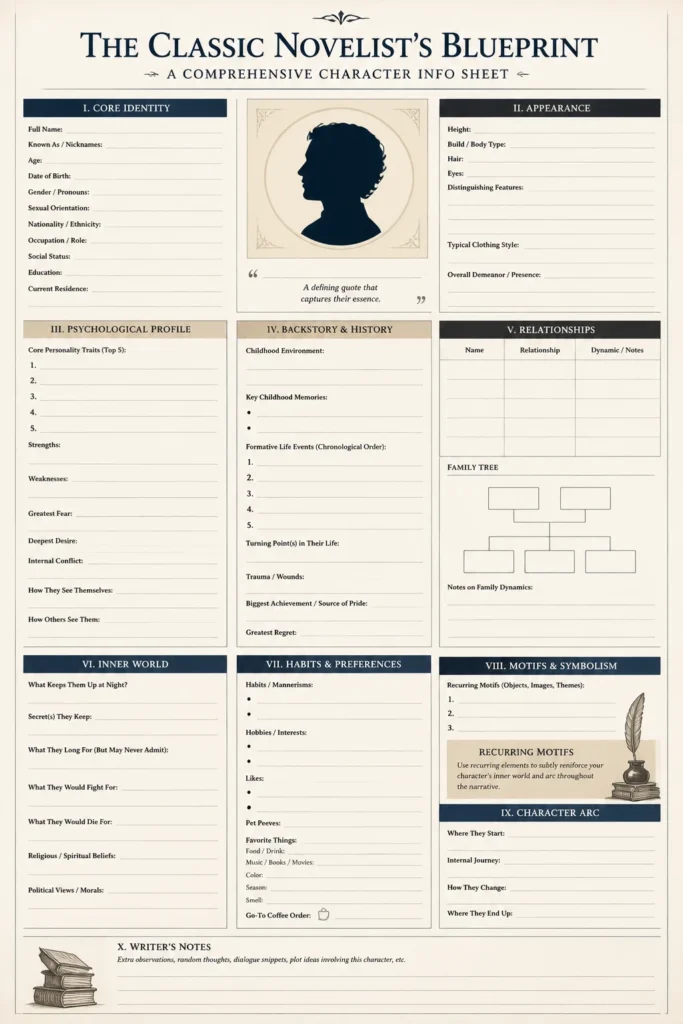
Pro Tip: Include a section for “Recurring Motifs” to weave subtle character details throughout your narrative.
2. RPG Player’s Quick Sheet
- Best For: Tabletop games, character creation on the fly.
- Vibe: Functional, stat-heavy, ready for action.
- Why it works: It prioritizes game mechanics alongside core personality.
Forget the fluff; this sheet gets right to the good stuff. It focuses on essential stats like Strength, Dexterity, and Charisma, plus a quick inventory. You’ll also jot down their primary class, race, and perhaps one quirky habit that makes them memorable in a dungeon crawl. Perfect for when the DM says “roll initiative.”
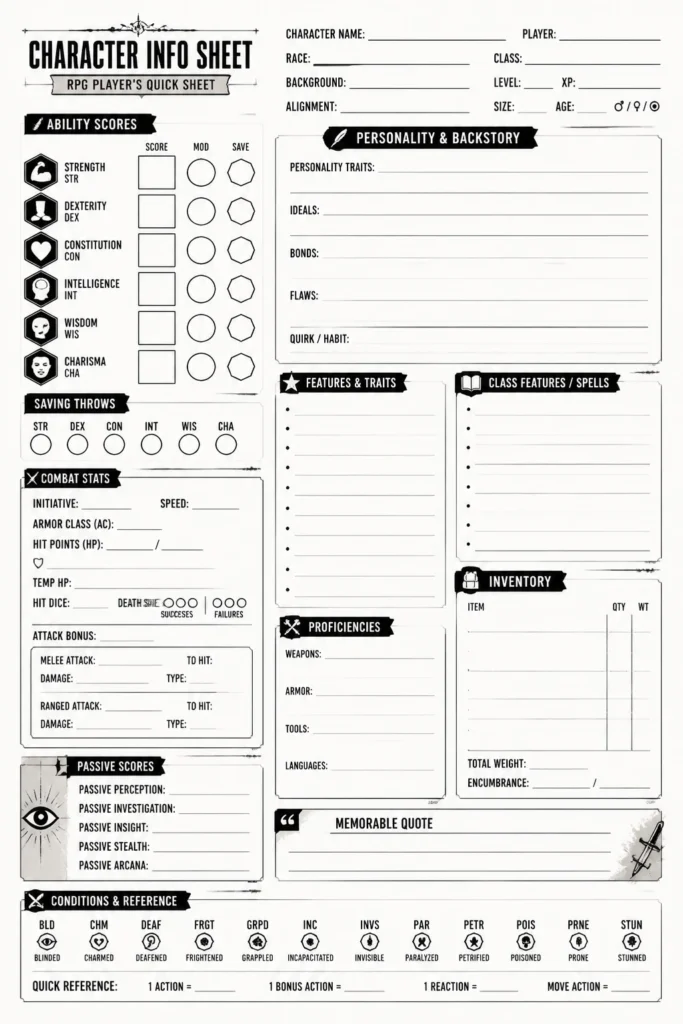
Pro Tip: Leave space for a “Memorable Quote” that captures their essence during gameplay.
3. Screenwriter’s Character Arc
- Best For: Film scripts, TV series development.
- Vibe: Dynamic, plot-driven, transformative.
- Why it works: It connects character development directly to narrative progression.
This template isn’t just about who they are; it’s about who they become. You’ll track their initial state, the inciting incident that changes everything, and their journey through various plot points. Highlight their “want” versus their “need” and how these evolve. Think in terms of visible actions and internal shifts.
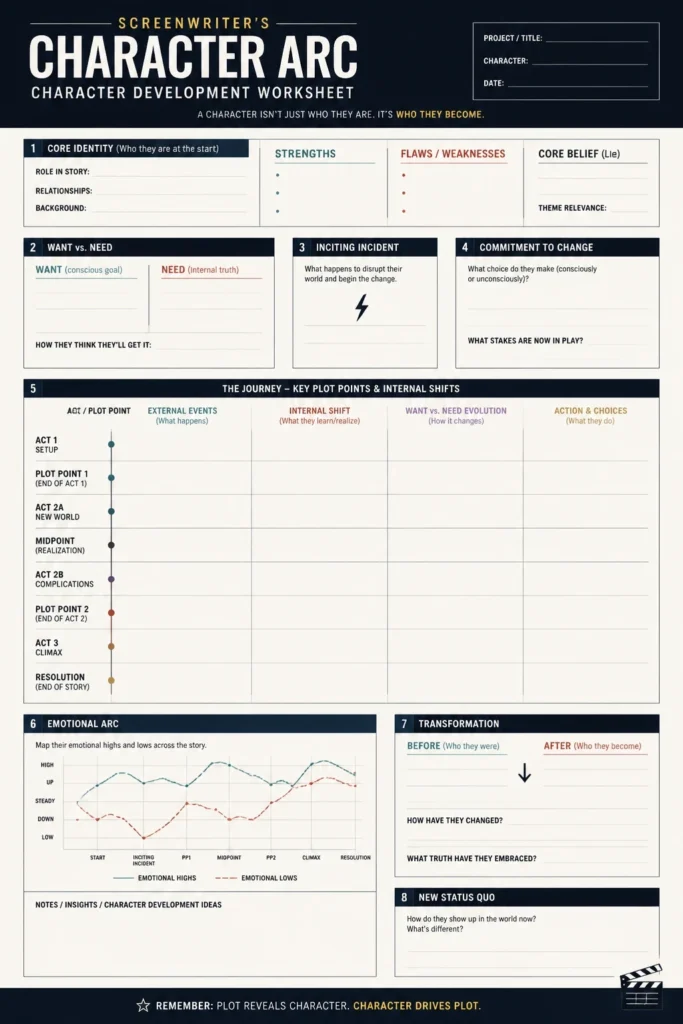
Pro Tip: Use different colored pens to map emotional highs and lows across the arc.
4. Artist’s Visual Guide
- Best For: Illustrators, comic artists, concept designers.
- Vibe: Inspirational, reference-heavy, visually focused.
- Why it works: It collates all necessary visual information in one spot.
No more guessing their hair color or preferred battle stance. This sheet includes spaces for multiple sketches, color palettes (maybe specific Hex codes like #4A90E2 for their eyes), and costume details. You’ll even find sections for facial expressions and body language notes. Imagine a mood board, but for a single person.
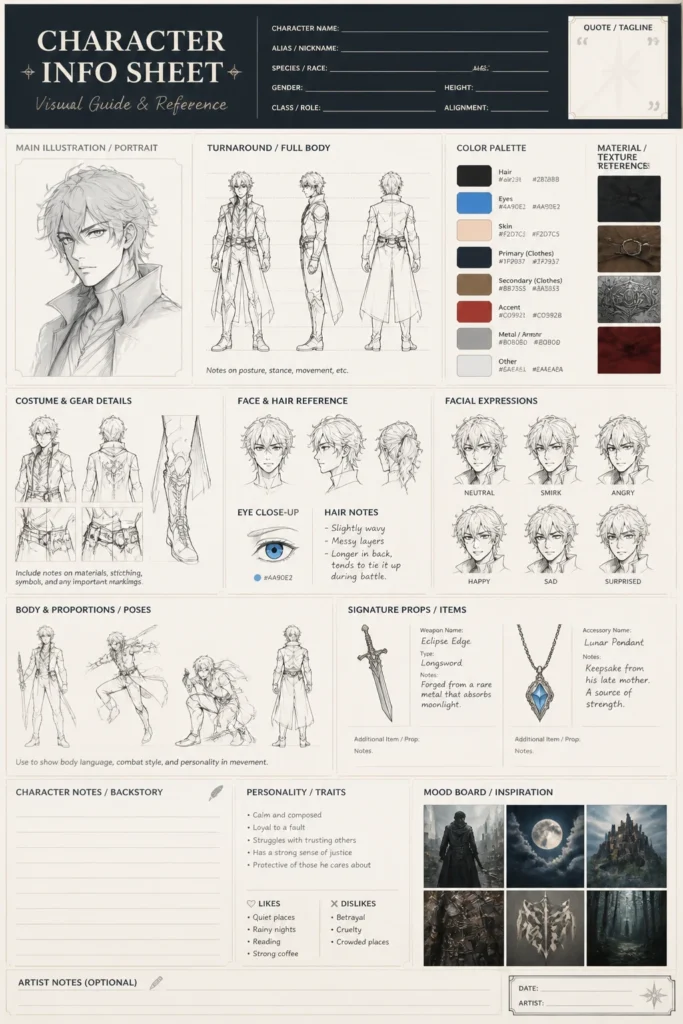
Pro Tip: Add a small section for “Signature Props” like a specific weapon or a quirky accessory.
5. Gamer’s NPC Generator
- Best For: Game developers, Dungeon Masters.
- Vibe: Efficient, quest-focused, easily expandable.
- Why it works: It provides just enough detail to make an NPC feel real without overcomplicating things.
Need a quick barkeep or a mysterious merchant? This template focuses on their immediate function, a simple personality quirk, and a potential quest hook. You’ll list their key dialogue lines, their primary motivation (like “wants more gold” or “seeks lost cat”), and their connection to the player. Keep it lean, mean, and game-ready.
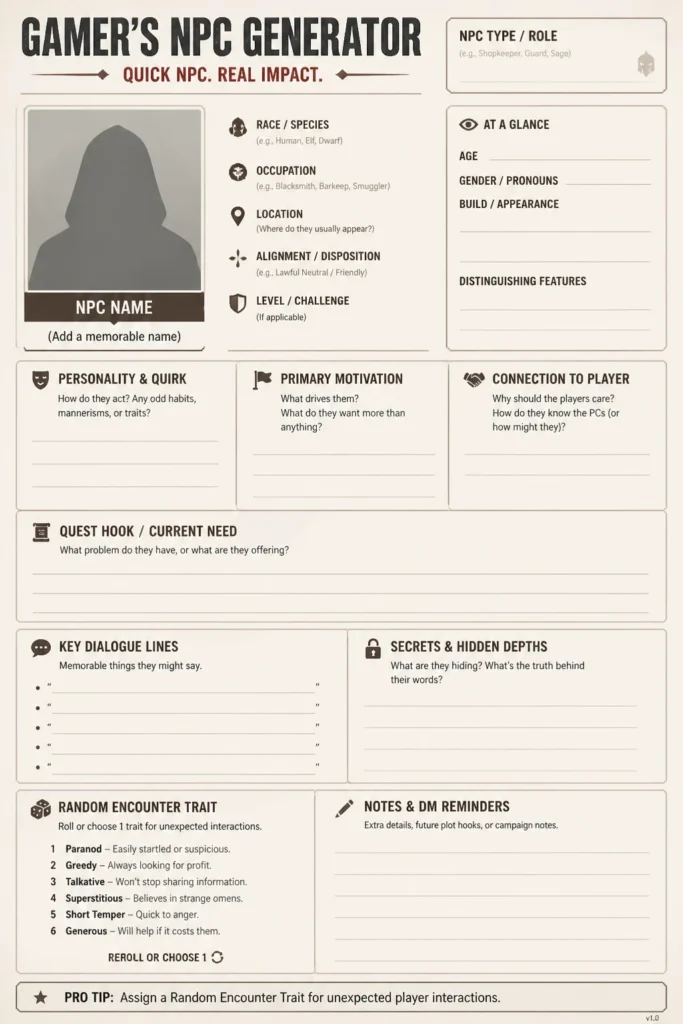
Pro Tip: Assign a “Random Encounter Trait” for unexpected player interactions.
6. Worldbuilder’s Cultural Profile
- Best For: Fantasy and sci-fi writers, complex world creation.
- Vibe: Anthropological, detailed, societal.
- Why it works: It grounds your character within their specific cultural context.
This sheet explores how a character’s background shapes them. Dive into their societal role, religious beliefs, and the customs they adhere to (or rebel against). You’ll consider their language, traditional attire, and how their culture views concepts like honor or family. It helps build truly unique individuals within a rich setting.
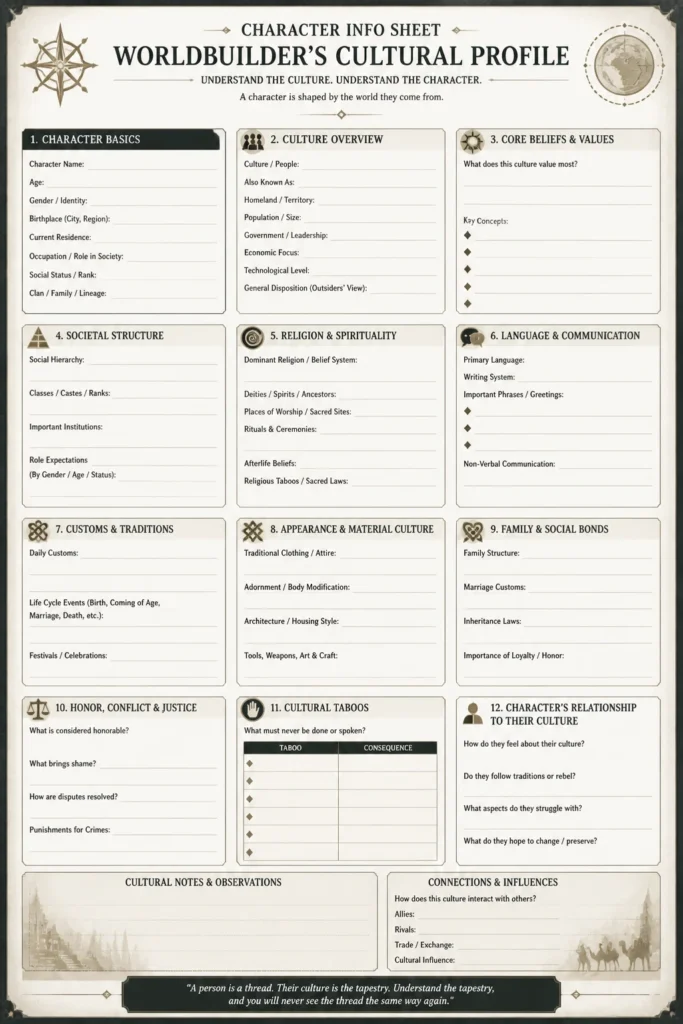
Pro Tip: Include a “Cultural Taboos” section to add immediate conflict or moral dilemmas.
7. Mystery Solver’s Suspect Dossier
- Best For: Detective novels, crime thrillers.
- Vibe: Investigative, suspicious, full of secrets.
- Why it works: It organizes clues and potential motives for various characters.
Every good mystery needs a roster of shady characters. This template tracks alibis, potential motives, and known relationships to the victim (or perpetrator). You’ll note any inconsistencies in their story, their criminal record (if any), and their general trustworthiness. Keep a “Red Herring Score” to mess with your readers.
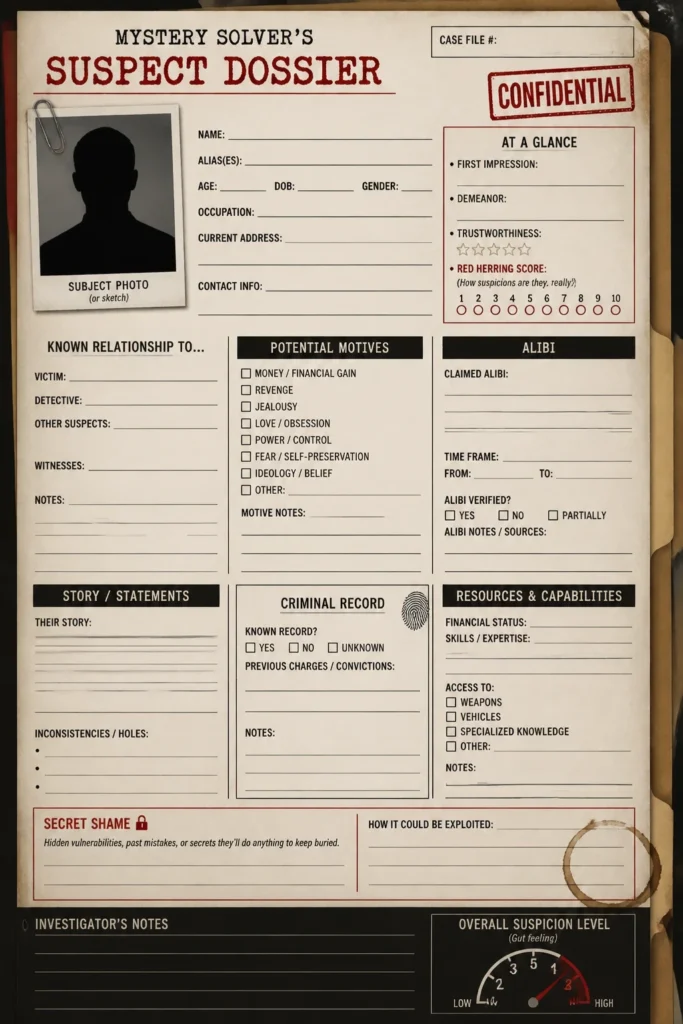
Pro Tip: Add a “Secret Shame” section for hidden vulnerabilities the detective might exploit.
8. Fantasy Hero’s Lore Compendium
- Best For: Epic fantasy, chosen one narratives.
- Vibe: Mythic, ancient, destiny-driven.
- Why it works: It ties the character to the grand history and magic of your world.
Your hero isn’t just a person; they’re a legend in the making. This sheet details their magical abilities, their ancient lineage, and any prophecies tied to their existence. You’ll list their fabled weapons, mystical companions, and significant historical events they’re connected to. Think of it as their “destiny checklist.”
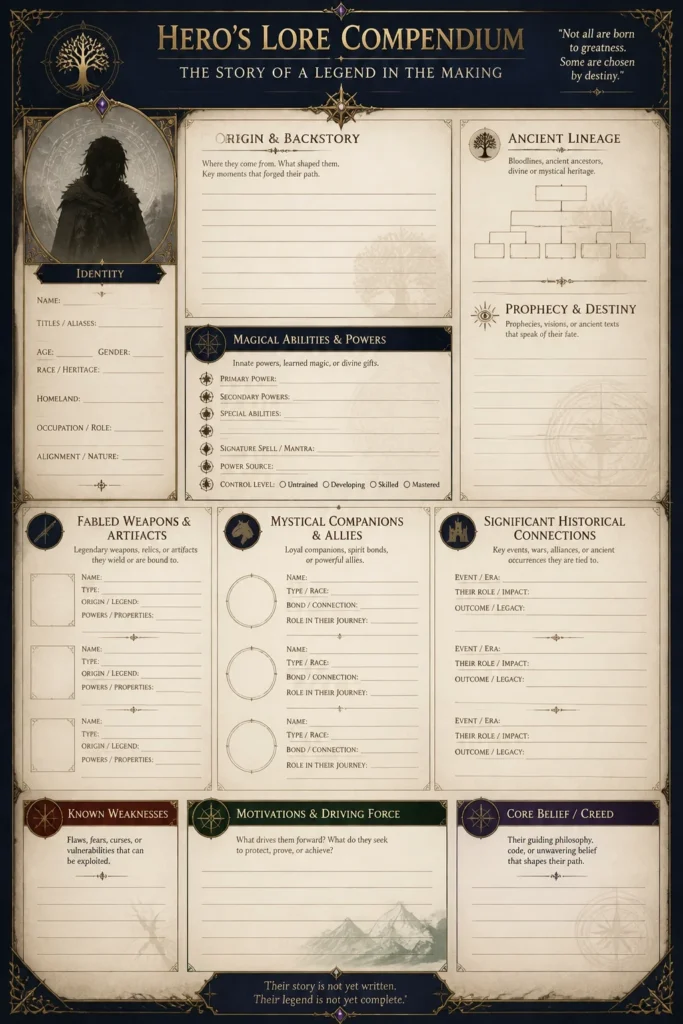
Pro Tip: Dedicate a small box to “Known Weaknesses” (magical or otherwise) for dramatic tension.
9. Sci-Fi Crew Member Brief
- Best For: Space operas, dystopian futures, futuristic teams.
- Vibe: Technical, futuristic, mission-oriented.
- Why it works: It defines their role and capabilities within a high-tech environment.
Every starship needs a specialized crew. This template focuses on their technical skills (e.g., “expert xenolinguist,” “master hacker”), cybernetic enhancements, and their assigned role on the ship or team. You’ll also note their origin planet, any unique alien physiology, and their loyalty rating. Make sure their tech jargon is on point.
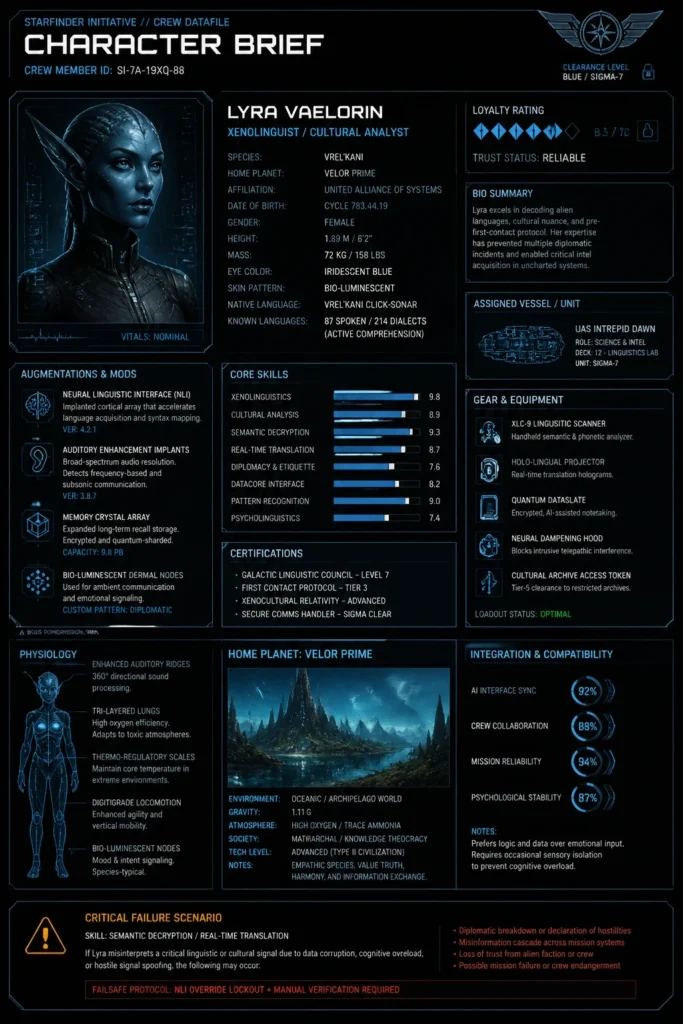
Pro Tip: Include a “Critical Failure” scenario unique to their skill set.
10. Romance Lead’s Heart Profile
- Best For: Romance novels, character-driven love stories.
- Vibe: Emotional, intimate, relationship-focused.
- Why it works: It helps you craft a compelling love interest with depth and flaws.
Beyond their charming smile, what makes them tick? This sheet explores their ideal partner, their biggest relationship fears, and their “love language.” You’ll detail their past heartbreaks, their emotional baggage, and their secret romantic gestures. Give them a fatal flaw that their partner must learn to love (or fix).
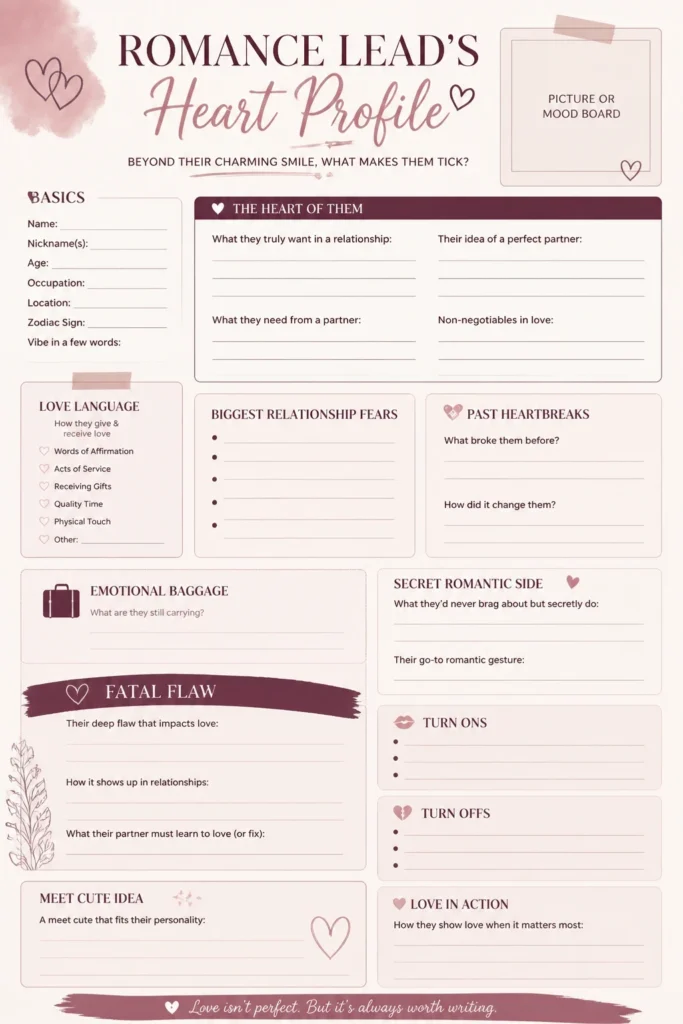
Pro Tip: Jot down a “Meet Cute Idea” specific to their personality.
11. Villain’s Master Plan Sheet
- Best For: Any story needing a compelling antagonist.
- Vibe: Malevolent, strategic, delightfully evil.
- Why it works: It outlines their motivations and methods, making them more than just a bad guy.
Villains aren’t born; they’re made (usually with a tragic backstory and a thirst for power). This template maps out their ultimate goal, their resources (like a secret lair or an army of minions), and their greatest weakness. You’ll also track their moral code (or lack thereof) and their preferred method of global domination. Remember, they’re the hero of their own story.
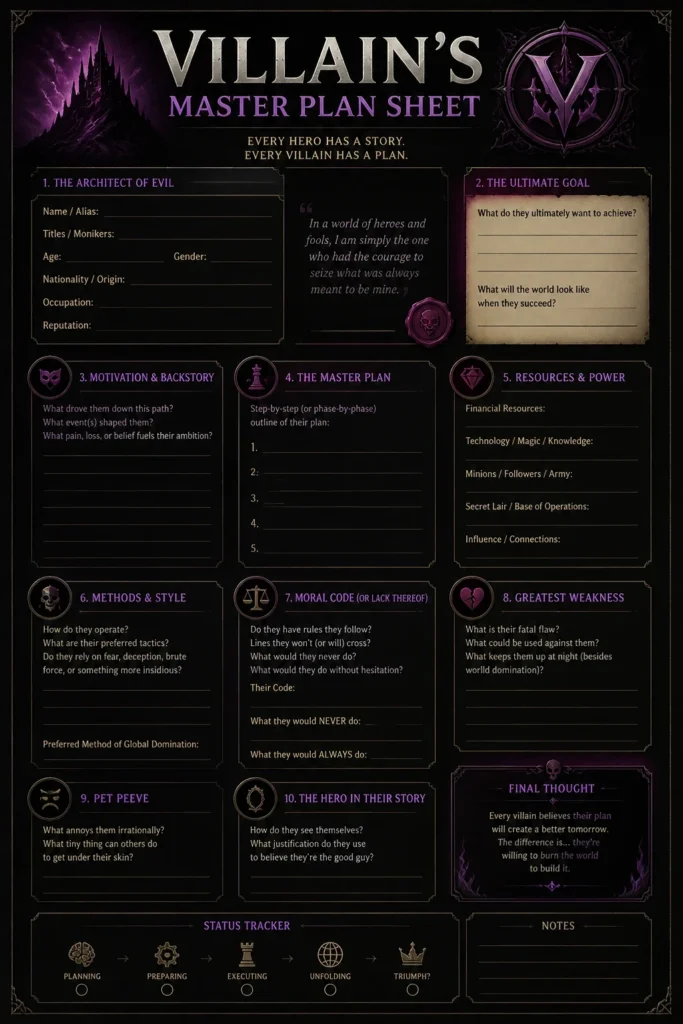
Pro Tip: Include a “Pet Peeve” that can be used to subtly annoy them.
12. Sidekick’s Support System
- Best For: Stories with strong secondary characters.
- Vibe: Loyal, helpful, often comedic.
- Why it works: It ensures your sidekick isn’t just a plot device.
Every hero needs a trusty companion, even if they’re a bit clumsy. This sheet focuses on their relationship with the protagonist, their unique, often overlooked skills, and their personal aspirations. You’ll note their loyalty level, their go-to catchphrase, and how they challenge or support the main character. Give them a moment to shine, too.
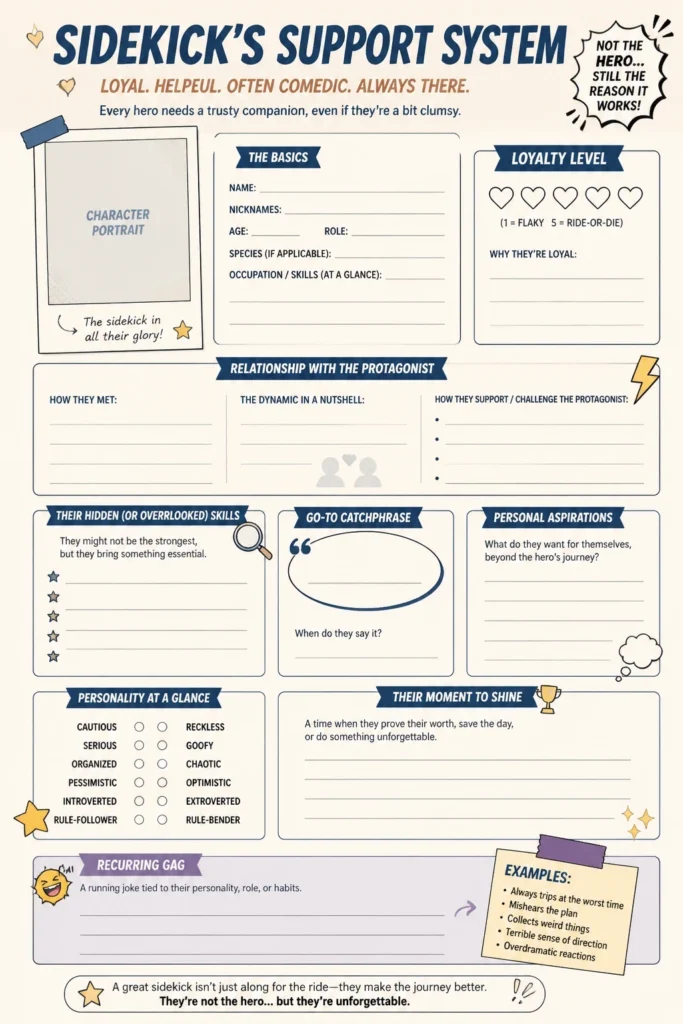
Pro Tip: List a “Recurring Gag” tied to their personality or role.
13. Horror Victim’s Backstory
- Best For: Horror, psychological thrillers.
- Vibe: Vulnerable, tragic, destined for trouble.
- Why it works: It makes their eventual demise (or survival) more impactful.
Who cares if they get eaten by a monster if you don’t care about them? This template builds empathy by detailing their past traumas, personal fears, and what they have to live for. You’ll note their biggest regret, their fatal flaw, and their specific phobias. Make them relatable, then put them through hell.
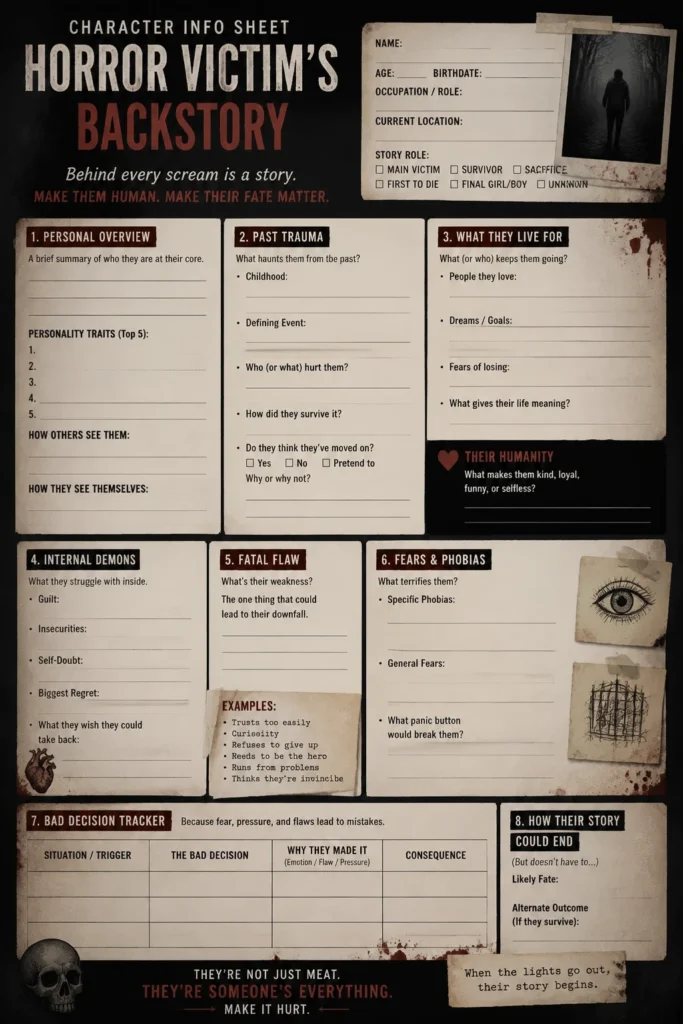
Pro Tip: Include a “Bad Decision Tracker” to justify their inevitable mistakes.
14. Historical Figure’s Bio Sketch
- Best For: Historical fiction, alternate history.
- Vibe: Authentic, era-specific, fact-based.
- Why it works: It grounds your character in a specific time and place with real-world context.
When writing historical fiction, accuracy (or plausible deviation) is key. This template focuses on their real-world impact, key historical events they witnessed, and their societal standing. You’ll research their typical attire, common phrases of the era, and their real-life motivations. Don’t forget their average cost of living, if available.
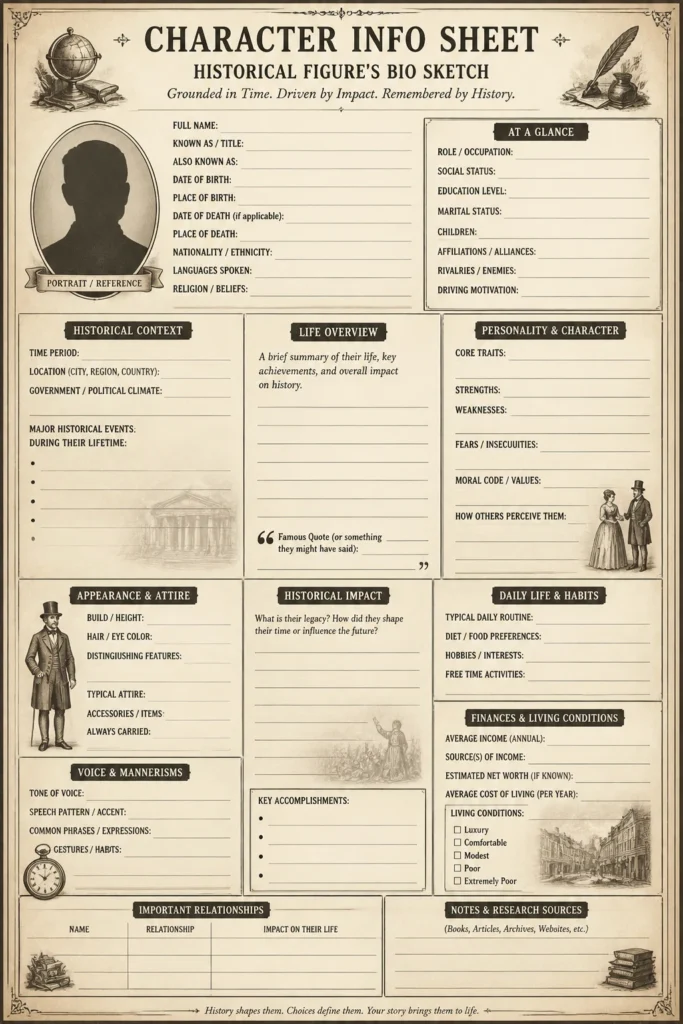
Pro Tip: Research period-appropriate names and titles to enhance authenticity.
15. Comic Book Persona Grid
- Best For: Comic books, graphic novels, superhero stories.
- Vibe: Dynamic, dual-identity, visually impactful.
- Why it works: It clearly separates their civilian and hero (or villain) identities.
Superheroes are all about the alter ego. This template has side-by-side sections for their civilian identity (mild-mannered reporter, struggling artist) and their heroic persona (caped crusader, master of shadows). You’ll list their powers, weaknesses, secret hideout, and signature gadgets. Don’t forget their catchphrase and their iconic costume details, maybe vibrant primary colors.
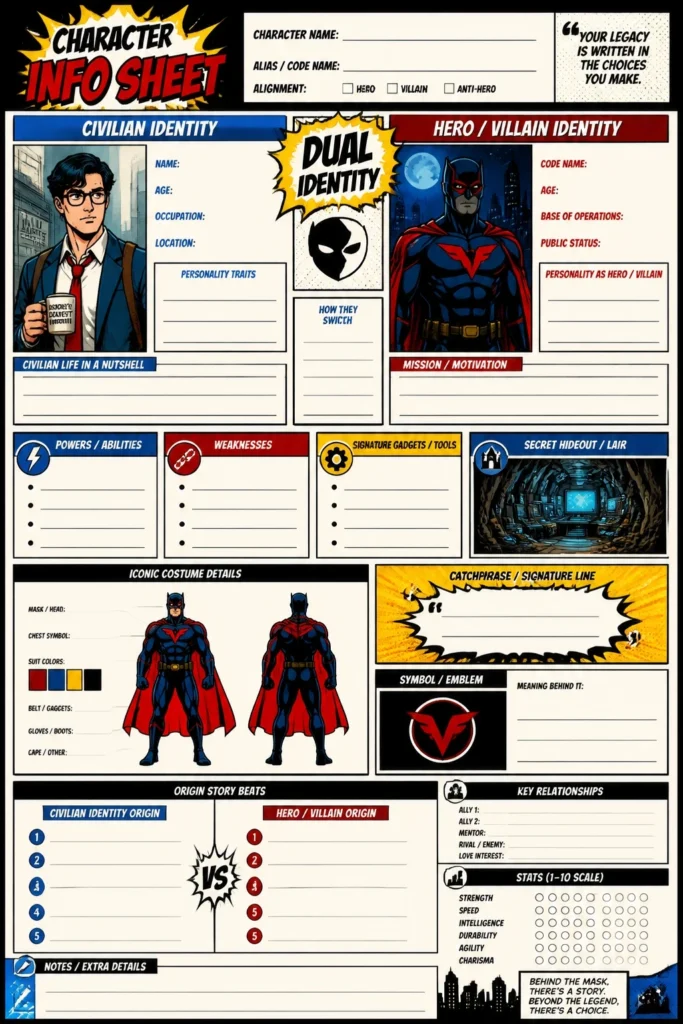
Pro Tip: Map out their “Origin Story” beats for both identities.
Our Top Recommended Finds
- A sleek digital tablet: Perfect for using digital templates, sketching visuals, and keeping everything organized on the go.
- A set of colorful gel pens: For those who prefer a tactile experience, these make distinguishing sections and highlighting key details a breeze.
- A sturdy ring binder with dividers: Ideal for printing out multiple templates and keeping all your character profiles neatly categorized and accessible.
Which of these will you try first?
Ready to stop just thinking about your characters and start building them?
Grab one of these templates and get cracking.
Which epic personality are you bringing to life first?
& CRAFT IDEAS
Beginner-friendly tutorials, creative projects,
and weekly inspiration in your inbox.