✨ 15 Sew In Braid Pattern
& CRAFT IDEAS
Beginner-friendly tutorials, creative projects,
and weekly inspiration in your inbox.
🛠️ The Ultimate Maker's Toolkit
I've tested thousands of craft tools over the years. Whether you are quilting, crafting, or building mixed-media art, these are the top 5 absolute non-negotiable tools I personally recommend to guarantee professional results.
🪡 SINGER Heavy Duty 4452 Sewing Machine
The sewing community highly recommends this as the ultimate "bulletproof" entry-level machine. Its heavy metal frame powerfully pushes through thick denim and heavy quilt layers that would instantly jam a standard plastic machine.
✂️ Fiskars 8" Orange-Handled Scissors
Never settle for dull dollar-store blades. Wirecutter repeatedly names Fiskars the absolute best all-purpose craft scissor due to its legendary precision-ground blades and an ergonomic grip that prevents hand-cramping.
🔥 Gorilla Dual Temp Hot Glue Gun
Named Wirecutter's top choice because it literally does the work of two tools. It features dual-temperature settings offering low heat for delicate florals and blistering high heat for heavy wood adhesion repairs.
🖌️ Mod Podge Waterbase Gloss Sealer
The absolute undisputed champion of decoupage and paper crafts. Experts rely exclusively on this exact water-based formula because it glues, seals, and finishes beautifully without yellowing or flaking over time.
🎨 Apple Barrel Acrylic Paint (2 oz)
The quintessential, incredibly inexpensive craft paint. Woodworkers and hobby painters swear by its smooth flow and matte finish, providing massive value and remarkably thick color coverage on rough surfaces.
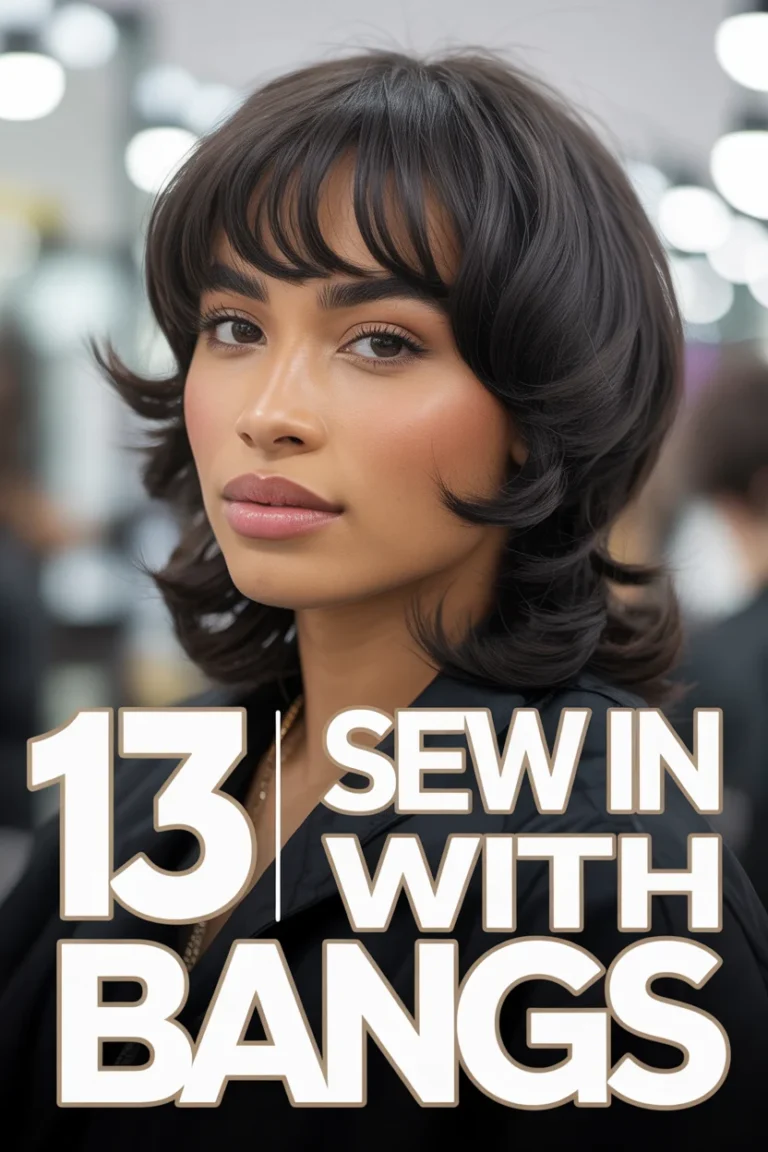
Alright, bestie, let’s spill the tea on sew-ins. You know that feeling when you’re ready for a fresh vibe, but also, like, protection for your real hair? Enter the sew-in. It’s not just slapping on some tracks; the magic is all in that foundation. A bomb braid pattern means your install lays flatter, lasts longer, and looks so natural, people will be doing double takes. Forget basic, we’re diving into the patterns that make all the difference. Get ready to upgrade your hair game, one braid at a time.
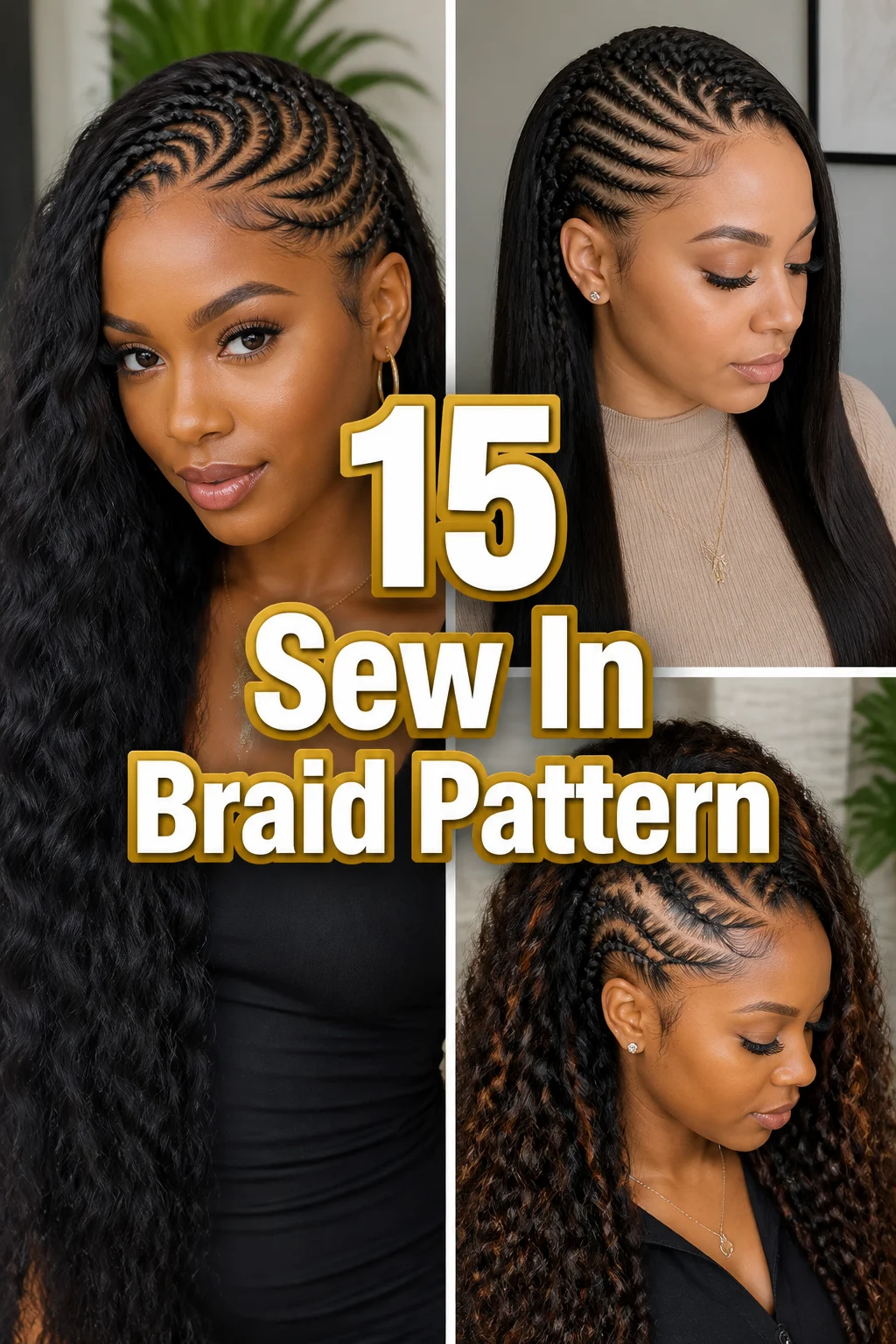
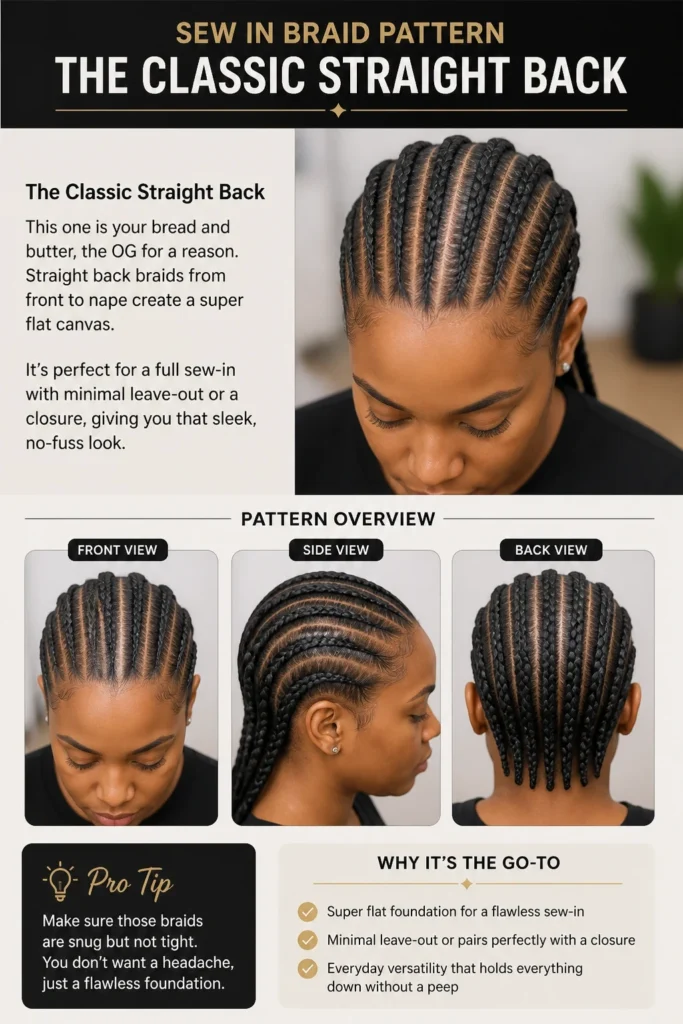
1. The Classic Straight Back
This one is your bread and butter, the OG for a reason. Straight back braids from front to nape create a super flat canvas. It’s perfect for a full sew-in with minimal leave-out or a closure, giving you that sleek, no-fuss look.
Pro tip: Make sure those braids are snug but not tight. You don’t want a headache, just a flawless foundation. It’s the go-to for everyday versatility, holding everything down without a peep.
2. U-Part (Leave-Out)
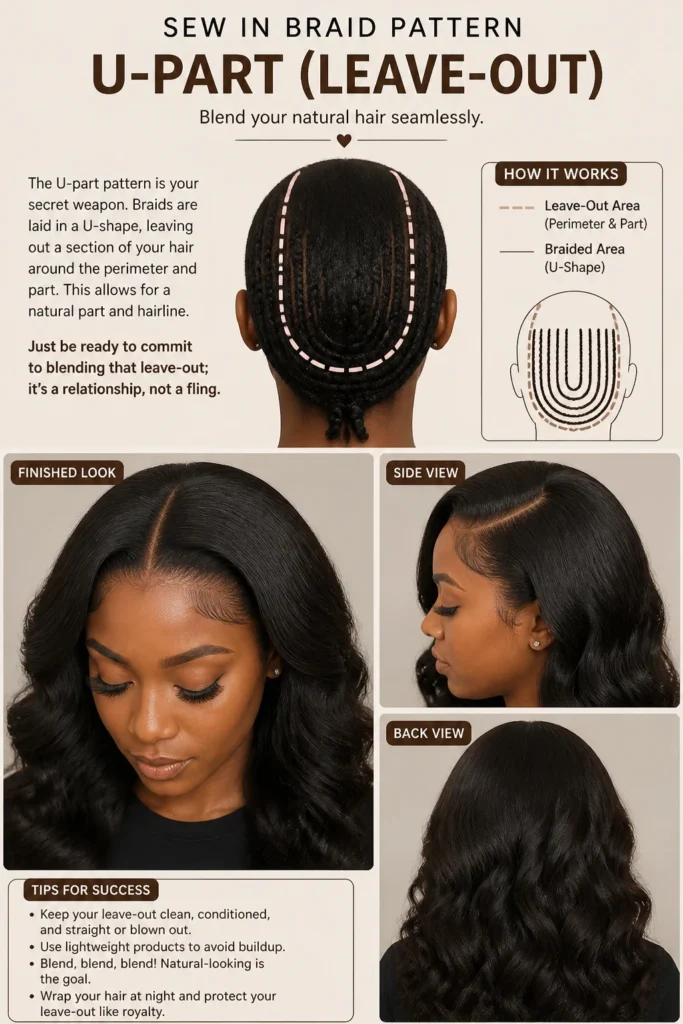
Want to blend your natural hair seamlessly? The U-part pattern is your secret weapon. Braids are laid in a U-shape, leaving out a section of your hair around the perimeter and part.
This allows for a natural part and hairline. Just be ready to commit to blending that leave-out; it’s a relationship, not a fling.
3. V-Part (Leave-Out Variation)
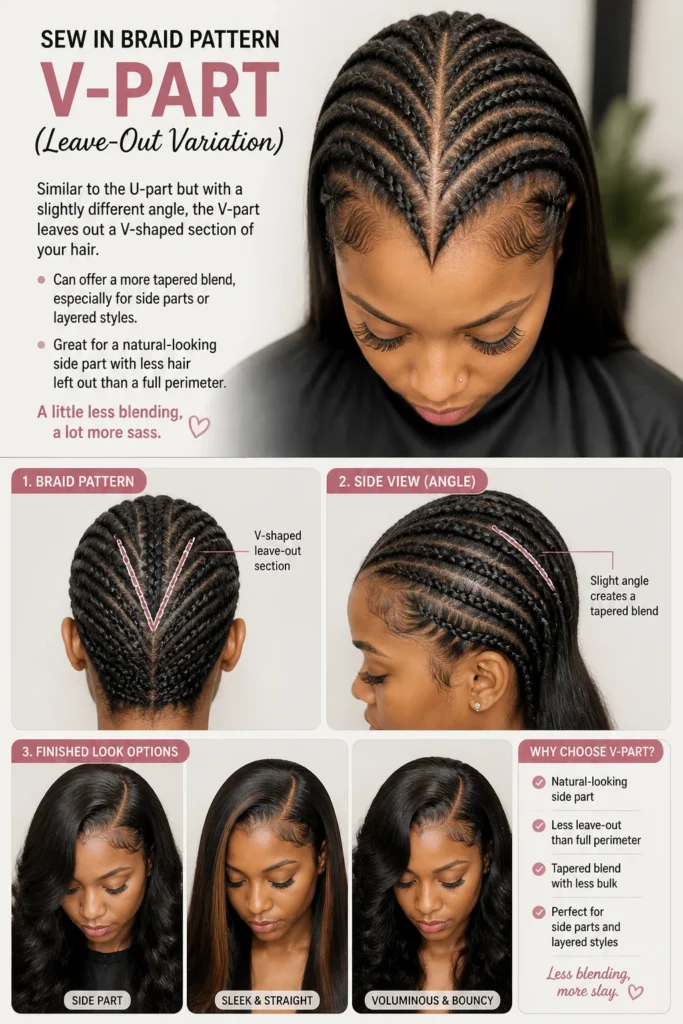
Similar to the U-part but with a slightly different angle, the V-part leaves out a V-shaped section of your hair. This can sometimes offer a more tapered blend, especially if you’re rocking a side part or specific layered styles.
It’s great for those who want a natural-looking side part with less hair left out than a full perimeter. A little less blending, a lot more sass.
4. Full Sew-In (No Leave-Out)
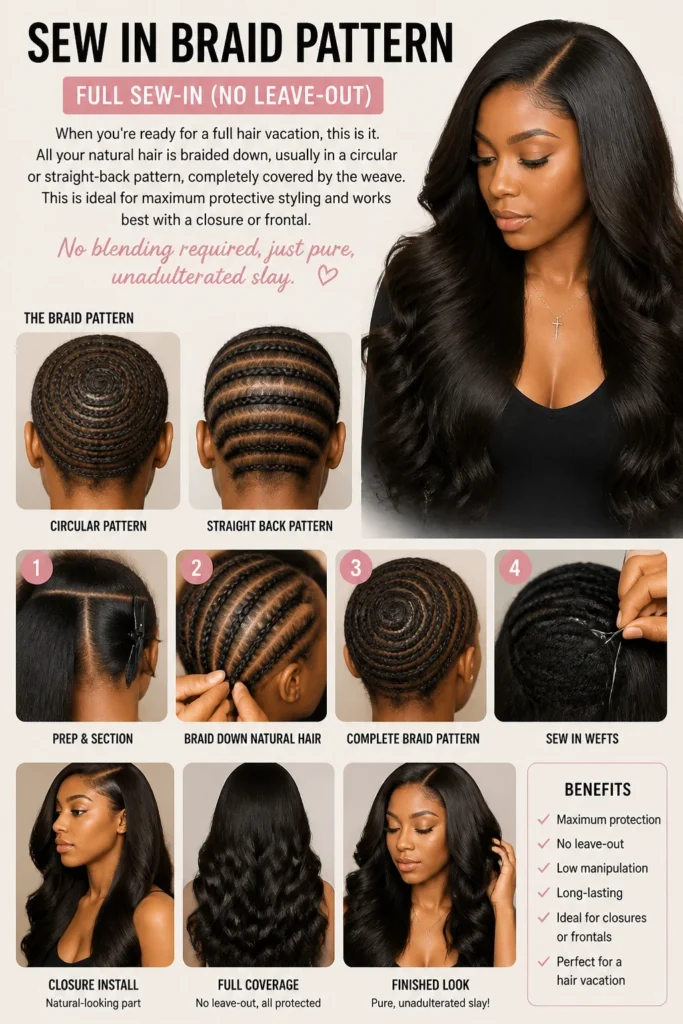
When you’re ready for a full hair vacation, this is it. All your natural hair is braided down, usually in a circular or straight-back pattern, completely covered by the weave.
This is ideal for maximum protective styling and works best with a closure or frontal. No blending required, just pure, unadulterated slay.
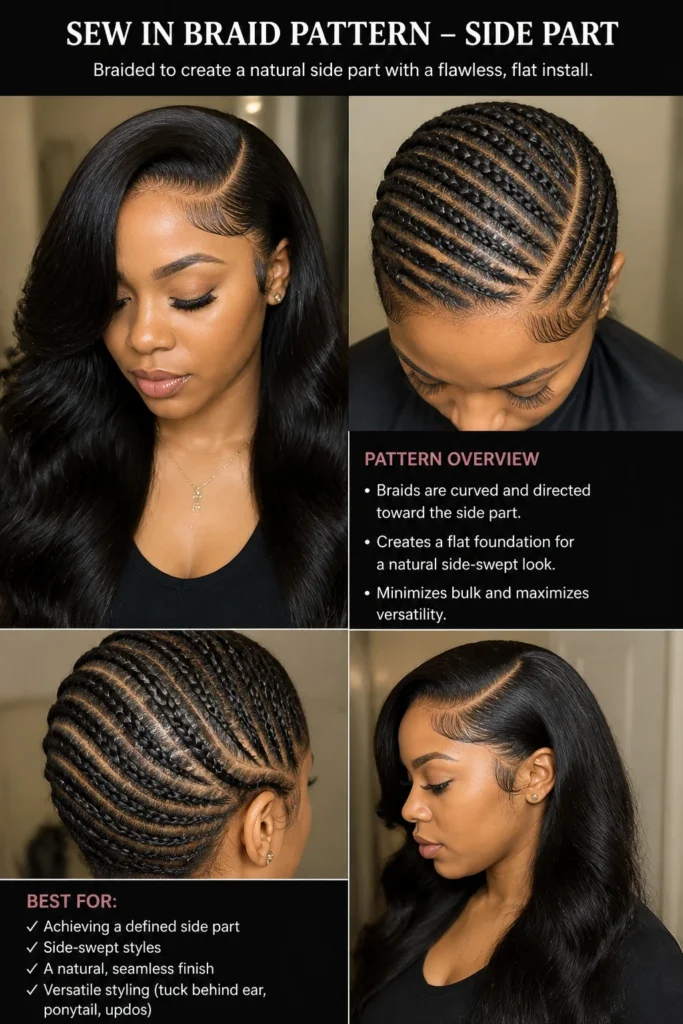
5. Side Part
Pretty self-explanatory, right? The braids are strategically placed to create a distinct side part in your sew-in. This usually involves braiding towards the desired part line.
It’s fantastic for achieving a specific side-swept look without fighting your hair’s natural growth pattern. Your hair, but make it drama.
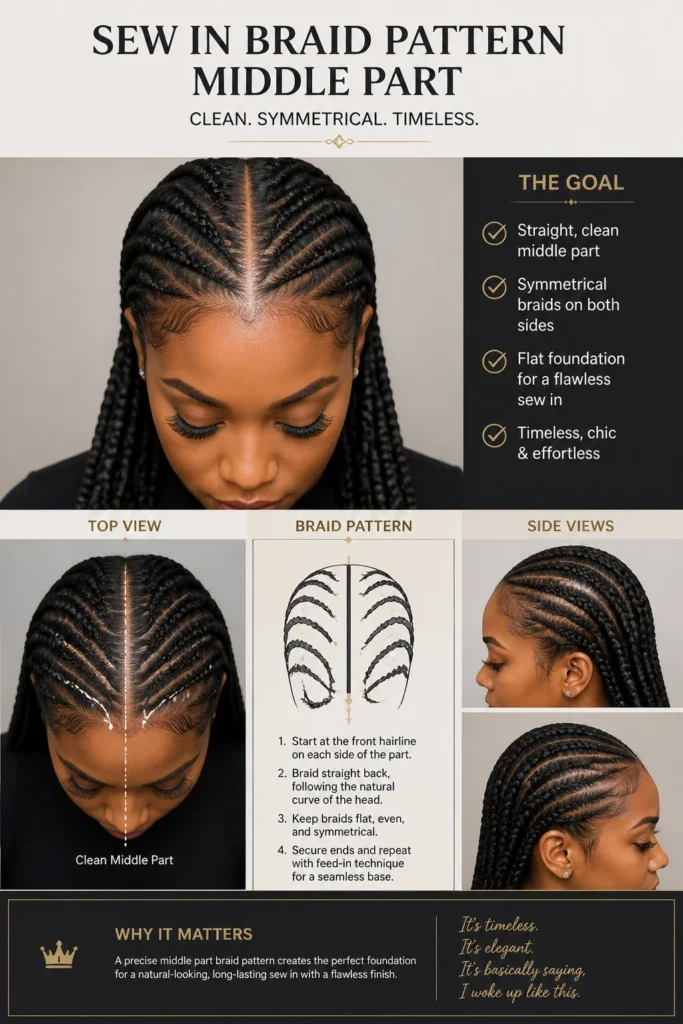
6. Middle Part
For symmetrical queens, the middle part pattern is key. Braids are laid to ensure a clear, straight middle part, usually with two sections braided down each side of the head.
This pattern is essential for that classic, chic middle part style. It’s timeless, it’s elegant, it’s basically saying, “I woke up like this.”
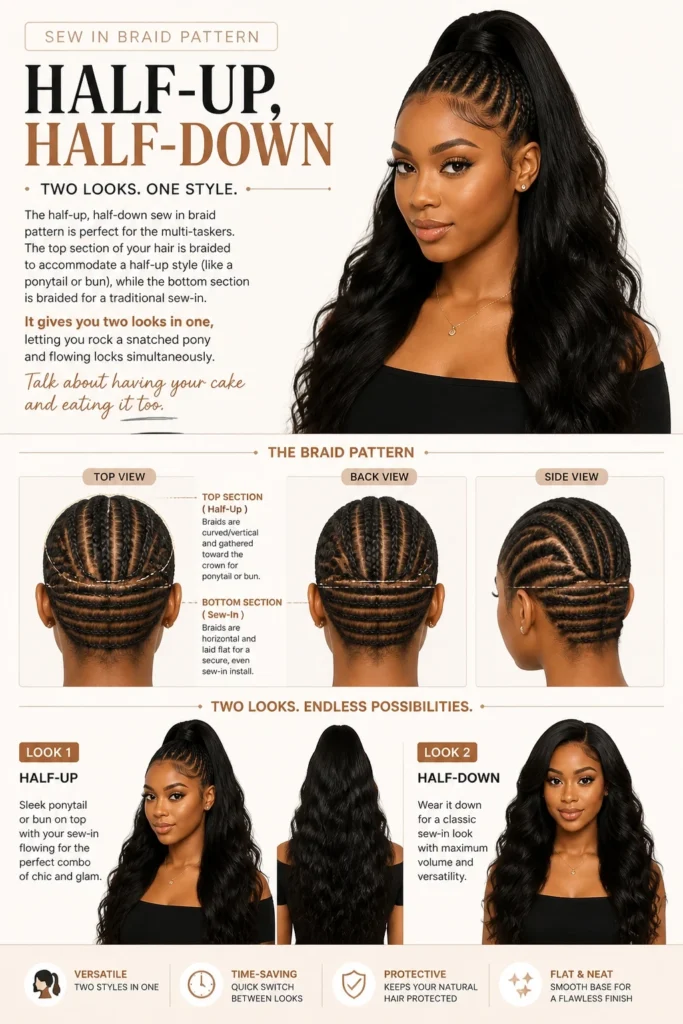
7. Half-Up, Half-Down
This pattern is for the multi-taskers. The top section of your hair is braided to accommodate a half-up style (like a ponytail or bun), while the bottom section is braided for a traditional sew-in.
It gives you two looks in one, letting you rock a snatched pony and flowing locks simultaneously. Talk about having your cake and eating it too.
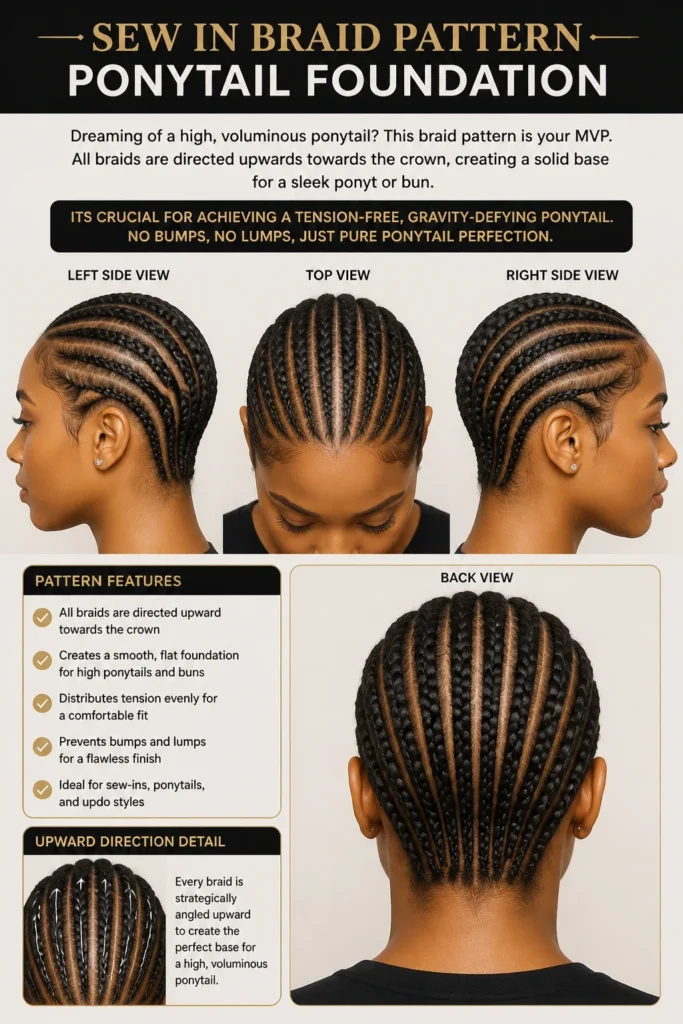
8. Ponytail Foundation
Dreaming of a high, voluminous ponytail? This braid pattern is your MVP. All braids are directed upwards towards the crown, creating a solid base for a sleek pony or bun.
It’s crucial for achieving a tension-free, gravity-defying ponytail. No bumps, no lumps, just pure ponytail perfection.
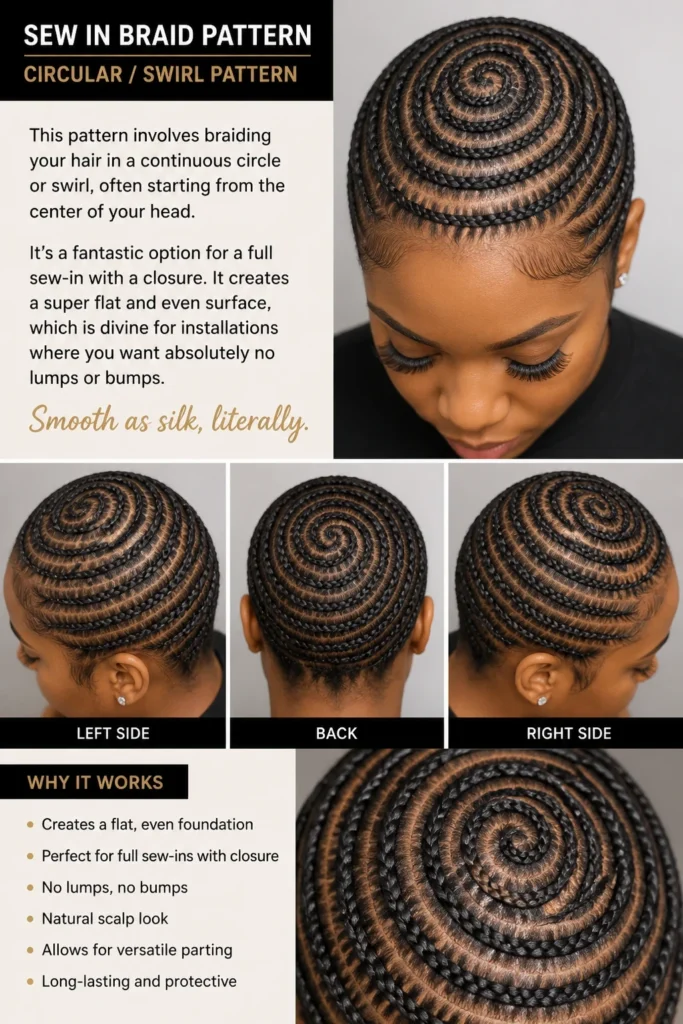
9. Circular/Swirl Pattern
This pattern involves braiding your hair in a continuous circle or swirl, often starting from the center of your head. It’s a fantastic option for a full sew-in with a closure.
It creates a super flat and even surface, which is divine for installations where you want absolutely no lumps or bumps. Smooth as silk, literally.
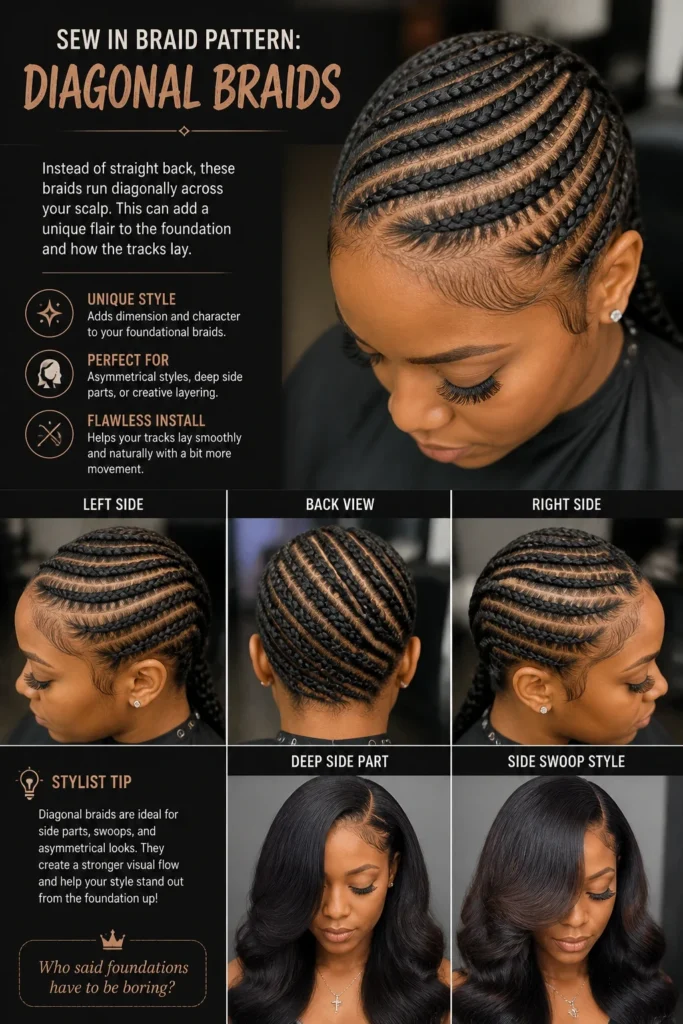
10. Diagonal Braids
Spice things up a bit! Instead of straight back, these braids run diagonally across your scalp. This can add a unique flair to the foundation and how the tracks lay.
Great for asymmetrical styles or specific layering, giving your weave a bit more character from the jump. Who said foundations have to be boring?
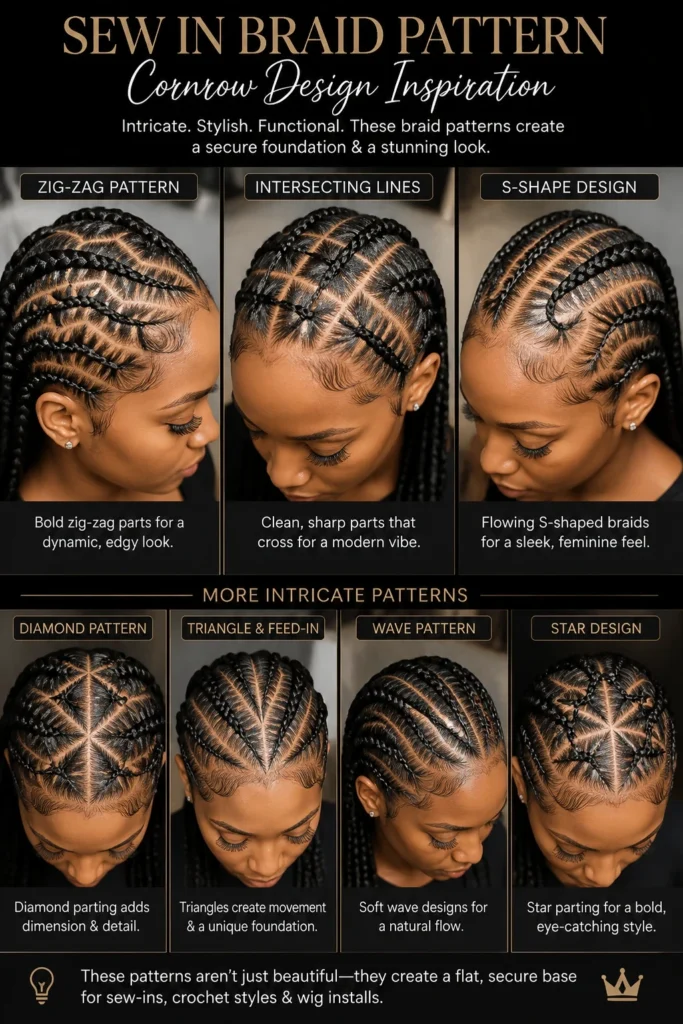
11. Cornrow Design
Feeling fancy? Your braid pattern can totally be a work of art. Think zig-zags, intersecting lines, or even intricate S-shapes. While more complex, it can be stunning.
This pattern is often used for crochet braids or specific wig foundations, where the design itself contributes to the final look. It’s basically scalp couture.
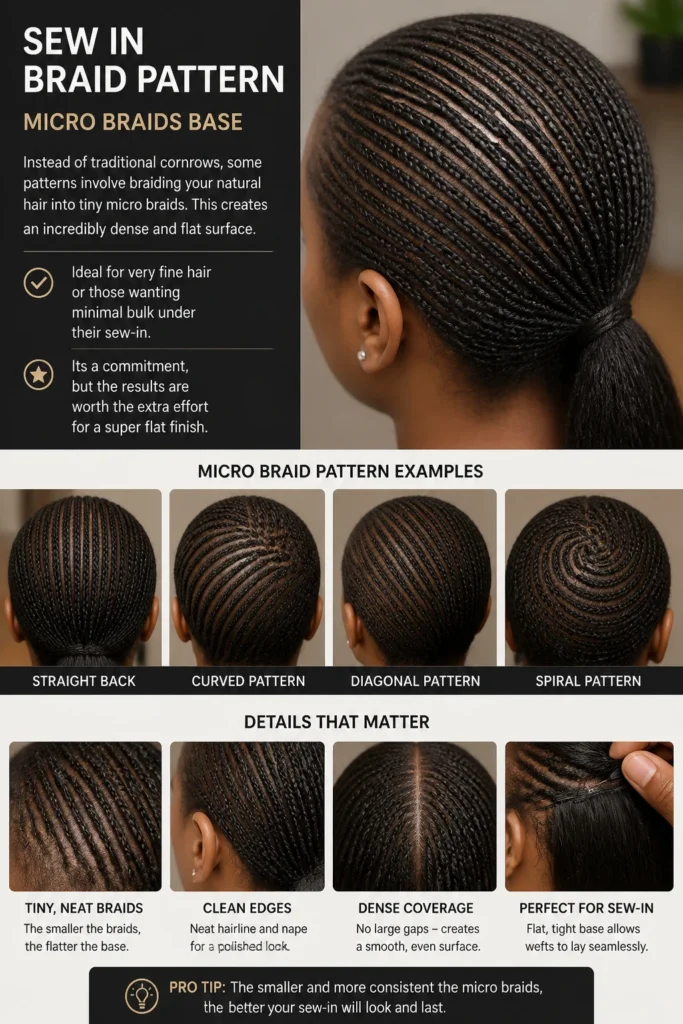
12. Micro Braids Base
Instead of traditional cornrows, some patterns involve braiding your natural hair into tiny micro braids. This creates an incredibly dense and flat surface.
Ideal for very fine hair or those wanting minimal bulk under their sew-in. It’s a commitment, but the results are worth the extra effort for a super flat finish.
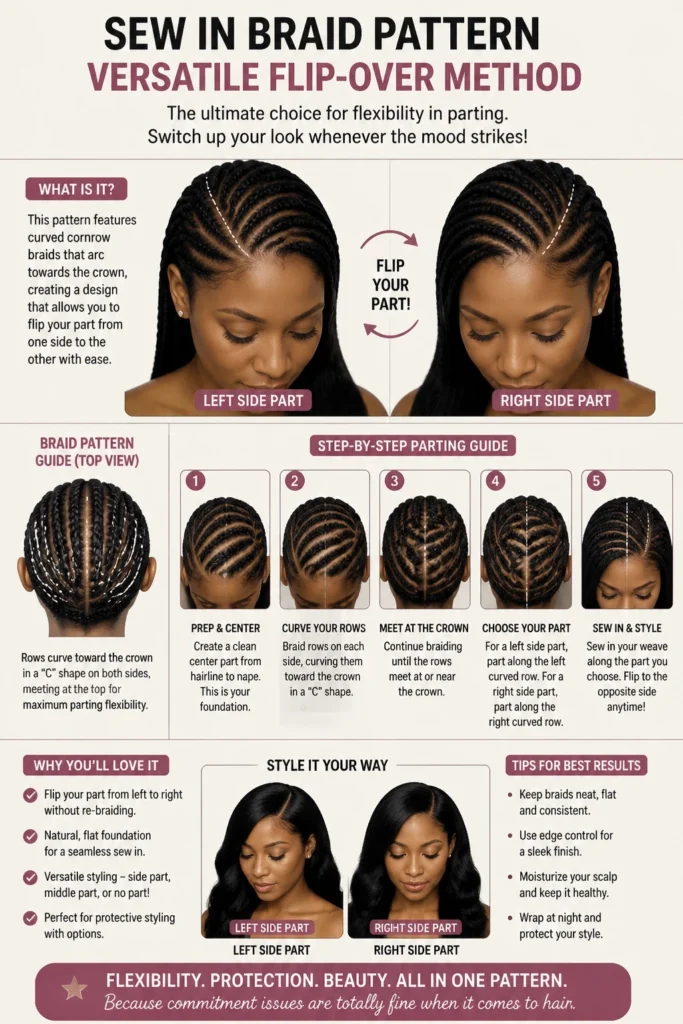
13. Versatile Flip-Over Method
This pattern often involves braiding rows that curve towards the crown, allowing you to “flip” your part from one side to the other. It’s all about strategic parting.
It’s the ultimate choice for flexibility in parting, letting you switch up your look whenever the mood strikes. Because commitment issues are totally fine when it comes to hair.
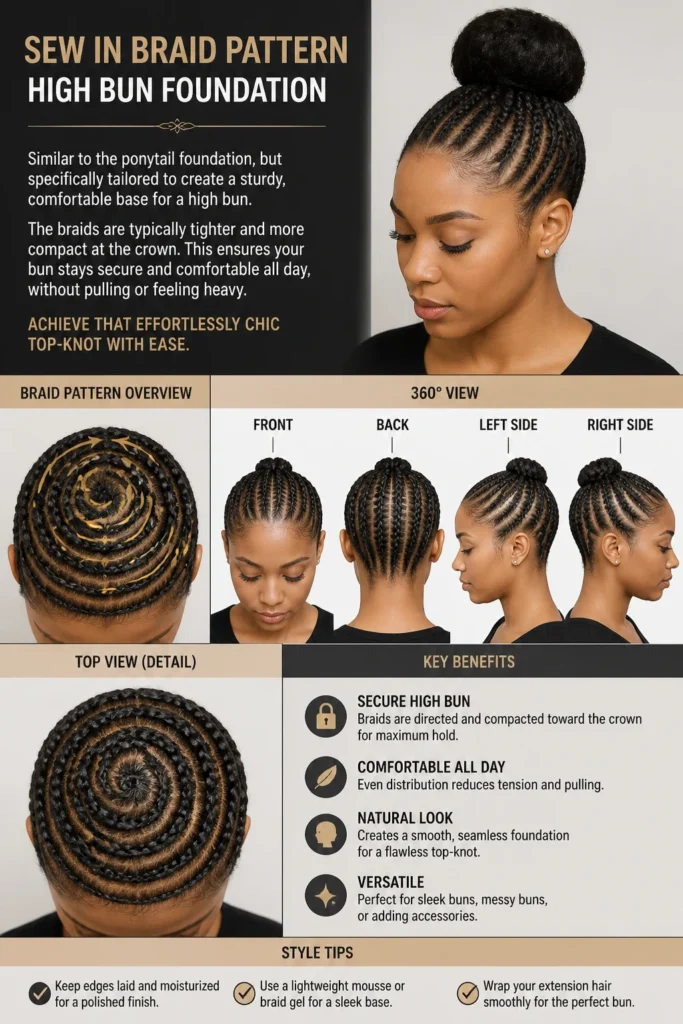
14. High Bun Foundation
Similar to the ponytail foundation, but specifically tailored to create a sturdy, comfortable base for a high bun. The braids are typically tighter and more compact at the crown.
This ensures your bun stays secure and comfortable all day, without pulling or feeling heavy. Achieve that effortlessly chic top-knot with ease.
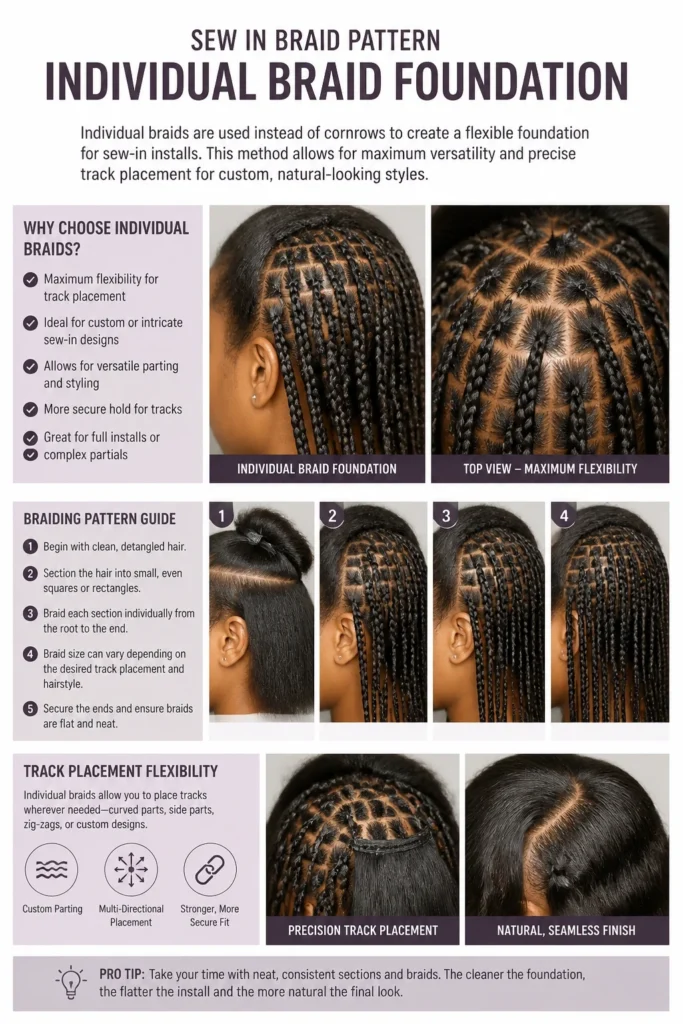
15. Individual Braid Foundation
Sometimes, especially for specific wig constructions or very intricate partial sew-ins, individual braids are used instead of cornrows. This gives maximum flexibility for track placement.
It’s a more time-consuming option but offers unparalleled versatility for track placement, allowing for truly custom styles. When you need to be that precise.
Conclusion
See? It’s not just about getting braids; it’s about getting the right braids. Your sew-in foundation is the unsung hero, the silent workhorse, the Beyoncé of your hairstyle. Choose wisely, my friend, and you’ll unlock a world of protective styling that looks phenomenal and feels even better. Now go forth and conquer those hair goals!
& CRAFT IDEAS
Beginner-friendly tutorials, creative projects,
and weekly inspiration in your inbox.