🍪 How To Make Edible Cookie Dough

& CRAFT IDEAS
Beginner-friendly tutorials, creative projects,
and weekly inspiration in your inbox.
🛠️ The Ultimate Maker's Toolkit
I've tested thousands of craft tools over the years. Whether you are quilting, crafting, or building mixed-media art, these are the top 5 absolute non-negotiable tools I personally recommend to guarantee professional results.
🪡 SINGER Heavy Duty 4452 Sewing Machine
The sewing community highly recommends this as the ultimate "bulletproof" entry-level machine. Its heavy metal frame powerfully pushes through thick denim and heavy quilt layers that would instantly jam a standard plastic machine.
✂️ Fiskars 8" Orange-Handled Scissors
Never settle for dull dollar-store blades. Wirecutter repeatedly names Fiskars the absolute best all-purpose craft scissor due to its legendary precision-ground blades and an ergonomic grip that prevents hand-cramping.
🔥 Gorilla Dual Temp Hot Glue Gun
Named Wirecutter's top choice because it literally does the work of two tools. It features dual-temperature settings offering low heat for delicate florals and blistering high heat for heavy wood adhesion repairs.
🖌️ Mod Podge Waterbase Gloss Sealer
The absolute undisputed champion of decoupage and paper crafts. Experts rely exclusively on this exact water-based formula because it glues, seals, and finishes beautifully without yellowing or flaking over time.
🎨 Apple Barrel Acrylic Paint (2 oz)
The quintessential, incredibly inexpensive craft paint. Woodworkers and hobby painters swear by its smooth flow and matte finish, providing massive value and remarkably thick color coverage on rough surfaces.

There’s nothing quite like the irresistible allure of cookie dough.
That creamy, sweet, chocolate-studded goodness often feels off-limits, but I’m here to tell you it doesn’t have to be.
Having perfected countless batches for family and friends, I can confidently guide you to your own delicious, safe-to-eat creation.
Quick Overview
Get ready to whip up a batch of safe, delicious cookie dough that’s perfect for snacking, sharing, or simply enjoying straight from the bowl. We’ll cover everything from preparing your ingredients to the final delightful mix-ins.
- Time needed: 20-30 minutes active, plus optional chilling
- Difficulty: Beginner
- What you’ll need: Common pantry staples, a microwave or oven, mixing bowls, and a mixer
Step-by-Step Instructions
Step 1: Gather Your Ingredients and Tools
Before you begin, ensure all your ingredients are measured and ready. This practice, known as “mise en place,” makes the whole process smoother and more enjoyable.
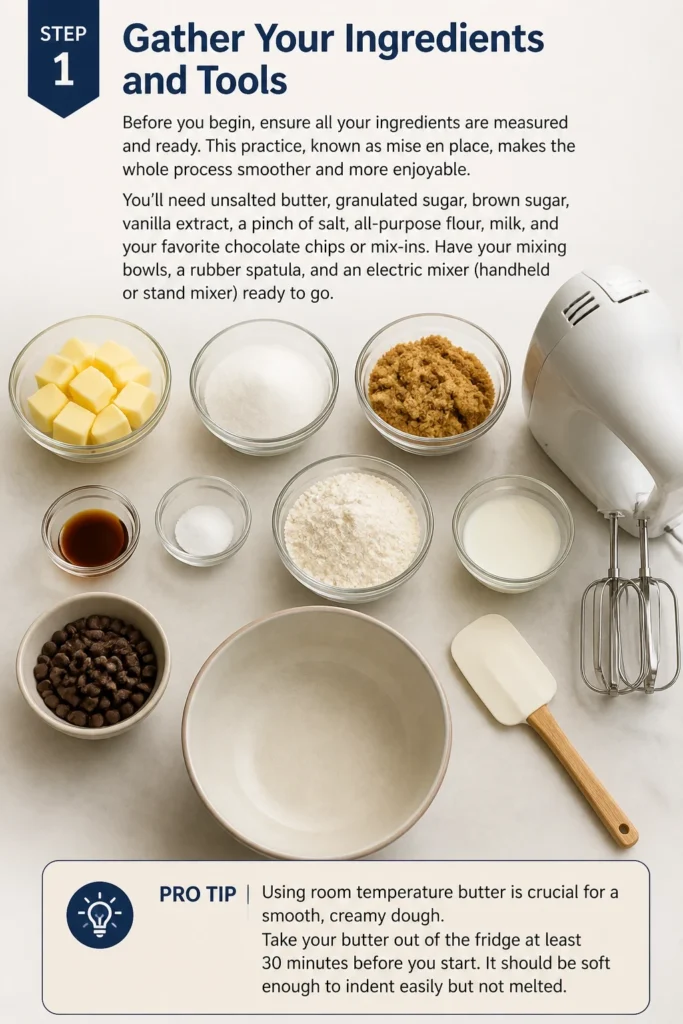
You’ll need unsalted butter, granulated sugar, brown sugar, vanilla extract, a pinch of salt, all-purpose flour, milk, and your favorite chocolate chips or mix-ins.
Have your mixing bowls, a rubber spatula, and an electric mixer (handheld or stand mixer) ready to go.
Pro Tip: Using room temperature butter is crucial for a smooth, creamy dough. Take your butter out of the fridge at least 30 minutes before you start. It should be soft enough to indent easily but not melted.
Step 2: Heat Treat Your Flour
This is the most critical step for making edible cookie dough safe. Raw flour can contain bacteria, so we need to heat it to kill any potential pathogens.
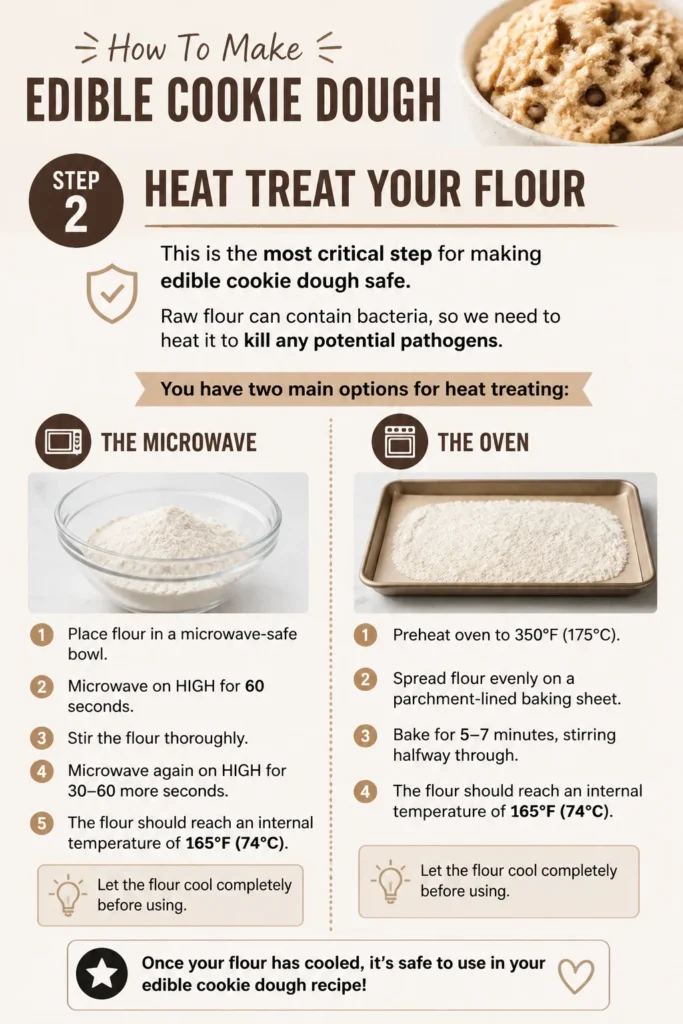
You have two main options for heat treating: the microwave or the oven.
Microwave Method:
Place your measured flour in a microwave-safe bowl.
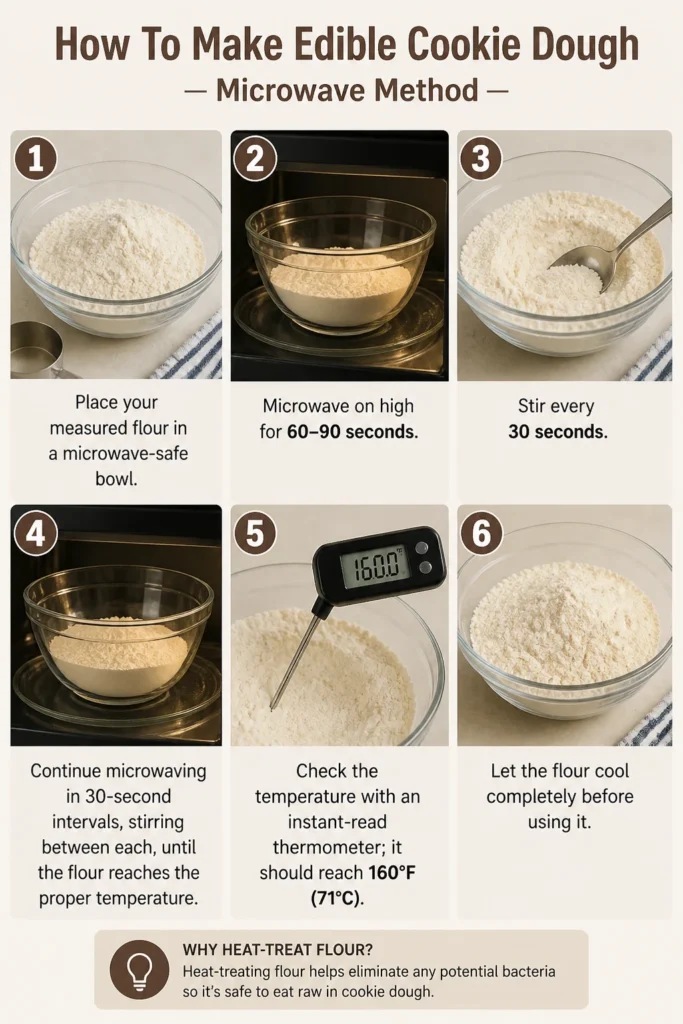
Microwave on high for 60-90 seconds, stirring every 30 seconds.
Check the temperature with an instant-read thermometer; it should reach 160°F (71°C).
Let the flour cool completely before using it.
Oven Method:
Preheat your oven to 300°F (150°C).
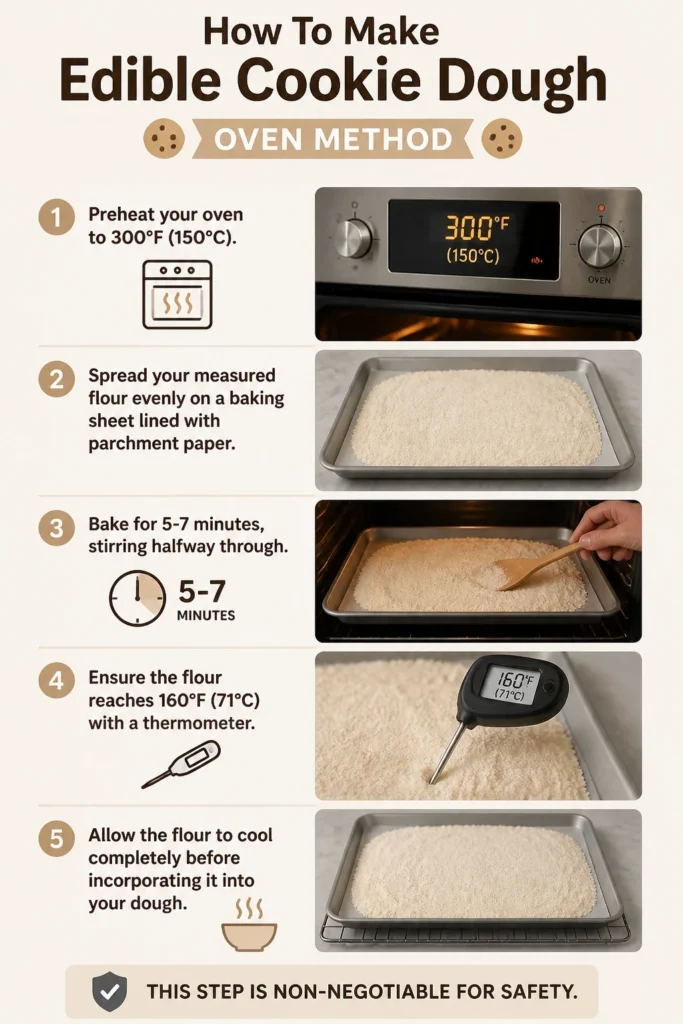
Spread your measured flour evenly on a baking sheet lined with parchment paper.
Bake for 5-7 minutes, stirring halfway through.
Ensure the flour reaches 160°F (71°C) with a thermometer.
Allow the flour to cool completely before incorporating it into your dough. This step is non-negotiable for safety.
Step 3: Cream the Butter and Sugars
In a large mixing bowl, add your softened unsalted butter.
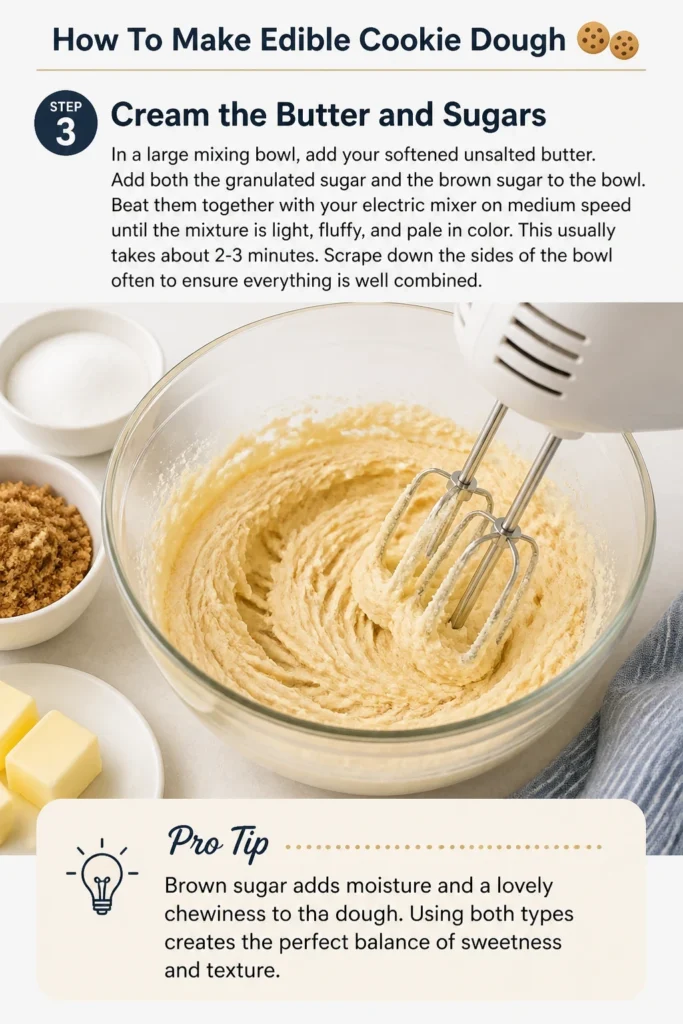
Add both the granulated sugar and the brown sugar to the bowl.
Beat them together with your electric mixer on medium speed until the mixture is light, fluffy, and pale in color.
This usually takes about 2-3 minutes. Scrape down the sides of the bowl often to ensure everything is well combined.
Pro Tip: Brown sugar adds moisture and a lovely chewiness to the dough. Using both types creates the perfect balance of sweetness and texture.
Step 4: Add Vanilla and Salt
Once your butter and sugars are perfectly creamed, it’s time to infuse flavor.
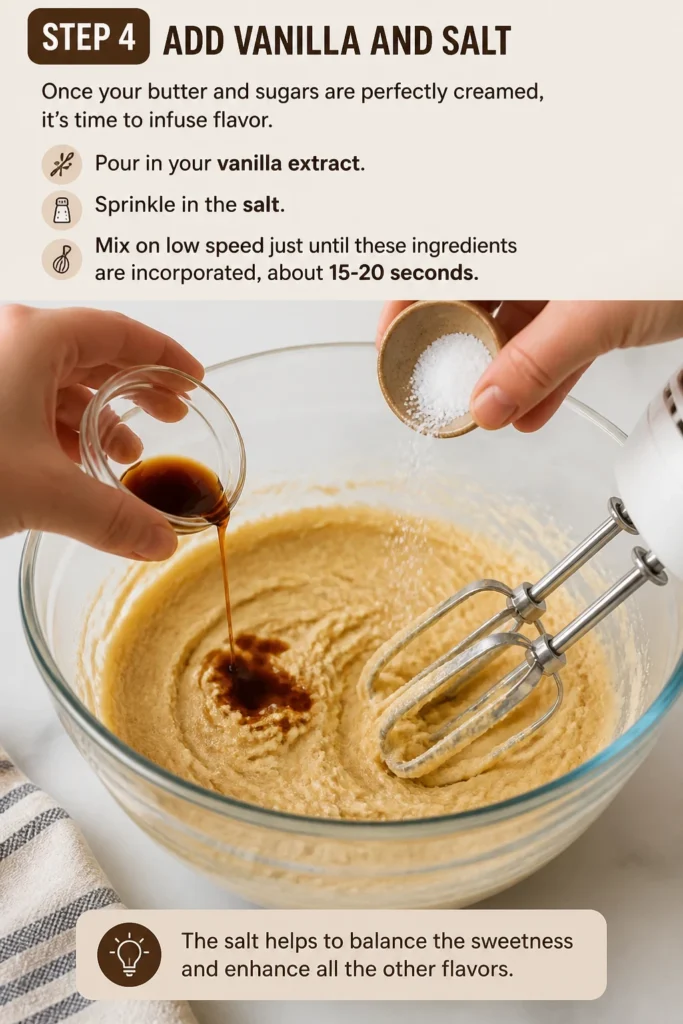
Pour in your vanilla extract.
Sprinkle in the salt.
Mix on low speed just until these ingredients are incorporated, about 15-20 seconds.
The salt helps to balance the sweetness and enhance all the other flavors.
Step 5: Incorporate the Heat-Treated Flour
Now, gently add your completely cooled, heat-treated flour to the wet ingredients.
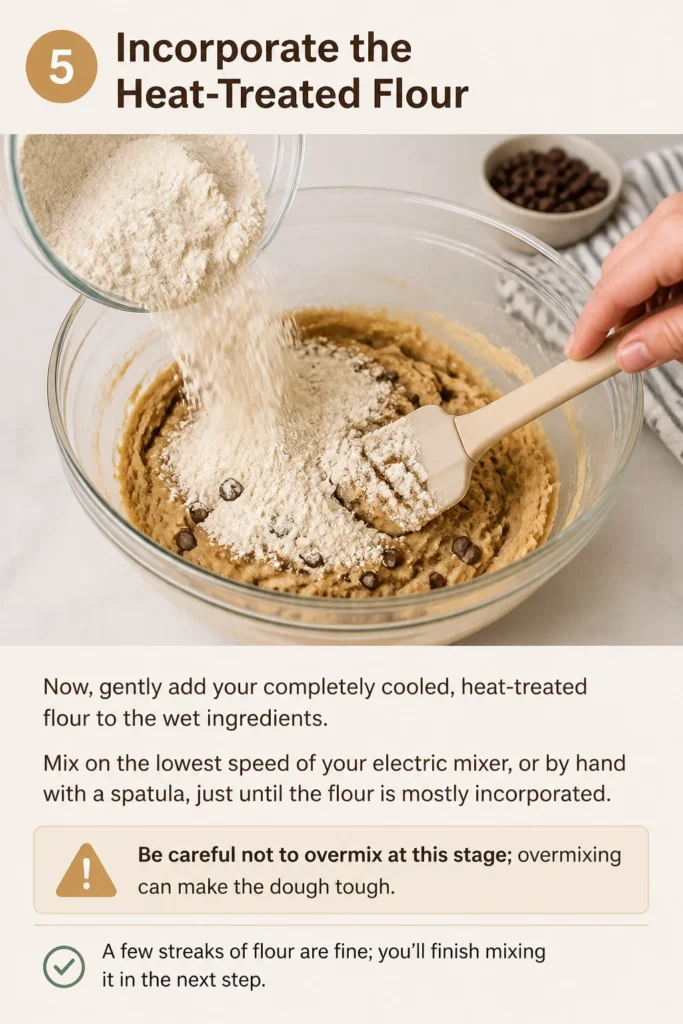
Mix on the lowest speed of your electric mixer, or by hand with a spatula, just until the flour is mostly incorporated.
Be careful not to overmix at this stage; overmixing can make the dough tough.
A few streaks of flour are fine; you’ll finish mixing it in the next step.
Step 6: Adjust Consistency with Milk
The dough might seem a bit dry or crumbly at first after adding the flour.
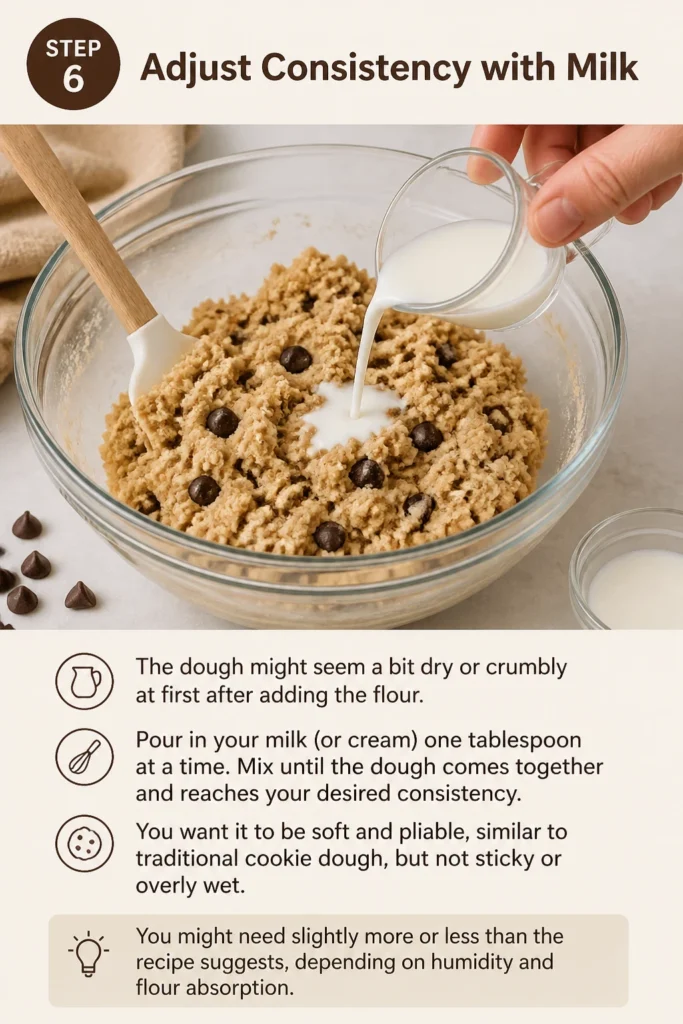
Pour in your milk (or cream) one tablespoon at a time.
Mix until the dough comes together and reaches your desired consistency.
You want it to be soft and pliable, similar to traditional cookie dough, but not sticky or overly wet.
You might need slightly more or less than the recipe suggests, depending on humidity and flour absorption.
Step 7: Fold in Your Favorite Mix-Ins
This is where the real fun begins and you can truly customize your edible cookie dough!
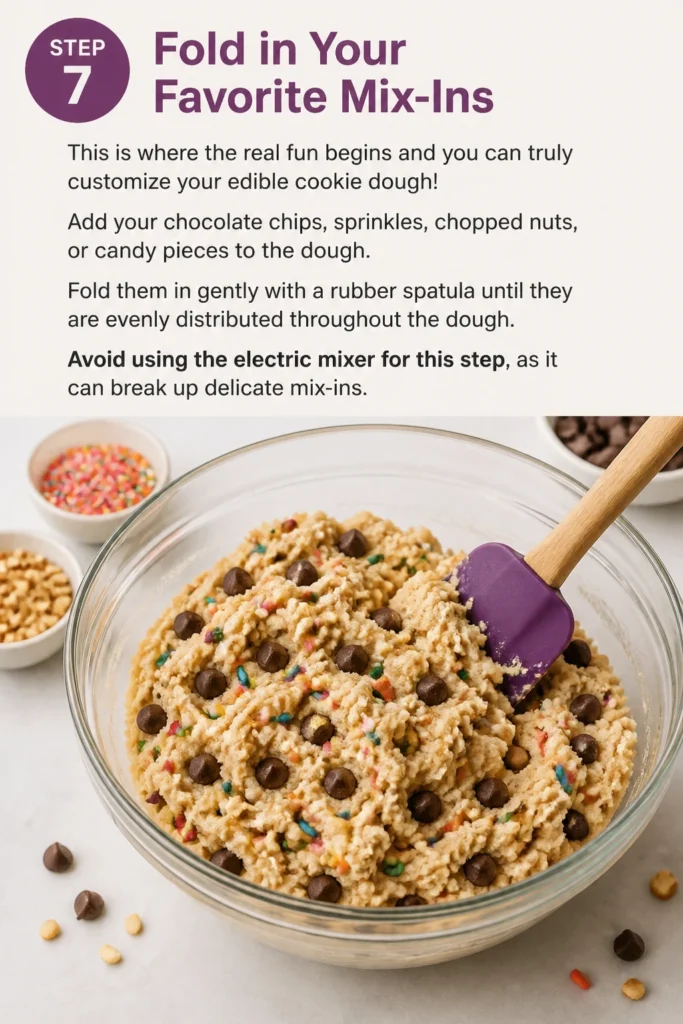
Add your chocolate chips, sprinkles, chopped nuts, or candy pieces to the dough.
Fold them in gently with a rubber spatula until they are evenly distributed throughout the dough.
Avoid using the electric mixer for this step, as it can break up delicate mix-ins.
Step 8: Chill and Enjoy!
While not strictly necessary for safety, chilling your edible cookie dough for 30 minutes to an hour in the refrigerator can significantly improve its texture and flavor.
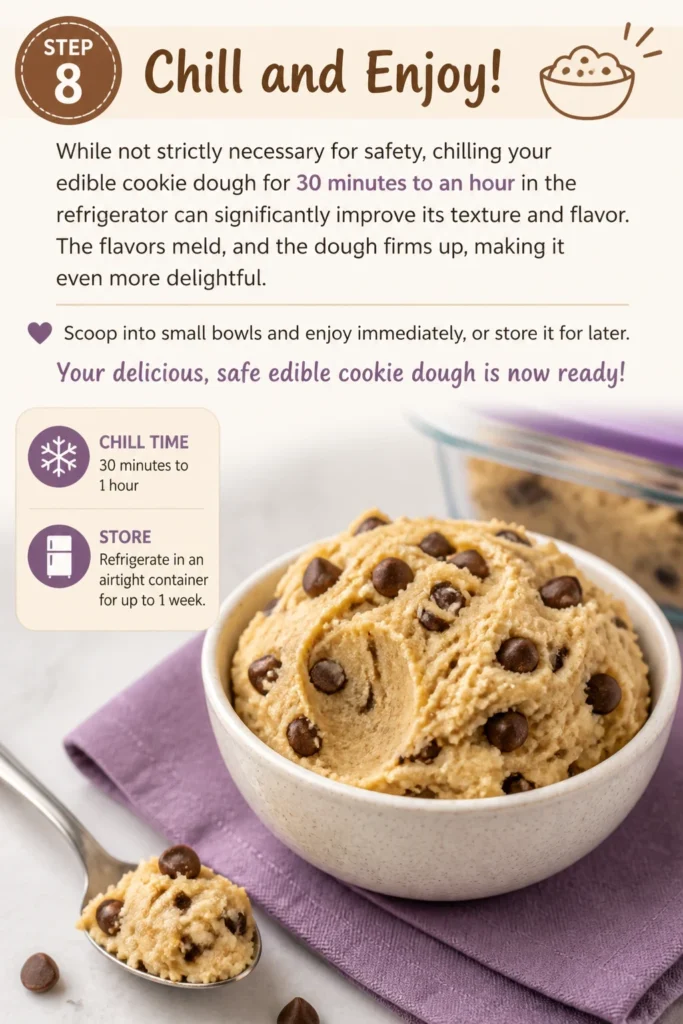
The flavors meld, and the dough firms up, making it even more delightful.
Scoop into small bowls and enjoy immediately, or store it for later.
Your delicious, safe edible cookie dough is now ready!
Common Mistakes to Avoid
Not Heat Treating Your Flour
This is the most common and dangerous mistake. Raw flour can contain harmful bacteria like E. coli. Skipping the heat treatment step means you’re consuming potentially unsafe ingredients.
Always ensure your flour reaches 160°F (71°C) and cools completely before mixing. This simple step guarantees your dough is safe to eat.
Using Raw Eggs
Traditional cookie dough recipes call for eggs, but edible cookie dough recipes specifically omit them. Raw eggs carry a risk of salmonella contamination, making them unsafe for uncooked consumption.
Edible cookie dough relies on milk or cream for moisture and binding instead of eggs. Stick to egg-free recipes for safety.
Overmixing the Dough
While not a safety issue, overmixing can lead to a tough and less enjoyable texture. Once you add the flour, mix only until it’s just combined.
Developing the gluten in the flour too much results in a chewy dough, which isn’t ideal for the soft, melt-in-your-mouth experience of edible cookie dough.
Using Melted Butter
Starting with melted butter instead of softened, room-temperature butter will drastically change the texture of your dough. Melted butter won’t cream properly with the sugars, leading to a greasy and dense dough.
Softened butter creates air pockets when creamed with sugar, resulting in a lighter, fluffier, and more desirable consistency for your edible cookie dough.
Troubleshooting
Dough is Too Dry and Crumbly
If your dough seems too dry and won’t come together, it likely needs more moisture. This can happen if your flour absorbed more liquid than expected, or if you didn’t add enough milk.
Solution: Add an additional half-tablespoon of milk or cream at a time, mixing thoroughly after each addition, until the dough reaches a pliable, cohesive consistency. Be patient and add slowly to avoid making it too wet.
Dough is Too Sticky or Wet
Conversely, if your dough is overly sticky and difficult to handle, you might have added too much liquid or your butter was too warm.
Solution: Try adding a tablespoon of cooled, heat-treated flour to the dough and mix it in. If it’s still too sticky, add another tablespoon. You can also chill the dough for 30-60 minutes; cold dough is often less sticky and easier to manage.
Dough Tastes Bland
Sometimes, the flavors just don’t pop as much as you’d like. This usually means it’s missing a crucial balance of sweet and salty, or enough vanilla.
Solution: Taste a small piece of dough. If it needs more sweetness, mix in a teaspoon of granulated sugar. If it needs a flavor boost, a tiny pinch more salt or an extra splash of vanilla extract can make a huge difference. Mix well and taste again.
Key Takeaways
- Always heat treat your flour to 160°F (71°C) for safety.
- Use room temperature butter for a perfectly creamy, fluffy base.
- Never use raw eggs in edible cookie dough; milk provides the necessary moisture.
- Mix ingredients just until combined to maintain a tender texture.
- Customize your dough with a variety of fun and delicious mix-ins.
- Chilling the dough enhances its flavor and makes it firmer.
Frequently Asked Questions
Can I bake this edible cookie dough?
No, this edible cookie dough recipe is specifically designed for raw consumption and is not suitable for baking. It lacks leavening agents like baking soda or baking powder and eggs, which are essential for traditional cookies to rise and hold their shape in the oven. Baking it would likely result in flat, hard disks.
How long does edible cookie dough last?
Stored in an airtight container in the refrigerator, edible cookie dough typically lasts for about 1 to 2 weeks. You can also freeze it for up to 2-3 months. If freezing, scoop into individual portions on a baking sheet, freeze until solid, then transfer to a freezer-safe bag or container.
What are some creative mix-in ideas?
Beyond classic chocolate chips, the possibilities are endless! Try mini M&M’s, chopped Oreos, sprinkles for funfetti dough, peanut butter cups, toffee bits, shredded coconut, or even a swirl of jam or caramel sauce. Get creative and use your favorite candies or nuts.
Is it safe for pregnant women or young children?
Yes, because the flour is heat-treated and there are no raw eggs, this edible cookie dough recipe is generally considered safe for everyone, including pregnant women and young children. However, always ensure proper hygiene during preparation and that all ingredients are fresh.
Our Top Recommended Finds
- Stand Mixer or Hand Mixer: While not strictly necessary, an electric mixer makes creaming butter and sugar incredibly easy and yields the best texture.
- Silicone Spatula: Perfect for scraping down bowls and gently folding in mix-ins without overworking the dough.
- Airtight Storage Containers: Essential for keeping your edible cookie dough fresh in the refrigerator for longer enjoyment.
Your Edible Cookie Dough Adventure Awaits!
You’ve now got all the knowledge and confidence to create your very own batch of safe, delicious edible cookie dough.
Imagine the joy of scooping that perfect spoonful, knowing every ingredient is just right and completely safe to enjoy.
Don’t wait another moment; gather your ingredients and start crafting this delightful treat today!
& CRAFT IDEAS
Beginner-friendly tutorials, creative projects,
and weekly inspiration in your inbox.