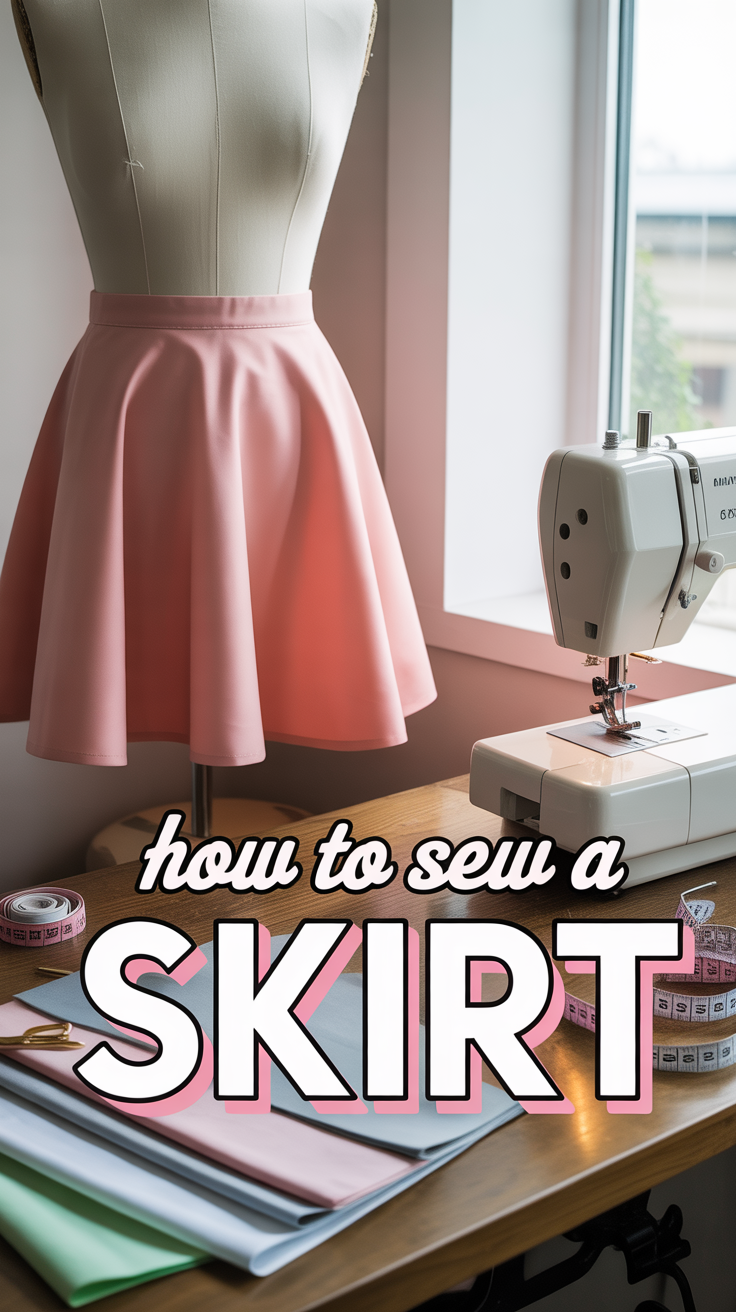
🧵 How To Sew A Skirt
Ready to turn a flat piece of fabric into a wearable compliment magnet? Let’s stitch up a skirt without tears, tantrums, or mystery knots. I’ll walk you through the fun stuff, the fiddly bits, and the “oh wow, I made that” moment.

1. Choose Your Skirt Style
Pick your vibe: A-line for swish, pencil for sleek, gathered for cute. Your style sets the pattern and fabric. Keep your lifestyle in mind—if you sit a lot, hello stretch.
Pro tip: New to sewing? Start with an elastic-waist gathered skirt. Minimal drama, maximum payoff.
This works because you match design to skill level and body comfort—hello win-win.
2. Measure Like You Mean It
Grab a soft tape and measure waist, hips, and desired length. Add ease so you can breathe and eat snacks. Write it down—future you will forget.
Pro tip: Measure over the undergarments you’ll wear with the skirt for accuracy.
Good measurements mean fewer alterations and more “it fits!” moments.
3. Pick Fabric That Behaves
Fabric choice makes or breaks the vibe. Cotton is easy, linen is breezy, rayon drapes like a dream, and denim gives structure. Check the drape—twirl it in the store if you must.
Pro tip: Pre-wash your fabric the way you’ll launder the skirt to prevent post-sew shrinkage heartbreak.
The right fabric lets the silhouette do its thing without fighting you at the machine.
4. Gather Tools Without Panic
You don’t need a couture studio. Just a machine, universal needle, matching thread, scissors, pins or clips, chalk, ruler, and elastic or zipper. Add a seam ripper—the real MVP.
Pro tip: Use a new needle for clean stitches and fewer skipped loops.
Having the basics means smooth sewing and less yelling at inanimate objects.
5. Draft or Trace a Simple Pattern
Use a store-bought pattern or make a basic one. For gathered skirts, it’s literally a rectangle: waist x 2 to 2.5 for fullness, by length + hems + casing. Easy math, cute results.
Pro tip: Label pieces with grainline arrows to keep things hang-straight and pro-looking.
Clear pattern pieces reduce wonky seams and weird twisting when you walk.
6. Cut Clean and On Grain
Lay fabric flat, align the grain, and pin or weight your pattern. Cut slowly—fast cutting equals jagged edges and regret. Mark notches and centers now so future you isn’t guessing.
Pro tip: Use a rotary cutter and mat for super clean lines, especially on slinky fabrics.
Accurate cutting means everything lines up and you avoid that “why is this piece longer” mystery.
7. Tame the Edges
Finish raw edges before assembly, especially on fray-happy fabrics. Use a zigzag, serger, or pinked edges. Your seams will look neat and last longer.
Pro tip: Test stitches on scraps to match tension and width to your fabric.
Neat insides make your skirt feel store-bought, not “DIY but in a cute way.”
8. Stitch the Body
Join side seams right sides together. Press seams as you go—yes, really. Pressing sets stitches and makes everything look crisp and intentional.
Pro tip: Press seams toward the back or open, depending on bulk and finish.
Clean assembly creates structure, so the skirt hangs like it knows what it’s doing.
9. Add the Waistband or Casing
Elastic waist? Fold down the top to make a casing, stitch, then thread the elastic. Flat waistband? Interface it for structure, then attach and topstitch.
Pro tip: Cut elastic to waist minus 1–2 inches depending on stretch, then test fit before closing the gap.
Waist finish is where comfort meets polish—you’ll feel it every time you wear it.
10. Install a Zipper Without Tears
If you skipped elastic, zipper time. Use an invisible zipper for sleek or a centered zipper for simple. Baste first, then stitch with the correct foot.
Pro tip: Press zipper coils flat with a warm iron before sewing for a truly invisible look.
A clean zipper gives that “I could sell this” energy.
11. Hem Like You Mean It
Try on the skirt, check length, and mark evenly. Do a double-fold hem for clean edges or a blind hem for fancy. Steam and press for that crisp, pro finish.
Pro tip: Use hem tape to stabilize slippery fabrics before stitching.
Good hems are the difference between handmade and handmade-but-stunning.
12. Fit, Tweak, and Flaunt
Give it a twirl and check the details: waist comfort, seam puckers, and drape. Make tiny tweaks—move a stitch line, snug the elastic, steam again. Then wear it out immediately.
Pro tip: Keep a quick list of what to adjust next time—length, fullness, waistband width.
Iterating levels up your skills fast, and your next skirt will sew up like a breeze.
Conclusion
You just turned fabric into a fit that flatters and a mood that lifts. With smart choices, simple steps, and a little pressing magic, sewing a skirt goes from “maybe someday” to “made it today.” Now go make another—your closet called and said, more swish please.