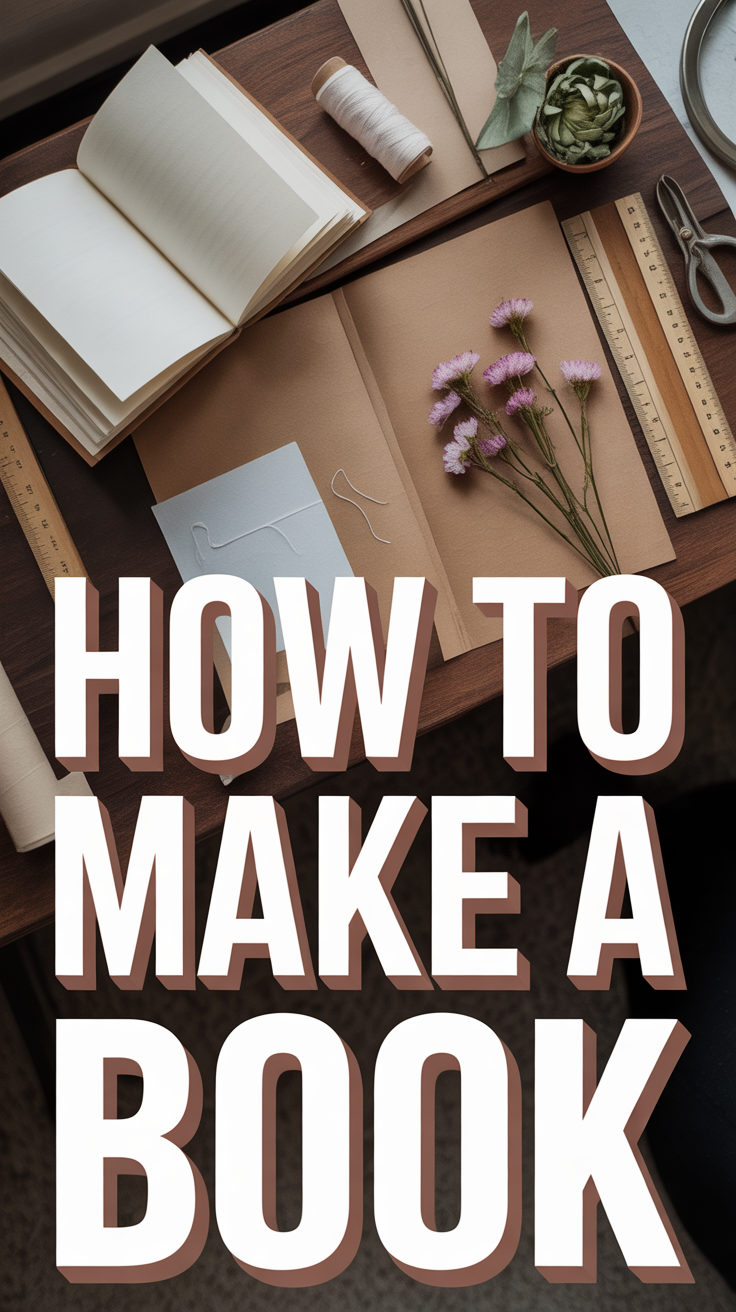
📚 How To Make A Book
So, you want to make a book? Bold move. Whether you’re dreaming of a coffee-table beauty or a scrappy zine with attitude, I’ve got you. We’ll go from “uhhh” to “author energy” in simple, doable steps. No gatekeepers, just pages and power.
1. Define Your Why
Your book needs a spine—and I don’t just mean paper. Know why you’re making it: to teach, to entertain, to process, to sell. Your why becomes your North Star when you’re stuck.
Key points:
- Purpose drives tone, structure, and length.
- Audience dictates vocabulary and examples.
- Outcome: what you want readers to feel or do.
Pro tip: Write a one-sentence mission and pin it somewhere bossy. Read it before every session.
This works because clarity reduces decision fatigue and keeps your book cohesive.
2. Pick Your Format
Not all books wear hardcovers. Choose print, ebook, audiobook—or a combo that fits your goals and budget. Each format changes how you write and design.
Key points:
- Print: visual design matters; costs per copy.
- Ebook: reflowable text; easy distribution.
- Audiobook: performance and pacing become everything.
Pro tip: If funds are tight, start digital. Validate with readers, then scale to print.
Choosing format early prevents redo chaos later.
3. Outline Like a Movie Trailer
Think scenes, not sludge. Your outline should make someone say, “I’d read that.” Keep it modular so you can shuffle without tears.
Key points:
- Table of contents as a roadmap.
- Chapter beats with problem-to-payoff arcs.
- Transitions planned so flow feels natural.
Pro tip: Use sticky notes or a digital card tool to rearrange chapters fast.
Great outlines speed drafting and cut editing time in half.
4. Draft Fast, Edit Slow
Get messy first. Perfection is for later. Separate writing from editing or your inner critic will eat your lunch.
Key points:
- Sprints: 25–45 minute bursts, no backspacing.
- Word targets per session keep momentum.
- Placeholders: write [fact check] and move on.
Pro tip: Write in a distraction-free app and turn off spellcheck during drafting.
This works because speed builds confidence and reveals the story’s shape.
5. Build a Consistent Voice
Your voice is the vibe. Decide how you sound and stick with it. Readers bond with consistency more than cleverness.
Key points:
- Voice guide: tone, slang, sentence length.
- Examples of “yes” and “no” phrases.
- Reader promise: what they’ll always get from you.
Pro tip: Read a page aloud. If you cringe, fix the voice first, not the commas.
A steady voice turns pages into a personality readers trust.
6. Design for Readability
Pretty is nice. Readable sells. Make choices that help eyes glide, not squint.
Key points:
- Typography: choose a legible serif for print, sans for web/ebook.
- Spacing: line-height and margins breathe.
- Hierarchy: clear headings, subheads, pull quotes.
Pro tip: Print a sample chapter; bad design screams on paper.
Good design reduces friction, which keeps readers turning pages.
7. Use Tools That Fit Your Brain
Software should help, not haunt. Pick your stack and keep it simple.
Key points:
- Drafting: Google Docs, Word, or Scrivener.
- Formatting: Vellum, Atticus, InDesign.
- Version control: cloud folders with clear names.
Pro tip: Name files like 03-Chapter-Title-v2 to avoid gremlin duplicates.
Right tools speed you up and prevent tech drama at deadline.
8. Edit in Layers
One pass, one purpose. Don’t copyedit a plot hole.
Key points:
- Structural edit: order, pacing, missing pieces.
- Line edit: clarity, tone, rhythm.
- Copyedit: grammar, consistency, style guide.
Pro tip: Change the font or medium for each pass to trick your brain into seeing fresh.
Layered editing keeps quality high without melting your soul.
9. Get Real Feedback
Not from your mom. From your readers. Ask specific questions and brace for smart fixes.
Key points:
- Beta readers: 5–10 from your target audience.
- Surveys with focused prompts, not vibes.
- Sensitivity checks where needed.
Pro tip: Give readers a deadline and a simple form. Feedback without friction gets done.
External eyes spot gaps you’re blind to—gold you can’t mine alone.
10. Polish the Package
Covers sell. Titles hook. Back covers close the deal.
Key points:
- Title: clear, compelling, searchable.
- Subtitle: promise and positioning.
- Cover design: genre signals and thumbnail legibility.
Pro tip: Test 2–3 cover options as tiny thumbnails—most buyers see small first.
A sharp package boosts credibility and conversion.
11. Format and Proof Like a Pro
The details are the difference between indie and “who published this.” Make it clean.
Key points:
- Front/back matter: copyright, dedication, acknowledgments.
- Widows and orphans: fix layout gremlins.
- Styles: consistent headings, captions, lists.
Pro tip: Proof on multiple devices and a printed proof copy. Errors hide until they don’t.
Professional polish earns trust and reviews.
12. Publish and Distribute
Time to ship. Choose where your book lives and how readers find it.
Key points:
- Platforms: KDP, IngramSpark, Draft2Digital.
- ISBNs: control your metadata and distribution.
- Pricing: anchor to genre norms and goals.
Pro tip: Use expanded distribution for libraries and bookstores while keeping Amazon optimized.
Smart distribution multiplies reach without multiplying work.
13. Market With Heart
People buy from people. Share the journey, not just the link.
Key points:
- Audience: email list > algorithms.
- Content: teach, entertain, or join a conversation.
- Assets: quotes, short videos, behind-the-scenes.
Pro tip: Set a simple launch plan: preorders, a three-email sequence, and two live sessions.
Authentic marketing builds readers who stick around for the next book.
Conclusion
You don’t need permission—just pages and a plan. Start scrappy, iterate smart, and polish like you mean it. Make the book you wanted to read, and others will want it too. Now go make something shelf-worthy.