🧵 14 Easy Embroidery For Beginners
& CRAFT IDEAS
Beginner-friendly tutorials, creative projects,
and weekly inspiration in your inbox.
🛠️ The Ultimate Maker's Toolkit
I've tested thousands of craft tools over the years. Whether you are quilting, crafting, or building mixed-media art, these are the top 5 absolute non-negotiable tools I personally recommend to guarantee professional results.
🪡 SINGER Heavy Duty 4452 Sewing Machine
The sewing community highly recommends this as the ultimate "bulletproof" entry-level machine. Its heavy metal frame powerfully pushes through thick denim and heavy quilt layers that would instantly jam a standard plastic machine.
✂️ Fiskars 8" Orange-Handled Scissors
Never settle for dull dollar-store blades. Wirecutter repeatedly names Fiskars the absolute best all-purpose craft scissor due to its legendary precision-ground blades and an ergonomic grip that prevents hand-cramping.
🔥 Gorilla Dual Temp Hot Glue Gun
Named Wirecutter's top choice because it literally does the work of two tools. It features dual-temperature settings offering low heat for delicate florals and blistering high heat for heavy wood adhesion repairs.
🖌️ Mod Podge Waterbase Gloss Sealer
The absolute undisputed champion of decoupage and paper crafts. Experts rely exclusively on this exact water-based formula because it glues, seals, and finishes beautifully without yellowing or flaking over time.
🎨 Apple Barrel Acrylic Paint (2 oz)
The quintessential, incredibly inexpensive craft paint. Woodworkers and hobby painters swear by its smooth flow and matte finish, providing massive value and remarkably thick color coverage on rough surfaces.
Hey, fellow creative soul! Ever scrolled past those impossibly cute embroidered pieces on your feed and thought, “Ugh, my hands could never”? Well, hold your needles, because I’m here to tell you that’s total bunk. Embroidery isn’t just for grandmas (no offense, grandmas, your skills are legendary). It’s for anyone who wants to add a little handmade magic to their life without, you know, losing a finger to a sewing machine. This isn’t about perfection; it’s about chilling out and making something cool.
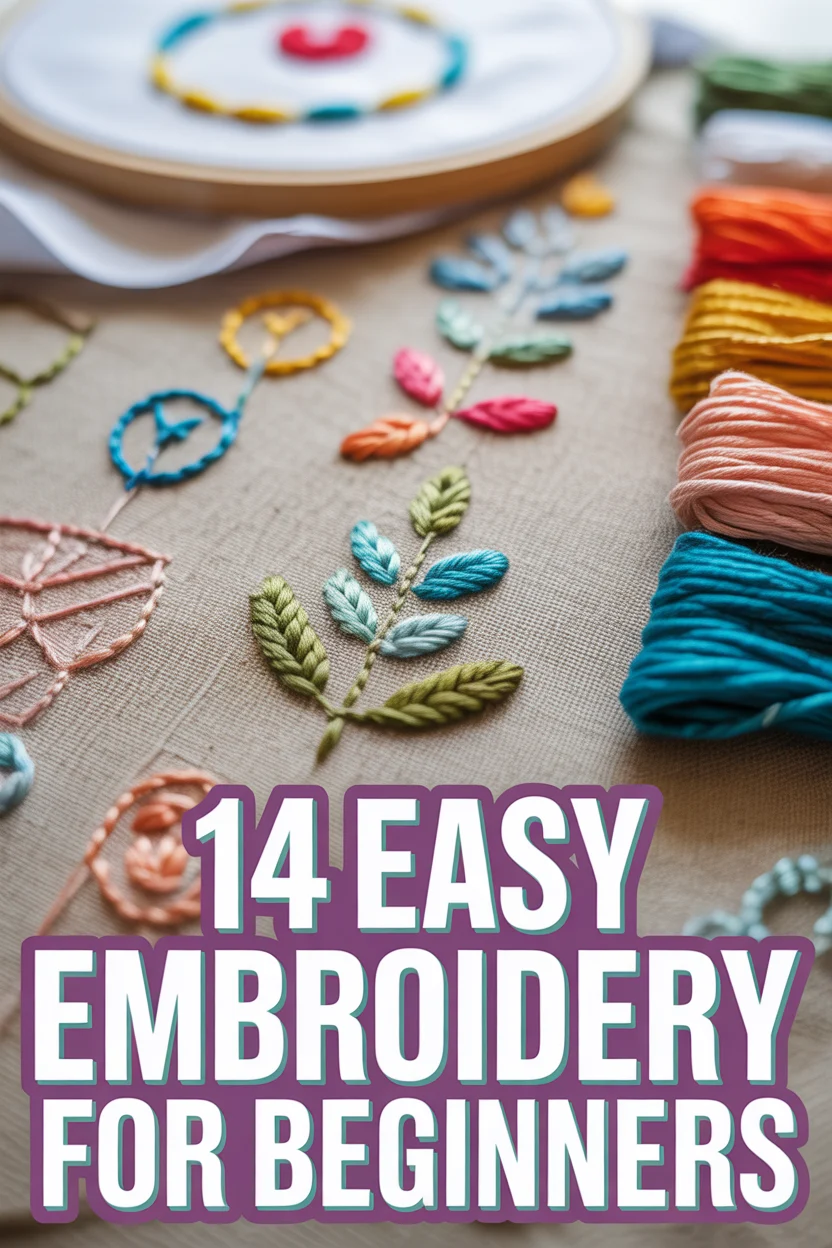
1. Simple Outline Designs
Forget intricate shading and a gazillion colors. Start with a single line, like a cute little heart, a star, or a very basic flower. You just need one stitch, probably the backstitch, to trace your design. It’s like drawing, but with thread, which makes it instantly cooler.
Pro tip: Use a washable fabric marker to draw your design directly onto the fabric first. No freehand heroics required just yet.
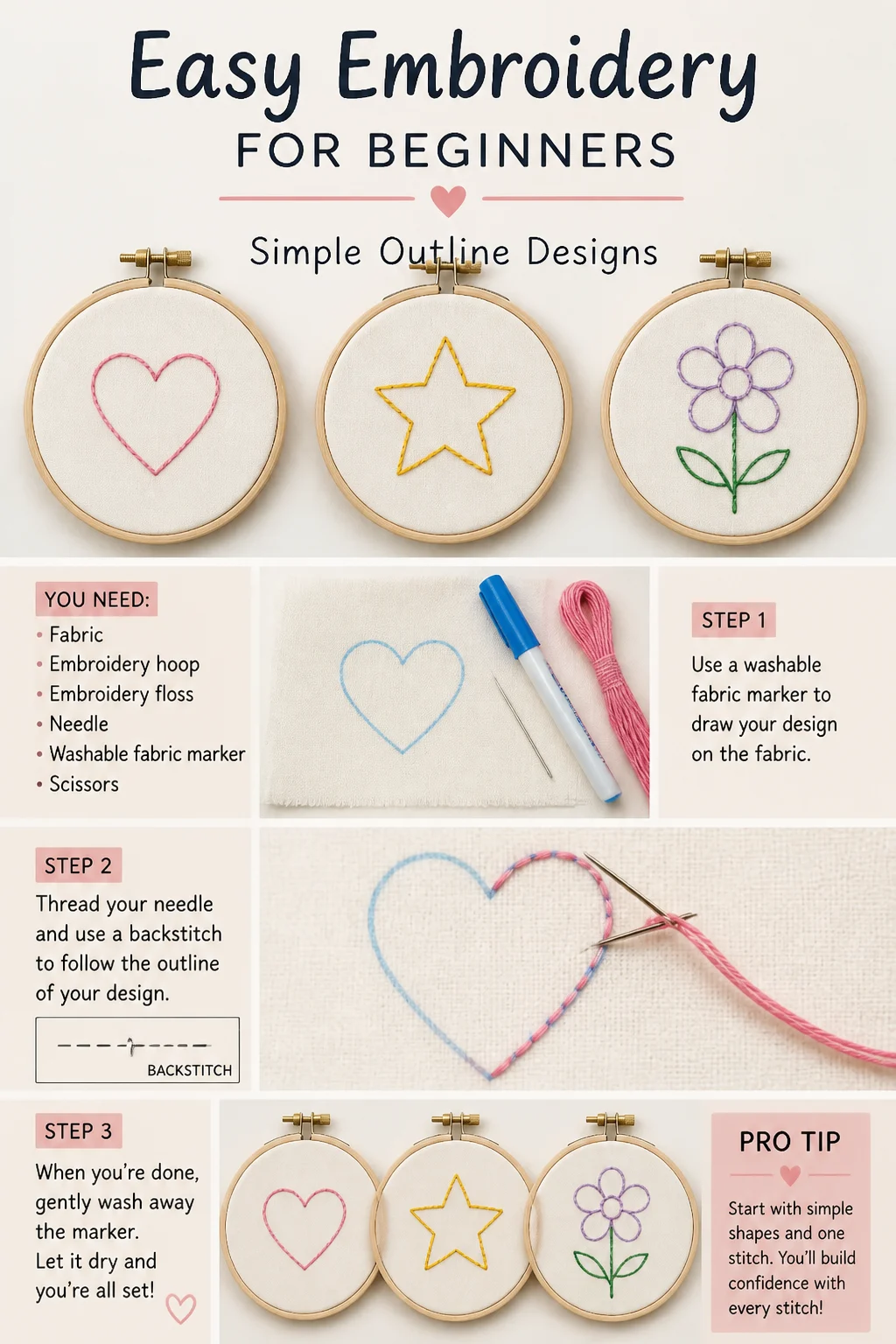
This works because you’re focusing on one fundamental skill: following a line. Easy peasy.
2. Minimalist Monograms
Personalize everything without the headache. A simple initial on a tote bag, a pillowcase, or even a basic t-shirt cuff looks incredibly chic. Pick a blocky, straightforward font and just stitch the outline.
Choose a contrasting thread color to make your initial pop. It’s a small detail that makes a big statement.

This project is fantastic for beginners because it’s contained and impactful. You get a custom piece with minimal effort.
3. Abstract Squiggles and Blobs
Who said art has to make sense? Grab a hoop and just start stitching random lines, curves, and shapes. Think abstract doodles from your high school notebook, but make them fabric-friendly. Use a simple running stitch or backstitch.
Don’t overthink it; the more spontaneous, the better. Use a few different thread colors if you’re feeling wild.
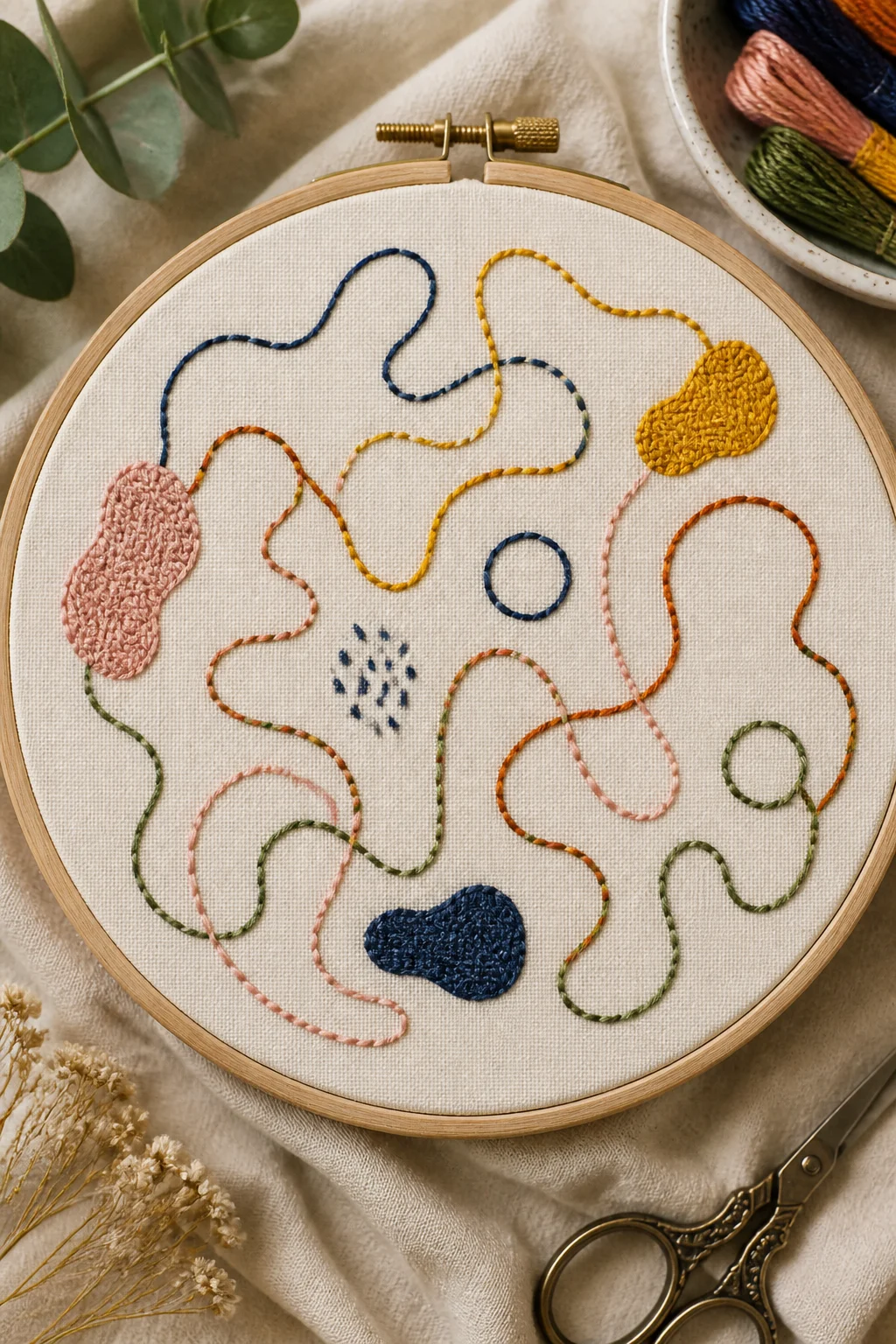
This is pure creative freedom. There’s no right or wrong, just thread going where it wants to go. Very Zen.
4. Backstitch Doodles
If you can draw a continuous line, you can backstitch a continuous line. Draw a simple little house, a tree, or even a tiny mountain range. Then, trace your drawing using only the backstitch.
Keep your lines chunky by using a few strands of embroidery floss. It gives it a bolder, more illustrative look.
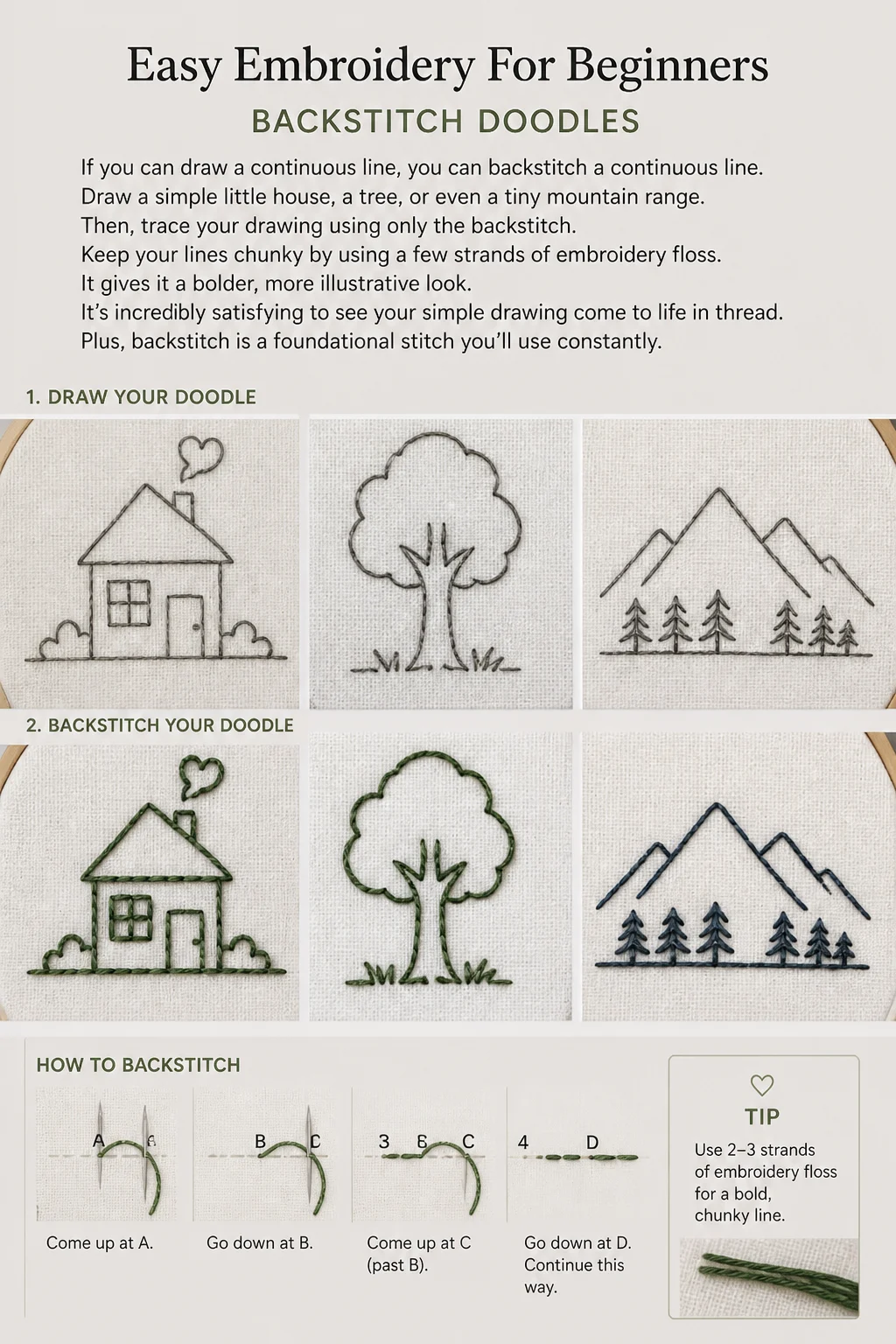
It’s incredibly satisfying to see your simple drawing come to life in thread. Plus, backstitch is a foundational stitch you’ll use constantly.
5. Seed Stitch Fill
Want texture without the commitment of complex stitches? The seed stitch is your new best friend. It’s just tiny, random straight stitches scattered across an area. It looks like a sprinkled texture.
Vary the length and direction of your tiny stitches for an organic, natural feel. It’s all about controlled chaos.
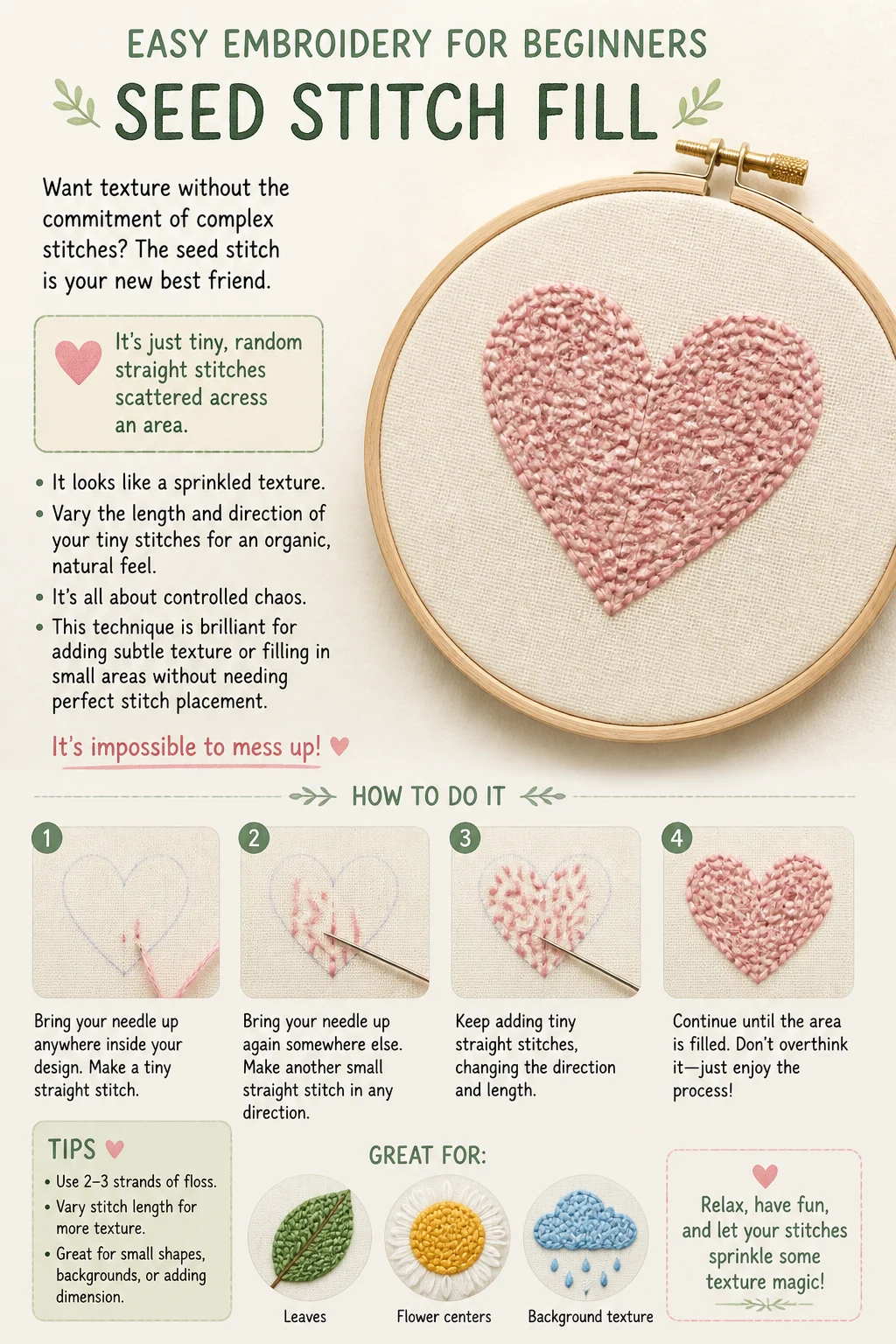
This technique is brilliant for adding subtle texture or filling in small areas without needing perfect stitch placement. It’s impossible to mess up.
6. French Knot Clusters
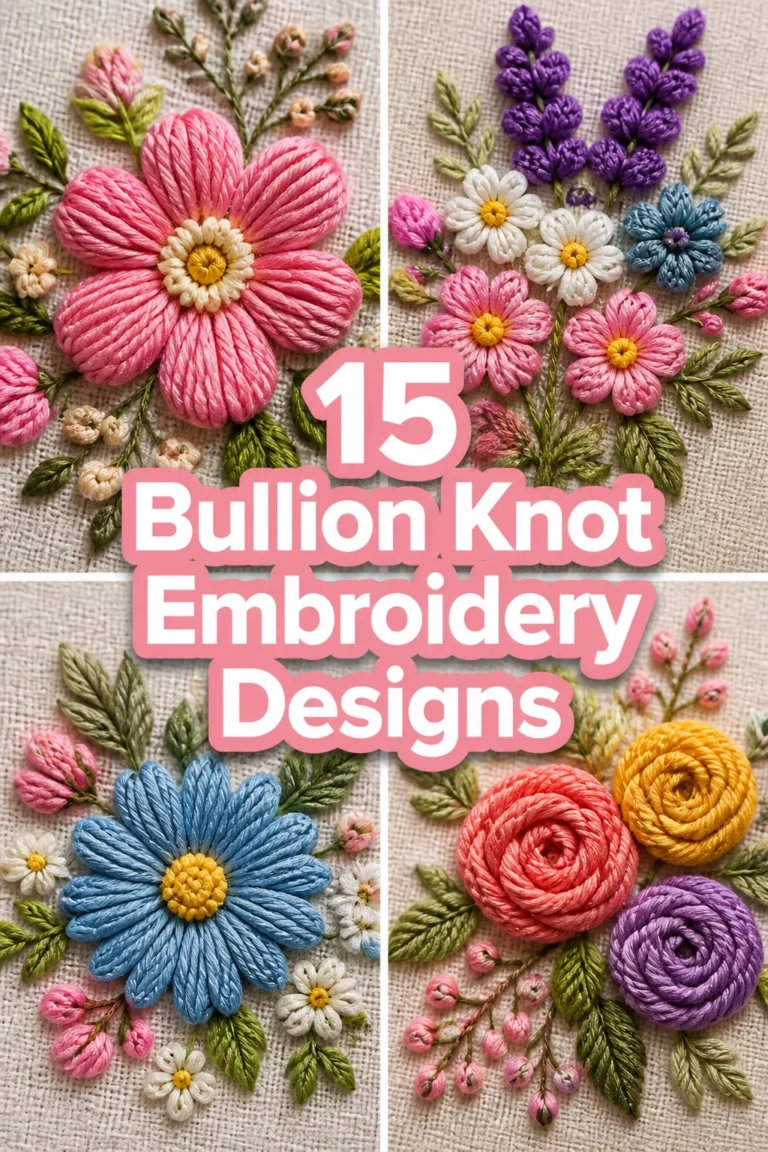
Okay, don’t run away. French knots look intimidating, but they’re basically just tiny, adorable little bumps. Practice a few, then use them to create polka dots, little flower centers, or abstract clusters of texture.
Wrap the thread around your needle just once or twice for smaller, neater knots. Any more and they get a bit unruly, like a toddler on a sugar rush.

Once you get the hang of it, French knots are incredibly versatile and add a lovely dimension to any piece. You’ll feel like a pro.
7. Lazy Daisy Flowers
These flowers are called “lazy” for a reason, and it’s not because they binge-watch reality TV. They are super simple loops that form perfect petals. Stitch a few around a French knot center, and boom, you have a flower.
Keep your loops fairly uniform in size for a more polished look, but don’t sweat it if they’re a little wobbly. Adds character.
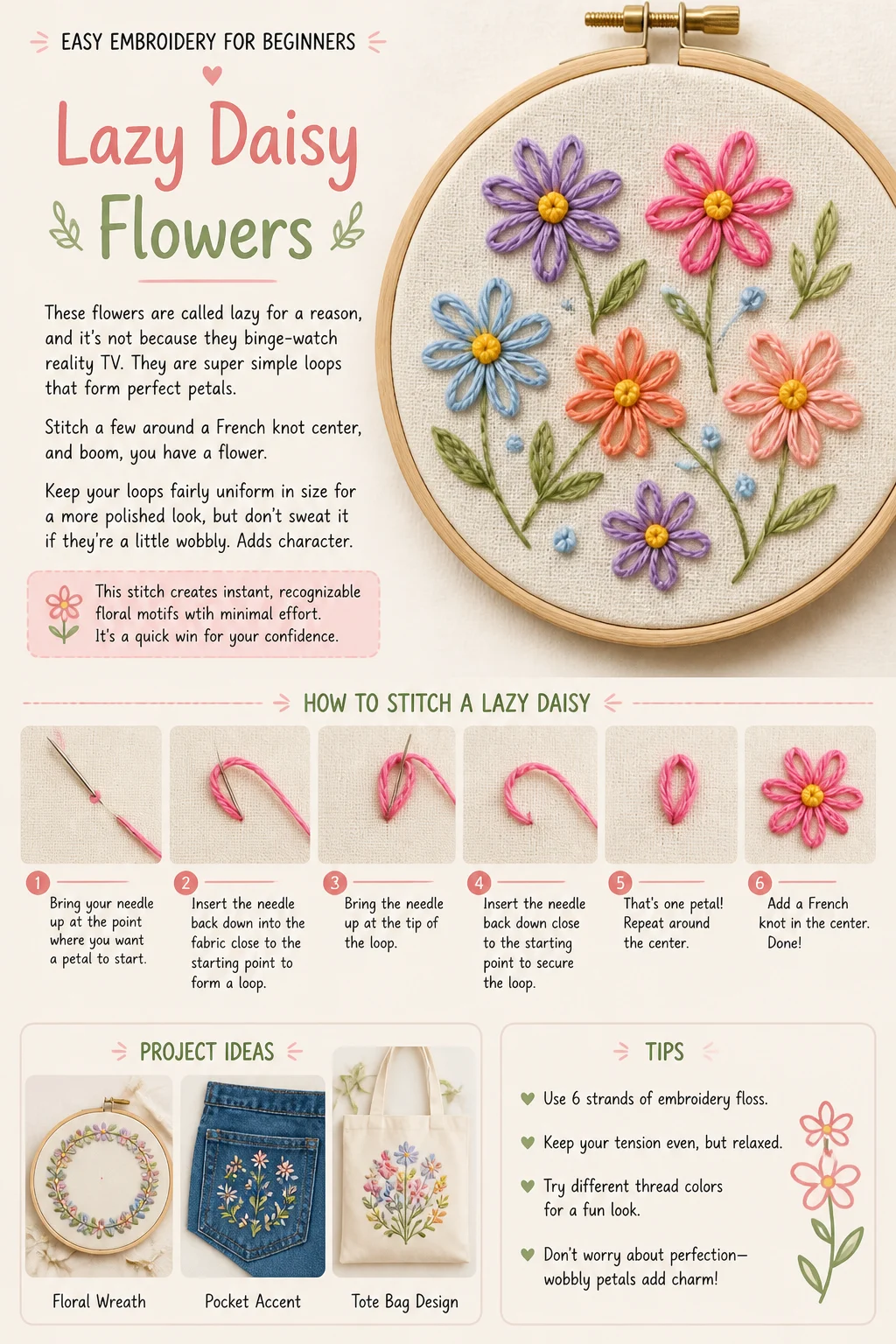
This stitch creates instant, recognizable floral motifs with minimal effort. It’s a quick win for your confidence.
8. Running Stitch Patterns
The running stitch is the simplest stitch out there, literally just going in and out of the fabric. But you can create cool patterns by varying the length of your stitches or by arranging them in grids or stripes.
Try making your stitches and the gaps between them equal in length for a neat, dashed line effect. Precision is optional, of course.
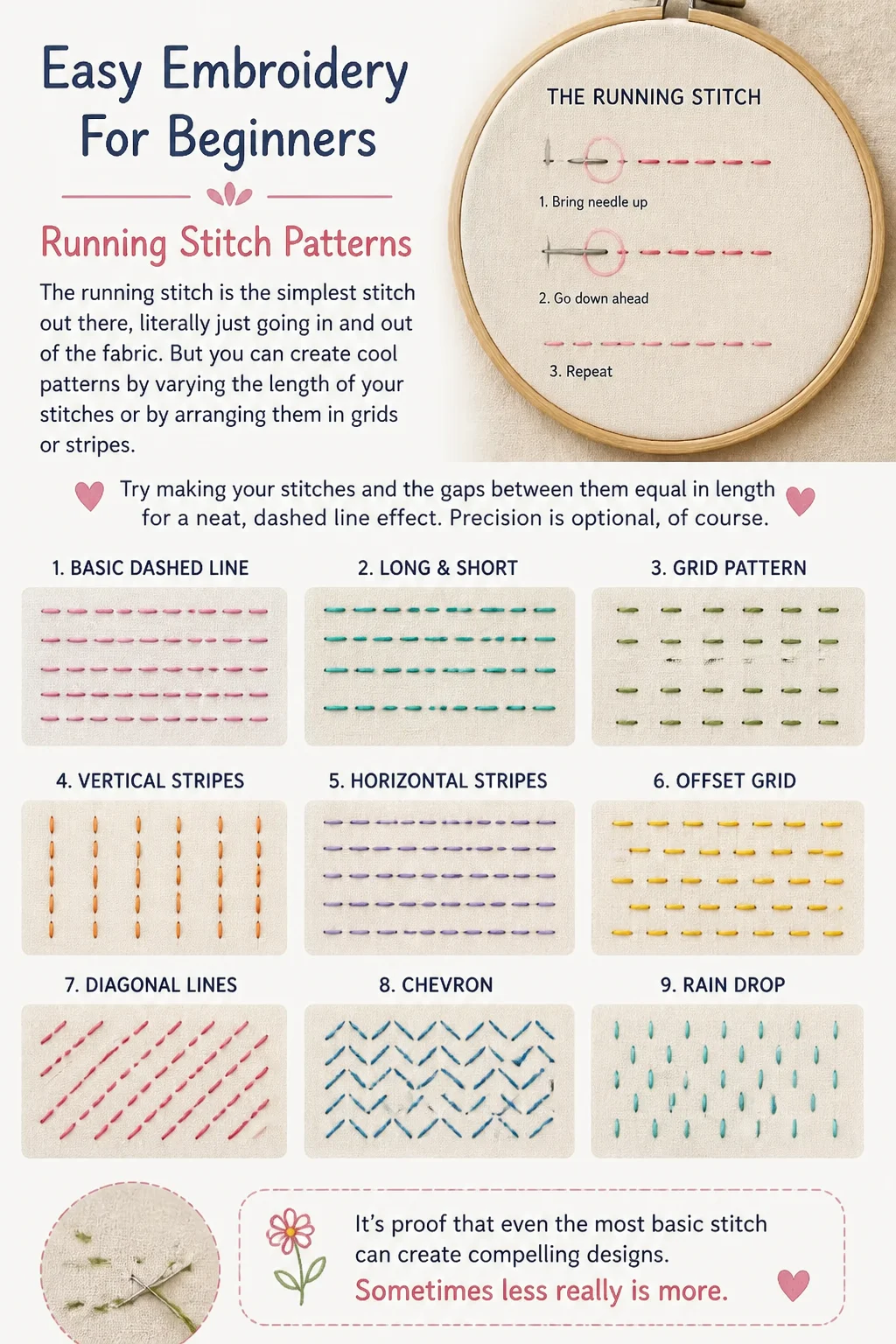
It’s proof that even the most basic stitch can create compelling designs. Sometimes less really is more.
9. Basic Cross Stitch
Yes, cross stitch is embroidery. And no, it doesn’t have to be a giant, pixelated masterpiece. Start with a small, simple design like a tiny star, a heart, or a single letter on a piece of aida cloth. Just perfect little ‘X’s.
Make sure all your top stitches cross in the same direction for a super neat, uniform look. It’s the secret sauce.
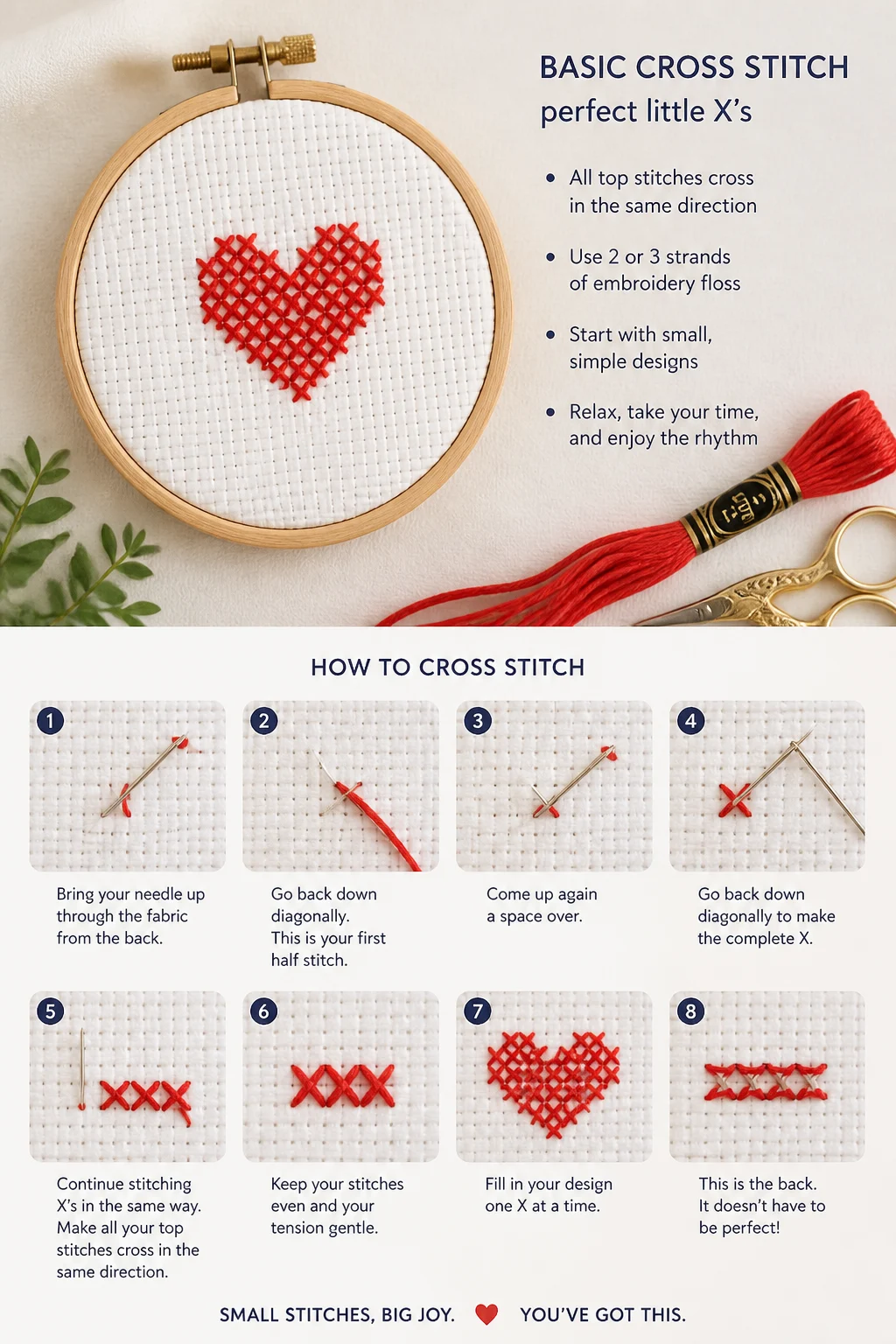
Cross stitch is very meditative and the grid makes it easy to follow a pattern. It’s structured stitching for your structured soul.
10. Embroidered Felt Patches
Cut out a simple shape from felt (like a cloud, a mushroom, or a blob). Then, embroider some simple details onto it using a backstitch or running stitch. Think tiny eyes, a happy face, or a basic pattern.
Use a blanket stitch around the edge of your felt shape for a clean, finished look. It’s like giving your patch a tiny, cozy hug.

Felt doesn’t fray, making it super forgiving for beginners. Plus, you get a cool patch you can sew onto anything.
11. Upcycling Clothes with Small Details
Got a plain denim jacket, a boring t-shirt, or a dull pair of jeans? Add a tiny embroidered detail. A single flower on a pocket, a small initial on a collar, or a simple line design on a cuff.
Before you commit, draw your design with a washable fabric pen. Test it on an inconspicuous spot first, just in case.
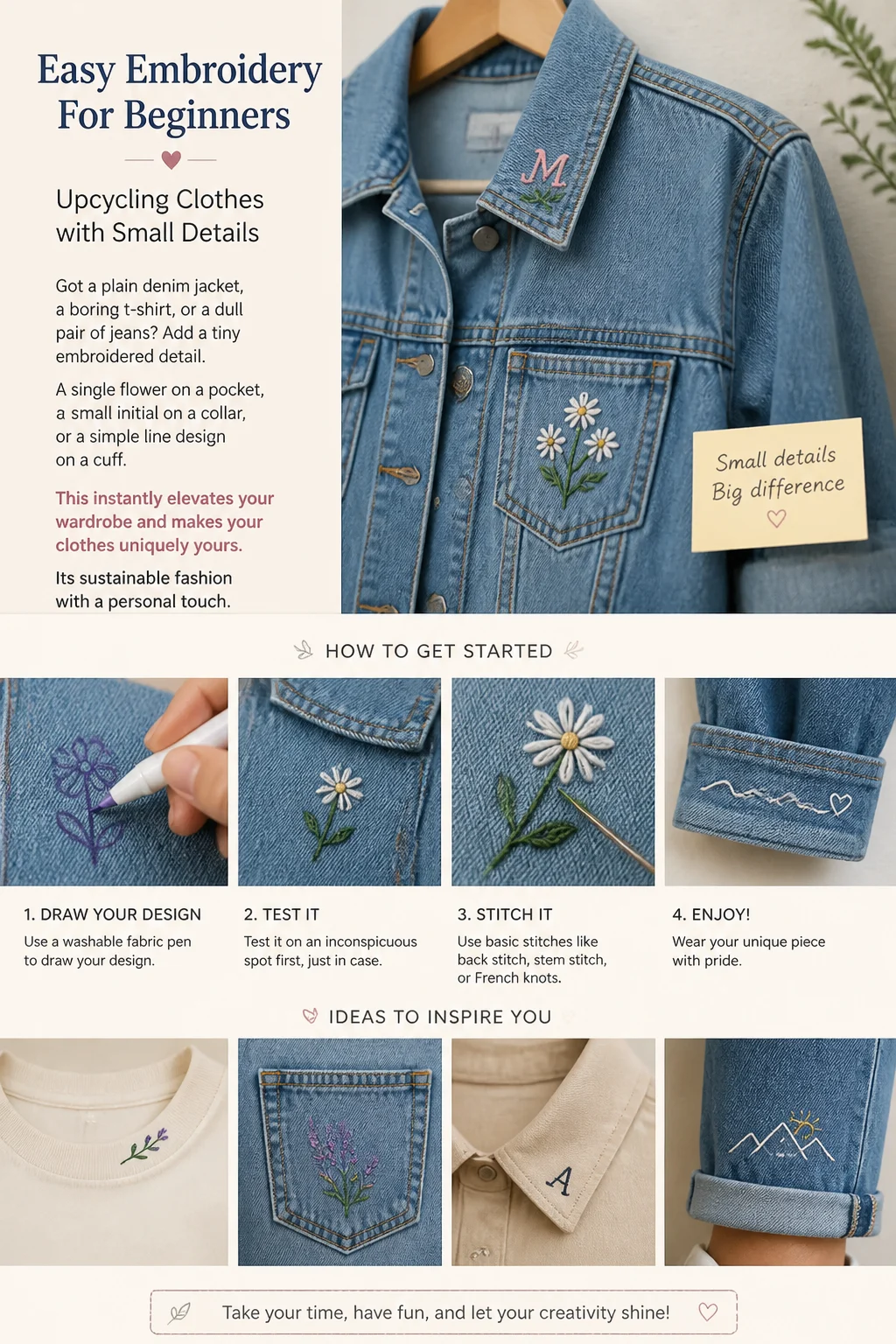
This instantly elevates your wardrobe and makes your clothes uniquely yours. It’s sustainable fashion with a personal touch.
12. Beginner Samplers
If you’re feeling adventurous but still want guidance, create a sampler. This is basically a piece of fabric divided into squares, where you practice a different simple stitch in each square. Think of it as your embroidery report card.
Don’t be afraid to make mistakes; that’s literally the point of a sampler. Embrace the wonky stitches.
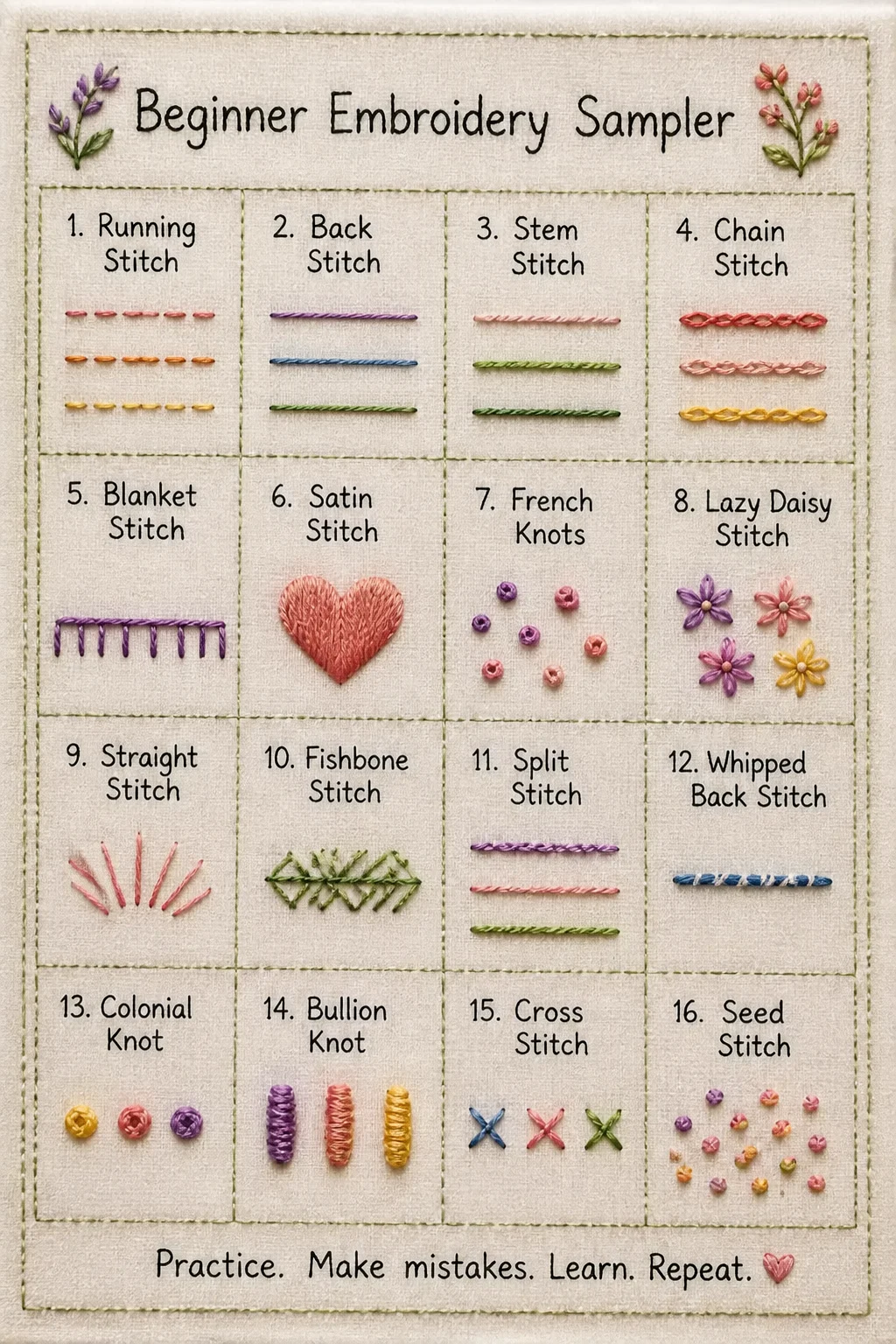
Samplers are excellent for learning multiple stitches without the pressure of a finished project. It’s all about skill-building.
13. Simple Text Art
Stitch out a short, sweet word or phrase. Think “hello,” “love,” “create,” or even just your favorite single emoji (if you can draw it). Use a simple backstitch or stem stitch for clear lines.
Use an online font generator to find a simple, clear font you like, then trace it onto your fabric. No need to be a calligrapher.
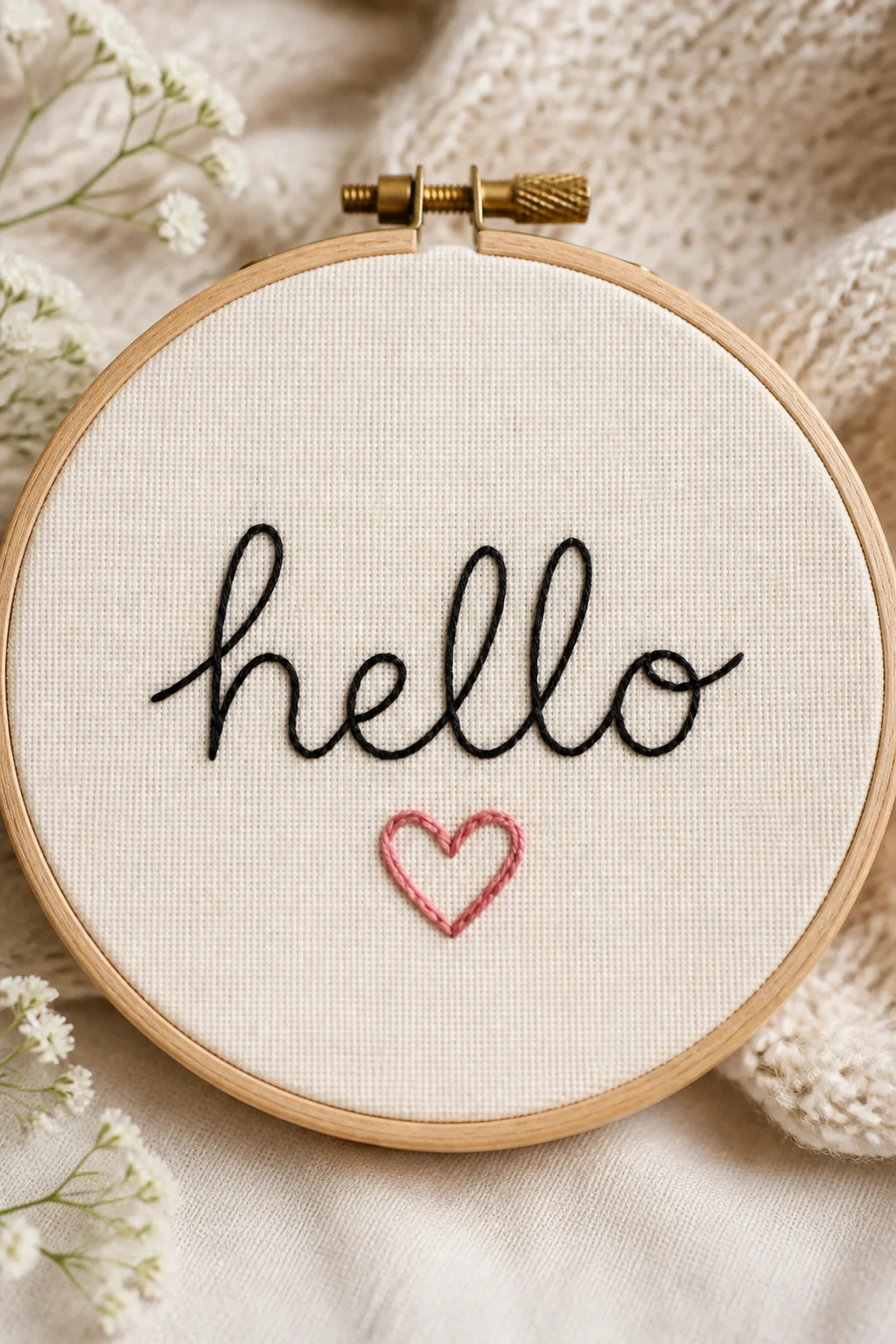
Text embroidery is incredibly popular and adds a modern, personal touch. It’s a great way to express yourself with thread.
14. Nature Silhouettes
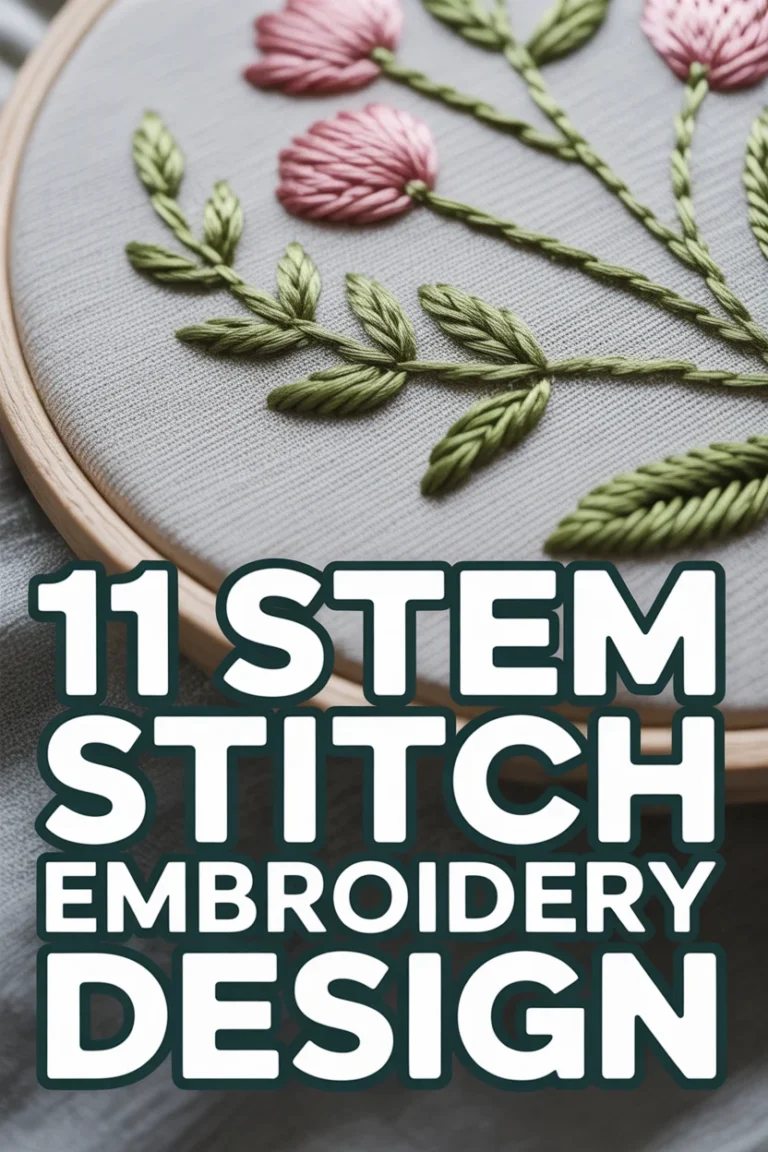
Imagine a simple outline of a mountain, a tree, or a cluster of leaves. You don’t need to fill them in with color. Just stitch the silhouette using a backstitch or a slightly thicker stem stitch.
Choose a muted thread color like forest green or deep blue for a sophisticated, understated look. Earth tones are your friend.
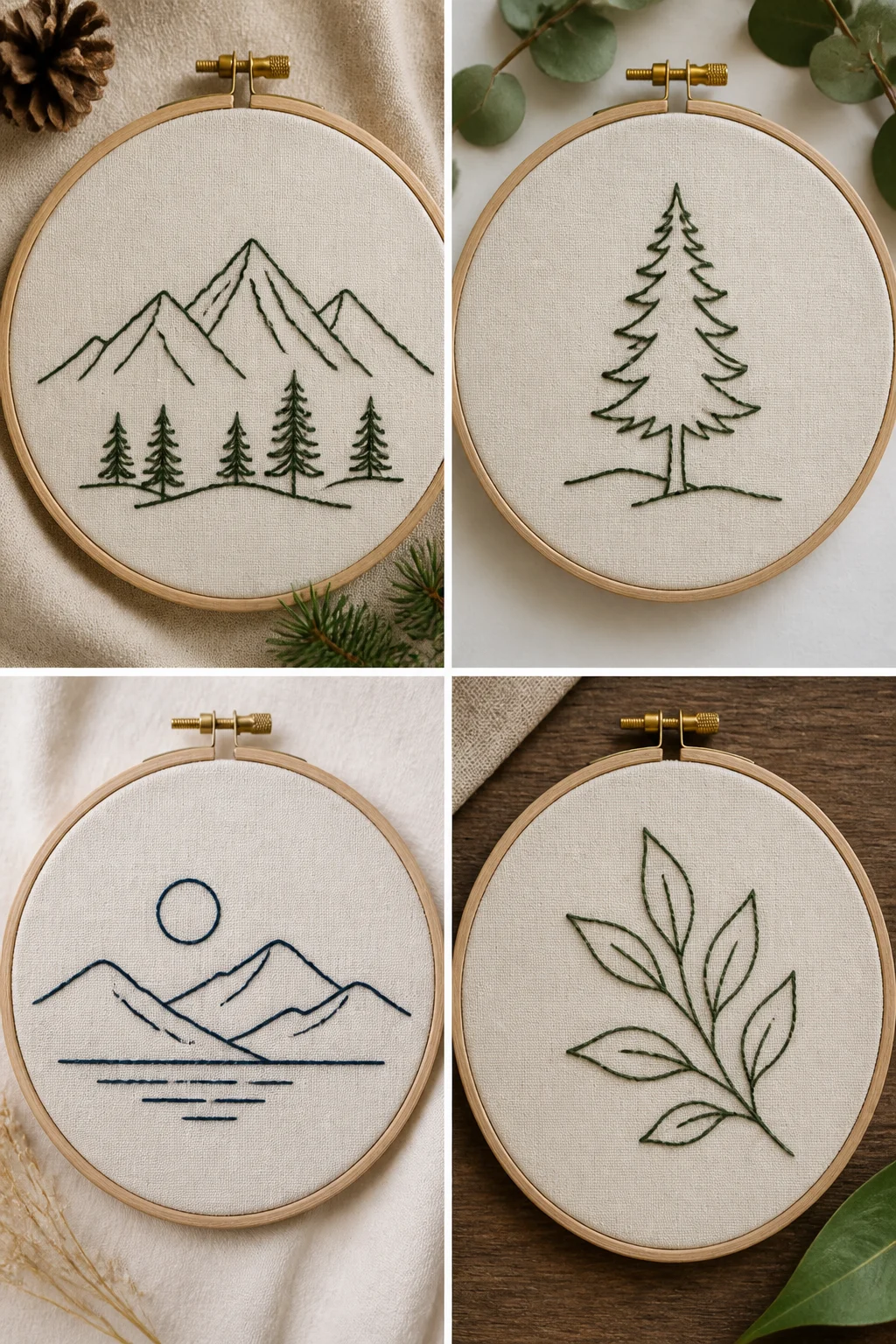
These designs are calming to stitch and result in beautiful, minimalist pieces that evoke nature without being overly complex.
Conclusion
See? Embroidery doesn’t have to be some ancient, mystical art form reserved for textile wizards. It’s just thread and a needle, ready for you to get your hands on. Pick one of these projects, grab some basic supplies, and dive in. You’ll be adding custom flair to everything you own faster than you can say “thread snips.” Trust me, your inner craft queen (or king) is dying to come out and play.
& CRAFT IDEAS
Beginner-friendly tutorials, creative projects,
and weekly inspiration in your inbox.