✨ How To Make Stickers
& CRAFT IDEAS
Beginner-friendly tutorials, creative projects,
and weekly inspiration in your inbox.
🛠️ The Ultimate Maker's Toolkit
I've tested thousands of craft tools over the years. Whether you are quilting, crafting, or building mixed-media art, these are the top 5 absolute non-negotiable tools I personally recommend to guarantee professional results.
🪡 SINGER Heavy Duty 4452 Sewing Machine
The sewing community highly recommends this as the ultimate "bulletproof" entry-level machine. Its heavy metal frame powerfully pushes through thick denim and heavy quilt layers that would instantly jam a standard plastic machine.
✂️ Fiskars 8" Orange-Handled Scissors
Never settle for dull dollar-store blades. Wirecutter repeatedly names Fiskars the absolute best all-purpose craft scissor due to its legendary precision-ground blades and an ergonomic grip that prevents hand-cramping.
🔥 Gorilla Dual Temp Hot Glue Gun
Named Wirecutter's top choice because it literally does the work of two tools. It features dual-temperature settings offering low heat for delicate florals and blistering high heat for heavy wood adhesion repairs.
🖌️ Mod Podge Waterbase Gloss Sealer
The absolute undisputed champion of decoupage and paper crafts. Experts rely exclusively on this exact water-based formula because it glues, seals, and finishes beautifully without yellowing or flaking over time.
🎨 Apple Barrel Acrylic Paint (2 oz)
The quintessential, incredibly inexpensive craft paint. Woodworkers and hobby painters swear by its smooth flow and matte finish, providing massive value and remarkably thick color coverage on rough surfaces.
Ever look at a blank laptop or water bottle and think, “Ugh, needs more personality”? Same, friend. Stickers are basically tiny canvases of pure joy, but buying them can get pricey, and sometimes you just can’t find that perfect design. Good news: you don’t need to be a design guru or own a fancy factory to whip up your own. We’re about to dive into how to make stickers that are so cool, your friends will be begging for your secret sauce. Let’s get sticky!
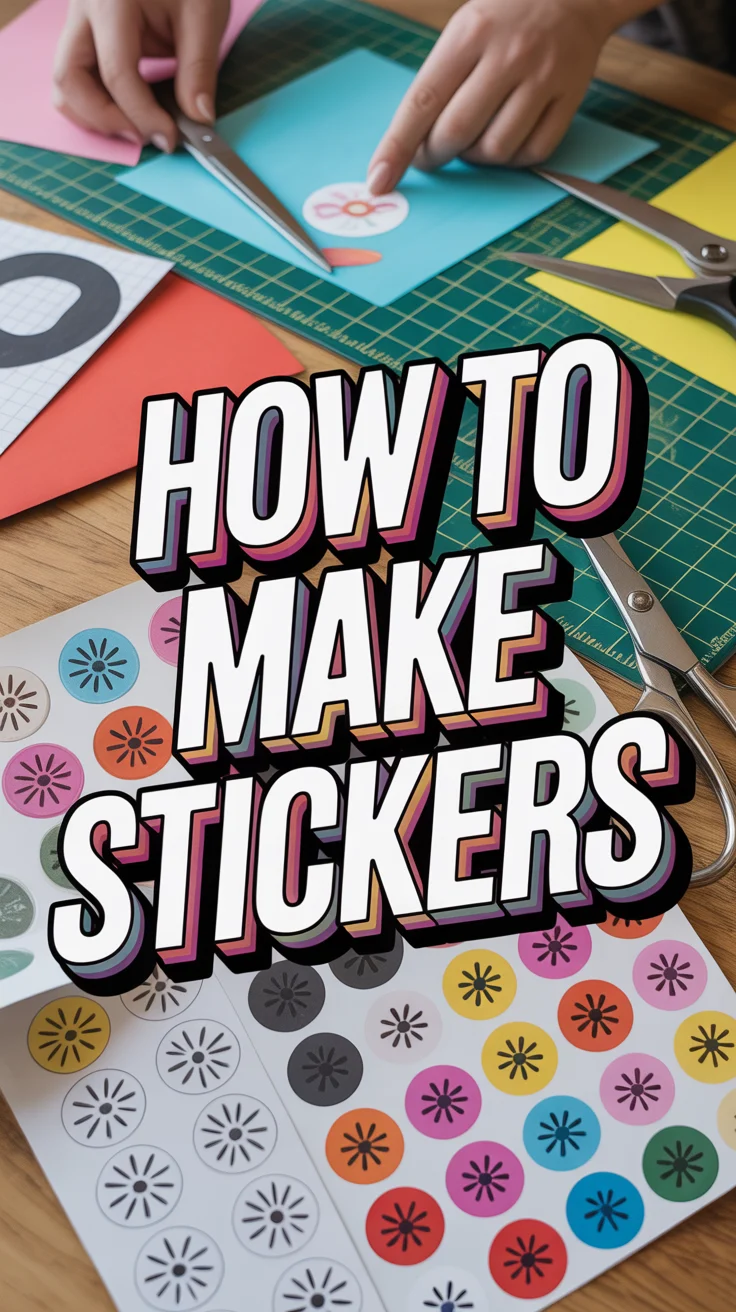
1. Hand-Drawn & Cut
Wanna go old school? This is the OG sticker method, perfect for when you’re feeling artsy and a little rebellious against technology. Grab your fave pens and unleash your inner Picasso.
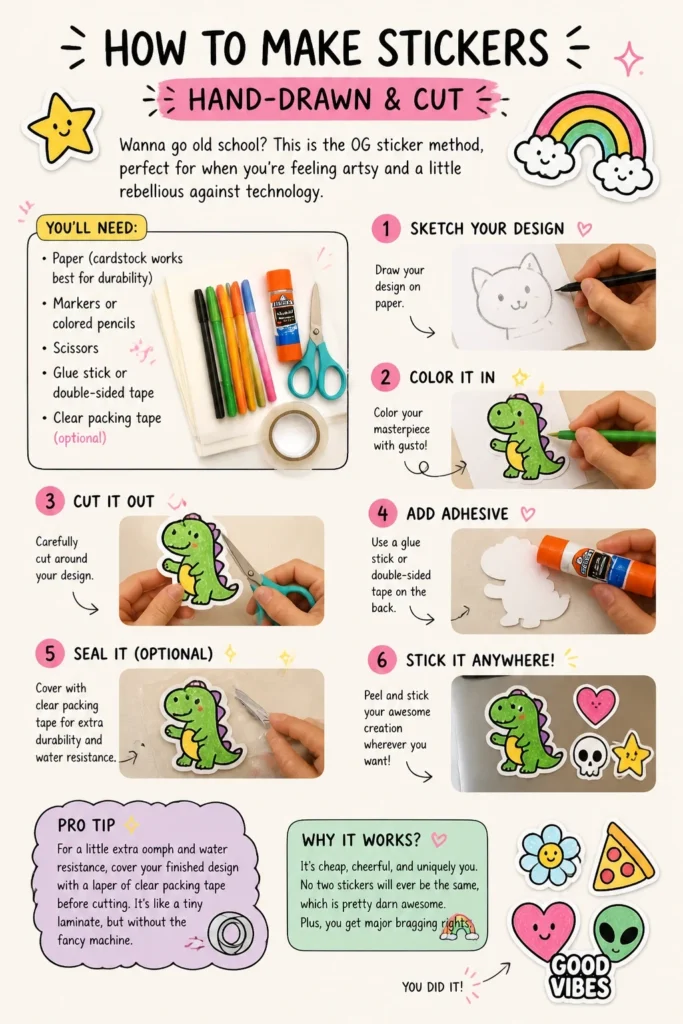
You’ll need some paper (cardstock works best for durability), your trusty markers or colored pencils, and a pair of scissors. Sketch out your design, color it in with gusto, and then carefully cut it out. For adhesion, a simple glue stick or double-sided tape on the back does the trick. You’re basically a DIY wizard.
Pro tip: For a little extra oomph and water resistance, cover your finished design with a layer of clear packing tape before cutting. It’s like a tiny laminate, but without the fancy machine.
Why it works? It’s cheap, cheerful, and uniquely you. No two stickers will ever be the same, which is pretty cool if you ask us.
2. Printer & Sticker Paper
Okay, so maybe “old school” isn’t your vibe. No worries, your printer is about to become your new bestie. This method is super popular for a reason: it’s efficient and looks pro.
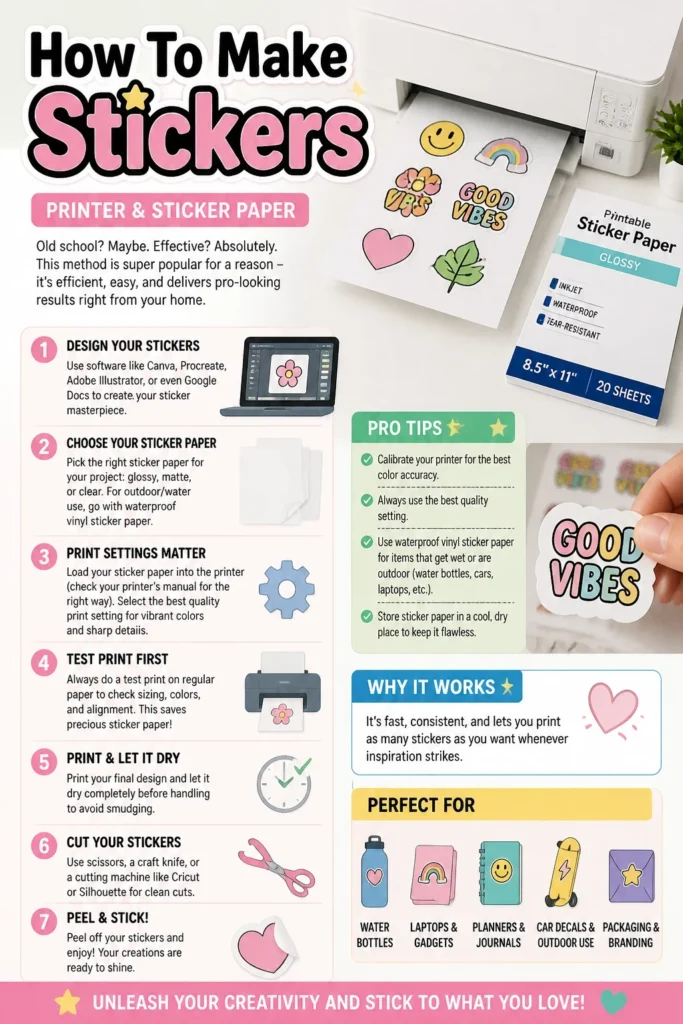
Design your masterpiece digitally using software like Canva, Procreate, or even Google Docs (don’t knock it ’til you try it!). Then, print it onto printable sticker paper. You can find glossy, matte, or even clear options. Just make sure your printer can handle the paper type, and always do a test print on regular paper first to save precious sticker sheets.
Pro tip: Calibrate your printer for the best color accuracy and always use the “best quality” setting. Also, consider waterproof vinyl sticker paper if your creations are going on water bottles or cars.
Why it works? It’s fast, consistent, and lets you print a whole sheet of different designs in one go. Hello, sticker army!
3. Laminator Method
Level up your hand-drawn or printed stickers with a laminator! This adds a professional, durable finish that makes your stickers feel store-bought (but way cooler because you made them).
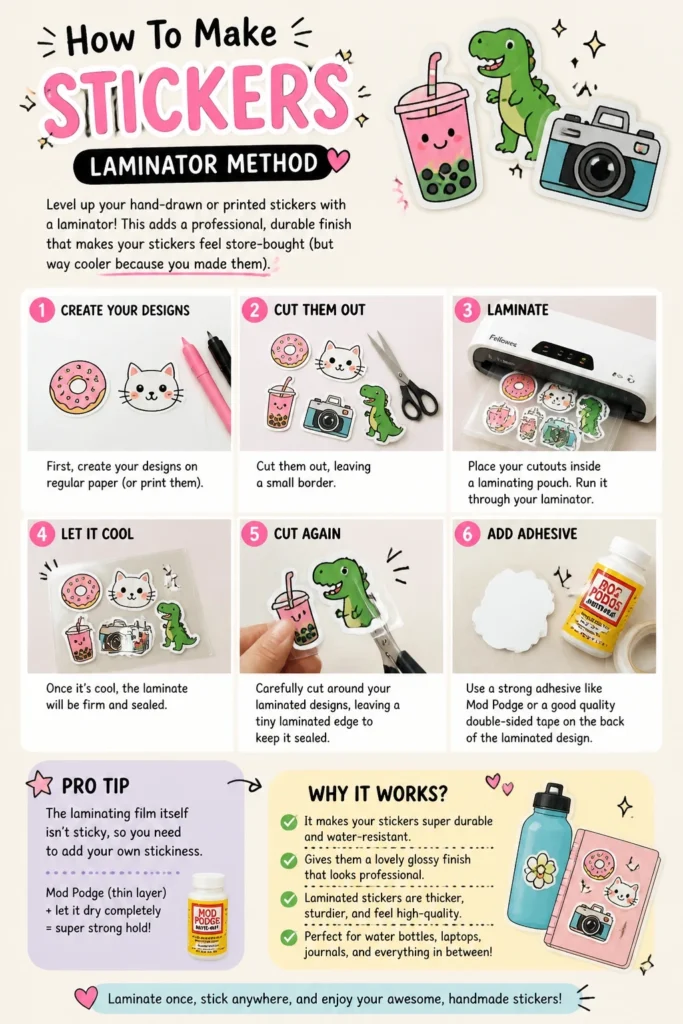
First, create your designs on regular paper (or print them). Cut them out, leaving a small border. Then, place your cutouts inside a laminating pouch. Run it through your laminator. Once it’s cool, carefully cut around your laminated designs, leaving a tiny laminated edge to keep it sealed.
Pro tip: Use a strong adhesive like Mod Podge or a good quality double-sided tape on the back of the laminated design. The laminating film itself isn’t sticky, so you need to add your own stickiness.
Why it works? It makes your stickers super durable, water-resistant, and gives them a lovely glossy finish. Plus, laminators are just fun to use.
4. Packing Tape Method
Who knew your moving box essential could be a sticker-making MVP? This hack is ridiculously simple and gives your paper designs a glossy, somewhat water-resistant finish.
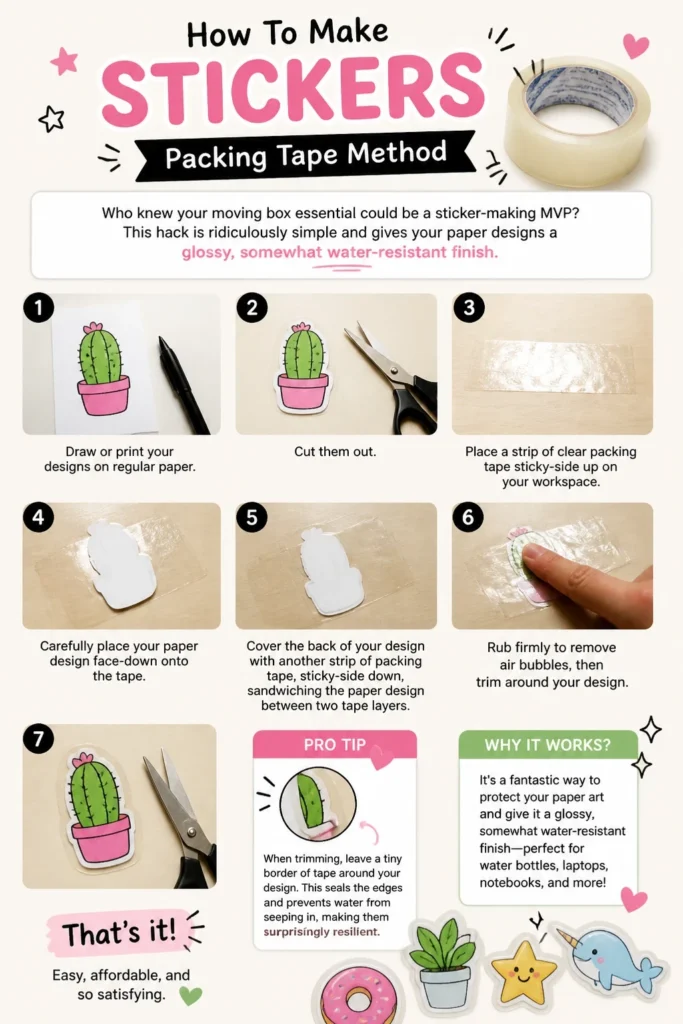
Draw or print your designs on regular paper. Cut them out. Place a strip of clear packing tape sticky-side up on your workspace. Carefully place your paper design face-down onto the tape. Cover the back of your design with another strip of packing tape, sticky-side down, sandwiching the paper design between two tape layers. Rub firmly to remove air bubbles, then trim around your design.
Pro tip: When trimming, leave a tiny border of tape around your design. This seals the edges and prevents water from seeping in, making them surprisingly resilient.
Why it works? It’s a fantastic way to protect your paper art and give it a bit of a sticker sheen without any special equipment. Resourcefulness for the win!
5. Clear Contact Paper Method
If you’ve ever lined a shelf, you’re halfway to making stickers! Clear contact paper is basically a giant, sticky, protective sheet perfect for DIY decals.
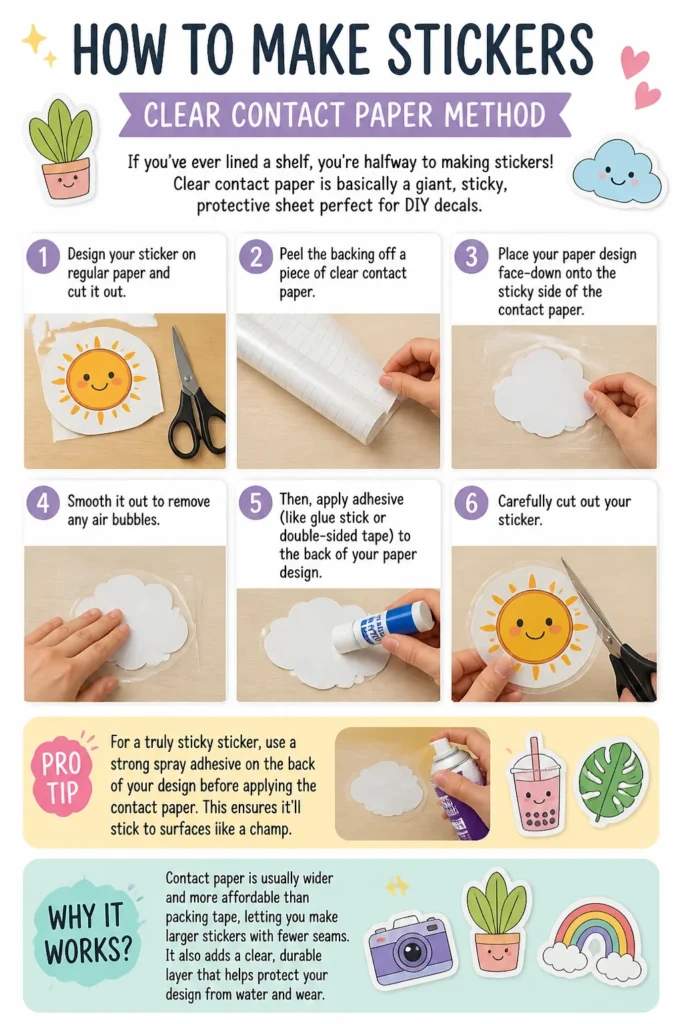
Design your sticker on regular paper and cut it out. Peel the backing off a piece of clear contact paper. Place your paper design face-down onto the sticky side of the contact paper. Smooth it out to remove any air bubbles. Then, apply adhesive (like glue stick or double-sided tape) to the back of your paper design, and carefully cut out your sticker.
Pro tip: For a truly sticky sticker, use a strong spray adhesive on the back of your design before applying the contact paper. This ensures it’ll stick to surfaces like a champ.
Why it works? Contact paper is usually wider and more affordable than packing tape, letting you make larger stickers or batches with ease. It’s also pretty durable.
6. Double-Sided Tape
Sometimes, the simplest tools are the most effective. Double-sided tape might not be fancy, but it gets the job done for quick and easy stickers.
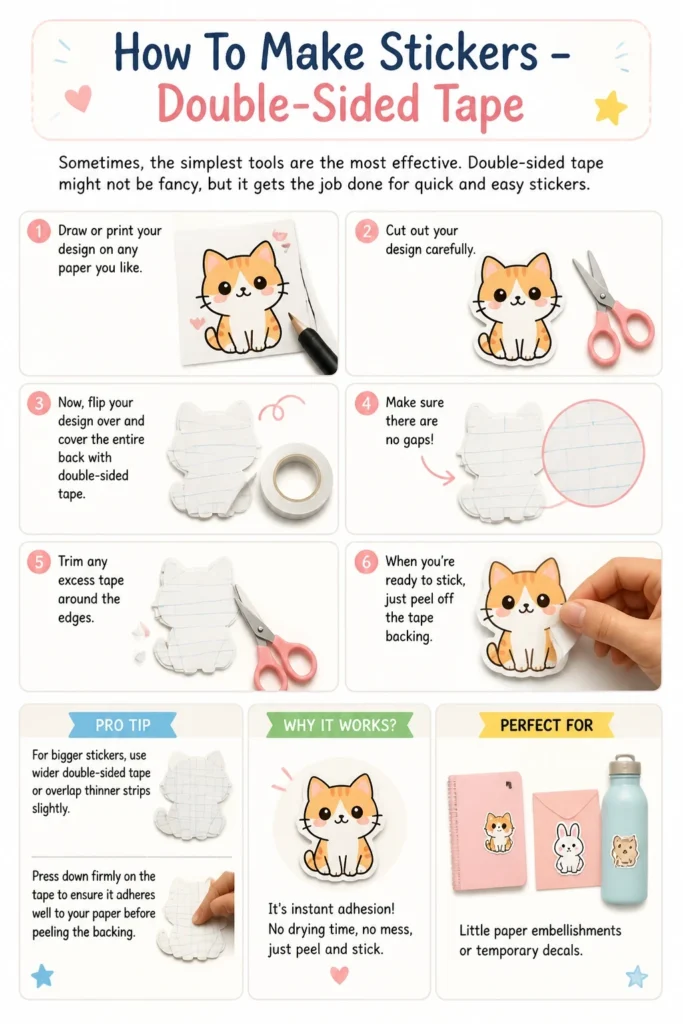
Draw or print your design on any paper you like. Cut out your design carefully. Now, flip your design over and cover the entire back with double-sided tape. Make sure there are no gaps! Trim any excess tape around the edges. When you’re ready to stick, just peel off the tape backing.
Pro tip: For bigger stickers, use wider double-sided tape or overlap thinner strips slightly. Press down firmly on the tape to ensure it adheres well to your paper before peeling the backing.
Why it works? It’s instant adhesion! No drying time, no mess, just peel and stick. Perfect for little paper embellishments or temporary decals.
7. Vinyl Cutter (Cricut/Silhouette)
Okay, this is where we get into the big leagues of DIY sticker making. If you’re serious about your sticker game, a vinyl cutter is a total game-changer.
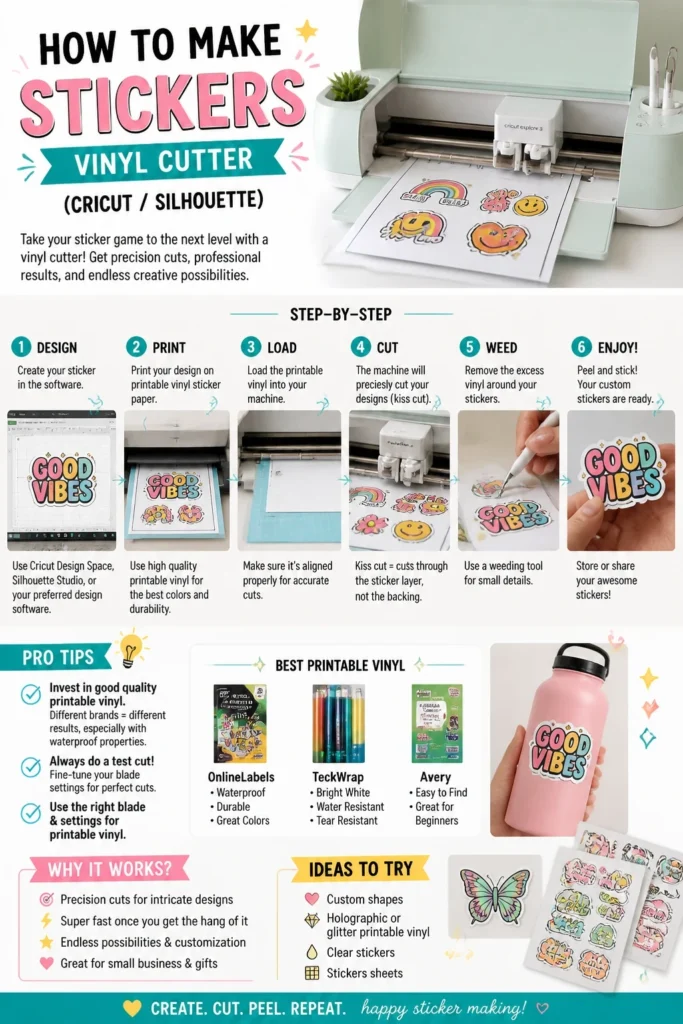
Design your sticker using the machine’s software (like Cricut Design Space or Silhouette Studio). Load printable vinyl sticker paper into your machine. The machine will then precisely cut out your designs, often with a “kiss cut” that cuts through the sticker layer but not the backing. Weed out the excess vinyl, and boom, ready-to-peel stickers!
Pro tip: Invest in a good quality printable vinyl. Different brands yield different results, especially with waterproof properties. Also, always do a test cut to get your blade settings just right.
Why it works? Precision, speed, and endless possibilities. You can make intricate designs, custom shapes, and even layered vinyl stickers. It’s basically a sticker factory on your desk.
8. Print-on-Demand (POD)
Not feeling the DIY cutting and printing? Let someone else do the heavy lifting! Print-on-Demand services are your ticket to professional-grade stickers without ever touching an adhesive.
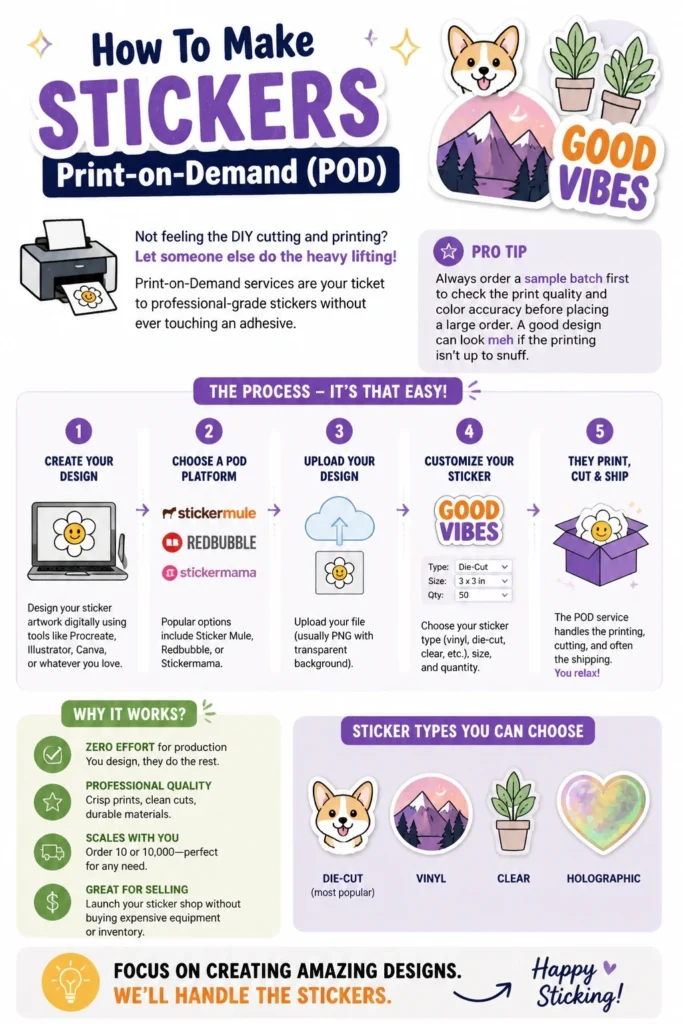
Create your digital designs and upload them to a POD platform like Sticker Mule, Redbubble, or Stickermama. Choose your sticker type (vinyl, die-cut, clear, etc.), size, and quantity. They handle the printing, cutting, and often even the shipping. You just sit back and wait for your awesome stickers to arrive.
Pro tip: Always order a sample batch first to check the print quality and color accuracy before placing a large order. A good design can look meh if the printing isn’t up to snuff.
Why it works? Zero effort on your part for production, professional quality, and a great way to sell your designs without managing inventory. Passive sticker income, anyone?
9. Photo Paper & Glue Stick
Got some glossy photo paper lying around? It’s not just for vacation pics anymore! This method gives your stickers a nice sheen and a bit more heft than regular paper.
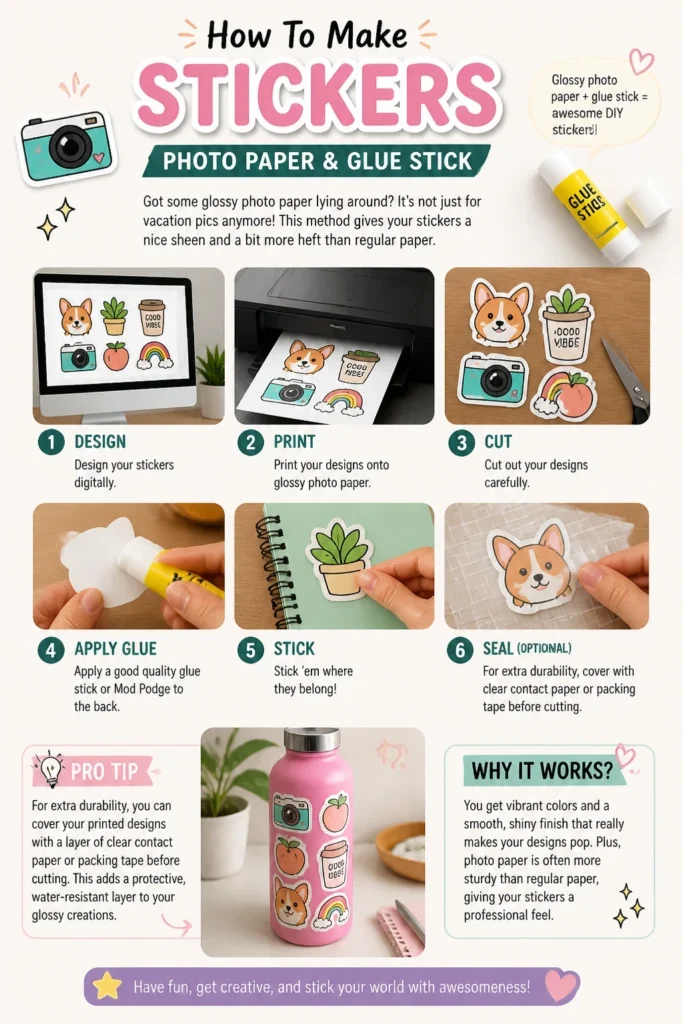
Design your stickers digitally and print them onto glossy photo paper. The thicker paper and glossy finish give them a more premium feel. Cut out your designs carefully. When you’re ready to use them, apply a good quality glue stick or even Mod Podge to the back, and stick ’em where they belong.
Pro tip: For extra durability, you can cover your printed designs with a layer of clear contact paper or packing tape before cutting. This adds a protective, water-resistant layer to your glossy creations.
Why it works? You get vibrant colors and a smooth, shiny finish that really makes your designs pop. Plus, photo paper is often readily available.
10. Temporary Tattoo Paper
Thinking outside the sticker box? Temporary tattoo paper lets you put your designs on skin, or even smooth, non-porous surfaces like mugs or phone cases for a unique, semi-permanent decal look.
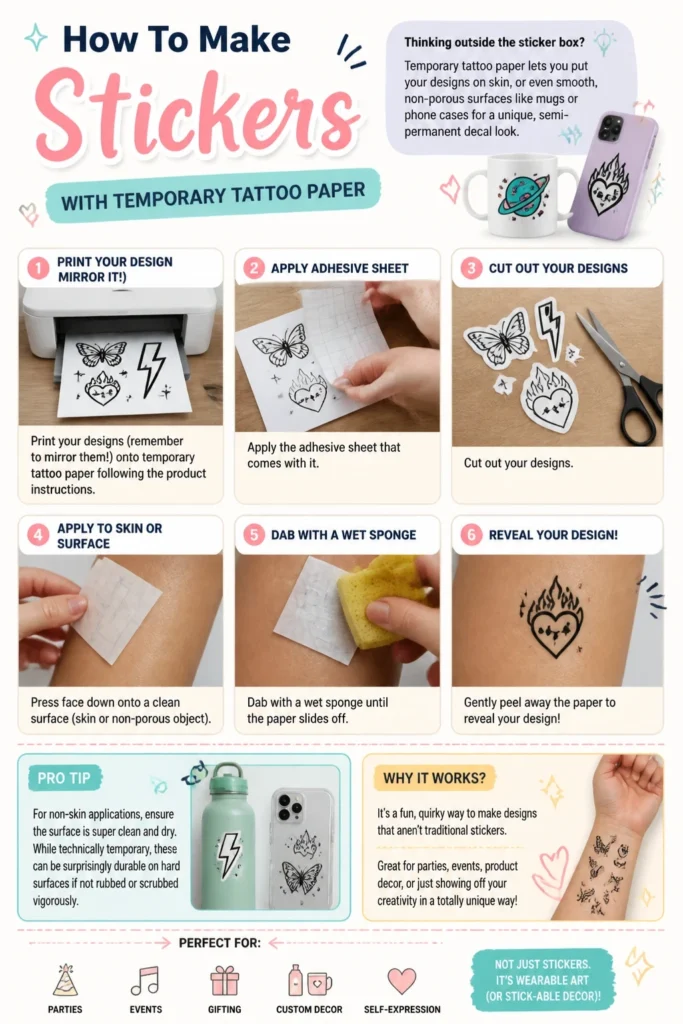
Print your designs (remember to mirror them!) onto temporary tattoo paper following the product instructions. Apply the adhesive sheet that comes with it. Cut out your designs. To apply, press face down onto a clean surface and dab with a wet sponge until the paper slides off, leaving your design behind.
Pro tip: For non-skin applications, ensure the surface is super clean and dry. While technically temporary, these can be surprisingly durable on hard surfaces if not rubbed or scrubbed vigorously.
Why it works? It’s a fun, quirky way to make designs that aren’t traditional stickers. Great for parties, branding, or just personalizing items in a unique way.
11. Fabric Stickers
Who says stickers have to be paper or vinyl? Fabric stickers add a soft, textured, and totally unique vibe to your projects. Think patches, but stickier!
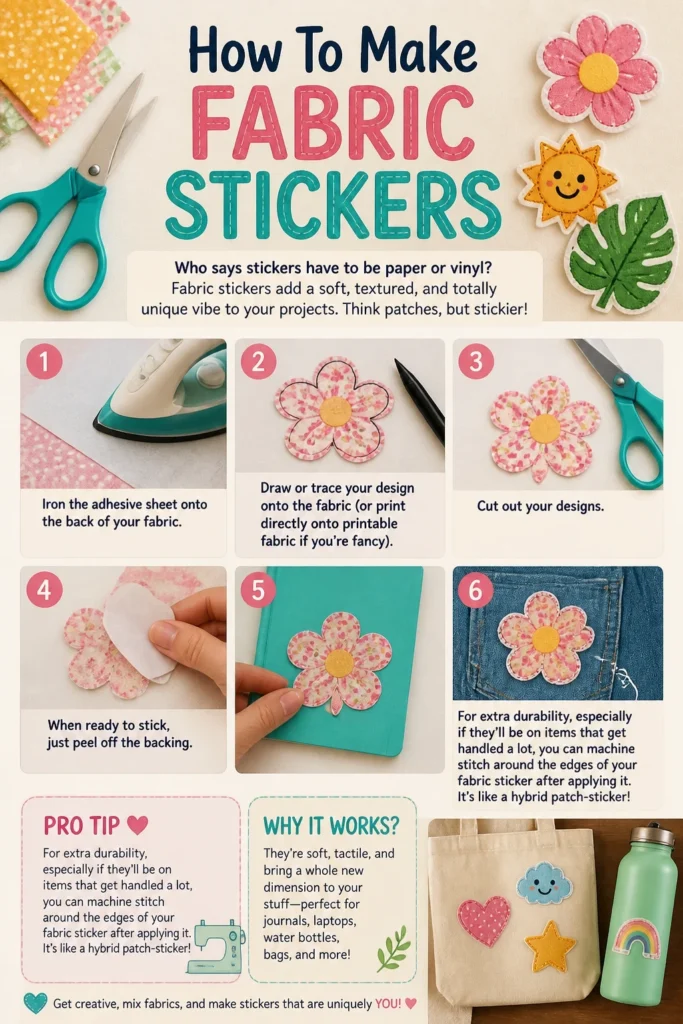
You’ll need some fabric (cotton works great), fabric adhesive sheets (like HeatnBond or Pellon EZ-Steam), and a pair of fabric scissors. Iron the adhesive sheet onto the back of your fabric. Draw or trace your design onto the fabric (or print directly onto printable fabric if you’re fancy). Cut out your designs. When ready to stick, just peel off the backing.
Pro tip: For extra durability, especially if they’ll be on items that get handled a lot, you can machine stitch around the edges of your fabric sticker after applying it. It’s like a hybrid patch-sticker!
Why it works? They’re soft, tactile, and bring a whole new dimension to your sticker game. Perfect for personalizing fabric items or adding a cozy touch.
12. Resin Stickers
Ready for some serious shine and dimension? Resin stickers are like tiny works of art, encased in a glossy, domed finish. They’re a bit more involved, but the results are stunning.
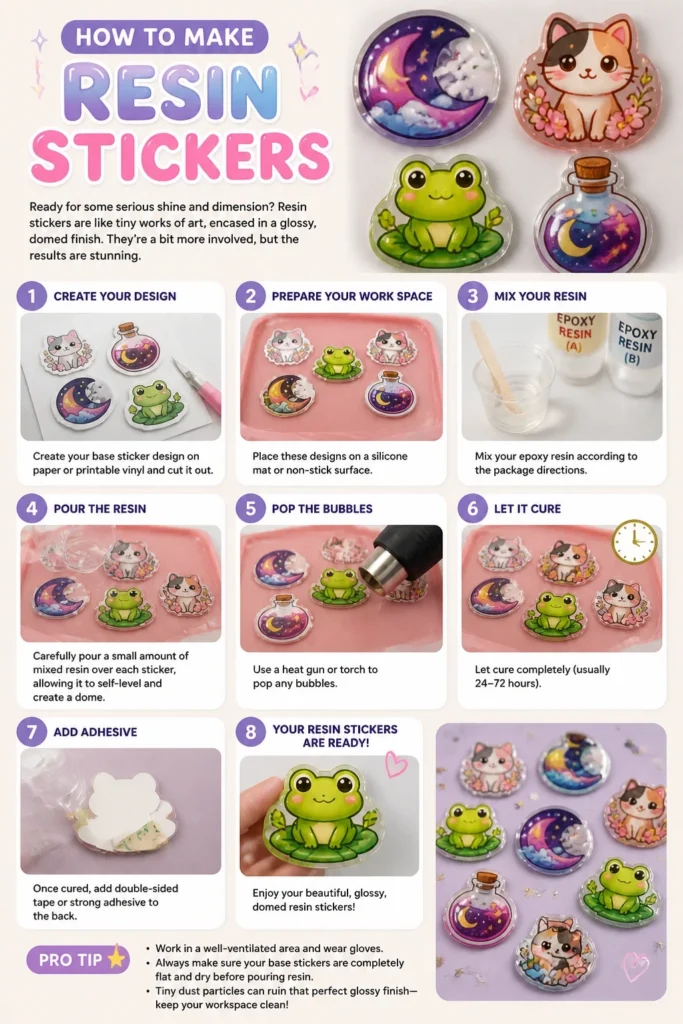
First, create your base sticker design on paper or printable vinyl and cut it out. Place these designs on a silicone mat or non-stick surface. Mix your epoxy resin according to the package directions. Carefully pour a small amount of mixed resin over each sticker, allowing it to self-level and create a dome. Use a heat gun or torch to pop any bubbles. Let cure completely (usually 24-72 hours). Once cured, add double-sided tape or strong adhesive to the back.
Pro tip: Work in a well-ventilated area and wear gloves. Always make sure your base stickers are completely flat and dry before pouring resin. Tiny dust particles are the enemy, so keep your workspace clean!
Why it works? They’re incredibly durable, scratch-resistant, waterproof, and have a gorgeous, professional-looking domed effect. These are true statement stickers.
13. Foam Stickers
Bring on the texture and squish! Foam stickers are fantastic for kids’ crafts, adding dimension to scrapbooks, or just making something super tactile and fun.
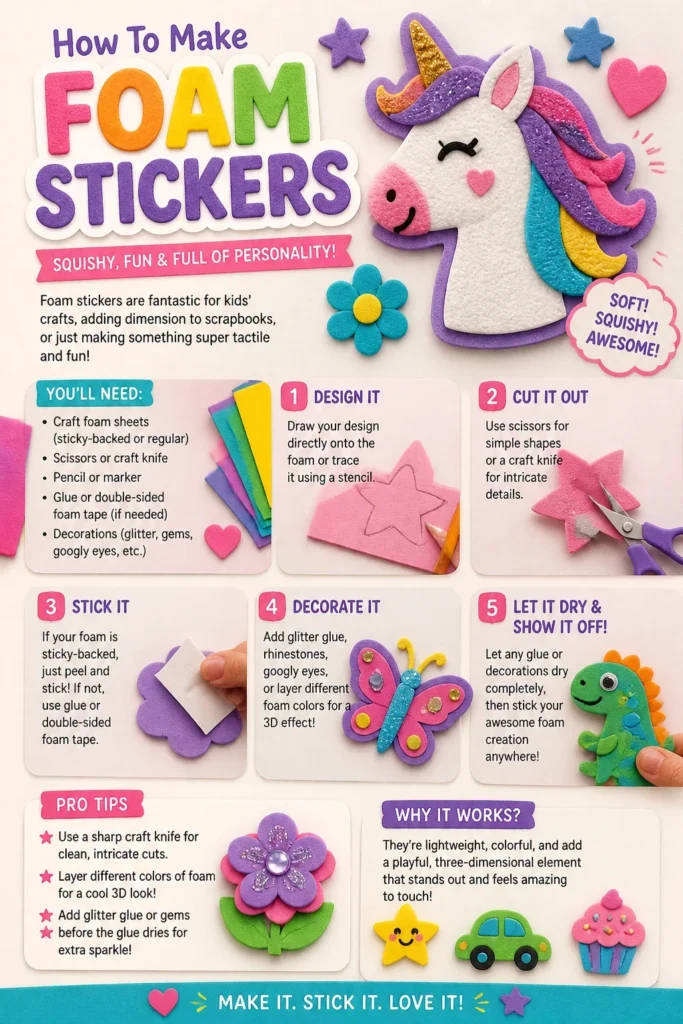
Grab some sheets of craft foam (the sticky-backed kind is a lifesaver, otherwise you’ll need glue). Draw your designs directly onto the foam or trace them. Cut them out with scissors. If your foam isn’t already sticky-backed, apply a strong craft glue or double-sided foam tape to the back. You can even layer different colors of foam for a multi-dimensional effect.
Pro tip: Use a sharp craft knife for intricate cuts, especially if you’re layering foam. For extra sparkle, add glitter glue or rhinestones to your foam designs before they dry.
Why it works? They’re lightweight, colorful, and add a playful, three-dimensional element that standard flat stickers just can’t match. Kids absolutely adore them.
14. Wax Paper & Hot Glue
This is a super creative, slightly unconventional method that yields surprisingly cool, textured stickers. Think of them as custom, raised decals!
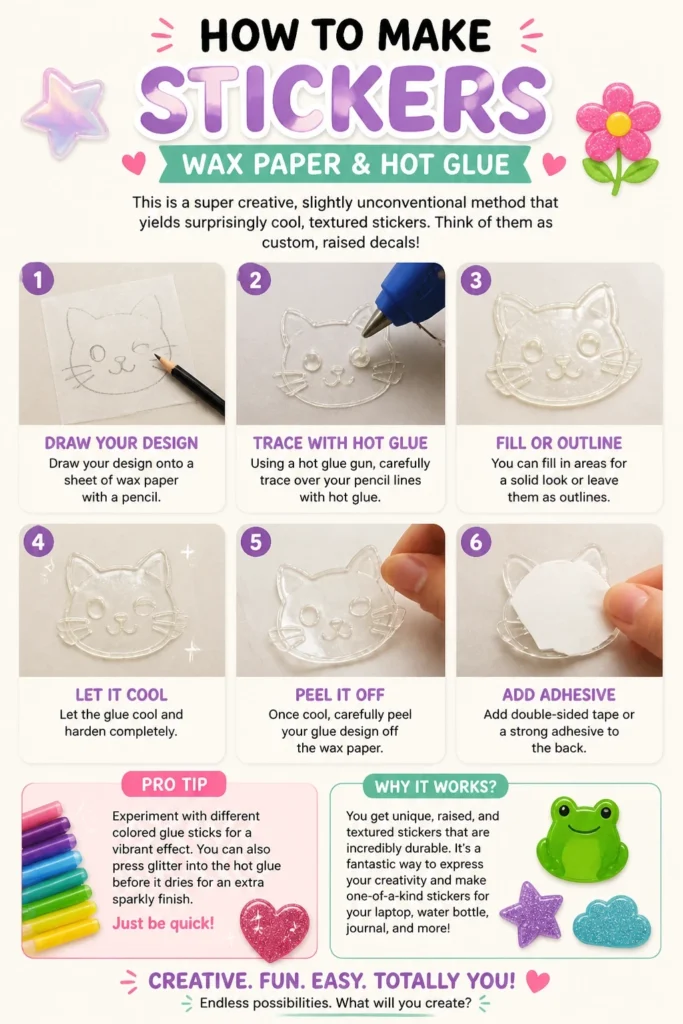
Draw your design onto a sheet of wax paper with a pencil. Using a hot glue gun, carefully trace over your pencil lines with hot glue. You can fill in areas for a solid look or leave them as outlines. Let the glue cool and harden completely. Once cool, carefully peel your glue design off the wax paper. Add double-sided tape or a strong adhesive to the back.
Pro tip: Experiment with different colored glue sticks for a vibrant effect. You can also press glitter into the hot glue before it dries for an extra sparkly finish. Just be quick!
Why it works? You get unique, raised, and textured stickers that are incredibly durable. It’s a fantastic way to add a tactile element to your creations and really stand out.
Conclusion
So there you have it, fourteen ways to transform your ideas into sticky, glorious reality. Whether you’re a digital whiz with a vinyl cutter or an old-school artist with a glue stick, there’s a sticker-making method out there just waiting for you to embrace it. Stop staring at those blank spaces and start creating! Your world (and everything in it) deserves a little more personalized flair. Go forth and stickify!
& CRAFT IDEAS
Beginner-friendly tutorials, creative projects,
and weekly inspiration in your inbox.