📝 How To Journal For Beginners
& CRAFT IDEAS
Beginner-friendly tutorials, creative projects,
and weekly inspiration in your inbox.
🛠️ The Ultimate Maker's Toolkit
I've tested thousands of craft tools over the years. Whether you are quilting, crafting, or building mixed-media art, these are the top 5 absolute non-negotiable tools I personally recommend to guarantee professional results.
🪡 SINGER Heavy Duty 4452 Sewing Machine
The sewing community highly recommends this as the ultimate "bulletproof" entry-level machine. Its heavy metal frame powerfully pushes through thick denim and heavy quilt layers that would instantly jam a standard plastic machine.
✂️ Fiskars 8" Orange-Handled Scissors
Never settle for dull dollar-store blades. Wirecutter repeatedly names Fiskars the absolute best all-purpose craft scissor due to its legendary precision-ground blades and an ergonomic grip that prevents hand-cramping.
🔥 Gorilla Dual Temp Hot Glue Gun
Named Wirecutter's top choice because it literally does the work of two tools. It features dual-temperature settings offering low heat for delicate florals and blistering high heat for heavy wood adhesion repairs.
🖌️ Mod Podge Waterbase Gloss Sealer
The absolute undisputed champion of decoupage and paper crafts. Experts rely exclusively on this exact water-based formula because it glues, seals, and finishes beautifully without yellowing or flaking over time.
🎨 Apple Barrel Acrylic Paint (2 oz)
The quintessential, incredibly inexpensive craft paint. Woodworkers and hobby painters swear by its smooth flow and matte finish, providing massive value and remarkably thick color coverage on rough surfaces.
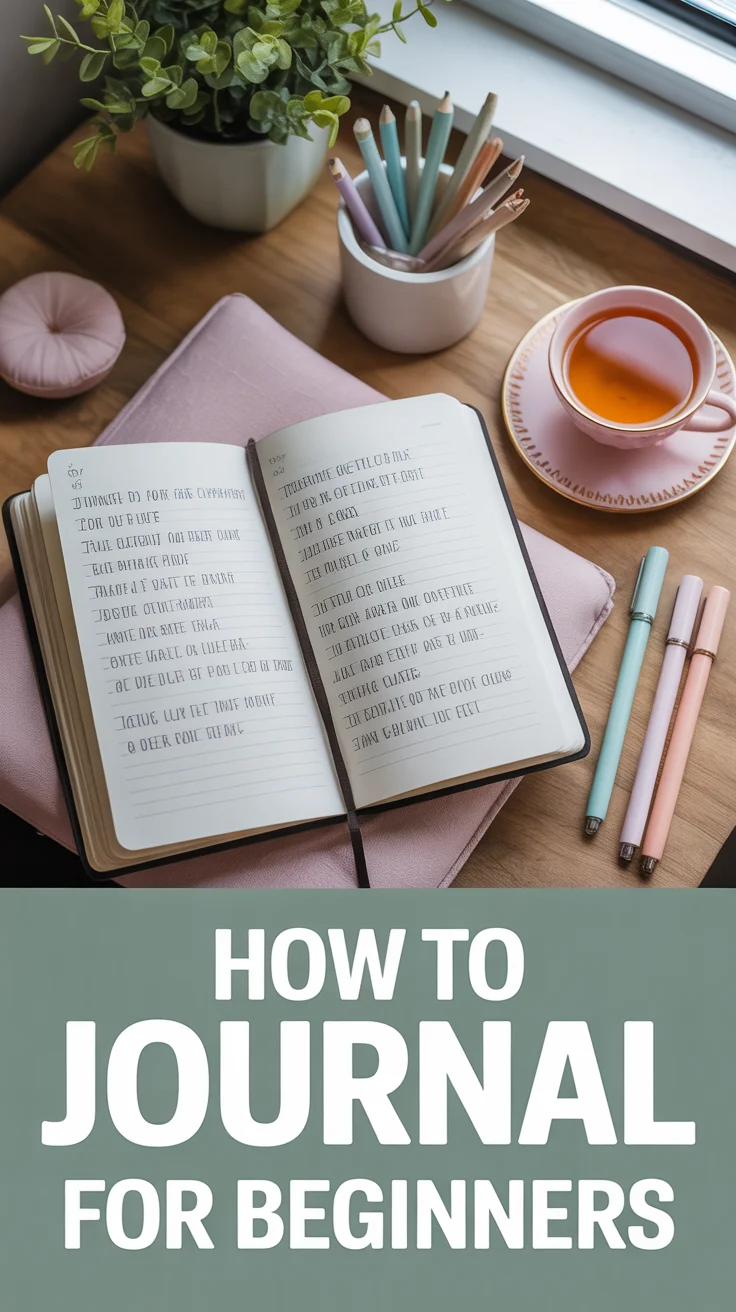
New to journaling? Perfect. You don’t need fancy pens, a leather notebook, or a mysterious past. You just need a few minutes and a brain that occasionally forms thoughts. Let’s make this simple, fun, and wildly doable.
1. Start With Three Lines
Zero pressure, maximum momentum. Write exactly three lines about your day, mood, or breakfast drama. That’s it.
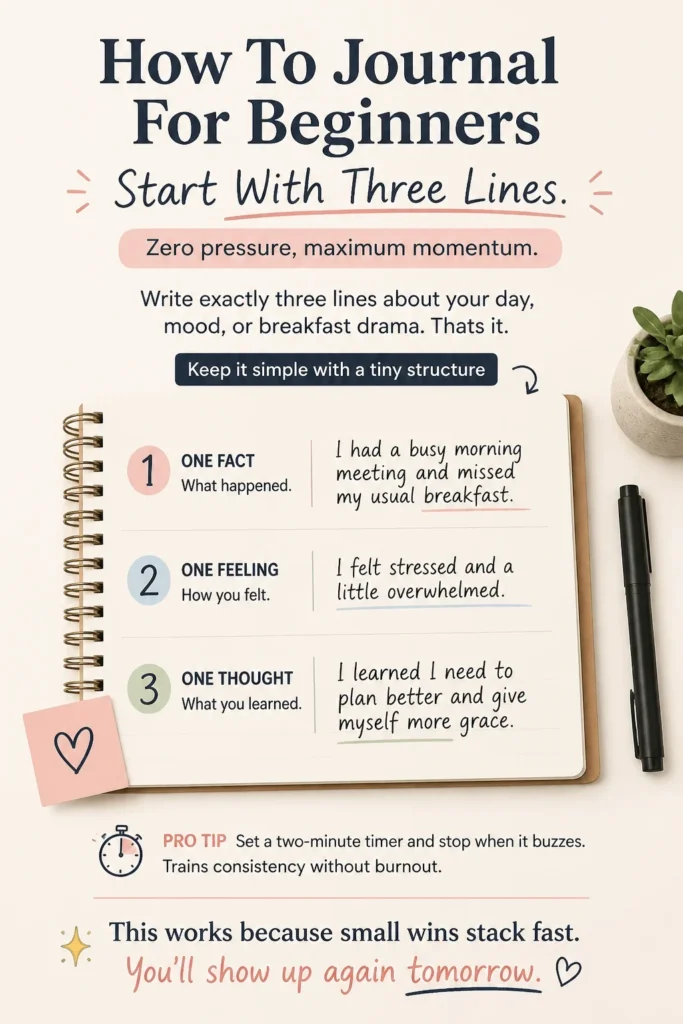
Keep it simple with a tiny structure:
- One fact: What happened.
- One feeling: How you felt.
- One thought: What you learned.
Pro tip: Set a two-minute timer and stop when it buzzes. Trains consistency without burnout.
This works because small wins stack fast. You’ll show up again tomorrow.
2. The Morning Brain Dump
Got mental tabs open? Dump them on paper. Spelling optional, honesty required.
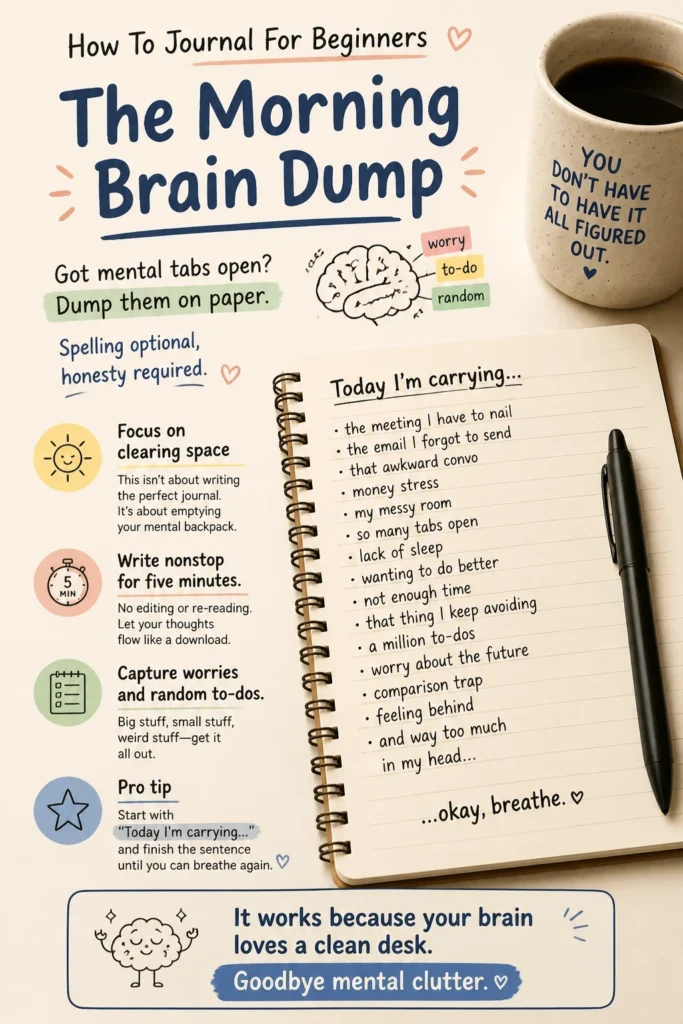
Focus on clearing space:
- Write nonstop for five minutes.
- No editing or re-reading.
- Capture worries and random to-dos.
Pro tip: Start with “Today I’m carrying…” and finish the sentence until you can breathe again.
It works because your brain loves a clean desk. Goodbye mental clutter.
3. The One-Line Nightcap
End your day with one crisp line. It’s a memory anchor and a sleep helper.
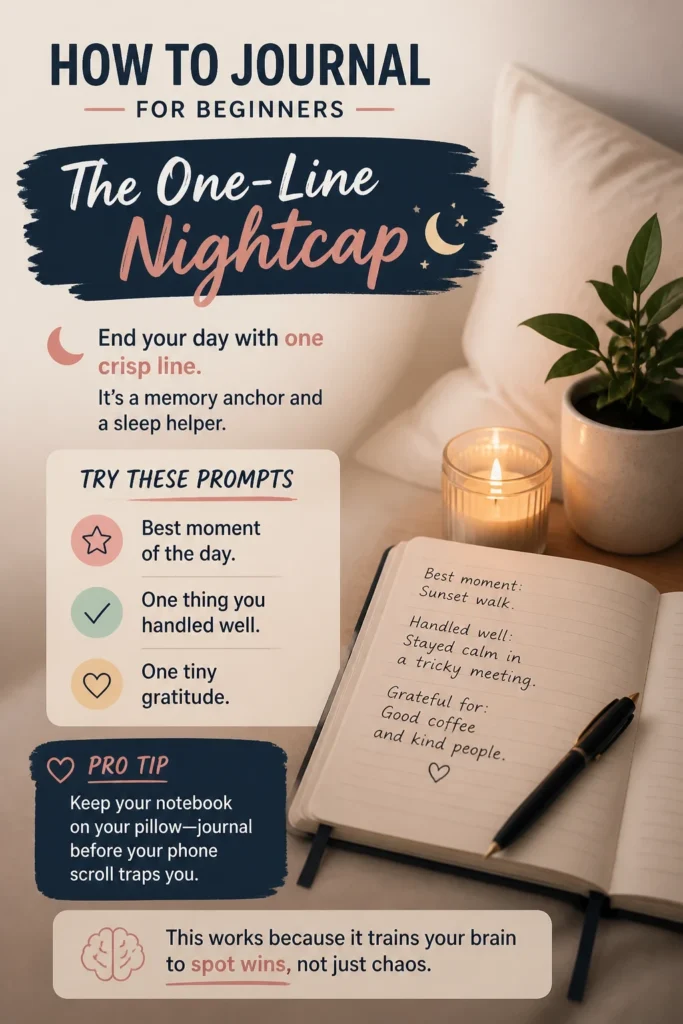
Try these prompts:
- Best moment of the day.
- One thing you handled well.
- One tiny gratitude.
Pro tip: Keep your notebook on your pillow—journal before your phone scroll traps you.
This works because it trains your brain to spot wins, not just chaos.
4. The 3-2-1 Reset
When life feels spicy, do a quick reset. It’s structured and fast.
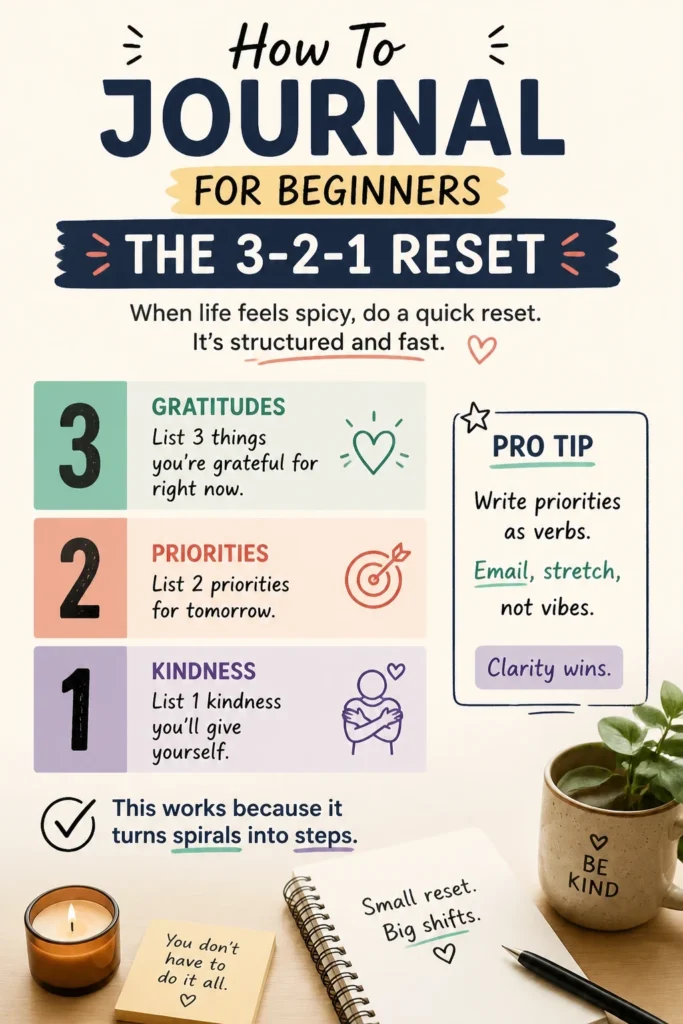
Use this formula:
- 3 gratitudes
- 2 priorities for tomorrow
- 1 kindness for yourself
Pro tip: Write priorities as verbs: “Email, stretch,” not “vibes.” Clarity wins.
This works because it turns spirals into steps.
5. Prompt Roulette
Not sure what to write? Spin the prompt wheel—aka a short list you reuse.
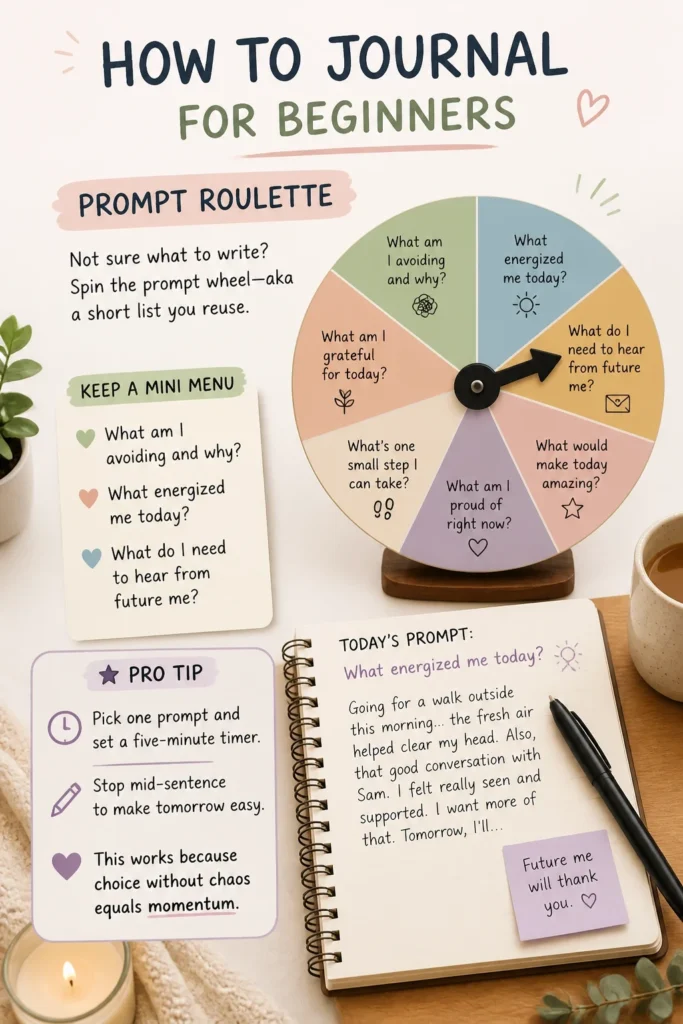
Keep a mini menu:
- What am I avoiding and why?
- What energized me today?
- What do I need to hear from future me?
Pro tip: Pick one prompt and set a five-minute timer. Stop mid-sentence to make tomorrow easy.
This works because choice without chaos equals momentum.
6. Habit Stack It
Attach journaling to something you already do. No extra willpower required.
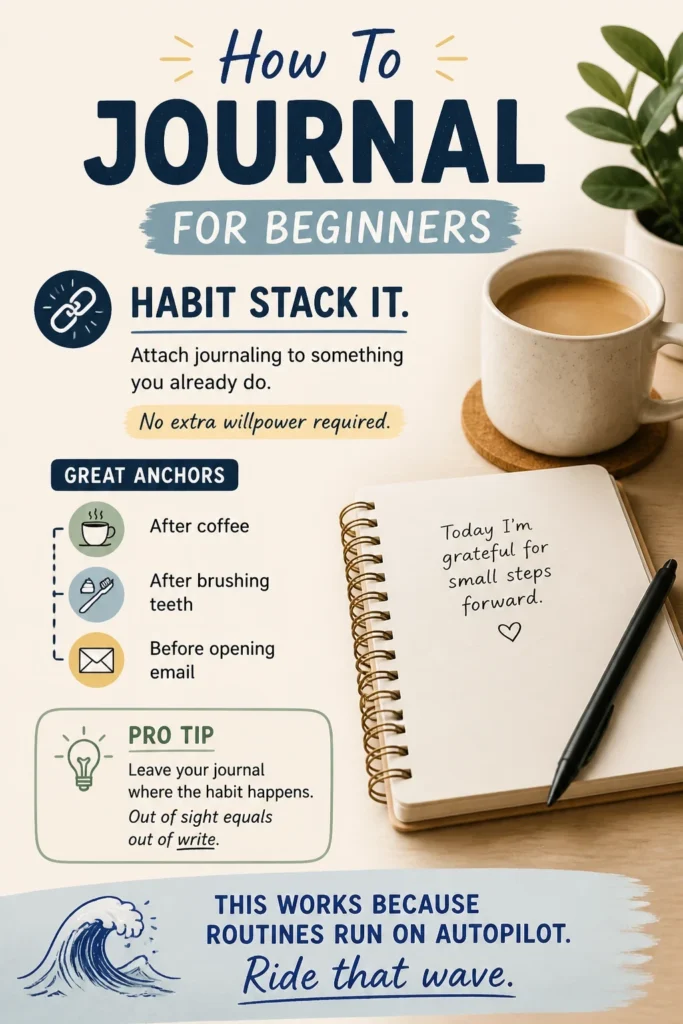
Great anchors:
- After coffee
- After brushing teeth
- Before opening email
Pro tip: Leave your journal where the habit happens. Out of sight equals out of write.
This works because routines run on autopilot. Ride that wave.
7. The Feelings Decoder
Turn “I feel bad” into something useful. Name it, tame it.
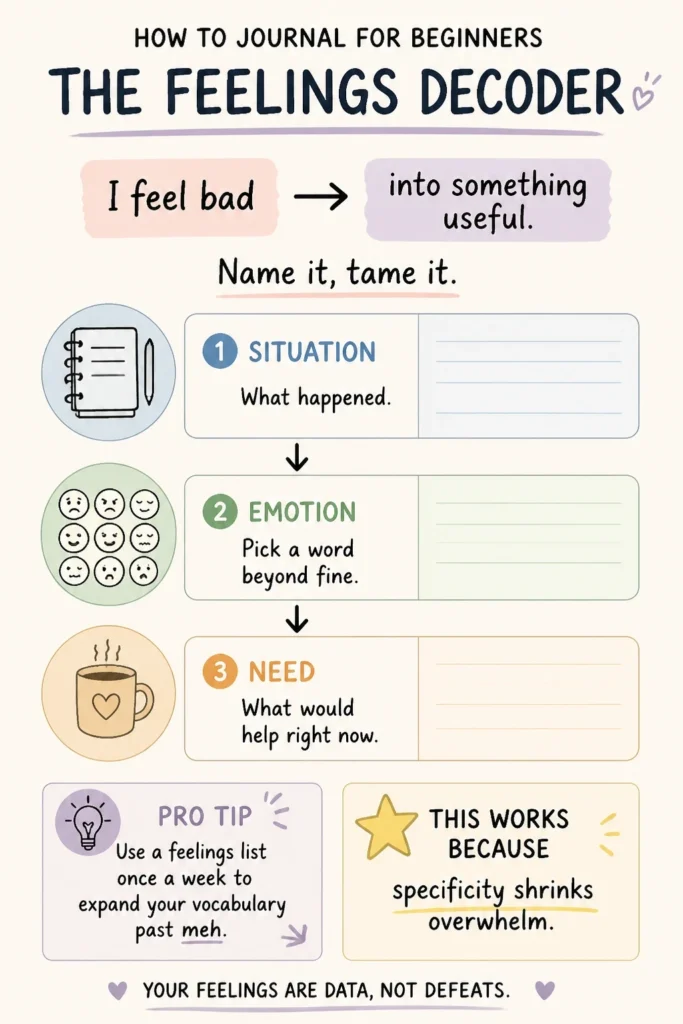
Use a simple flow:
- Situation: What happened.
- Emotion: Pick a word beyond “fine.”
- Need: What would help right now.
Pro tip: Use a feelings list once a week to expand your vocabulary past “meh.”
This works because specificity shrinks overwhelm.
8. The Wins + Lessons Log
Collect receipts of your progress. Confidence loves evidence.
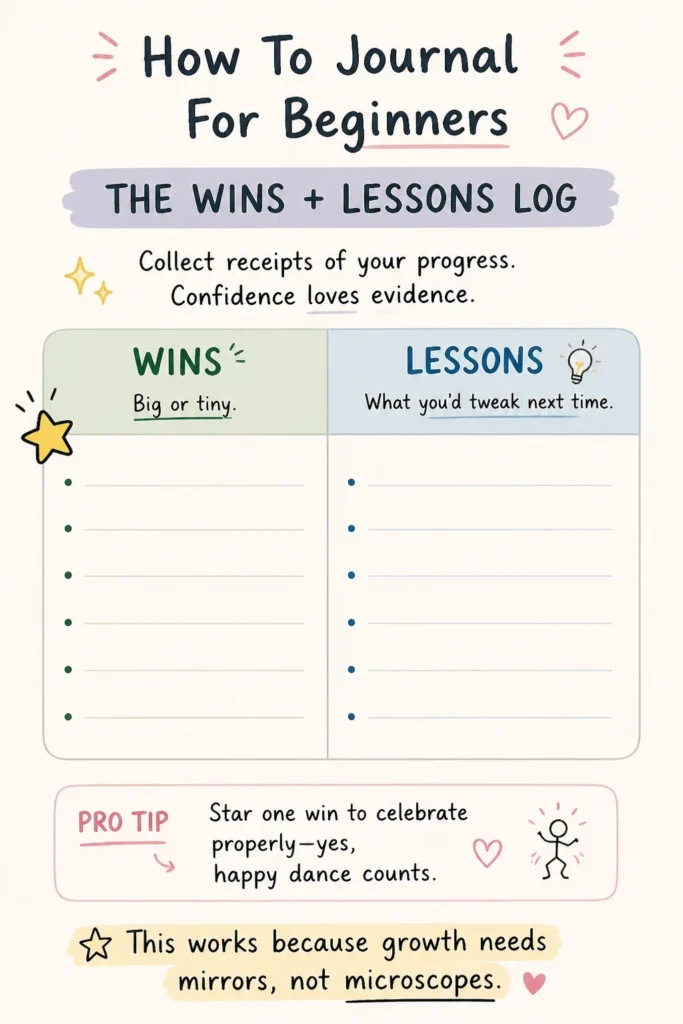
Split the page:
- Wins: Big or tiny.
- Lessons: What you’d tweak next time.
Pro tip: Star one win to celebrate properly—yes, happy dance counts.
This works because growth needs mirrors, not microscopes.
9. Micro Goals, Micro Plans
Dreams are cute. Plans get results. Keep it bite-size.
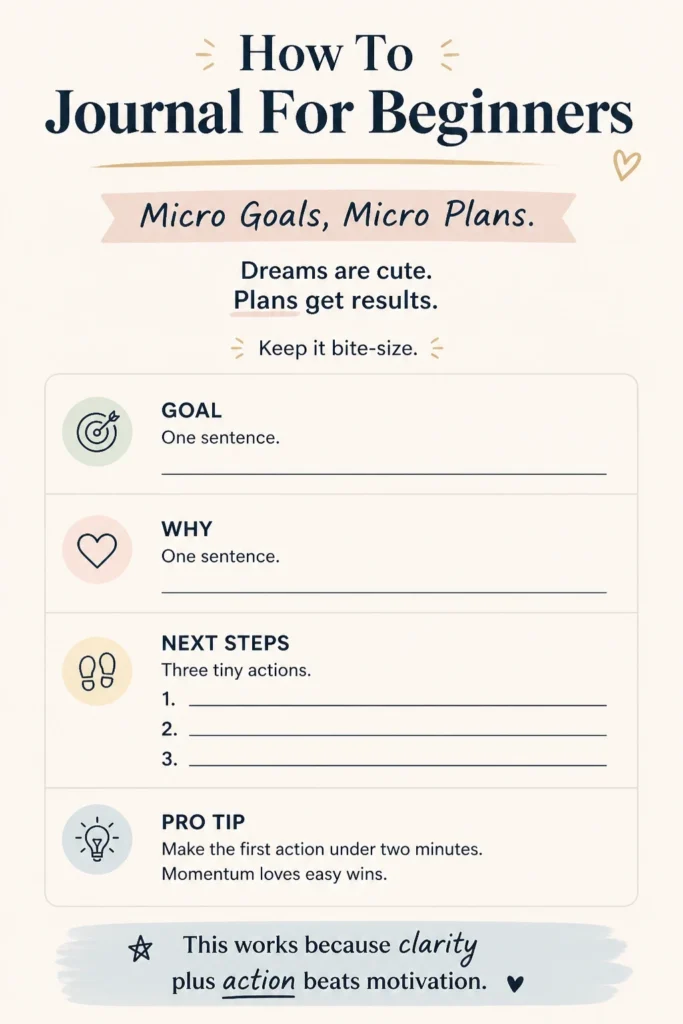
Use this daily:
- Goal: One sentence.
- Why: One sentence.
- Next steps: Three tiny actions.
Pro tip: Make the first action under two minutes. Momentum loves easy wins.
This works because clarity plus action beats motivation.
10. The Conversation With Future You
Write a note to yourself 30 days ahead. Ask for advice. Then answer like future you.
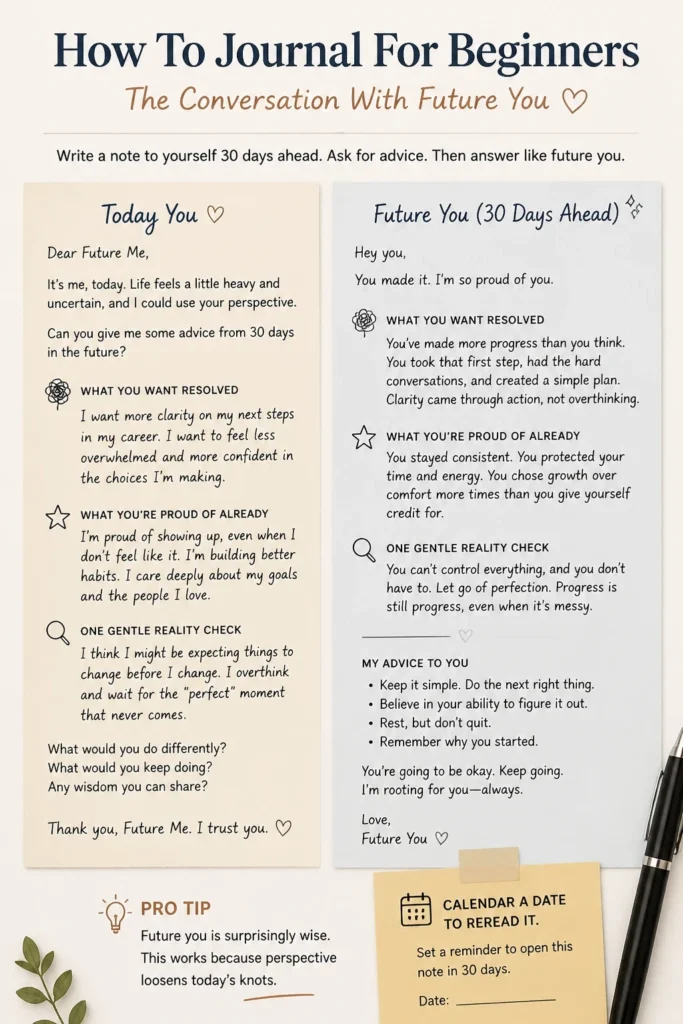
Include:
- What you want resolved
- What you’re proud of already
- One gentle reality check
Pro tip: Calendar a date to reread it. Future you is surprisingly wise.
This works because perspective loosens today’s knots.
11. The Theme Day
Give each day a vibe so you’re never stuck. Monday doesn’t have to be a villain.
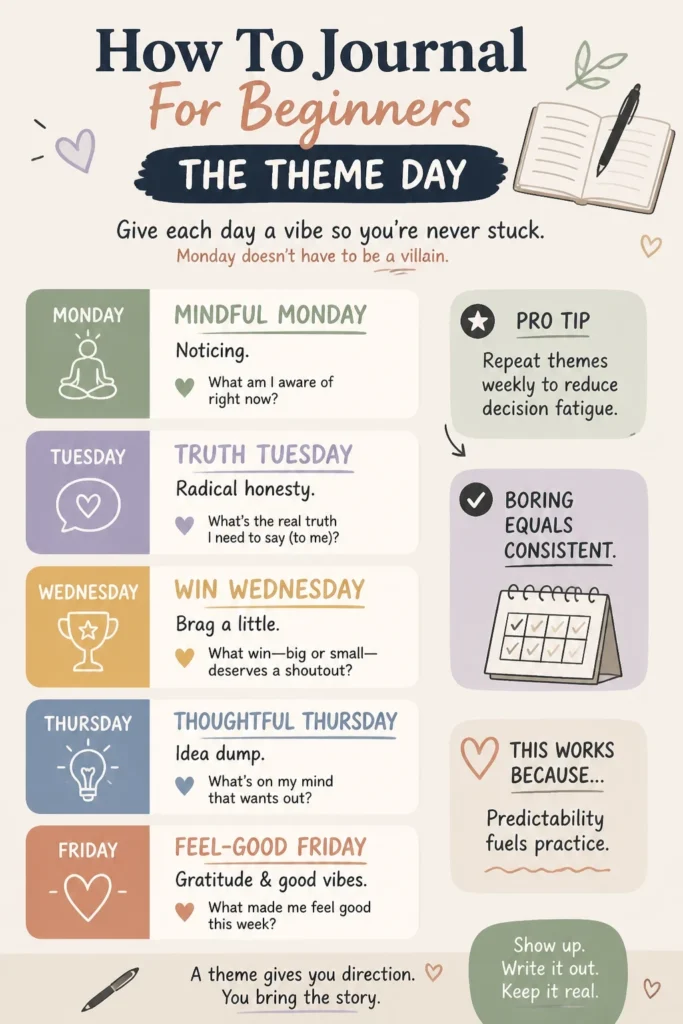
Sample lineup:
- Mindful Monday: Noticing.
- Truth Tuesday: Radical honesty.
- Win Wednesday: Brag a little.
Pro tip: Repeat themes weekly to reduce decision fatigue. Boring equals consistent.
This works because predictability fuels practice.
12. The Snapshot Spread
Make your journal visual without needing art skills. Blocks > paragraphs.
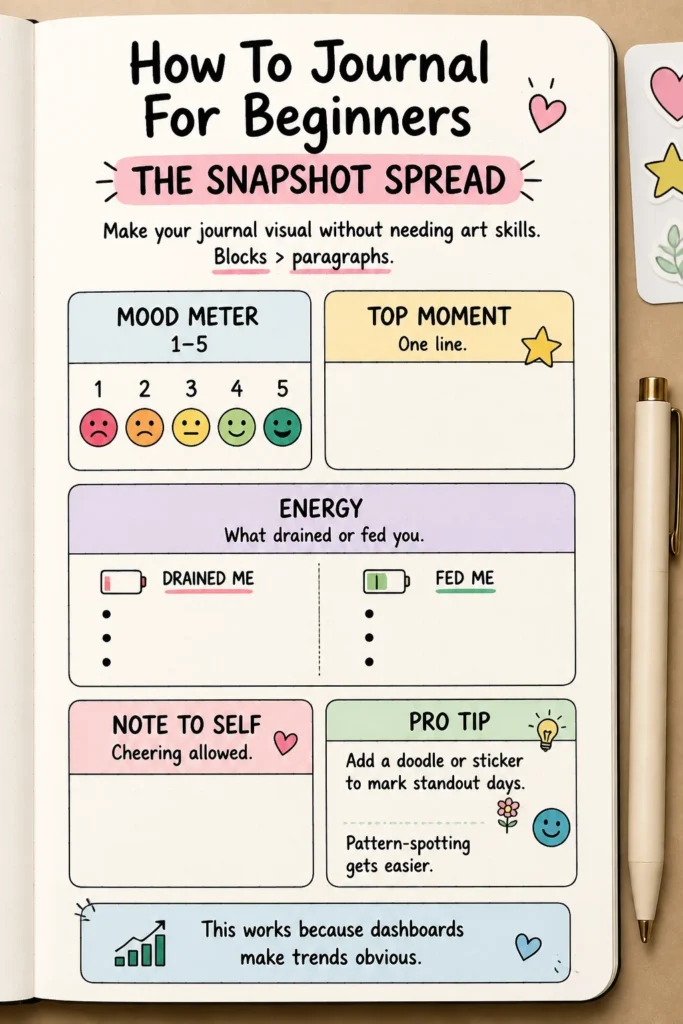
Divide a page into boxes:
- Mood meter: 1–5.
- Top moment: One line.
- Energy: What drained or fed you.
- Note to self: Cheering allowed.
Pro tip: Add a doodle or sticker to mark standout days. Pattern-spotting gets easier.
This works because dashboards make trends obvious.
Conclusion
You don’t need a perfect system—just a pen that works and two spare minutes. Pick one idea, try it tonight, and let your journal be a low-pressure home for your brain. The magic isn’t the method; it’s the habit. Show up scrappy, leave a little clearer, repeat.
& CRAFT IDEAS
Beginner-friendly tutorials, creative projects,
and weekly inspiration in your inbox.