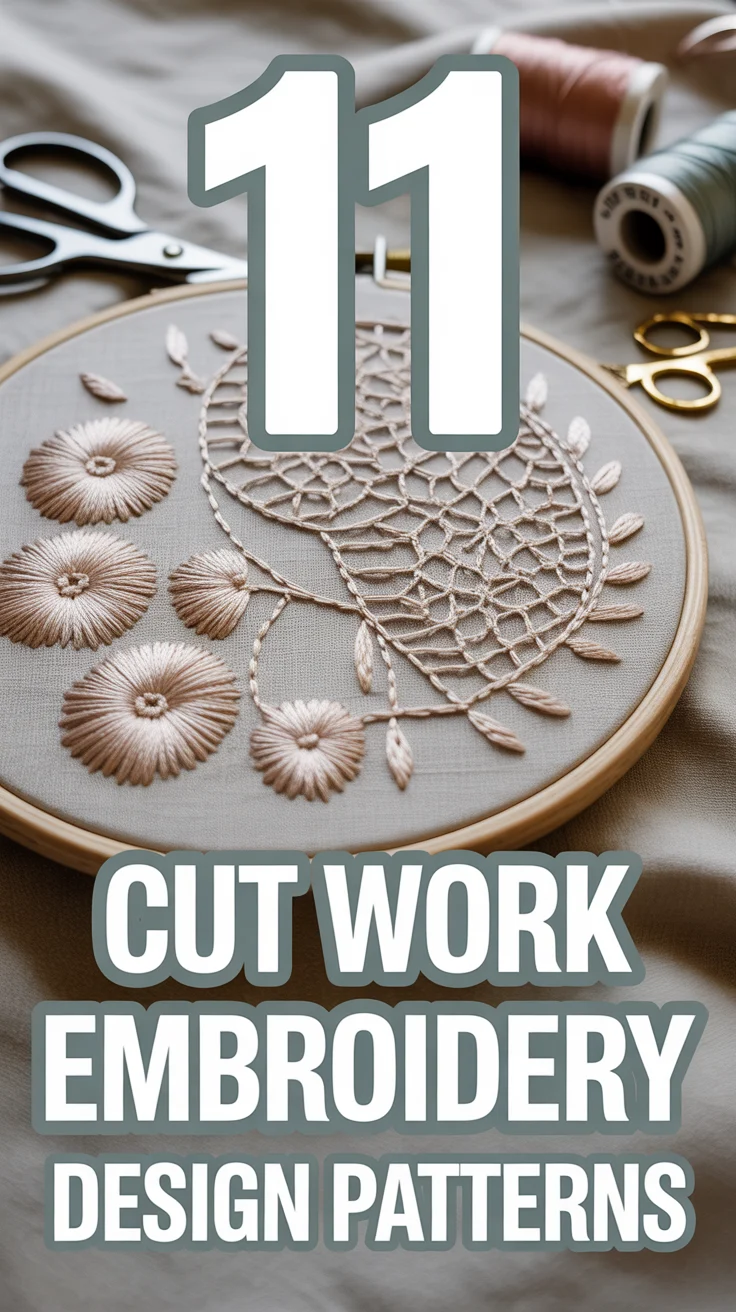
🧵 11 Cut Work Embroidery Design Patterns
& CRAFT IDEAS
Beginner-friendly tutorials, creative projects,
and weekly inspiration in your inbox.
Cut work is the drama queen of embroidery. It carves negative space, flirts with light, and makes plain fabric look couture in an afternoon. If you love crisp edges, delicate lacey vibes, and a tiny risk of snipping the wrong thread—welcome home.
1. Petal-Laced Florals
Soft petals meet airy cutouts for a romantic, wearable lace effect. Think garden-party sleeves and dress hems that flutter. Pair with satin stitch and buttonhole edging for crisp, fray-free shapes.
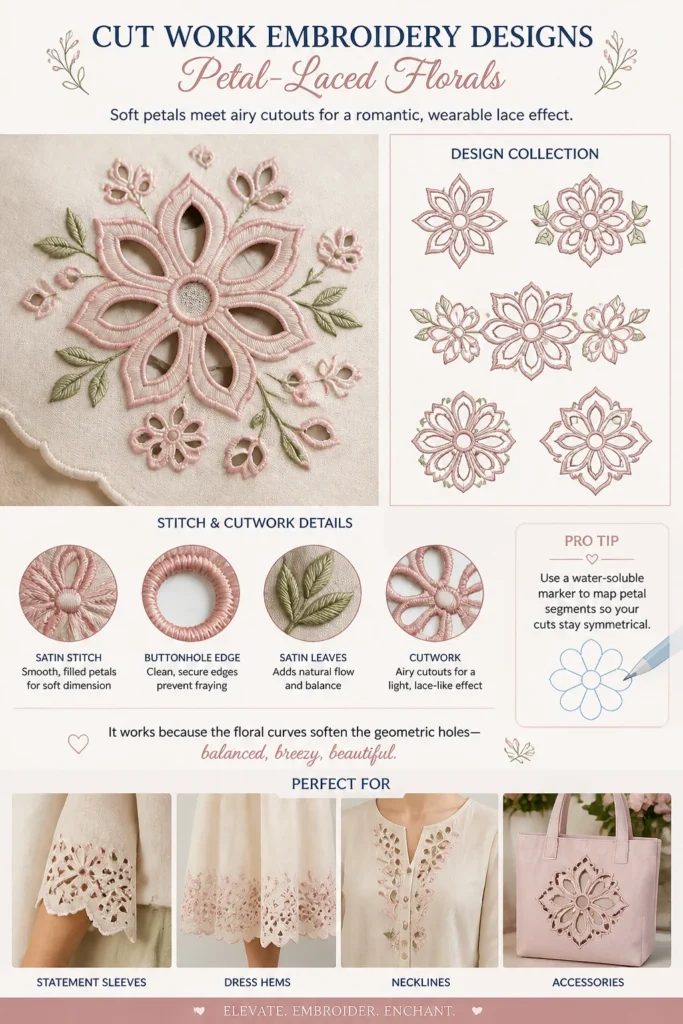
Pro tip Use a water-soluble marker to map petal segments so your cuts stay symmetrical.
It works because the floral curves soften the geometric holes—balanced, breezy, beautiful.
2. Geometric Lattice Panels
Clean lines, bold structure, zero fuss. Square or diamond grids make a statement on cuffs, yokes, and dupatta borders. Reinforce edges with blanket stitch before cutting for sharp definition.
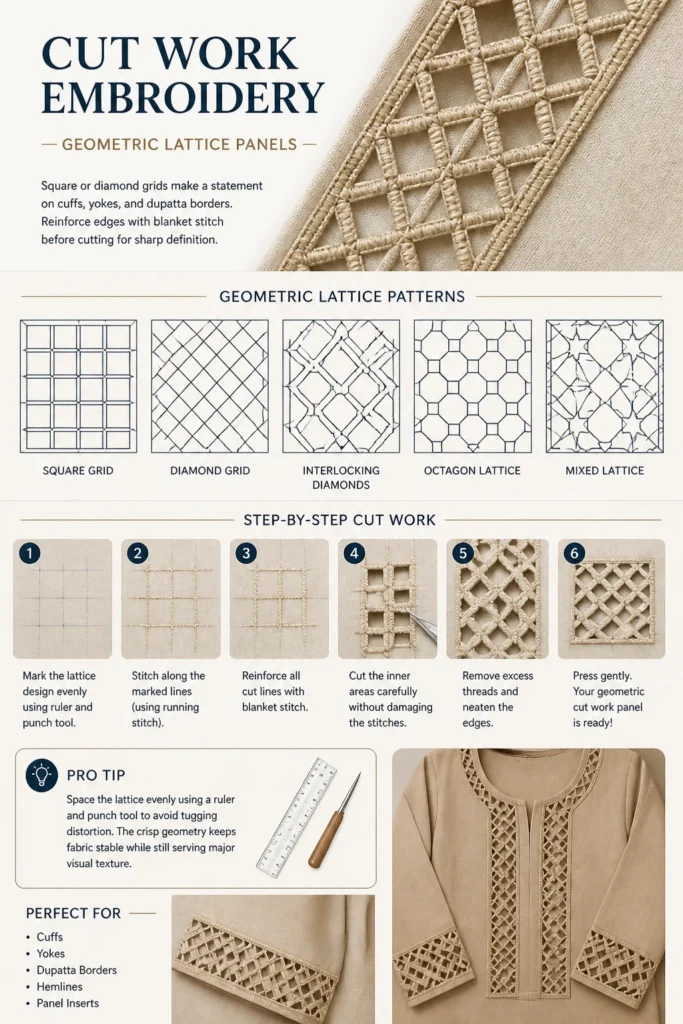
Pro tip Space the lattice evenly using a ruler and punch tool to avoid tugging distortion.
The crisp geometry keeps fabric stable while still serving major visual texture.
3. Scalloped Hem Cutouts
Give hems a couture wink with repeating scallops and peekaboo centers. Add seed stitch dots along the scallop crown for sparkle. Works on skirts, sleeves, and table linens.
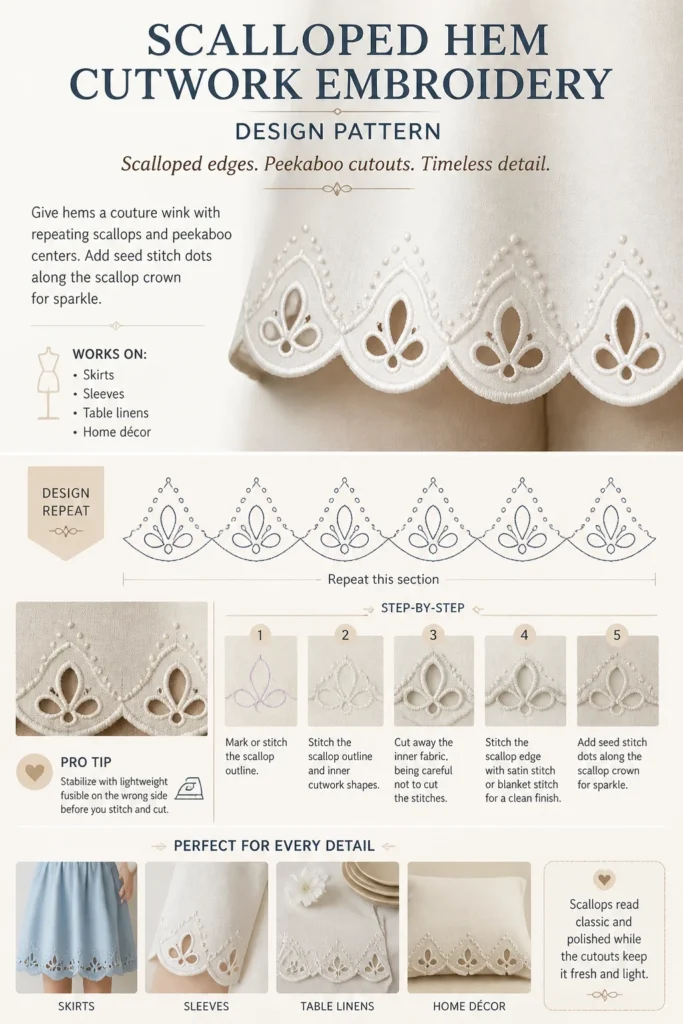
Pro tip Stabilize with lightweight fusible on the wrong side before you stitch and cut.
Scallops read classic and polished while the cutouts keep it fresh and light.
4. Vintage Doily Medallions
Channel grandma’s lace, but make it modern. Round medallions with cut rings and picot edges look stunning as appliqués. Layer on sheer fabric for extra depth.
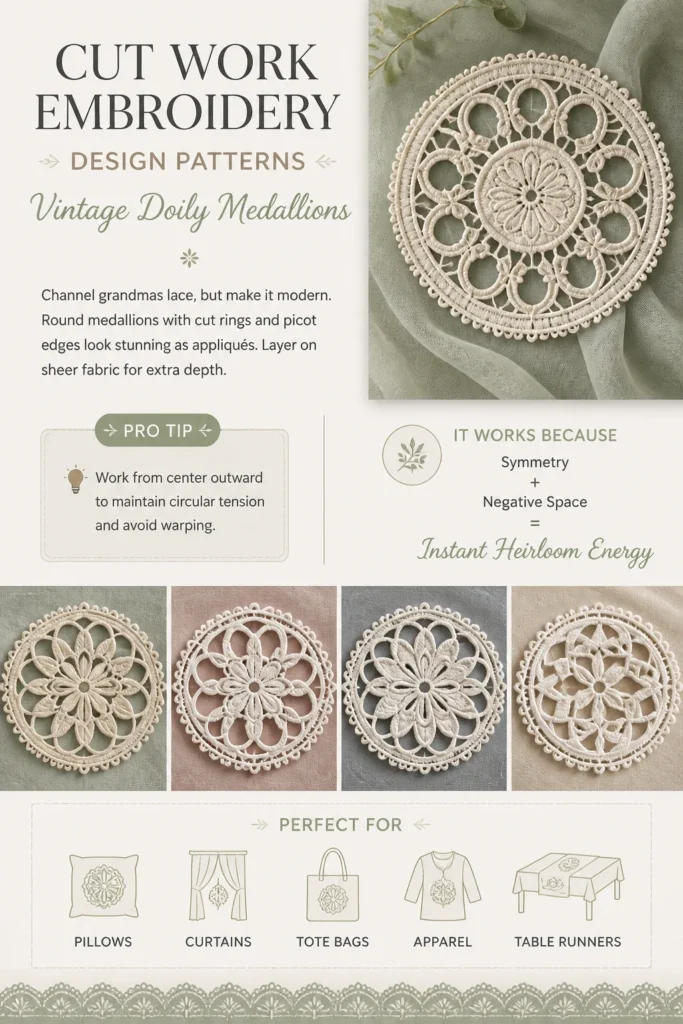
Pro tip Work from center outward to maintain circular tension and avoid warping.
It works because symmetry plus negative space equals instant heirloom energy.
5. Leaf Vein Windows
Botanical but sleek. Outline leaf shapes, stitch the veins, then cut tiny windows between them. Use whip stitch to secure delicate channels.
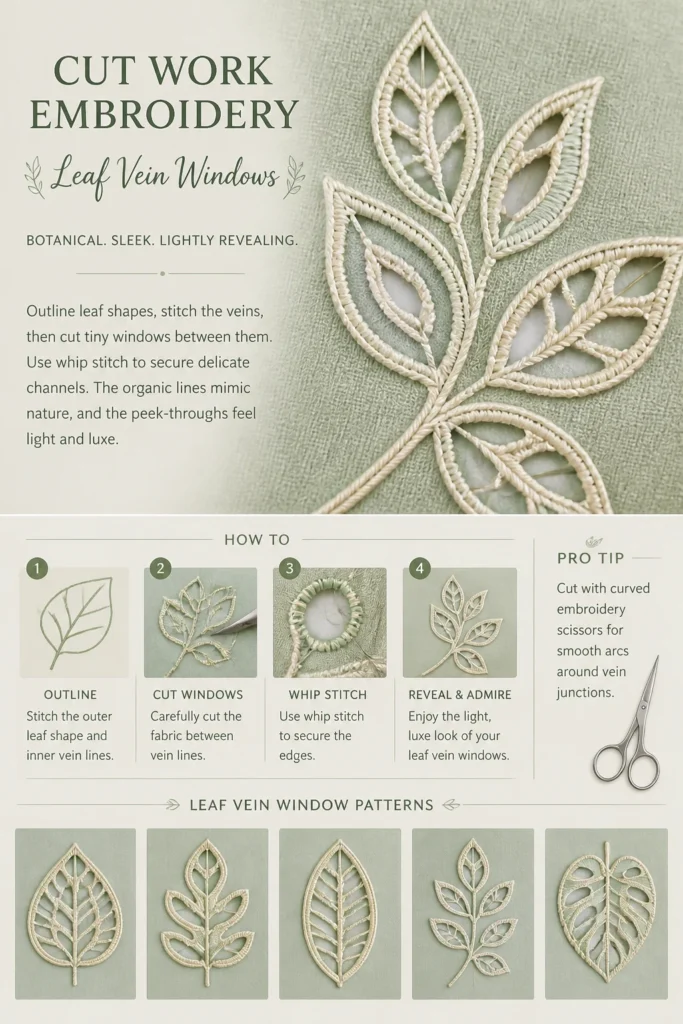
Pro tip Cut with curved embroidery scissors for smooth arcs around vein junctions.
The organic lines mimic nature, and the peek-throughs feel light and luxe.
6. Art Deco Arches
Glam angles meet polished curves. Layer arches, fans, and sunbursts with controlled cutouts. Pair with gold thread accents for quiet drama.
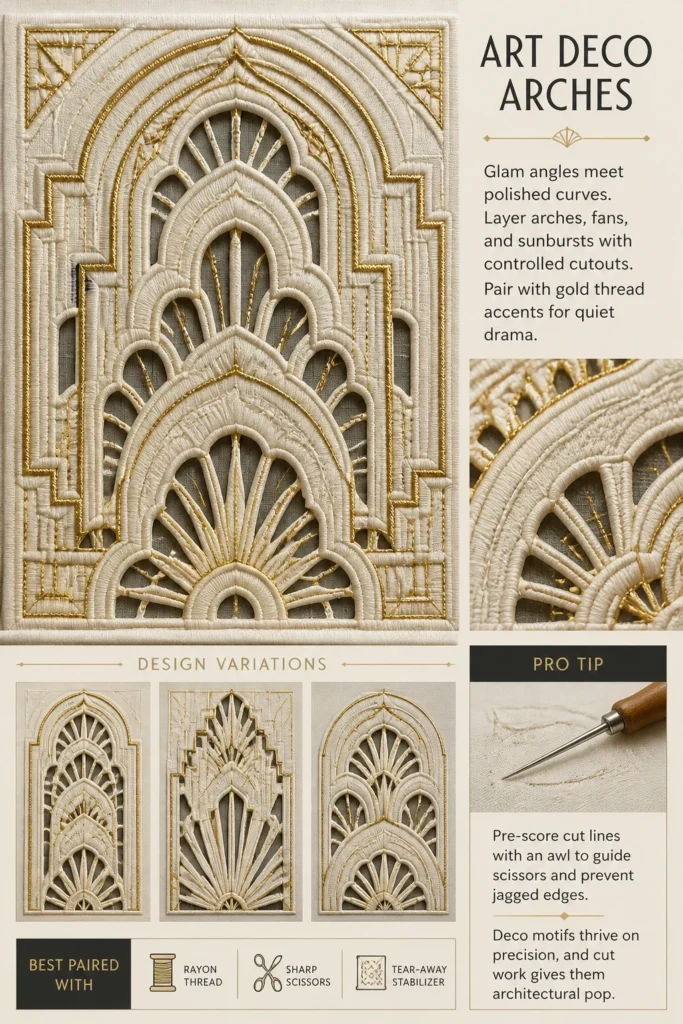
Pro tip Pre-score cut lines with an awl to guide scissors and prevent jagged edges.
Deco motifs thrive on precision, and cut work gives them architectural pop.
7. Monogram Frames
Personalized but not precious. Create a cut work frame and float your initials inside. Use padded satin stitch for the letter so it feels raised and luxe.
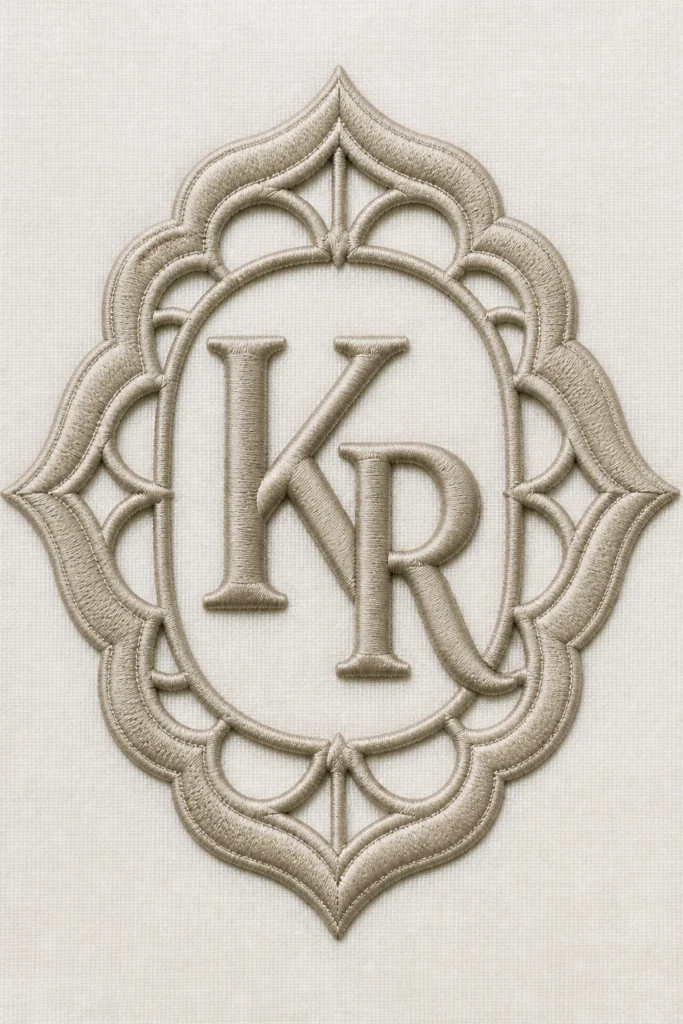
Pro tip Keep the frame thick enough to support cuts without sagging—at least 5 mm.
It works because the airy frame spotlights the monogram without overwhelming it.
8. Sheer Inset Panels
Swap fabric bulk for subtle transparency. Cut a window and back it with organza or tulle, stitching motifs along the edge. Finish with buttonhole stitch to lock fibers.
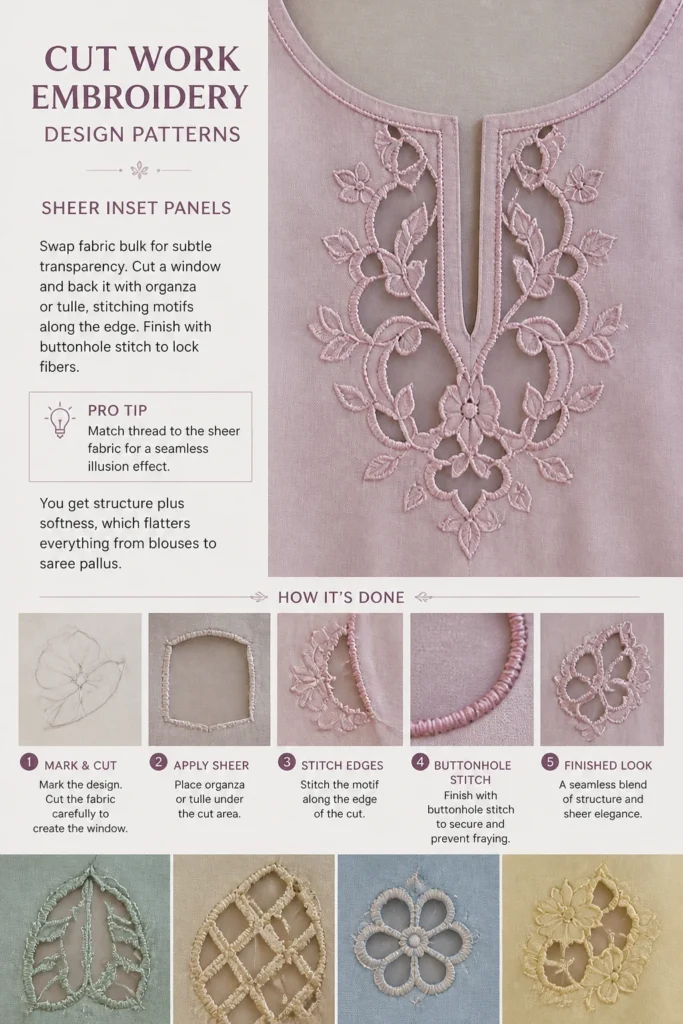
Pro tip Match thread to the sheer fabric for a seamless illusion effect.
You get structure plus softness, which flatters everything from blouses to saree pallus.
9. Celtic Knot Weaves
Interlaced lines look intricate, but it’s all about order. Stitch the path, then cut alternating negative spaces for depth. Use split stitch for ultra-controlled curves.
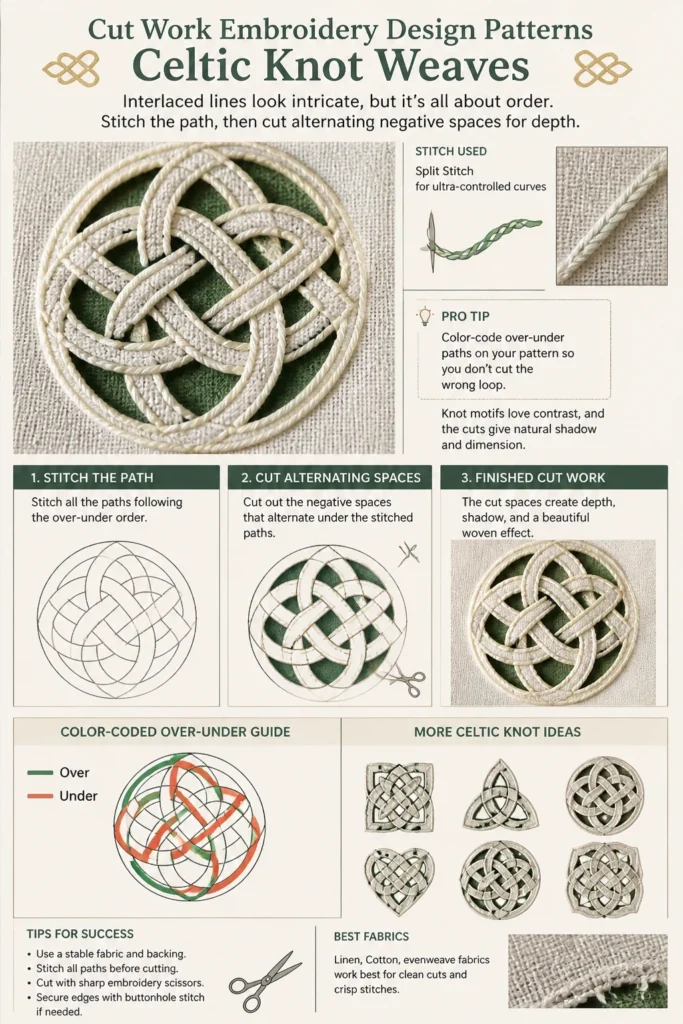
Pro tip Color-code over-under paths on your pattern so you don’t cut the wrong loop.
Knot motifs love contrast, and the cuts give natural shadow and dimension.
10. Border Bands with Eyelets
Simple, clean, wildly versatile. Combine small eyelets with elongated cut slots along borders. Reinforce with overcast stitching to keep edges tidy.
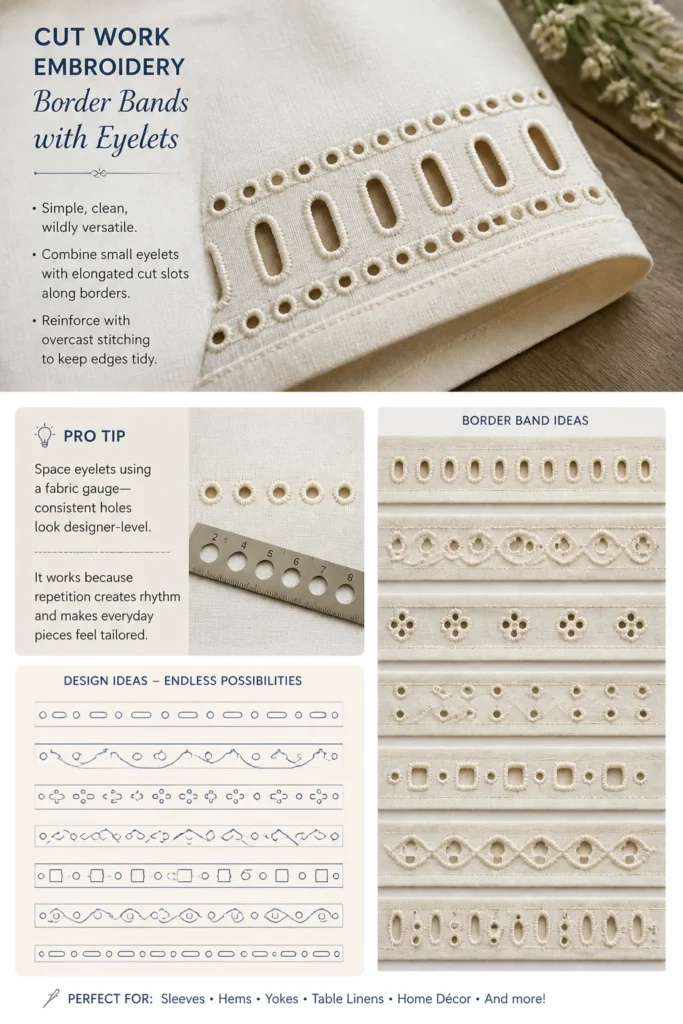
Pro tip Space eyelets using a fabric gauge—consistent holes look designer-level.
It works because repetition creates rhythm and makes everyday pieces feel tailored.
11. Negative-Space Butterflies
All wings, no weight. Outline the butterfly, stitch the veins, then cut interior cells for lacey flight. Add French knots along the body for texture.
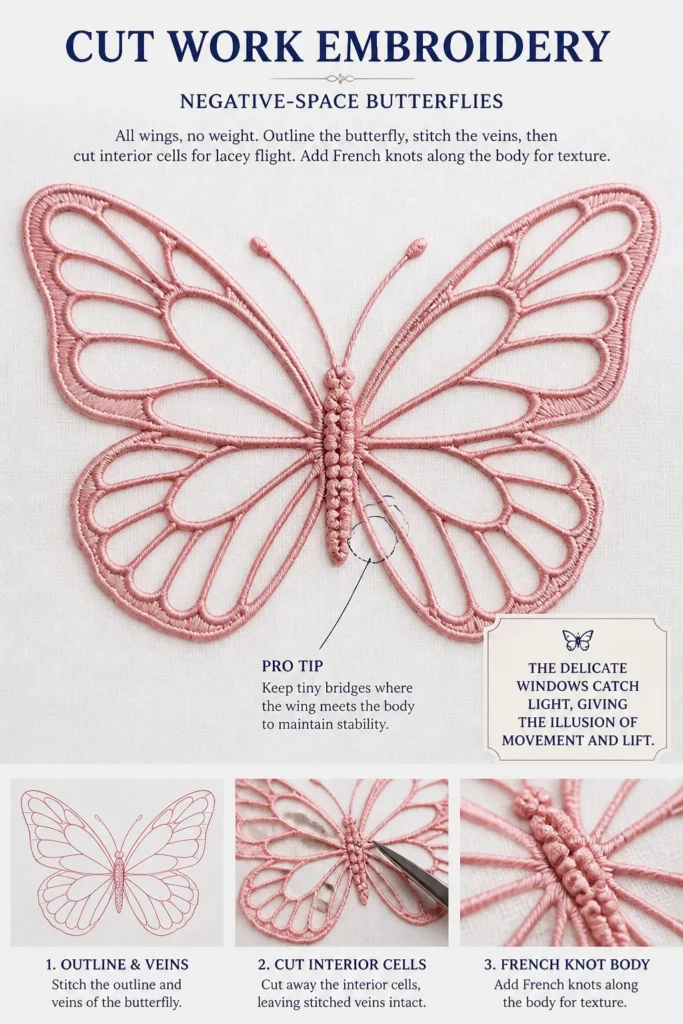
Pro tip Keep tiny bridges where the wing meets the body to maintain stability.
The delicate windows catch light, giving the illusion of movement and lift.
Conclusion
Cut work turns fabric into architecture—delicate, dramatic, and endlessly wearable. Start with stable stitches, cut with patience, and let negative space do the flexing. Your scissors are the spotlight, and your thread is the hype team.
& CRAFT IDEAS
Beginner-friendly tutorials, creative projects,
and weekly inspiration in your inbox.